Jia Lissa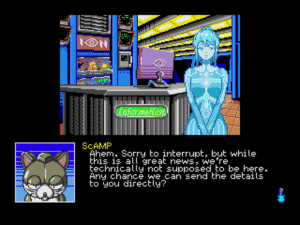
Narrative Architecture and Character Development
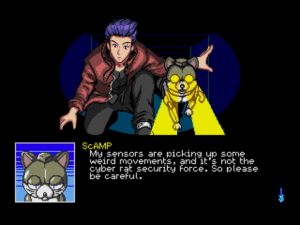
The story of Chords is an ambitious narrative divided into three distinct acts, focusing on a protagonist named Akio. Akio is depicted as an aspiring musician navigating the high-stakes environment of a global battle-of-the-bands competition. However, the narrative trajectory shifts from a standard sports-like underdog story into a deep-seated political and corporate thriller. As players progress, they uncover a powerful, shadowy organization manipulating the contest for clandestine purposes. This shift in tone reflects the influence of gritty, cyberpunk precursors while maintaining a unique identity centered on the cultural and emotional weight of music.
Lead developer Matt has indicated that the game is designed to be a "meaty" experience, prioritizing character growth and atmospheric world-building over the fast-paced action traditionally associated with the 16-bit era. Internal testing and speed-runs conducted by the development team suggest that even for those familiar with the game’s logic, the first chapter alone requires approximately 45 minutes of gameplay. For the average player engaging with the dialogue and exploring the environment, the full three-part saga is expected to offer several hours of interactive storytelling, a duration that rivals the most prominent titles in the Sega CD’s library.
The Technical Evolution of the 16-Bit Graphic Adventure
Historically, the Sega Genesis (known as the Mega Drive outside North America) struggled to host graphic adventures of this scale due to the memory constraints of standard cartridges. While the Sega CD offered 600MB of storage for high-quality audio and cinematic cutscenes, Genesis cartridges were often limited to 4MB or less during their primary commercial lifecycle. Chords represents a modern shift in indie development where advanced bank-switching and larger memory chips allow for an unprecedented volume of assets.
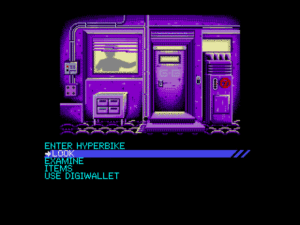
The aesthetic of Chords is defined by the work of Daniel "108 Stars" H, a veteran artist in the homebrew scene known for his significant contributions to the acclaimed RPG Pier Solar. The visual presentation utilizes detailed 16-bit pixel art that pushes the Genesis’s limited color palette to its absolute threshold, creating moody, atmospheric environments that serve as the backdrop for the game’s investigation mechanics. By utilizing a "cinematic" approach to framing and scene transitions, Pixel Pusher Games is attempting to replicate the feel of a CD-ROM game within the confines of a cartridge interface.
Gameplay Mechanics and Logical Interactivity
The gameplay loop in Chords adheres to the classic "point-and-click" or menu-driven adventure style popularized in the early 1990s. Players interact with the world through a series of commands such as "Move," "Look," "Talk," and "Investigate." However, the developers have emphasized that the game avoids the pitfall of "menu-cycling," a common issue in older adventure games where players could progress simply by clicking every available option.
In Chords, progression is tethered to logical deduction. Puzzles are integrated into the environment, requiring players to synthesize information gained from NPC conversations with visual clues found in the background art. For example, a poster on a wall or a subtle change in a character’s expression might provide the necessary context to solve a subsequent roadblock. This design philosophy encourages a meticulous approach to exploration, rewarding players who pay close attention to the game’s narrative and environmental cues.
Auditory Landscapes and Global Accessibility
Given the central theme of a battle-of-the-bands competition, the soundtrack plays a pivotal role in the Chords experience. The game features an energetic chiptune score composed by SuperJet Spade, specifically optimized for the Yamaha YM2612 FM synthesis chip found in the Genesis hardware. The soundtrack is designed not just as background noise, but as a core component of the game’s atmosphere, reflecting the protagonist’s musical journey and the tension of the underlying conspiracy.
Furthermore, Pixel Pusher Games has committed to making Chords a globally accessible title. In a move that is relatively rare for independent retro projects, the game will feature localized text for multiple languages at launch, including:
- English
- French
- German
- Spanish
- Portuguese
This decision reflects the enduring popularity of the Sega Mega Drive in regions like Europe and Brazil, where the console maintained a dominant market share well into the late 1990s. By offering multi-language support, the studio ensures that the narrative-heavy experience is not barred by language barriers for a significant portion of the retro-gaming community.
Comparative Analysis: The Legacy of Snatcher
The influence of Hideo Kojima’s Snatcher on Chords is both intentional and overt. Snatcher, released for the Sega CD in 1994, is widely regarded as the pinnacle of the genre on 16-bit hardware due to its mature themes, cinematic presentation, and deep world-building. Pixel Pusher Games has stated that Snatcher served as the primary inspiration for the project, particularly in how it utilized the "investigation" format to tell a complex story.
However, industry analysts note that Chords is positioning itself as a contemporary evolution rather than a mere imitation. While Snatcher relied heavily on the CD format’s ability to play Redbook audio and full-motion video (FMV), Chords must achieve its atmosphere through pure pixel art and FM synthesis. The success of Chords could signal a new era for the Genesis, demonstrating that the "action-oriented" reputation of the console was more a result of historical marketing and storage limitations than a lack of hardware capability.
Chronology of Development and Future Outlook
The development of Chords has spanned several years, with the team at Pixel Pusher Games prioritizing polish and narrative cohesion. The current project timeline indicates that while a playable demo has been met with positive feedback from testers and retro-gaming journalists, the final release is still in the refinement stage. The studio has confirmed that the game will receive both a digital release and a physical cartridge release, catering to the growing market of collectors who still utilize original hardware.
In addition to the Genesis version, a PC port is also in development, which will allow the game to reach a broader modern audience. Pixel Pusher Games is also concurrently working on Crypt of Dracula, a dungeon crawler that further illustrates the studio’s commitment to exploring diverse genres on legacy hardware.
The emergence of projects like Chords highlights a broader trend in the video game industry where "retro" is no longer just a visual style, but a dedicated platform for new development. As modern tools allow developers to bypass the technical hurdles of the 1990s, the Sega Genesis is experiencing a software renaissance. Chords stands at the forefront of this movement, promising to deliver a sophisticated, narrative-driven experience that was once thought to be the exclusive domain of more advanced optical disc technology.
Broader Implications for the Retro Development Scene
The release of Chords is expected to have a significant impact on the homebrew and indie development landscape. By successfully implementing a multi-act, high-fidelity adventure on a cartridge, Pixel Pusher Games provides a roadmap for other developers to explore narrative-heavy genres on older systems. This could lead to a diversification of the "new-retro" market, which has traditionally been saturated with platformers and shoot-’em-ups.
Furthermore, the involvement of established figures like Daniel H suggests that the quality of "homebrew" titles is reaching a professional parity with the original commercial releases of the 1990s. For the Sega Genesis community, Chords represents more than just a new game; it is a validation of the console’s enduring versatility and a testament to the creative potential that still exists within its 16-bit architecture. As the project moves toward its final release, the gaming public remains attentive to how Akio’s story will ultimately resonate within the annals of Sega history.