Farhan hamdan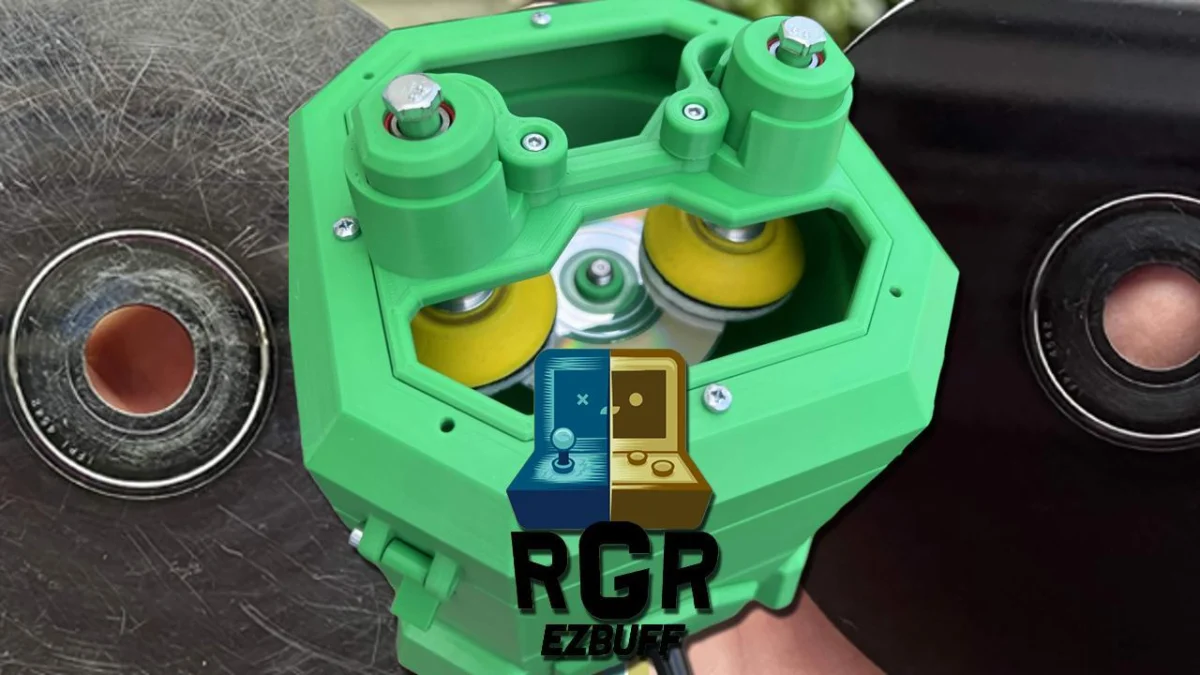
Dennis van den Broek, known within the enthusiast community as Pointer Function, has unveiled the RGR EZBuff, a groundbreaking fully open-source, optical disc buffer and resurfacer. This innovative project aims to democratize disc repair by offering a high-quality, low-cost solution accessible to hobbyists, collectors, and independent game stores alike. Released under an open-source license, the RGR EZBuff addresses a long-standing void in the market for affordable and effective disc maintenance tools, presenting a viable alternative to prohibitively expensive professional systems and often-ineffectual consumer-grade devices.
The proliferation of digital media in recent decades has not diminished the cultural and economic significance of physical optical discs, particularly within the burgeoning retro gaming and media collecting communities. From classic PlayStation titles and Sega CD games to beloved DVD movies and music CDs, these discs represent tangible pieces of history. However, their longevity is constantly threatened by the inevitable wear and tear of scratches, scuffs, and minor abrasions. These imperfections can lead to read errors, freezing, and ultimately render a disc unplayable, diminishing its value and sentimental importance.
The Pervasive Challenge of Disc Degradation
Optical discs, despite their robust appearance, are susceptible to various forms of damage. Scratches are the most common culprit, often accumulated through regular handling, improper storage, or accidental drops. While the data layer itself is usually protected beneath a layer of polycarbonate, deep scratches on the surface can scatter the laser light, preventing it from accurately reading the encoded information. Over time, even minor scuffs can aggregate, causing intermittent read errors that frustrate users.
Prior to the RGR EZBuff, individuals and small businesses faced a stark choice for disc repair. On one end of the spectrum were professional-grade machines, often costing upwards of $2,000. While highly effective, these units typically came with an additional per-disc fee for consumables, making them an unsustainable investment for small operations or individual collectors. Their operational costs and initial capital outlay effectively put them out of reach for the majority. On the other end were numerous low-cost, often manual, hand-cranked or battery-operated devices that gained popularity in the 1990s and early 2000s. These consumer-grade options, while inexpensive, were largely ineffective against anything more than superficial scratches and were notorious for their poor build quality and limited lifespan, often requiring frequent replacement of the entire unit or expensive proprietary pads. This left a significant gap for a reliable, economical, and effective solution.
Introducing the RGR EZBuff: A DIY Paradigm Shift
Dennis van den Broek’s RGR EZBuff project directly confronts this market inefficiency by leveraging the power of open-source hardware and 3D printing. The core philosophy behind the EZBuff is to provide a "quality disc polisher that’s affordable to buy or make." This is achieved through a design that utilizes readily available, off-the-shelf components, drastically reducing the barrier to entry. The enclosure for the machine is designed to be 3D printable, requiring only a single 1kg roll of filament—a common and inexpensive material for most home 3D printers. This approach not only minimizes manufacturing costs but also empowers users to build and maintain their own repair units.
The RGR EZBuff’s design supports both polishing and resurfacing functionalities, offering versatility crucial for addressing a range of disc damage. Initially configured with felt pads for polishing, which smooth out minor imperfections, the machine can be adapted for more aggressive resurfacing by swapping these pads with high-grit sandpaper. This modularity allows users to tackle deeper scratches that would be impervious to polishing alone. However, van den Broek wisely advises that for extensive resurfacing needs, constructing a second dedicated machine is preferable to avoid cross-contamination of polishing compounds with abrasive particles, thereby preserving the integrity of both processes. Even with the cost of building two units, the total investment remains significantly below that of the cheapest professional alternatives, making it an economically sound choice for businesses and serious collectors.

Technical Specifications and Assembly Insights
The RGR EZBuff’s reliance on readily available components is a cornerstone of its open-source ethos. While specific component lists are detailed on the project’s Printables page, the general design incorporates a motor, a power supply, and standard mechanical fasteners, all of which are widely accessible through electronics retailers or online marketplaces. The 3D printable enclosure, once printed, guides the user through a straightforward assembly process, akin to building a complex model kit. An assembly guide, featuring detailed diagrams, illustrates the step-by-step construction, emphasizing ease of assembly for individuals with basic mechanical aptitude. This "maker" approach not only reduces cost but also fosters a deeper understanding and appreciation of the device’s functionality.
The open-source nature extends beyond just the hardware. The project details available on Printables.com include all necessary files and instructions, enabling users to not only build the machine but also to understand its inner workings, modify it, or even contribute improvements back to the community. This collaborative model is a hallmark of successful open-source initiatives, promising continuous development and refinement driven by user feedback and innovation.
Safety Protocols and Best Practices
Van den Broek underscores the critical importance of safety and careful application, a warning pertinent to all disc repair methodologies, not exclusively the RGR EZBuff. Optical discs are not homogenous; they vary in thickness, material composition, and the amount of protective plastic available for removal before compromising the data layer. Therefore, an essential recommendation is to always "practice" on inexpensive, non-essential discs first. This allows users to develop a feel for the process, understand the machine’s behavior, and gauge the optimal duration and intensity for repair sessions without risking valuable media.
A "slow and steady wins the race" approach is strongly advocated. Users are advised to start the motor on a slow setting for only a minute per session, allowing both the machine and the disc to cool down between applications. This prevents excessive heat buildup, which can warp discs or degrade polishing compounds, and ensures a gradual material removal process. It is also crucial to manage expectations; while the RGR EZBuff is highly effective, some discs may be beyond repair due to severe damage or inherent manufacturing defects. Realistic assessment of disc condition before commencing repair is vital. The project’s detailed guidelines offer comprehensive advice on identifying irreparable damage, further enhancing user success and minimizing potential frustration.
Economic Impact and Market Implications
The RGR EZBuff is poised to significantly disrupt the niche market for optical disc repair. For independent retro game stores, which often rely on selling used games, the ability to effectively and affordably repair scratched inventory can translate into substantial cost savings and increased revenue. Instead of discarding damaged discs or selling them at a steep discount, stores can now restore them to playable condition, preserving their investment and offering a higher quality product to customers. The existing options for businesses were either prohibitively expensive professional kits with ongoing per-disc fees or unreliable consumer-grade devices that offered little return on investment. The EZBuff fills this critical gap, providing a durable, effective, and cost-efficient solution.
For individual collectors and enthusiasts, the EZBuff offers an unprecedented level of autonomy and control over their collections. The rising value of many retro games and media makes preservation a serious concern. A scratched disc can drastically reduce an item’s market value and, more importantly, its playability. With the RGR EZBuff, collectors can safeguard their investments and ensure the longevity of their cherished physical media, eliminating the need to send discs to third-party repair services or incur the cost of replacing rare titles. The ability to repair discs at home, using an open-source tool, aligns perfectly with the DIY spirit prevalent in many enthusiast communities.

The Broader Significance of Open-Source Hardware
The release of the RGR EZBuff exemplifies the profound impact of open-source hardware projects. By making the design files, schematics, and instructions freely available, van den Broek empowers a global community of makers, hobbyists, and small businesses. This model fosters innovation, collaboration, and rapid iteration. Users can adapt the design to their specific needs, contribute improvements, and share their experiences, creating a self-sustaining ecosystem of development.
Historically, the optical disc repair industry has been characterized by proprietary solutions and high entry costs. The RGR EZBuff challenges this paradigm, promoting transparency and accessibility. It underscores a growing trend in various technological fields where communities are taking control of their tools and infrastructure, moving away from closed ecosystems. This approach not only drives down costs but also ensures that the technology remains adaptable and relevant for years to come, independent of a single manufacturer’s business decisions.
The Creator’s Vision and Community Engagement
Dennis van den Broek’s motivation for creating the RGR EZBuff stems from a clear understanding of the challenges faced by the retro gaming community. His work under the alias Pointer Function has consistently contributed valuable resources and insights to the preservation and enhancement of classic gaming experiences. The interview with Dennis, linked by the original article, provides further context into his design philosophy, challenges faced during development, and his aspirations for the project’s impact. His dedication to open-source principles and community support is evident in the detailed documentation and the choice to host the project on platforms like Printables.com, making it widely discoverable and accessible.
Van den Broek also encourages community support for his ongoing projects through platforms like Ko-fi, recognizing that such ambitious open-source endeavors often require significant personal investment. His active presence on social media platforms like Twitter and Bluesky further facilitates direct engagement with users, allowing for real-time feedback and fostering a sense of community around the project.
Future Outlook and Adoption
While pre-made units of the RGR EZBuff are not yet commercially available, the open-source nature of the project means that this could change rapidly. Independent manufacturers or skilled individuals within the community might begin offering assembled units or kits, further expanding the reach of the EZBuff. The immediate availability of all necessary plans, however, allows anyone with access to a 3D printer and basic tools to construct their own machine today.
The RGR EZBuff represents a significant step forward in the ongoing effort to preserve physical media in the digital age. By providing an affordable, effective, and open-source solution for optical disc repair, Dennis van den Broek has not only addressed a critical market need but has also empowered countless individuals and small businesses to take control of their valuable collections. The project is expected to gain considerable traction within the retro gaming, media collecting, and maker communities, solidifying its place as an indispensable tool for future generations seeking to enjoy and preserve the rich legacy of optical disc media. Its impact could extend beyond mere repair, fostering a culture of self-reliance and technological literacy within these vibrant communities.