Cecilia Chamidah Nur
The co-founder of id Software, John Romero, has directly addressed a recent social media statement made by former id Software level designer Sandy Petersen, who attributed the financial struggles and eventual "gutting" of id Software, along with other prominent game companies, largely to video game piracy. Romero countered Petersen’s assertions, emphasizing that the situation surrounding DOOM‘s distribution and the broader challenges faced by the industry in the early 1990s were far more "complicated" than a simple blame on piracy, particularly given DOOM‘s pioneering shareware model.
The Catalyst: Petersen’s Provocative Piracy Allegations
The debate ignited over the past weekend when Sandy Petersen, known for his level design contributions to seminal titles like DOOM, DOOM II, and Quake, engaged with a Twitter/X account, "Video Game Nostalgia," which had solicited public opinions on the topic of video game piracy. Petersen’s response was unequivocal and strongly worded, advising video game pirates to "go f*k themselves." He posited, from his perspective as a veteran game designer active from 1988 to 2012, that piracy was directly responsible for the demise of numerous industry stalwarts, specifically naming "Atari, Amiga, Cinemaware, 3D Realms (Duke Nukem!)." More controversially, Petersen claimed that piracy was indirectly accountable for a significant wave of staff departures from id Software following the release of Quake*.
Petersen further elaborated on his claims regarding DOOM, stating that "70-90% of Doom’s players" had pirated the game. He suggested that had it not been for this widespread unauthorized copying, id Software would have accrued "so much more [money] for our workspace and upcoming projects," and critically, that "Quake may not have gutted id Software." These bold figures and direct accusations quickly drew considerable online scrutiny and disagreement, with many commentators pointing to alternative, often more systemic, factors for the decline of the mentioned companies and the internal shifts at id Software. A key counter-argument, notably echoed by Romero, was the integral role of free distribution in DOOM‘s marketing strategy.
Romero’s Rebuttal: The Nuance of Shareware and Unpaid Reach
John Romero, a pivotal figure in the creation of DOOM and the architect of its groundbreaking distribution model, swiftly responded to Petersen’s claims. He characterized historical narratives, particularly those concerning the complex economic forces at play in the early video game industry, as often "messier than ‘pirates killed the companies’." Romero specifically highlighted DOOM as a "complicated example" when discussing piracy, reminding Petersen of the fundamental role of the shareware approach in enabling DOOM‘s unprecedented global reach.
In his detailed social media post, Romero explained: "Regarding piracy, DOOM is a complicated example because shareware was the model. DOOM’s first episode was designed to be freely copied, passed around, uploaded, installed, and played. That enormous unpaid audience was not the same thing as piracy. It was part of how DOOM reached the world." He provided crucial statistics to underpin his argument: "By the mid-90s, DOOM had something like 20 million shareware installs and more than 2 million paid copies sold. Those 20 million people were not ‘pirates’ by default. A huge number of them were playing the free episode exactly as intended."
Romero further clarified the critical distinction, stating, "That doesn’t excuse people pirating the registered game. However, it’s important not to collapse legal shareware distribution, unpaid reach, and actual piracy into one number." He implied that Petersen’s high percentage figures for DOOM piracy likely conflated legitimate shareware users with actual pirates, thereby misrepresenting the economic reality and the strategic intent behind the game’s initial distribution.
Dissecting the Shareware Phenomenon: A Deeper Dive
To truly understand Romero’s perspective, it’s essential to delve into the shareware model, a unique and highly effective distribution strategy prevalent in the late 1980s and early 1990s, particularly for PC games. Unlike traditional retail models, shareware allowed developers to distribute a functional, often limited, version of their software for free. Users were encouraged to copy and share these "shareware" versions widely. If they enjoyed the software and wished to access the full features or subsequent episodes, they were expected to register and pay for the "registered" version.
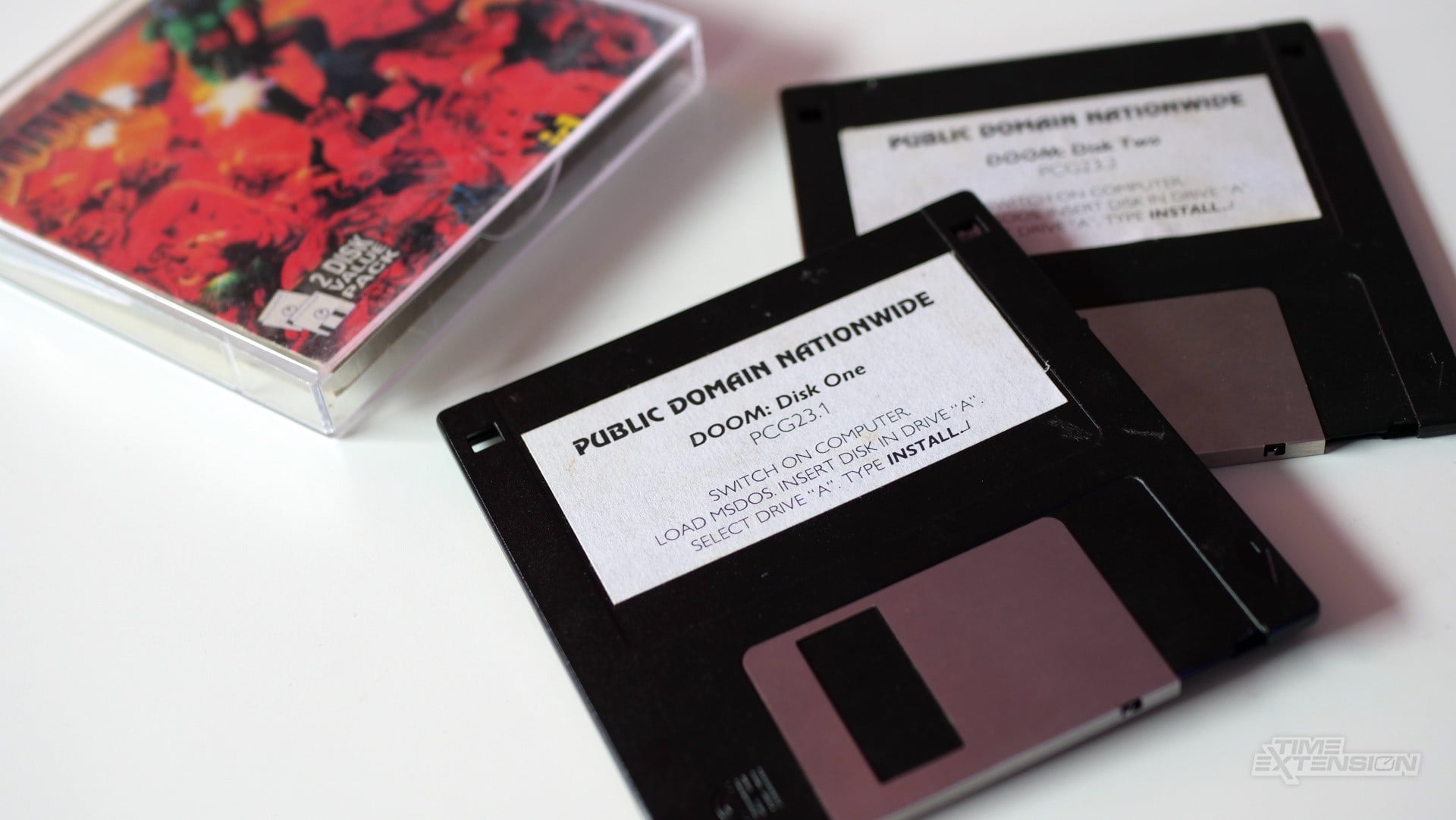
For DOOM, released in December 1993, this model was revolutionary. id Software released the first episode, "Knee-Deep in the Dead," as shareware. This wasn’t a demo; it was a complete, playable chunk of the game. The strategy was ingeniously viral: players would download it from bulletin board systems (BBSs), copy it onto floppy disks, and share it with friends. This organic, grassroots distribution allowed DOOM to penetrate homes and offices worldwide without a massive marketing budget, reaching an audience that traditional retail channels could never have achieved. The "unpaid reach" Romero refers to was the critical mass of users experiencing the game, many of whom would then be compelled to purchase the full version. The 2 million paid copies sold from an estimated 20 million shareware installs represent an impressive conversion rate for the era, demonstrating the model’s commercial viability and success. This was a deliberate marketing strategy, not an unintended consequence of piracy.
Beyond Piracy: Alternative Explanations for Industry Shifts
Romero also challenged Petersen’s assertion that piracy "gutted id," pointedly stating that "id is still around and still making games," referencing the company’s enduring legacy and continued output under Bethesda Softworks. While acknowledging that lost sales due to piracy of the registered game might have cost id money, Romero firmly asserted that "it wasn’t the reason Quake was hard or why people eventually went different ways." He even suggested that DOOM‘s innovative distribution model, by making it "impossible to ignore," might have paradoxically driven sales rather than solely detracting from them.
Petersen’s broad claims regarding the downfall of other companies like Atari, Amiga, Cinemaware, and 3D Realms also warrant a closer, fact-based examination. The demise or significant struggles of these entities are largely attributed to a confluence of factors far more complex than rampant piracy:
- Atari: Its decline in the early 1980s was primarily due to market saturation, a glut of low-quality games, and poor management decisions during the video game crash of 1983. While piracy existed, it was overshadowed by these systemic issues.
- Amiga: The Commodore Amiga line, while technically innovative, ultimately succumbed to fierce competition from the IBM PC compatible platform, internal corporate mismanagement at Commodore, and a failure to adapt to rapidly evolving industry standards and market shifts. Software piracy was certainly prevalent on the platform, but its role in the company’s collapse was secondary to strategic missteps and market forces.
- Cinemaware: Known for its innovative cinematic games, Cinemaware struggled with financial mismanagement, difficulty adapting to changing development costs, and an inability to transition successfully to newer, more expensive platforms.
- 3D Realms (Apogee Software): While 3D Realms faced challenges, including the famously protracted development of Duke Nukem Forever, its issues stemmed more from ambitious projects, extended development cycles, and creative differences rather than piracy solely. Apogee itself pioneered the shareware model before id Software, indicating a sophisticated understanding of distribution that mitigated some piracy risks.
These examples underscore Romero’s point: industry history is multifaceted, and attributing corporate failures solely to piracy often oversimplifies deeply rooted economic, technological, and managerial issues.
The Legacy of id Software and Creative Departures Post-Quake
The period following Quake‘s release in 1996 was indeed a time of significant transition for id Software, marked by the departure of key personnel, most notably John Romero himself, who left in 1996 to co-found Ion Storm. However, these departures were widely understood within the industry as a result of intense creative differences, particularly between Romero and John Carmack.
Carmack, a brilliant programmer, was increasingly focused on pushing technological boundaries, prioritizing engine development and graphical innovation. Romero, on the other hand, was more interested in game design, innovative gameplay mechanics, and exploring new intellectual properties. The grueling development cycles, the pressure to constantly innovate, and the divergent creative visions among the founders created an environment where collaboration became increasingly strained. Romero’s departure, and others that followed, were largely a consequence of these internal dynamics and the natural evolution of a highly successful, intensely creative, and demanding development studio. To attribute these "different ways" people went to piracy is to overlook the well-documented creative and personal tensions that shaped id Software’s post-Quake trajectory.
A Pattern of Correction: Romero and Petersen’s Historical Exchanges
This latest exchange is not an isolated incident but rather the latest chapter in an ongoing public dialogue, or rather, a series of corrections, from John Romero directed at Sandy Petersen. For years, Petersen has been known on social media for making a variety of bold and sometimes exaggerated claims regarding his contributions to DOOM‘s development. These claims have ranged from being solely responsible for designing the iconic E1M1 level (the first level of DOOM), to creating the game’s original backstory, and even saving the game’s shotgun from being cut.
Romero, known for his meticulous recollection of id Software’s history, has consistently, and usually with a polite preface such as "Hi Sandy, I hope you’re doing well," stepped in to publicly debunk or clarify these assertions. PC Gamer, a prominent gaming publication, has even amusingly tracked these instances, highlighting Romero’s consistent role in providing a more historically accurate account of DOOM‘s creation. This pattern suggests that Petersen’s recent piracy claims may stem from a similar tendency to present a simplified or personally amplified version of complex historical events.
Implications for Gaming History and Digital Distribution
The debate between Romero and Petersen offers valuable insights into the nascent days of digital distribution and the complex economics of the early PC gaming industry. It underscores the crucial distinction between legitimate, strategically planned free distribution (shareware) and outright piracy. Shareware, far from being a liability, was a powerful engine for virality and market penetration, especially for smaller studios lacking large marketing budgets. It was a calculated risk that paid off immensely for titles like DOOM.
This discussion also highlights the enduring challenge of quantifying the true impact of piracy. While piracy undeniably represents lost sales for creators, its overall effect is often debated, particularly in the context of games that gain massive exposure through free distribution. Some argue that a certain level of unauthorized sharing can act as a form of marketing, converting a segment of users into paying customers who might never have discovered the product otherwise.
Ultimately, Romero’s intervention serves as a critical historical correction, reminding the gaming community that the success and challenges of pioneering companies like id Software were products of innovative design, technological breakthroughs, shrewd business models, and complex human dynamics, rather than a singular, easily identifiable culprit like piracy alone. It reinforces the need for nuanced historical analysis, particularly when discussing the foundational moments of an industry now worth hundreds of billions of dollars. The legacy of DOOM stands not just as a testament to groundbreaking gameplay, but also to a revolutionary distribution strategy that forever changed how games reached their audience.