
 Jia Lissa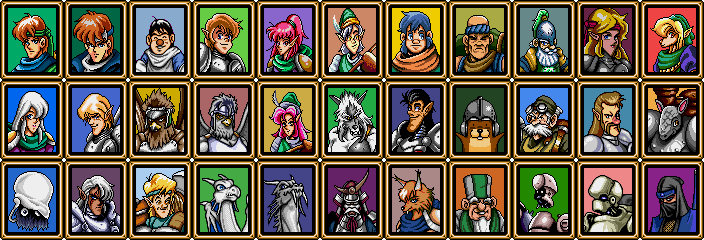
The release of Shining in the Darkness in March 1991 marked a pivotal moment for the Japanese development studio Climax and its publisher, Sega. While the debut title was a first-person dungeon crawler that exceeded sales expectations, particularly in overseas markets, its successor would take a radical departure in gameplay style, ultimately defining the tactical role-playing game (RPG) genre for the 16-bit era. Shining Force was not merely an expansion of the lore established in its predecessor; it was the catalyst for a franchise that would span decades and multiple hardware generations, despite a burgeoning internal rift between the studio and Sega’s corporate management.
Strategic Evolution: From Dungeons to Tactical Combat
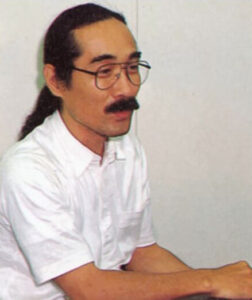
At the dawn of the 1990s, Sega was aggressively seeking to bolster its RPG portfolio to compete with Nintendo’s dominance in the genre. While titles like Phantasy Star II and Sword of Vermilion had established a foothold, Sega of Japan recognized a growing appetite for deeper, more complex narratives. Hiroyuki Takahashi, the founder of Climax, envisioned a project that moved away from the claustrophobic corridors of dungeon crawlers toward a grander, more cinematic experience.
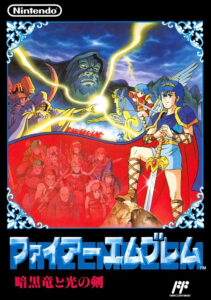
Takahashi’s philosophy was driven by a dissatisfaction with the existing strategy games of the era. He noted that contemporary titles, including Nintendo’s Fire Emblem, often felt like digitized board games with sluggish pacing and minimal character development. His inspiration instead came from the 1988 PC88 title Silver Ghost, developed by Kure Software Koubou, which featured real-time management of multiple characters. Takahashi sought to blend this tactical depth with the robust storytelling and character-driven drama found in Enix’s Dragon Quest series, where he had previously served in public relations and marketing.
The development of Shining Force introduced the concept of "distance" to the turn-based RPG formula. By incorporating terrain, formations, and varying movement ranges, Climax expanded the tactical choices available to the player. Unlike traditional RPGs where combatants stood in static lines, Shining Force required players to consider the battlefield as a dynamic environment.
Corporate Restructuring and the Birth of Sonic Co., Ltd.
As the scope of RPG development grew, Takahashi realized that Climax lacked the internal capacity to produce multiple high-quality titles annually. In June 1991, a joint venture between Sega and Climax led to the formation of Sonic Co., Ltd. This new entity was tasked with planning, market research, and marketing for Sega’s 16-bit and portable platforms.
The company was established with an initial investment of 40 million yen. Sega held an 85 percent majority stake, while Climax held 6.25 percent and Takahashi personally held the remaining 4 percent. The naming of the company was a strategic move by Sega CEO Hayao Nakayama, who chose "Sonic" over other mascot candidates like "Opa-Opa" or "Alex Kidd" to align with the high-profile promotion of Sega’s new mascot.
Sonic Co. served as a production agent, recruiting specialists from outside the gaming industry to handle story and art. This included Kenji Orimo, a director with deep ties to the manga industry. This collaborative approach allowed Climax to work on Shining Force while simultaneously developing Landstalker, a third chapter in Takahashi’s "Shining" trilogy that utilized the proprietary "Diamond Shaped Dimension System" (DDS520) for isometric gameplay.
Technical Innovations and the 12-Megabit Barrier
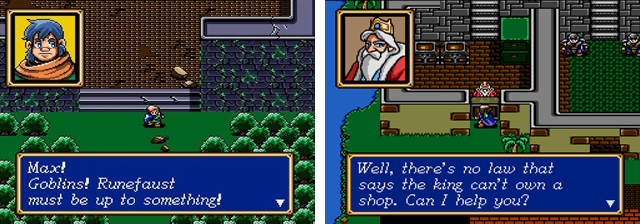
The ambition of Shining Force presented significant technical hurdles. Originally conceived as a lighter project for the Game Gear, the game’s scale quickly outgrew the portable’s limitations. When development shifted to the Mega Drive (Genesis) in March 1991, the team initially aimed for a 4-megabit cartridge. However, the requirement for animated battle scenes and a massive cast of characters necessitated an upgrade to 12 megabits—the largest cartridge size for any Mega Drive game at the time.
To manage this data, Climax programmers Yoshinori Tagawa and Haruki Kodera developed advanced compression routines. While standard compression typically achieved a 50 percent reduction, the Climax team refined their tools to compress graphics to 22 percent of their original size. This technical feat allowed for:
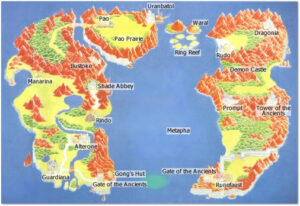
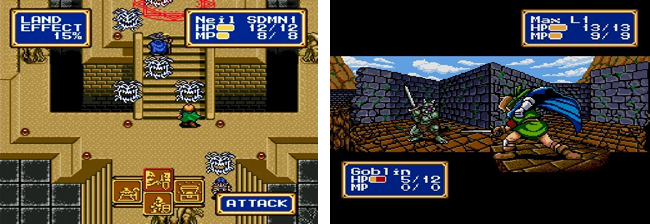
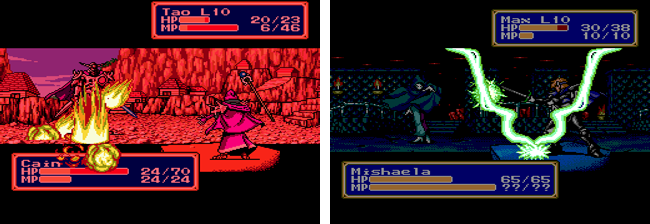
- Cinematic Battle Animations: Each character and enemy featured unique, large-scale sprites and attack patterns viewed from multiple angles.
- Diverse Terrain: The game included 31 unique battle screens across 29 different encounters, ranging from naval vessels to mountain passes.
- Advanced AI: Enemies were programmed to make complex tactical decisions—such as targeting weakened units or protecting their leaders—within a single second of processing time.
The battle system also moved away from the "phased" turn-based system typical of strategy games. Instead, turn order was determined by an "agility" stat, allowing for a more fluid and unpredictable combat flow where allies and enemies were interspersed in the turn queue.
Artistic Direction and Character Design
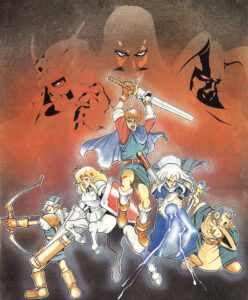
Yoshitaka Tamaki, the lead artist, shifted the series’ visual tone from the "Disney-like" caricatures of Shining in the Darkness to a more realistic manga style. This was intended to convey the gravity of the game’s plot, which involved a world at war and the threat of the Dark Dragon’s resurrection.
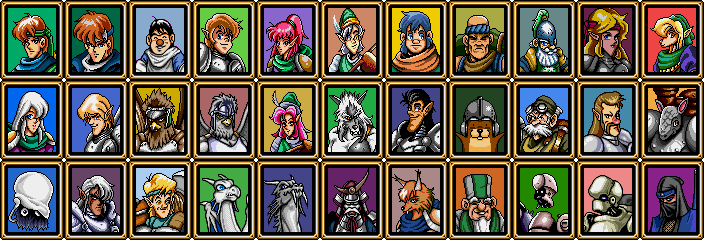
The game featured an eclectic cast of over 30 playable characters from 10 different races, including centaurs, birdmen, and wolflings. This diversity was partly born of necessity; Tamaki famously admitted that he struggled to draw men on horseback, leading him to design the "Royal Knights" as centaurs to bypass the anatomical difficulty.
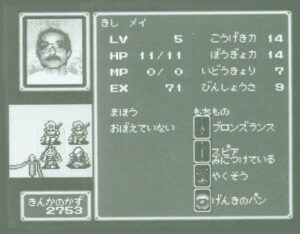
One of the most enduring elements of the game’s design was the inclusion of Jogurt (Yogurt), a hamster-like creature that began as a graphics test. Programmers had been using photos of staff members as placeholders in the status windows. When they requested a character design from Tamaki, he provided a doodle of a hamster. Despite having no combat utility—dealing only one point of damage—Jogurt became a fan favorite and a recurring mascot for the studio.
The Sound of the Force
Masahiko Yoshimura, who had composed the score for the first game, returned for Shining Force. His work was characterized by noble, orchestral themes that pushed the FM synthesis capabilities of the Mega Drive’s Yamaha YM2612 sound chip. However, Yoshimura was notoriously dissatisfied with the hardware’s output, believing it failed to capture the beauty of his compositions. This dissatisfaction led him to record orchestrated versions for a standalone CD release.
Yoshimura’s departure after Shining Force remains a point of mystery within the industry. While his themes defined the early identity of the franchise, subsequent titles were handled by Motoaki Takenouchi. Yoshimura’s legacy remains tied to the noble, determined melodies that accompanied Max and the Force on their journey through the continents of East and West Rune.

Market Reception and the Sega-Climax Fracture
Shining Force was officially announced during a Sega press conference on August 27, 1991. While the game was a critical darling upon its March 1992 release in Japan and its 1993 release in the West, sales data suggests it reached approximately 200,000 copies worldwide. While these numbers were respectable, they did not surpass the performance of Shining in the Darkness, a fact some analysts attribute to the niche appeal of strategy games in the early 90s.
Behind the scenes, the relationship between Climax and Sega began to deteriorate. Takahashi later revealed that Sega’s management structure became increasingly focused on profit margins, viewing Climax as an "unruly subsidiary." Despite the critical success of the Shining series, the studio operated on minimal budgets that barely covered development costs. This friction eventually led to the franchise being moved to other teams for later installments, and the Dreamcast famously became the only major Sega platform not to receive a mainline Shining Force entry.
Chronology of Development
- April 1990: Climax Co., Ltd. is founded by Hiroyuki Takahashi.
- March 1991: Shining in the Darkness is released; work begins on a Game Gear follow-up.
- June 1991: Sonic Co., Ltd. is established as a joint venture with Sega.
- August 1991: Shining Force is officially announced for the Mega Drive.
- December 1991: The final 12Mb ROM is submitted to Sega for production.
- January 1992: The game is showcased at the Winter CES in Las Vegas.
- March 27, 1992: Shining Force launches in Japan.
- 1993: The game receives a localized release in North America and Europe.
Legacy and Broader Impact
Shining Force’s primary achievement was the democratization of the tactical RPG. By removing the complexity barriers common in PC-based strategy games and focusing on a cinematic, character-driven narrative, Climax created a blueprint that would be followed by numerous other franchises.
The game’s lore, which established the recurring villain Darksol and the "Reading Girl" (Simone), created a foundation for sequels on the Game Gear (Shining Force Gaiden), Sega CD (Shining Force CD), and the Saturn (Shining Force III). Even after the departure of the original Climax staff, the "Shining" brand remained one of Sega’s most valuable intellectual properties, leading to a 2004 remake for the Game Boy Advance titled Resurrection of the Dark Dragon.
Ultimately, Shining Force remains a testament to the creative synergy between Takahashi’s vision, Tamaki’s art, and the technical prowess of the Climax programming team. It transformed a simple dungeon-crawling spin-off into a sprawling epic of 16-bit tactical warfare, securing its place as a cornerstone of the Sega Genesis library.








