Cecilia Chamidah Nur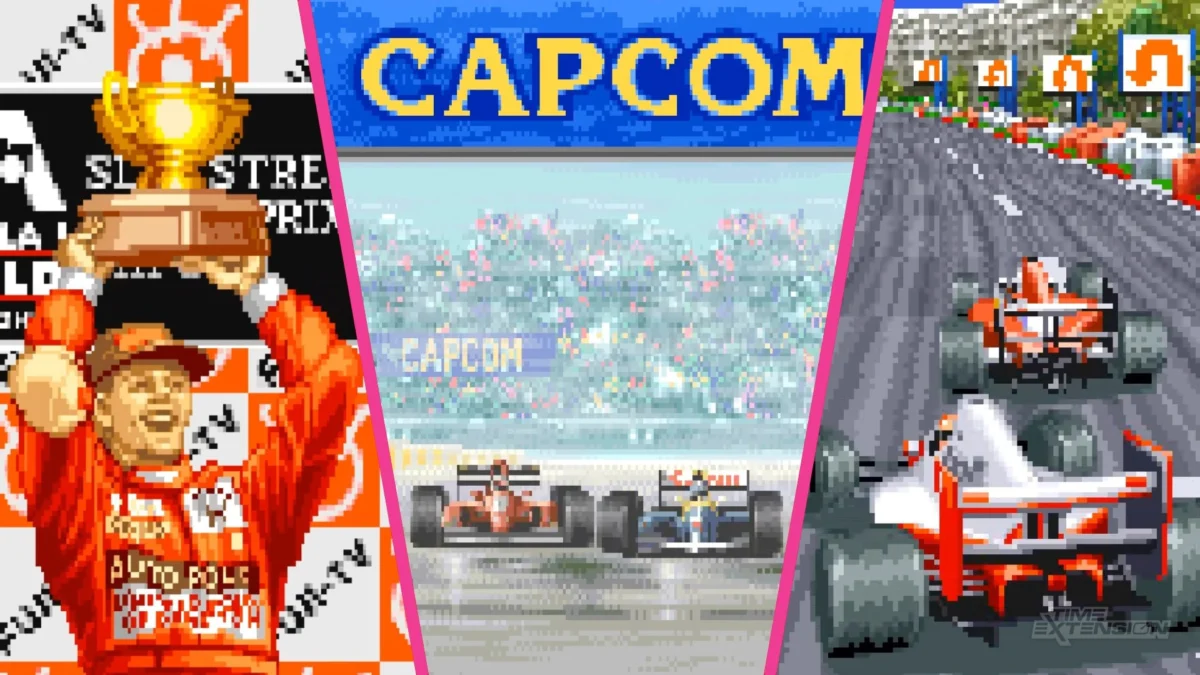
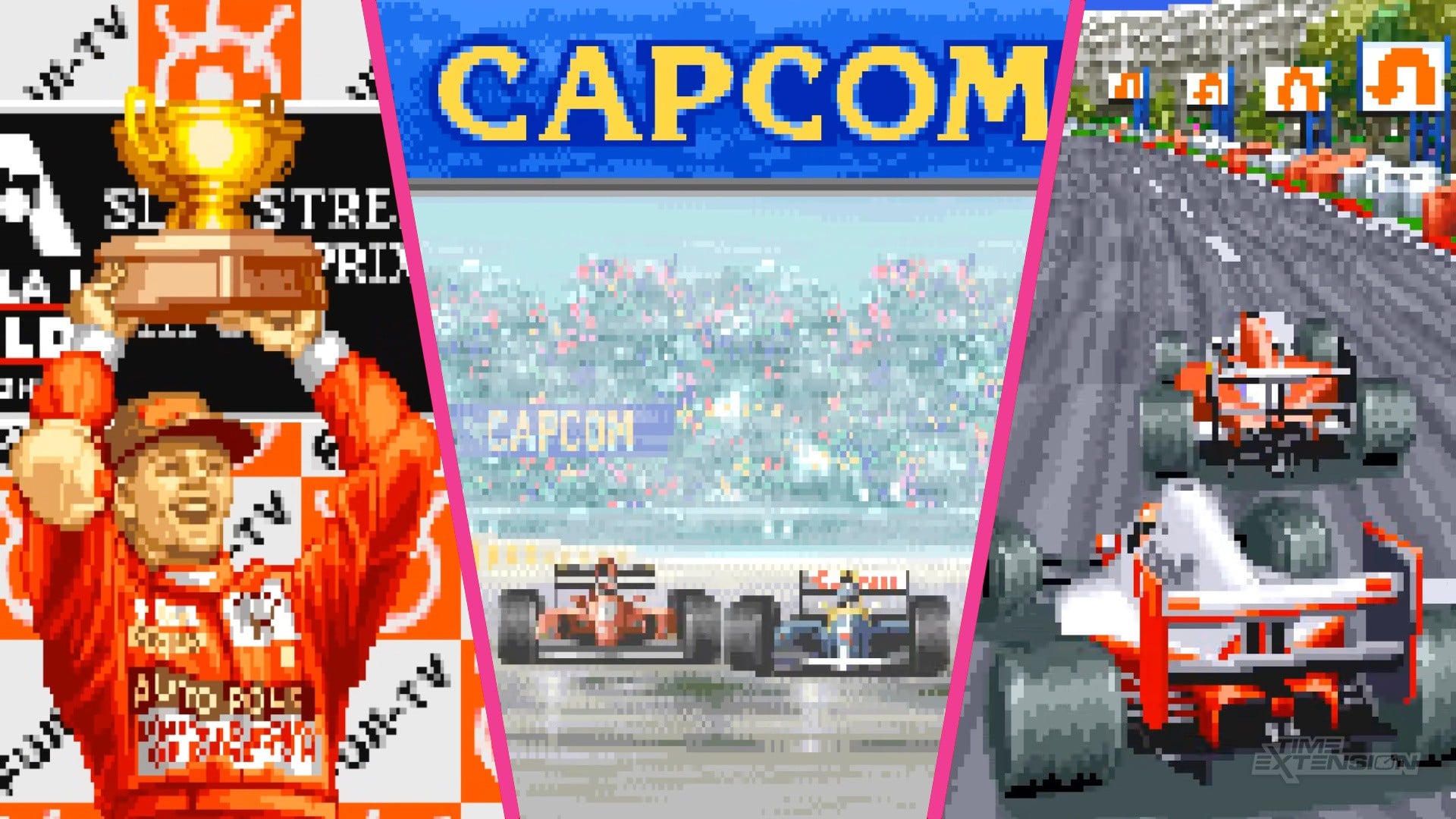
For enthusiasts dedicated to the preservation and exploration of retro gaming, the pursuit of lesser-known titles with compelling backstories is a constant endeavor. Among these hidden gems, Capcom’s Slip Stream stands out as a particularly intriguing case, a Super-Scaler F1-style arcade racing game shrouded in mystery, believed to have seen an exclusive release in Brazil and potentially other Hispanic countries in the mid-1990s. Its rarity is legendary, with online communities often citing production numbers as low as 150 Printed Circuit Boards (PCBs), making it an elusive artifact even for the most ardent Capcom superfans.
The Genesis of an Oddity: Capcom’s Venture into Sega Hardware
At a time when the arcade landscape was rapidly transitioning towards polygon-based 3D graphics, championed by titans like Namco’s Ridge Racer (1993) and Sega’s Daytona USA (1994), Slip Stream opted for a different path. Developed by Capcom in Japan, it was unique for being the only third-party game ever created for Sega’s powerful System 32 hardware. This 32-bit arcade board, known for its exceptional 2D sprite scaling and rotation capabilities, powered many of Sega’s own visually impressive titles, such as OutRunners, Alien 3: The Gun, and Rad Mobile. For Capcom, a company primarily celebrated for its fighting game franchises like Street Fighter, this foray into a racing genre on a rival’s specialized hardware was an unusual strategic move. The decision to leverage Sega’s System 32, rather than Capcom’s own CPS-2 board, hints at potential technical advantages or perhaps early partnership discussions, adding a layer of complexity to the game’s origins.
The choice of advanced 2D Super-Scaler graphics for Slip Stream, while technically sophisticated, positioned it distinctively against the nascent 3D revolution. While polygon models offered a new frontier in visual realism, advanced 2D scaling allowed for incredibly fluid motion, vibrant sprites, and a strong sense of speed, often surpassing early 3D efforts in sheer graphical fidelity and art direction. This artistic choice, praised by contemporary Brazilian reviewers, would later be seen as a strength, contributing to its timeless visual appeal.
Brazil’s Unique Gaming Landscape in the Mid-1990s
To understand Slip Stream‘s peculiar release, one must consider the distinctive economic and regulatory environment of Brazil’s gaming market in the 1990s. High import tariffs and a challenging distribution network often led to unique local market strategies. Companies like Tec Toy, Sega’s official representative in Brazil, and Romstar do Brazil, Capcom’s official representative, played crucial roles in navigating these complexities. These entities frequently engaged in local manufacturing, distribution, and even localized content, creating a vibrant, albeit often isolated, gaming culture. It was within this dynamic context that Slip Stream found its unlikely home.
The journey to document Slip Stream‘s history began for this author with the chance discovery of online gameplay footage a few years prior. However, it was after completing an article on Nintendo’s history in Brazil that the idea to delve into Slip Stream‘s story truly took hold, fueled by a desire to deepen understanding of the country’s rich gaming past. This sparked an ambitious investigative plan, targeting key figures involved in the game’s production and distribution.
The Investigative Journey: Unearthing Slip Stream‘s Secrets
Initial outreach included Yoshiki Okamoto, the game’s producer, a legendary figure in the industry known for his work at Konami and Capcom. Unfortunately, Okamoto-san, while expressing genuine nostalgia for the project, politely declined involvement without Capcom’s official approval, which proved unattainable within the publication timeline. His sentiment, however, underscored the game’s significance to its creators, hinting at a story waiting to be told.
The breakthrough came through Pablo Miyazawa, an invaluable source from the Nintendo Brazil article, who connected the author with Fabio Santana. Santana, a former EGM Brasil editor, ex-Capcom LATAM public relations manager, and a collector who owned several Slip Stream arcade boards, proved to be a treasure trove of information. Despite not having first-hand experience with the game’s development during his Capcom tenure, Santana had conducted extensive research, accumulating a wealth of photos, magazine clippings, and videos.
Santana’s materials quickly pointed to an article in Acao Games from October 1995, revealing Slip Stream‘s public debut at Salex (South America Leisure Exhibition) in August 1995 in São Paulo, Brazil. This event showcased Capcom’s formidable presence, boasting the largest stand at the fair (600 m²), 90 arcade machines, and even actors portraying Street Fighter characters, underscoring Capcom’s significant investment in the Brazilian market. Slip Stream was prominently displayed alongside other new cabinets like Cyberbots and Street Fighter Zero. Acao Games described it as "a racing game set in the 1993 F1 season, which was partly developed by Sega," a detail that further emphasized the unique hardware collaboration.
Public Debut and Contemporary Reception
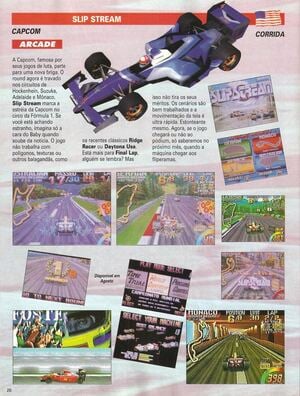
Brazilian gaming magazines provided the most detailed contemporary accounts of Slip Stream. SuperGamePower Issue 17, published in August 1995, also featured a preview. The magazine expressed surprise at Capcom’s venture into the Formula 1 "circus," a genre departure for the fighting game giant. While acknowledging its lack of "polygons" and "other bells and whistles" compared to the likes of Ridge Racer and Daytona USA, it likened Slip Stream instead to Namco’s Final Lap, a successful 2D Super-Scaler racer. Crucially, the review concluded that the absence of 3D graphics was inconsequential, praising the "well-crafted" scenery and "lightning fast" on-screen action. Similarly, a review in Videogame magazine (July 1995) lauded its graphics as "well done, with a good sense of 3D and astonishing speed."
This consistently positive reception by Brazilian journalists makes Slip Stream‘s global obscurity all the more perplexing. Evidence on The Cutting Room Floor, a wiki dedicated to unused and cut content in video games, suggests Capcom had intended a US and Japanese release, but for unknown reasons, these plans never materialized. One theory posits that Capcom might have feared a less forgiving reception for a 2D racer in markets already saturated with cutting-edge 3D experiences. Ironically, its 2D graphics have aged remarkably well, retaining a distinctive aesthetic charm. An old Capcom website reference further complicates the narrative, stating that the game’s development was initially halted but later revived upon request, hinting at a complex internal and external decision-making process.
Unraveling the Mystery of Limited Distribution
The quest for answers led to Cleber Marques, another Slip Stream machine owner, author of a Street Fighter book, and historian who had dedicated a chapter to the game. Marques vividly recalled first hearing about Slip Stream in Brazilian magazines in the ’90s but never encountering an arcade cabinet until 2018, when he purchased one for his store, Mundo WarpZone. His personal journey mirrored the game’s enigmatic status: a known entity in print, yet virtually invisible in practice. Marques highlighted its status as "a rare piece in the history of video games in Brazil," lamenting its small distribution and advocating for its inclusion in a modern console collection.
Marques introduced the author to Silvio Puertas, former marketing & licensing coordinator for Romstar do Brazil, Capcom’s official representative. Puertas was directly responsible for introducing Slip Stream to the Brazilian market, making him the most crucial source for understanding its unique trajectory. Though initial independent attempts to reach Puertas were unsuccessful, Marques graciously facilitated communication, relaying questions and securing invaluable insights.
Puertas provided critical context regarding Romstar’s operations in Brazil, explaining their initial shared-operation model from 1993, where the company owned machines and leased them to operators, splitting revenue. Subsequently, Romstar expanded to PCB leasing and direct sales.
Regarding Capcom’s choice of Sega hardware, Puertas could not recall the precise "strategic considerations" but offered a compelling theory: a planned joint venture between Romstar do Brazil and Sega’s representative, Tec Toy. This ambitious project aimed to establish a chain of arcades named "Sega Arcade," with Slip Stream being one of the featured titles. Work began on the first location at Beto Carreiro World theme park. However, the partnership with Tec Toy ultimately fell through, leading the project to become "Planet Arcade" and later "Sports Arcade," a chain with fewer than 10 locations, according to another Romstar source, Mitikazu Lisboa. Stefano Arnhold, former Tec Toy CEO, confirmed discussions with Romstar about opening arcade shops but recalled few details, lending further credence to Puertas’s account. This failed joint venture likely had significant implications for Slip Stream‘s broader distribution plans.
When questioned about concerns regarding releasing a 2D racer against the backdrop of Ridge Racer and Daytona USA, Puertas offered a pragmatic explanation: "Not that we at Romstar do Brasil were aware of it. This game was a more economically viable option than the more sophisticated 3D games and simulators emerging at the time. In other words, it targeted a different market." This strategic positioning likely aimed at operators with budget constraints or smaller venues, where the investment in a less expensive, yet visually engaging, 2D racer made more sense. Puertas further explained that in the Brazilian market, "the limitations were, in fact, logistical (transportation and space), since the cabinet took up more space at the arcade and in transport vehicles." This logistical challenge contributed to the gradual decline of large-footprint machines like pinball in smaller arcades.
Indeed, Puertas asserted that the cabinet’s considerable size was a primary reason for its extremely limited production. He stated, "production was made-to-order, and the machine used a cabinet that wasn’t easily adaptable to most popular arcades." This bespoke production model, coupled with the logistical hurdles, directly explains the reported rarity of approximately 150 PCBs.
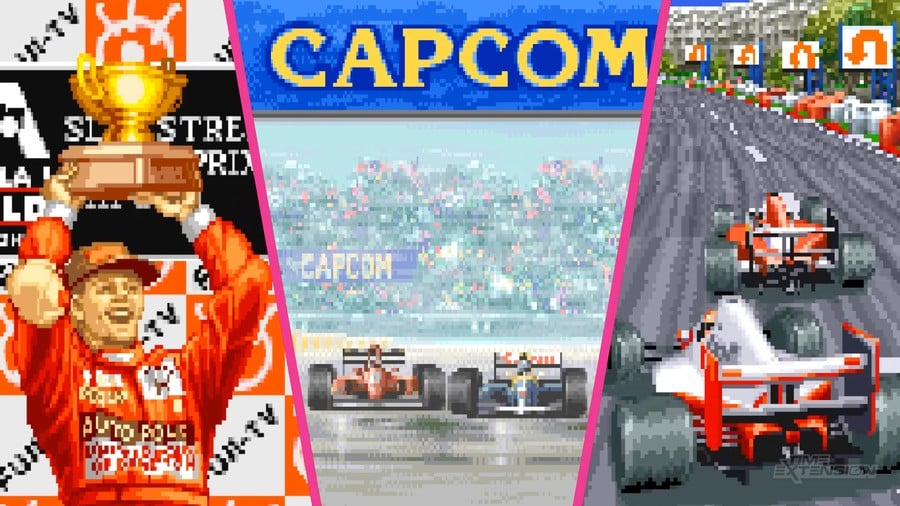
Puertas also theorized on why the game’s development might have been halted and later revived, suggesting "trademark licensing issues." He elaborated, "When it comes to F1, licensing costs are extremely high, and there are several teams with demands that are sometimes quite specific, which makes negotiations difficult." This explanation aligns with the final game being unlicensed, despite clear in-game evidence of intended F1 branding. Slip Stream features recreations of the 1993 Benetton, McLaren, Ferrari, and Williams cars, alongside four tracks based on real-world circuits from the 1993 season: Hockenheim, Suzuka, Adelaide, and Monaco. The Cutting Room Floor also found evidence of additional Belgian and USA tracks, suggesting an even more ambitious initial scope. It’s plausible that following Tec Toy’s withdrawal from the "Sega Arcade" deal and the escalating difficulties in F1 licensing negotiations, Capcom in Japan initially deemed the project unviable, only to revive it with a reduced scope once Romstar’s own arcade chain was operational, offering a guaranteed, albeit limited, distribution channel.
The Ayrton Senna Connection: A Missed Opportunity

Remarkably, Slip Stream‘s licensing woes extended beyond F1 teams. Puertas revealed another fascinating, albeit ultimately failed, licensing endeavor involving Senna Brands (then Senna Licensing). The team pursued negotiations to include an audio clip of legendary Brazilian Formula 1 driver Ayrton Senna narrating a lap around the Interlagos circuit for a machine demo. The proposed clip famously included Senna’s line, "Now we’re entering the turn… Whose turn? Senna’s!" This narration had been recorded for a sports program years earlier.
Puertas clarified that these negotiations, handled by Capcom rather than Romstar, took place after Senna’s tragic death in May 1994, underscoring the enduring power of his legacy in Brazil and Japan, where he had a massive fan base. Ultimately, the project was deemed financially unviable, complicated further by the fact that TV Globo held the rights to the original recording, requiring additional negotiations.
Senna’s profound connection to video games is well-documented, most notably as the star of Sega’s Ayrton Senna’s Super Monaco GP II. He also famously lifted a Sonic trophy at the Sega-sponsored 1993 Formula One European Grand Prix. The idea that Capcom, little more than a year after his passing, considered incorporating his voice into Slip Stream adds a poignant layer to the game’s narrative, showcasing the profound cultural impact of the racing icon.
Legacy and Preservation
The investigation into Slip Stream reveals it not just as a rare arcade game, but as a fascinating nexus of international business strategies, technological shifts, and cultural nuances within the mid-90s gaming industry. Its existence is a testament to the complexities of global game distribution and the unique market dynamics of countries like Brazil.
While the definitive answers to all of Slip Stream‘s mysteries remain elusive, the collective efforts of collectors, historians, and former industry insiders have pieced together a compelling narrative. The game’s status as a well-regarded title in its time, contrasted with its extreme rarity and non-existent global release, solidifies its place as one of Capcom’s most peculiar arcade entries.

Fortunately, Slip Stream has not been entirely lost to time. Though it has never seen an official rerelease – a missed opportunity for modern console collections, particularly for the Nintendo Switch, as Cleber Marques suggests – it is playable via MAME (Multiple Arcade Machine Emulator). This digital preservation ensures that despite its incredible rarity, future generations of gamers and historians can still experience this unique piece of Capcom and arcade history. The story of Slip Stream serves as a powerful reminder of the countless untold stories within gaming’s vast archive, waiting for dedicated enthusiasts to bring them to light.