
 Farhan hamdan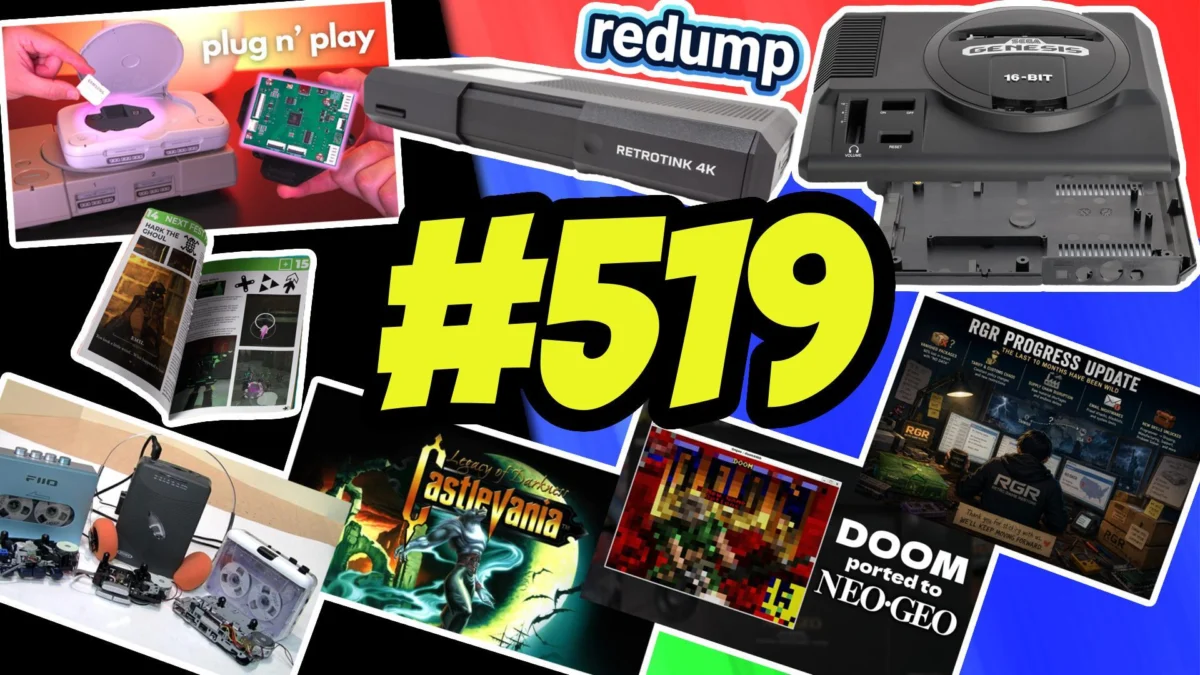
The retro gaming community buzzed with a confluence of significant developments this past week, spanning innovative hardware releases, crucial software updates, and pivotal preservation efforts. Highlights included the expansion of JAMPAK’d magazine’s distribution, the unveiling of new replacement shells for the Sega Genesis, and a significant firmware update for the highly anticipated RetroTINK 4K video upscaler. Enthusiasts also keenly followed news of a Castlevania 64 recompilation, the debunking of a long-standing cassette mechanism myth, and a compelling demonstration of the ArcStation Optical Drive Emulator for the PlayStation 1. Further technical marvels emerged with the porting of Doom to the Neo Geo, alongside important status updates from Retro Game Restore and the launch of a new website for the essential preservation project, Redump. These events collectively underscore the vibrant innovation and dedicated passion driving the retro gaming scene forward, ensuring classic hardware and software continue to thrive in the modern era.
Expanding Horizons for Retro Gaming Media: JAMPAK’d Magazine’s Wider Reach
The independent retro gaming publication, JAMPAK’d magazine, announced a significant expansion of its distribution network this week, a move set to bring its curated content to a broader audience of enthusiasts. Spearheaded by content creator EposVox, JAMPAK’d has quickly carved a niche for itself by focusing on in-depth articles, exclusive interviews, and high-quality photography, catering to a community increasingly seeking tangible, physical media in an overwhelmingly digital landscape.
Background and Context:
The resurgence of physical magazines in specialized niches like retro gaming reflects a broader trend among enthusiasts who appreciate the tactile experience and collectible nature of printed materials. In an era dominated by YouTube videos and online articles, a well-produced physical magazine offers a different kind of engagement, often seen as a more permanent and curated form of content. JAMPAK’d’s entry into this space was met with enthusiasm, promising a blend of nostalgia and contemporary retro gaming perspectives. The magazine’s initial distribution was primarily direct-to-consumer and through a limited number of specialty retailers.
Supporting Data and Implications:
The decision to expand distribution channels indicates a healthy demand for JAMPAK’d, suggesting that the initial print runs were successful and that there’s a wider market eager for its content. This expansion could involve partnerships with larger magazine distributors, entry into major bookstore chains, or increased presence in international markets. For the retro gaming community, this means easier access to a valuable resource that documents and celebrates the culture. It also signifies a growing maturity in the independent retro media ecosystem, demonstrating that quality content can find sustainable models beyond purely digital platforms. The move also potentially sets a precedent for other independent creators looking to diversify their content delivery methods, validating the continued appeal of physical media as a premium offering. This strategic growth positions JAMPAK’d not just as a publication, but as a significant voice shaping the discourse within the retro gaming community.
Revitalizing Classics: New Replacement Shells for the Sega Genesis
A critical development for console restoration enthusiasts this week was the introduction of new replacement shells for the venerable Sega Genesis console. These aftermarket components offer a vital solution for owners of aging hardware, whose original plastic casings often suffer from significant wear, discoloration, and structural degradation over decades of use.
Background and Context:
The Sega Genesis, known as the Mega Drive in many regions, was a cornerstone of the 16-bit console wars, launching in 1988 in Japan and 1989 in North America. Millions of units were sold worldwide, making it one of the most iconic consoles of its era. However, the ABS plastic used in its construction, while durable for its time, is susceptible to various forms of degradation. Exposure to UV light can cause yellowing, a process exacerbated by flame retardant chemicals often added to plastics in that period. Additionally, general wear and tear, accidental drops, and environmental factors can lead to cracks, scratches, and missing pieces, diminishing the console’s aesthetic appeal and protective integrity. For collectors and enthusiasts, maintaining the pristine condition of their consoles is paramount, but sourcing original, undamaged shells has become increasingly difficult and expensive.
Manufacturing and Quality:
The new replacement shells are reportedly manufactured using modern injection molding techniques, often employing high-quality virgin ABS plastic designed to be more resistant to yellowing and brittleness than their original counterparts. These new shells typically aim for a precise fit, mirroring the original console’s dimensions and internal mounting points, ensuring compatibility with existing internal components. The availability of various color options, beyond the original black, also offers modders and customizers new avenues for personalization.
Implications for Preservation and Customization:
The release of these shells is a boon for the console modding and restoration community. It enables enthusiasts to breathe new life into cosmetically damaged but internally functional Genesis consoles, preserving them for future generations. This not only enhances the visual appeal of restored systems but also protects the delicate internal electronics. Furthermore, it empowers customizers to create unique, personalized consoles without sacrificing an original, pristine shell. The economic impact is also noteworthy, as it reduces the cost and effort associated with finding donor consoles for parts, making restoration projects more accessible. This development reinforces the strong aftermarket support for classic consoles, driven by a dedicated community committed to celebrating and extending the life of vintage hardware.
Enhancing the Visual Experience: RetroTINK 4K Official New Menu Unveiled
The acclaimed RetroTINK 4K, a premium video upscaler for retro gaming consoles, received a significant enhancement this week with the official release of its new menu system. This update is poised to substantially improve the user experience, making the device’s advanced features more accessible and intuitive for a broader range of users.
Background and Context:
The RetroTINK 4K, developed by hardware engineer Mike Chi, stands at the forefront of retro video processing. It is designed to take the low-resolution, often analog, video signals from classic consoles and upscale them to modern 4K resolutions with minimal latency and superb image quality. This process involves complex algorithms for deinterlacing, scaling, and color correction, allowing games designed for CRT televisions to look stunning on contemporary displays. Given the device’s sophisticated capabilities, the user interface (UI) plays a critical role in its usability. Previous iterations, while functional, often required users to navigate through extensive menus or understand complex technical jargon to optimize settings.
Key Features of the New Menu:
While specific details of the menu’s new features would require direct consultation of the release notes, such updates typically include:
- Streamlined Navigation: Reorganizing menu options into more logical categories, reducing the number of steps required to access common settings.
- Visual Enhancements: Improved graphical interface, potentially with clearer icons, larger fonts, and better color schemes for readability.
- Contextual Help: On-screen explanations or tooltips to clarify the function of various settings, assisting users who may be less familiar with advanced video processing terminology.
- Preset Management: Easier saving, loading, and sharing of custom video presets, allowing users to quickly switch between optimized settings for different consoles or games.
- Real-time Feedback: More immediate visual feedback when adjusting parameters, helping users see the impact of their changes instantly.
Implications for Users and the Market:
The new menu is a crucial step in democratizing access to the RetroTINK 4K’s powerful capabilities. For experienced users, it means a more efficient workflow and quicker adjustments. For newcomers, it lowers the barrier to entry, allowing them to enjoy pristine retro gaming visuals without being overwhelmed by technical complexities. This firmware update reinforces RetroTINK’s commitment to user satisfaction and continuous improvement, solidifying the device’s position as a leading solution in the high-end retro video market. Enhanced usability can also lead to increased adoption, as more players become comfortable with integrating such sophisticated hardware into their setups. The ongoing evolution of the RetroTINK 4K, particularly through user-centric updates like this, exemplifies the dynamic nature of the retro hardware development scene.
A New Lease on Life: Castlevania 64 Decompilation Project Advances
The dedicated community of retro gaming preservationists and developers celebrated a significant milestone this week with progress reported on the recompilation project for Castlevania for the Nintendo 64. This ambitious endeavor aims to recreate the game’s source code, offering unprecedented opportunities for porting, modding, and long-term preservation of the classic title.
Background and Context:
Castlevania 64, released in 1999, marked the franchise’s first foray into 3D gaming. While it received mixed reviews at the time, it holds a unique place in the series’ history and among N64 enthusiasts. Decompilation is the process of reverse-engineering a compiled program (like a game’s executable code) back into a high-level programming language (like C or C++). Unlike emulation, which simulates the original hardware, a successful decompilation yields a functional, human-readable source code. This source code can then be compiled natively for modern platforms, allowing for true "ports" rather than emulated versions.
Benefits of Decompilation:
The implications of a complete and accurate Castlevania 64 decompilation are vast:
- Native Ports: The ability to compile the game for Windows, Linux, macOS, or even modern consoles, offering superior performance, higher resolutions, and custom aspect ratios without the overhead of emulation.
- Bug Fixes and Enhancements: Developers can identify and correct long-standing bugs, optimize performance, and even implement quality-of-life improvements that were not possible in the original release.
- Modding Potential: Access to the source code opens the door for extensive community-driven modifications, from texture packs and fan translations to new levels, characters, or gameplay mechanics.
- Long-term Preservation: The source code itself becomes an invaluable artifact, ensuring that the game’s original logic and design are preserved in a future-proof format, independent of the original hardware.
- Educational Value: The process of decompilation and the resulting code can serve as a learning resource for aspiring game developers and reverse engineers.
Challenges and the Community Effort:
Decompiling a commercial game is an incredibly complex and time-consuming undertaking, often requiring years of dedicated effort from a team of skilled individuals. It involves meticulous analysis of assembly code, understanding hardware-specific optimizations, and reconstructing high-level logic. The success of projects like The Legend of Zelda: Ocarina of Time and Super Mario 64 decompilations has inspired a vibrant community of volunteers working on similar projects for other beloved N64 titles, driven purely by passion for preservation and innovation. The progress on Castlevania 64 is a testament to this collective dedication, promising a new era for this classic game.
Unraveling Vintage Audio Truths: The Cassette Mechanism Myth Debunked
In the intricate world of vintage audio equipment, technical misconceptions can often circulate for years within enthusiast communities. This week, the retro audio scene saw a notable event: the definitive debunking of a long-standing "one cassette mechanism" myth. This clarification is significant for collectors, restorers, and hobbyists involved in the maintenance and understanding of classic cassette players and recorders.
Background and the Myth:
While the specific details of the "one cassette mechanism" myth were not explicitly provided in the roundup, such myths typically involve common beliefs about the interchangeability of parts, the universal design of certain components, or the origin of specific mechanisms across different brands and models. For instance, a common myth might suggest that a vast array of cassette decks from the 1980s all utilized the exact same core transport mechanism, merely rebranded by different manufacturers. Another might relate to a particular functional quirk being attributed to a universal design flaw rather than specific model characteristics. These myths often arise from anecdotal evidence, incomplete technical documentation, or simplified interpretations of complex engineering.
The Debunking Process:
Debunking such a myth usually involves:
- Detailed Technical Analysis: Experts delving into service manuals, patent documents, and physical inspections of various machines.
- Component Comparison: Side-by-side comparison of internal components from different models and manufacturers.
- Historical Research: Tracing the supply chains and manufacturing partnerships of the era to understand the true extent of shared components versus proprietary designs.
- Functional Testing: Rigorous testing to demonstrate differences or similarities in performance that either support or contradict the myth.
Implications for the Retro Audio Community:
The clarification of this myth has several important implications:
- Accurate Repair and Restoration: With correct information, restorers can avoid incorrect assumptions when troubleshooting or replacing parts, leading to more successful and authentic repairs. This prevents unnecessary parts acquisition or misdiagnosis.
- Enhanced Understanding: It deepens the collective knowledge base of the retro audio community, fostering a more informed approach to collecting and maintaining vintage equipment.
- Value Assessment: Understanding the true uniqueness or commonality of mechanisms can influence the perceived value and rarity of certain models.
- Preventing Future Misinformation: By clearly documenting the facts, the community can prevent the myth from resurfacing and ensure a more accurate historical record of audio technology.
This event highlights the ongoing commitment within the retro tech community to rigorous research and factual accuracy, ensuring that the appreciation for vintage equipment is built on solid technical understanding.
Modernizing Classic Gaming: ArcStation PS1 ODE Demo Showcases Seamless Play
The world of PlayStation 1 enthusiasts received an exciting update this week with a compelling installation and demonstration of the ArcStation Optical Drive Emulator (ODE). This device promises to revolutionize how classic PS1 games are played and preserved, offering a modern, reliable alternative to the console’s aging optical drive.

Background and Context:
The original PlayStation, launched in 1994, was a groundbreaking console that utilized CD-ROMs for its games. While revolutionary at the time, optical drives are mechanical components prone to wear and tear. Over decades, lasers degrade, motors fail, and discs themselves suffer from "disc rot" or physical damage. This makes playing original PS1 games increasingly difficult and unreliable. Optical Drive Emulators like the ArcStation are designed to bypass the physical CD-ROM drive entirely. Instead, they allow users to load game images (ROMs) from digital storage media, typically an SD card, offering significant advantages.
How ODEs Work and ArcStation’s Features:
An ODE replaces or interfaces with the console’s existing optical drive controller. When the console attempts to read from the "disc," the ODE intercepts these commands and serves the requested data directly from the SD card. Key benefits include:
- Enhanced Reliability: Eliminates the risk of disc rot, laser failure, and mechanical wear, ensuring games load consistently.
- Faster Loading Times: Digital storage often provides significantly quicker data access than spinning optical discs, reducing load screens.
- Convenience: A single SD card can hold an entire library of games, removing the need to swap physical discs.
- Preservation: By allowing games to be played from digital backups, ODEs contribute to the long-term preservation of game libraries, safeguarding them against physical degradation.
The ArcStation, demonstrated this week, likely offers a straightforward installation process and a user-friendly interface for selecting and launching games. Competing ODEs for the PS1, such as PSIO and XStation, have already established a market for such devices, and ArcStation’s entry signifies continued innovation and choice for consumers.
Implications for PS1 Gaming:
The ArcStation ODE, much like its predecessors and competitors, has profound implications for the PS1 gaming community:
- Extended Console Lifespan: It allows PS1 consoles with failing disc drives to be fully functional again, saving them from obsolescence.
- Accessibility to Game Libraries: Makes vast game libraries more accessible, especially for titles that are rare or expensive in physical format.
- Modern Gaming Experience: Integrates classic games into a modern setup more seamlessly, matching the convenience expected by contemporary gamers.
- Digital Preservation: Supports the ongoing effort to create and utilize byte-for-byte digital backups of classic games, a cornerstone of game preservation.
The demonstration of ArcStation highlights a vibrant segment of the retro gaming market dedicated to not just playing, but truly preserving and enhancing the experience of classic consoles for decades to come.
Pushing Hardware Boundaries: Doom Ported to the Neo Geo
In a stunning display of technical prowess and sheer dedication, the retro gaming community was captivated this week by the news of Doom being successfully ported to the SNK Neo Geo console, with two working levels already demonstrated. This achievement represents a remarkable feat of optimization and reverse engineering, given the substantial architectural differences between the original Doom and the Neo Geo.
Background and Context:
Doom, released by id Software in 1993, is a seminal first-person shooter known for its revolutionary 3D graphics, fast-paced gameplay, and intricate level design. It was originally developed for MS-DOS PCs, leveraging the capabilities of x86 processors and VGA graphics. The Neo Geo, launched by SNK in 1990, was an arcade-focused console renowned for its sprite-based 2D graphics, massive game cartridges, and powerful Motorola 68000 CPU (a 16/32-bit processor) paired with a Z80 co-processor for audio. Its hardware was optimized for large, colorful sprites and smooth scrolling backgrounds, making it a king of 2D fighters and action games. Porting a 3D-intensive game like Doom to a system fundamentally designed for 2D is an immense technical challenge.
The Technical Marvel: "Doom64kb" on Neo Geo:
The mention of "Doom64kb" suggests a highly optimized or stripped-down version of the game, likely focusing on minimizing memory footprint and CPU cycles. The Neo Geo’s 68k CPU, while powerful for its time, lacks the floating-point capabilities and specific architectural features that Doom typically relies on for its 3D rendering. The port would involve:
- Software Rendering: Implementing a software renderer from scratch or adapting an existing one, which directly draws pixels to the screen using the CPU, bypassing dedicated 3D hardware.
- Memory Optimization: Carefully managing the Neo Geo’s limited RAM and video RAM, which were designed for 2D assets.
- Asset Conversion: Converting Doom‘s original textures, sprites, and level geometry into a format compatible with the Neo Geo’s display capabilities and memory constraints.
- Performance Tuning: Aggressively optimizing code to run at an acceptable frame rate on the 68k processor, likely involving extensive assembly language programming.
The fact that two levels are already working demonstrates the feasibility of the project and the incredible skill of the developer(s) involved in pushing the Neo Geo’s hardware to its absolute limits.
Implications for Homebrew and the Neo Geo Community:
This Doom port is more than just a novelty; it has several significant implications:
- Hardware Capabilities Showcase: It vividly demonstrates the raw power and flexibility of the Neo Geo’s architecture, even for tasks it wasn’t originally designed for.
- Homebrew Innovation: It inspires other homebrew developers to explore unexpected ports and original creations for vintage hardware, pushing creative boundaries.
- Expanded Game Library: While unlikely to become a full, commercial release, such projects expand the perceived and actual game library of the console, offering unique experiences.
- Community Engagement: Generates significant excitement and discussion within the Neo Geo and retro gaming communities, fostering a sense of wonder and appreciation for classic systems.
The Doom port on Neo Geo stands as a testament to the enduring appeal of technical challenges and the boundless creativity of the retro gaming development scene.
Ensuring Future Supplies: Retro Game Restore (RGR) Status Update
The retro gaming community received a crucial status update this week from Retro Game Restore (RGR), a key player in providing high-quality restoration parts and accessories for vintage consoles. Such updates are vital for managing expectations, communicating progress, and maintaining trust within a niche market often characterized by bespoke manufacturing and fluctuating supply chains.
Background and Context:
Retro Game Restore specializes in manufacturing and distributing components that help enthusiasts restore and maintain classic video game consoles. This often includes items like custom-designed replacement shells (as discussed with the Genesis shells), specialized internal parts, high-quality buttons, rubber pads, and other consumables that degrade over time. The demand for these products is driven by collectors, modders, and repair technicians who seek to keep vintage hardware operational and aesthetically pleasing. Given the specialized nature of these products, RGR often operates with limited production runs, custom tooling, and reliance on specific manufacturing partners, making clear communication about production status particularly important.
Common Challenges in Specialized Manufacturing:
Updates from companies like RGR often address common challenges inherent in small-batch, specialized manufacturing:
- Supply Chain Issues: Sourcing specific plastics, dyes, electronic components, or packaging materials can be unpredictable, especially in a globalized market.
- Manufacturing Delays: Custom tooling, quality control processes, and production scheduling can lead to unforeseen delays at factories.
- Logistics and Shipping: International shipping, customs clearance, and last-mile delivery can introduce variables and extended timelines.
- Quality Control: Ensuring that bespoke parts meet the high standards expected by a discerning retro gaming community requires rigorous testing and inspection.
Implications for Customers and the Market:
The RGR status update carries significant implications for its customer base and the broader retro gaming market:
- Customer Assurance: Regular updates, even if they report delays, help to build and maintain trust with customers who have pre-ordered items or are awaiting restocks. Transparency is highly valued.
- Planning for Projects: Customers planning restoration projects rely on accurate timelines for parts availability. Updates allow them to adjust their schedules and procurement strategies.
- Market Stability: A reliable supplier of restoration parts helps to stabilize the aftermarket for retro console components, preventing price gouging and ensuring access to essential items.
- Community Engagement: Such updates often foster direct engagement between the manufacturer and the community, allowing for feedback and a sense of shared progress.
RGR’s commitment to keeping its community informed underscores the collaborative spirit that often defines the retro gaming scene, where creators and consumers are deeply invested in the longevity and quality of classic hardware.
A New Digital Home: Redump.org Launches Redesigned Website
A cornerstone of digital preservation in the retro gaming world, Redump.org, announced the launch of its redesigned website this week. This update is a significant event for archivists, preservationists, and enthusiasts alike, promising improved accessibility and functionality for its vast database of accurately dumped optical media.
Background and Context:
Redump.org is a non-profit, community-driven project dedicated to creating and archiving exact, byte-for-byte copies of optical disc-based games and software. Its primary goal is to combat "disc rot" and other forms of physical degradation that threaten the long-term viability of classic software. Unlike casual disc copying, Redump employs rigorous verification processes, often requiring multiple "dumps" from different drives and users to ensure absolute accuracy and integrity of the data. Their database includes checksums and metadata for thousands of discs across various platforms, including PlayStation, Sega CD, Dreamcast, GameCube, and more. This meticulous approach makes Redump’s collection the gold standard for digital preservation, essential for accurate emulation and historical archiving.
Key Improvements of the New Website:
While specific features of the redesign would be detailed on the site itself, common goals for such a relaunch include:
- Enhanced User Interface (UI): A more modern, clean, and intuitive layout that makes it easier for users to navigate the extensive database.
- Improved Search Functionality: More robust search filters, sorting options, and perhaps auto-completion to help users quickly find specific game entries.
- Mobile Responsiveness: Ensuring the website is fully functional and aesthetically pleasing across various devices, from desktop computers to smartphones and tablets.
- Better Data Presentation: Clearer display of essential data points such as disc IDs, checksums, dump dates, and associated metadata.
- Community Features: Potentially enhanced forums, contribution guidelines, or tools to facilitate community interaction and new dump submissions.
- Performance Optimizations: Faster loading times and more efficient server-side processing for a smoother user experience.
Implications for Digital Preservation and the Community:
The launch of Redump’s new website carries substantial implications:
- Increased Accessibility: A more user-friendly interface will make the project’s invaluable data accessible to a broader audience, including researchers, historians, and casual enthusiasts.
- Streamlined Contributions: Improved tools and guidelines for submitting new dumps could accelerate the growth of the database, covering more rare and obscure titles.
- Reinforced Trust: A professional and modern online presence further solidifies Redump’s reputation as a reliable and authoritative source for digital preservation.
- Long-term Viability: A robust and well-maintained website is crucial for the project’s long-term sustainability, ensuring that its mission continues to serve future generations of gamers and archivists.
Redump.org’s new website is a testament to the ongoing, vital work of digital preservation within the retro gaming community, safeguarding our collective interactive heritage against the ravages of time and technological obsolescence.
The past week’s roundup of retro gaming news vividly illustrates the dynamic and multifaceted nature of this passionate community. From hardware innovations like the new Genesis shells and the RetroTINK 4K menu, which enhance the physical interaction with classic systems, to the deep technical dives of the Castlevania 64 recompilation and the Doom port on Neo Geo, pushing software boundaries, the scene is constantly evolving. Preservation efforts, epitomized by the ArcStation ODE and Redump’s website redesign, ensure that our gaming heritage remains accessible and playable. Meanwhile, community-driven initiatives like JAMPAK’d magazine and the ongoing updates from Retro Game Restore highlight the strong collaborative spirit and dedication to supporting both creators and consumers. These developments collectively affirm that retro gaming is not merely about nostalgia, but a thriving ecosystem of innovation, preservation, and shared enthusiasm that continues to shape the future of interactive entertainment.








