Cecilia Chamidah Nur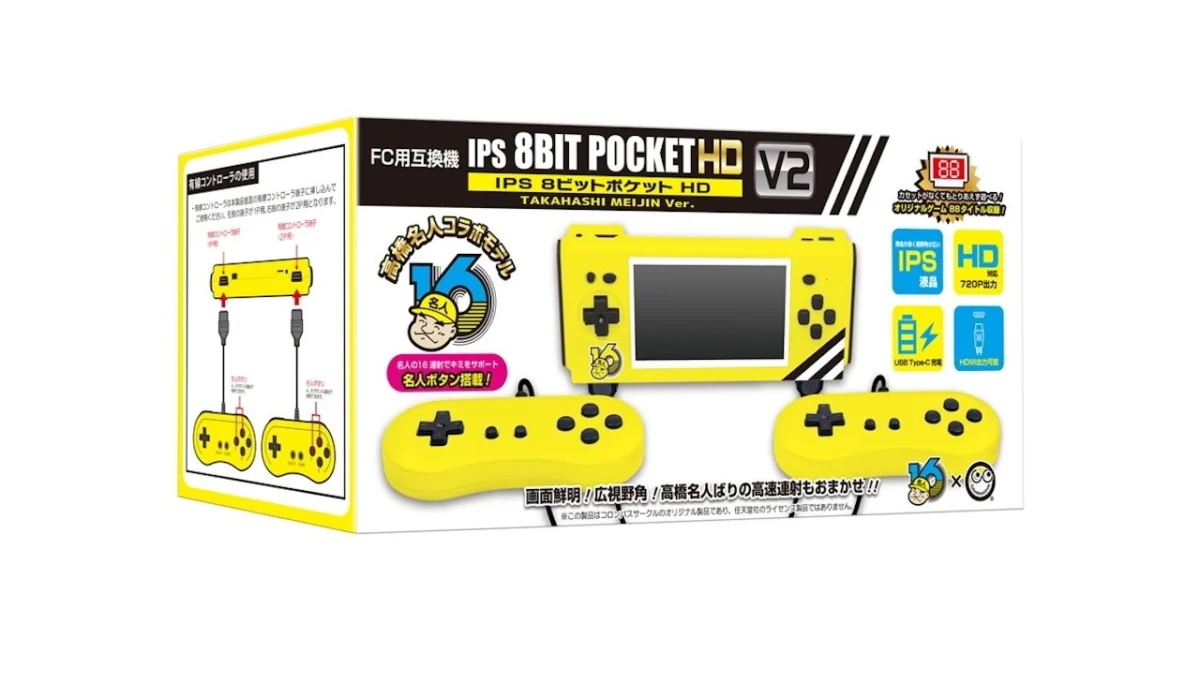
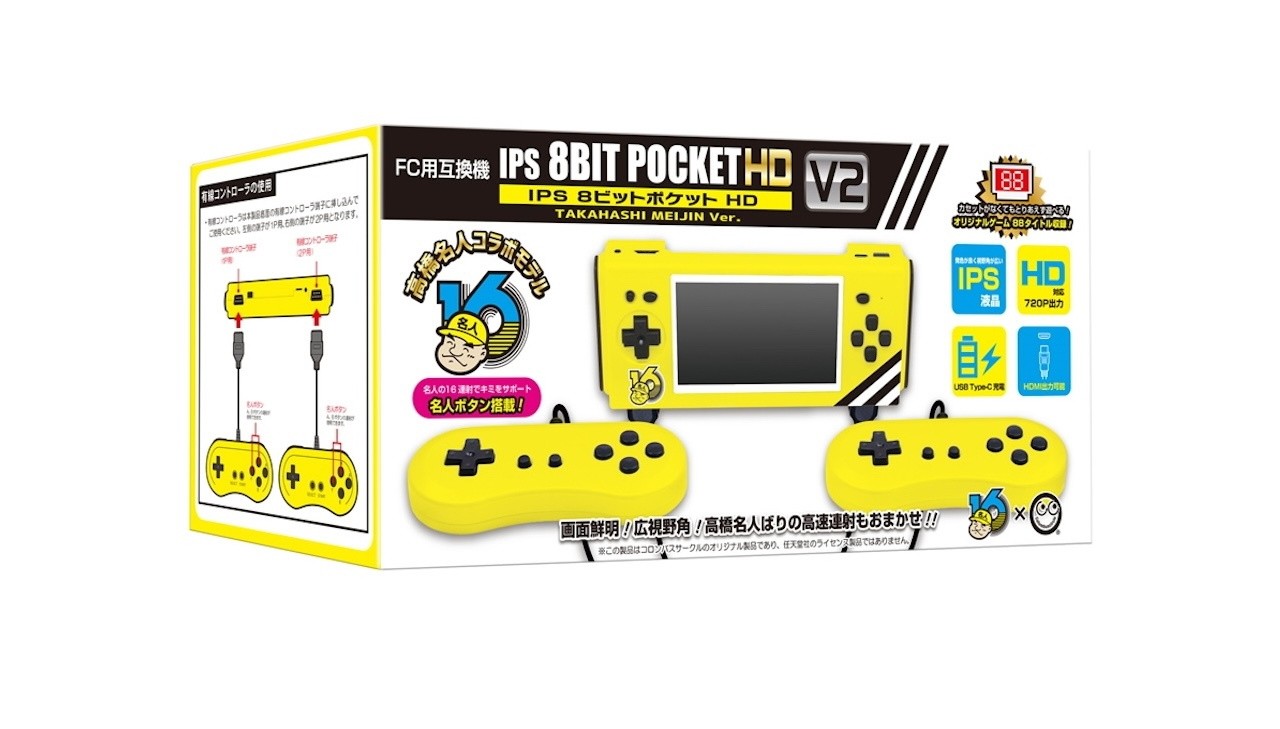
Columbus Circle, a prominent player in the retro gaming hardware market, has officially announced the upcoming release of its IPS 8-Bit Pocket HD V2, a new iteration of its popular portable Famicom (Nintendo Family Computer) clone system. Scheduled for a September launch, this updated device distinguishes itself not only through enhanced technical specifications but also by featuring the direct involvement of the legendary gaming personality, Takahashi Meijin (real name: Toshiyuki Takahashi), in its design. While his contribution appears primarily in the form of distinctive logos adorning the system’s casing, this collaboration underscores a strategic move to infuse the product with authentic retro gaming heritage, appealing directly to a generation of enthusiasts who revere Takahashi’s iconic status.
The IPS 8-Bit Pocket HD V2 builds upon Columbus Circle’s established line of Famicom-compatible handhelds, offering players the ability to revisit their cherished 8-bit cartridges on modern displays or on the go. Key technical upgrades for this model include an integrated IPS LCD panel, known for its superior viewing angles and vibrant color reproduction compared to standard TN panels often found in similar devices. Furthermore, the system boasts an HDMI output, allowing seamless connectivity to contemporary high-definition televisions and monitors, effectively bridging the gap between vintage software and modern entertainment setups. This dual functionality — a portable Famicom experience and a home console alternative — positions the IPS 8-Bit Pocket HD V2 as a versatile option for retro gaming aficionados.
The Enduring Legacy of Takahashi Meijin: A Pioneer of Japanese Gaming Culture
Takahashi Meijin’s association with the IPS 8-Bit Pocket HD V2 is more than a mere celebrity endorsement; it is a profound nod to a foundational figure in Japanese video game history. Born Toshiyuki Takahashi, he rose to prominence in the 1980s as the charismatic public face of Hudson Soft, a renowned Japanese video game developer and publisher. His "Meijin" title, translating to "master" or "expert," was not merely a marketing gimmick but a recognition of his exceptional gaming prowess and deep understanding of the medium.
Takahashi’s legend was largely cemented by his unparalleled rapid-fire button-pressing ability, often referred to as the "16 shot." At the peak of his fame, he demonstrated the remarkable skill of pressing a single button 16 times per second. This extraordinary feat was not just a parlor trick; it was a practical skill that significantly influenced gameplay in fast-paced shoot ’em up titles of the era. Games like Hudson Soft’s Star Soldier and Namco’s Star Force (for which Hudson Soft published the Famicom port) became synonymous with Takahashi’s name, as his rapid-fire technique allowed players to achieve incredibly high scores and overcome challenging segments that were otherwise nearly impossible for average players. His skill turned him into a national hero, a testament to the competitive spirit that permeated early console gaming.
Beyond his individual gaming prowess, Takahashi Meijin played a pivotal role in shaping Japanese gaming culture through the "Hudson Caravan" events. These were nationwide competitive gaming tours held annually across Japan, primarily during the summer months. Beginning in 1985, these caravans traveled to various cities, allowing players of all ages to compete in Hudson Soft titles, often Star Soldier or its successors, with Takahashi Meijin himself often present to challenge top contenders and entertain the crowds. These events were massive cultural phenomena, fostering a sense of community and friendly competition among gamers, long before the advent of widespread internet connectivity and esports. The Hudson Caravan tours were instrumental in popularizing video games as a competitive and social activity, making Takahashi Meijin a household name and an aspirational figure for countless young gamers.
His influence extended beyond competitive play. Takahashi Meijin became the inspiration and protagonist for Hudson Soft’s beloved Adventure Island series. While the character was famously rechristened "Master Higgins" for its Western release, the core design and spirit of the energetic, skateboarding, fruit-eating hero were directly based on Takahashi’s persona. This series, known for its challenging platforming and vibrant graphics, introduced his legacy to a global audience, albeit under a different moniker, further cementing his place in the pantheon of gaming icons. His image also transcended gaming, leading to appearances in anime and manga series, truly making him a multi-media star in Japan.
Takahashi Meijin remained with Hudson Soft until its eventual decline and absorption by Konami Digital Entertainment. He parted ways with the company in 2011, a significant moment marking the end of an era. However, his passion for gaming and his public persona have endured, with him continuing to engage with fans and participate in various retro gaming initiatives, demonstrating his lasting dedication to the industry he helped define.
Columbus Circle’s Strategic Vision in the Retro Hardware Market
Columbus Circle operates within a burgeoning and highly competitive retro gaming hardware market. This sector caters to a growing demand for devices that allow enthusiasts to play classic games, either through original cartridges or digital emulation, on modern screens with improved functionality. The market includes a diverse range of products, from affordable Famiclones to high-end FPGA-based systems, each targeting different segments of the retro community. Columbus Circle has carved out a niche by offering accessible, portable solutions for Famicom enthusiasts, often integrating modern conveniences like HDMI output.
The decision to incorporate an IPS LCD panel in the IPS 8-Bit Pocket HD V2 is a significant upgrade that speaks to the evolving expectations of retro gamers. Unlike older, cheaper LCDs, IPS panels offer superior color accuracy, contrast, and, crucially for a handheld, wide viewing angles. This means the image quality remains consistent and vibrant even when viewed from oblique angles, enhancing the overall portable gaming experience. The HDMI output, on the other hand, addresses the common challenge of connecting vintage consoles to modern televisions, many of which lack the composite video inputs that were standard in the 1980s and 90s. By providing a digital HDMI signal, the system ensures compatibility and often a cleaner, sharper image on large screens, revitalizing the visual fidelity of 8-bit classics.
The collaboration with Takahashi Meijin is a shrewd marketing strategy in this competitive landscape. While his direct design input might be limited to aesthetic elements like logos, the symbolic weight of his endorsement is immense. For many Japanese retro gamers, and indeed a global audience familiar with his story, Takahashi Meijin represents authenticity, skill, and the golden age of 8-bit gaming. His ’16 shot’ ability, referenced directly on one of the device’s logos, serves as a powerful nostalgic trigger, instantly connecting the new hardware to a cherished past. This association provides the IPS 8-Bit Pocket HD V2 with a unique selling proposition, distinguishing it from generic Famiclones and appealing to the emotional attachment many players have to that era.
Implications and Industry Reactions
The announcement of the IPS 8-Bit Pocket HD V2, especially with Takahashi Meijin’s involvement, highlights several broader trends within the video game industry. The "nostalgia economy" continues to thrive, with consumers eager to revisit the games and experiences of their youth. This manifests in various forms, from remakes and remasters of classic titles to the proliferation of retro-inspired indie games and, crucially, dedicated hardware designed to play original cartridges. Columbus Circle’s new system taps directly into this demand, offering a tangible link to the past while providing modern conveniences.
From an industry perspective, this collaboration could be seen as a blueprint for other retro hardware manufacturers seeking to differentiate their products. In an era where hardware specifications can quickly become commoditized, the infusion of cultural icons and historical narratives provides invaluable brand equity. It transforms a piece of technology into a cultural artifact, resonating more deeply with its target audience.
While no official statements from Columbus Circle or Takahashi Meijin were released beyond the initial announcement, one can infer the strategic thinking behind such a partnership. A spokesperson for Columbus Circle might state, "We are immensely honored to collaborate with Takahashi Meijin, whose legendary status perfectly embodies the spirit of classic gaming we aim to preserve and modernize. His iconic ’16 shot’ ability is a testament to the skill and passion that defined an era, and we believe his endorsement adds an unparalleled layer of authenticity to the IPS 8-Bit Pocket HD V2. This system is a tribute to both the enduring appeal of the Famicom and the enduring legacy of a true gaming pioneer."
Takahashi Meijin himself, known for his affable public persona, might offer a sentiment along these lines: "It’s always a pleasure to be involved in projects that bring the joy of classic Famicom gaming to a new generation and allow veterans to relive their youth. Seeing my legacy, like the ’16 shot,’ recognized in a modern device is truly special. I hope players enjoy the improved experience and continue to find challenge and fun in these timeless games."
Industry analysts would likely concur on the strategic benefits. "This collaboration is a smart move by Columbus Circle," observes one hypothetical analyst. "In a crowded retro hardware market, associating with a verifiable legend like Takahashi Meijin provides a significant marketing advantage and resonates deeply with the core demographic. It’s not just about the hardware; it’s about the story, the authenticity, and the powerful pull of nostalgia that such a figure represents. This could set a new standard for how retro brands engage with their heritage."
Moreover, the continued production of high-quality Famiclones with modern features like IPS screens and HDMI output underscores the ongoing debate within the retro gaming community regarding preservation and accessibility. While some purists advocate for original hardware and CRT televisions, devices like the IPS 8-Bit Pocket HD V2 offer a practical and often more affordable alternative, making classic games accessible to a wider audience without the complexities of maintaining vintage equipment. It represents a compromise that respects the original experience while adapting it for contemporary viewing standards.
Conclusion
The upcoming release of the Columbus Circle IPS 8-Bit Pocket HD V2 in September marks an exciting development for retro gaming enthusiasts. By combining advanced display technology and modern connectivity with the direct, albeit symbolic, involvement of Takahashi Meijin, the system offers a compelling blend of nostalgia and contemporary functionality. It serves as a testament to the enduring appeal of 8-bit gaming and the timeless legacy of figures like Takahashi Meijin, whose influence continues to shape the gaming landscape decades after his initial rise to fame. As the retro market continues to expand, such collaborations are likely to become increasingly important, allowing brands to forge deeper connections with consumers through shared cultural history and a passion for gaming’s storied past.