Indra Gunadi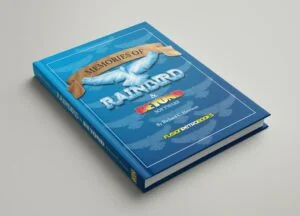
A new premium hardback book, "Memories of Rainbird and Beyond," is currently engaged in a crowdfunding campaign to meticulously document and celebrate the profound historical legacy of British Telecom’s seminal software labels. Announced on June 24, 2026, this ambitious 324-page volume promises an unprecedented deep dive into the behind-the-scenes narratives of legendary 8-bit and 16-bit software releases, including critically acclaimed titles such as Starglider, Carrier Command, and The Lords of Midnight. The project, hosted on Kickstarter, offers enthusiasts and historians alike the opportunity to secure their copies and claim limited rewards, some personally signed by the author, as it progresses towards its funding goals and unlocks various stretch objectives designed to enhance the final product.
The Genesis of a Gaming Giant: British Telecom’s Unlikely Foray into Software Publishing
The 1980s witnessed an explosive boom in the home computer market, particularly within the United Kingdom. Machines like the ZX Spectrum, Commodore 64, Amstrad CPC, Amiga, and Atari ST became household fixtures, driving an insatiable demand for software. It was against this vibrant backdrop that an unexpected player entered the arena: British Telecom (BT). Primarily known as the UK’s dominant telecommunications provider, BT saw an opportunity to diversify its portfolio and capitalize on the burgeoning digital entertainment sector. This strategic move led to the establishment of BT Software, which soon branched out into distinct publishing labels: Firebird and, subsequently, Rainbird.
Firebird, launched in 1984, quickly made a name for itself by focusing on budget-priced games, often selling for under £2. Its philosophy was to make gaming accessible, democratizing the experience for millions. This approach proved incredibly successful, establishing BT Software as a significant player in a highly competitive market. Building on Firebird’s commercial triumph, BT then launched Rainbird Software in 1986. Rainbird was conceived with a different ambition: to publish high-end, premium titles that pushed the boundaries of technology, graphics, and gameplay. Where Firebird was about volume and accessibility, Rainbird aimed for prestige and innovation, often collaborating with some of the most talented developers and artists in the British and European gaming scene. This dual-label strategy allowed BT to cater to different segments of the market while solidifying its presence across the entire software spectrum.
A Chronology of Innovation: Key Releases and Enduring Legacies
Rainbird’s tenure, though relatively brief, left an indelible mark on the gaming landscape of the late 1980s. Its commitment to quality and innovation attracted visionary developers, resulting in a catalogue of games that are still revered today.
1986: The Arrival of Starglider
One of Rainbird’s earliest and most iconic releases was Starglider. Developed by Argonaut Software, Starglider captivated players with its revolutionary 3D wireframe graphics and fast-paced combat. Released initially for the Amiga and Atari ST, and later ported to other platforms including the ZX Spectrum and Commodore 64, it demonstrated the potential for immersive, technically advanced experiences on home computers. The game’s fluid movement through a polygonal landscape, combined with strategic dogfights and mission objectives, set a new benchmark for 3D action games and garnered widespread critical acclaim. Its success firmly established Rainbird as a publisher willing to invest in cutting-edge technology and ambitious game design.
1984 (re-release by Rainbird): The Epic Scope of The Lords of Midnight
While originally released in 1984 by Beyond Software, The Lords of Midnight found a wider audience and enduring recognition through its re-release under the Rainbird banner. Created by the legendary Mike Singleton, this title was a groundbreaking fusion of strategy, adventure, and role-playing. Players navigated a vast, open-world fantasy landscape, commanding multiple characters in a quest to defeat the evil Doomdark. Its innovative "Freescape" graphics system, which rendered a pseudo-3D perspective of the environment, and its complex strategic depth were far ahead of their time. The Lords of Midnight is considered a masterpiece of early British game design, showcasing Singleton’s unparalleled vision and Rainbird’s discerning taste for truly exceptional software.
1988: The Strategic Depth of Carrier Command
Another jewel in Rainbird’s crown was Carrier Command, released in 1988. Developed by Realtime Games, this title was a monumental achievement in simulation and strategy. Players took control of a futuristic aircraft carrier, managing its resources, deploying amphibious vehicles and aircraft, and engaging in tactical battles to conquer an archipelago of islands. Carrier Command pushed the boundaries of 16-bit hardware, featuring sophisticated 3D graphics, a dynamic economy, and complex AI. Its blend of real-time action and strategic planning offered an unprecedented level of depth, earning it a place among the most innovative games of its era and influencing subsequent generations of strategy and simulation titles.
Beyond these flagship titles, Rainbird was also responsible for publishing other notable works, including adventure games like The Pawn and Guild of Thieves (from Magnetic Scrolls), which were renowned for their sophisticated text parsers and intricate plots. The label consistently sought out projects that offered unique experiences, whether through narrative complexity, graphical innovation, or novel gameplay mechanics. This curated approach positioned Rainbird as a purveyor of "intelligent" and "premium" software, differentiating it from the more mass-market offerings of its sister label, Firebird.
The late 1980s, however, brought significant shifts in the industry. The rise of dedicated games consoles and the increasing costs of software development began to reshape the landscape. British Telecom, undergoing its own corporate restructuring and refocusing on its core telecommunications business, eventually decided to divest its software publishing interests. The Rainbird and Firebird labels, along with their extensive back catalogues and future projects, were eventually acquired by MicroProse in 1989, marking the end of an era for BT’s direct involvement in game publishing.
Behind the Pixels: The Creative Minds and Technical Prowess
The success of Rainbird was not merely a matter of astute business decisions; it was fundamentally built upon the ingenuity and dedication of the developers who crafted these iconic games. The British games industry of the 1980s was characterized by small, highly talented teams, often working with limited resources but boundless creativity. These developers frequently pushed hardware to its absolute limits, finding innovative solutions to technical challenges posed by memory constraints, processor speeds, and diverse platform architectures.
For games like Starglider and Carrier Command, the Amiga and Atari ST platforms were particularly crucial. Their advanced graphics and sound capabilities, compared to earlier 8-bit machines, allowed developers to realize visions that were previously impossible. The ability to display more colours, utilize hardware sprites, and process more complex 3D calculations directly contributed to the immersive experiences Rainbird sought to deliver. Developers like Jez San (Argonaut Software) and the teams behind Realtime Games and Magnetic Scrolls became celebrated figures, known for their technical prowess and artistic vision.
The development culture fostered by Rainbird was one of ambition and technical excellence. The publisher provided a platform for these creative individuals to bring their most daring ideas to fruition, often investing in longer development cycles and higher production values than many of their contemporaries. This commitment translated into titles that consistently reviewed well and achieved significant commercial success, with many games selling hundreds of thousands of copies globally across their various platform releases. This period was a golden age for British game development, with Rainbird standing as a testament to the quality and innovation emanating from the UK.
The Author’s Vision and Community Engagement: A Crowdfunding Success Story
The "Memories of Rainbird and Beyond" project is more than just a book; it’s a testament to the enduring passion for retro gaming and the importance of preserving digital history. The author, deeply immersed in the history of this pivotal era, aims to provide an unprecedented look behind the curtain, offering insights from key developers, rare archival materials, and detailed analyses of the games themselves. The decision to crowdfund the book via Kickstarter reflects a growing trend in niche publishing, allowing authors to connect directly with their target audience and gauge interest before committing to full-scale production.
The Kickstarter campaign has already garnered significant attention from retro gaming enthusiasts, former developers, and historians alike. The initial funding target, while ambitious, aims to cover the extensive research, high-quality printing, and intricate design necessary for a premium hardback volume of this scope. The campaign details specific stretch goals, which, if met, promise to enrich the book further – potentially adding more pages, including exclusive interviews, enhancing the photographic content, or even producing supplementary materials like art prints or digital archives.
The rewards offered to backers are a crucial element of the campaign’s success. From standard copies to limited editions signed by the author, and even exclusive bundles that might include original artwork or unique memorabilia related to the era, these incentives provide tangible value for financial contributions. This direct engagement fosters a sense of community ownership over the project, transforming supporters into stakeholders in the preservation of this important slice of gaming history. The inferred sentiment from the community is overwhelmingly positive, with many expressing excitement at the prospect of a definitive historical account of labels that shaped their formative gaming experiences.
Broader Implications: Preserving Digital Heritage and Retro Gaming’s Enduring Appeal
The publication of "Memories of Rainbird and Beyond" holds significant implications beyond the immediate satisfaction of its readers. It contributes vitally to the broader movement of video game preservation and the academic study of interactive entertainment history. As digital media ages and original hardware becomes increasingly rare, comprehensive textual accounts like this become indispensable for understanding the evolution of the industry.
Books of this nature serve multiple critical functions:
- Historical Documentation: They capture and consolidate first-hand accounts, technical details, and contextual information that might otherwise be lost to time. This is crucial for understanding the design philosophies, technical limitations, and creative processes of a past era.
- Cultural Significance: They highlight the cultural impact of these games and companies, particularly in the UK, where the home computer boom was a significant social and economic phenomenon. Rainbird’s games were not just products; they were cultural touchstones for a generation.
- Educational Resource: For students and researchers of game design, computer science, and cultural studies, such a book provides a valuable resource for analyzing early innovations and their influence on contemporary gaming.
- Community Building: Projects like this energize the retro gaming community, fostering discussions, shared memories, and a collective appreciation for the foundations of modern gaming.
The enduring appeal of retro gaming itself underscores the importance of initiatives like "Memories of Rainbird and Beyond." Many modern game developers openly acknowledge the influence of classic titles and design paradigms from the 8-bit and 16-bit eras. Understanding the origins of concepts like open worlds, sophisticated AI, and immersive narratives—elements pioneered or significantly advanced by companies like Rainbird—is essential for appreciating the trajectory of the industry. This book promises to be a definitive resource, illuminating the often-overlooked yet profoundly influential contributions of British Telecom’s pioneering software labels to the global tapestry of video game history. As the crowdfunding campaign continues, it offers a unique opportunity for individuals to actively participate in the preservation and celebration of this rich digital heritage.