Cecilia Chamidah Nur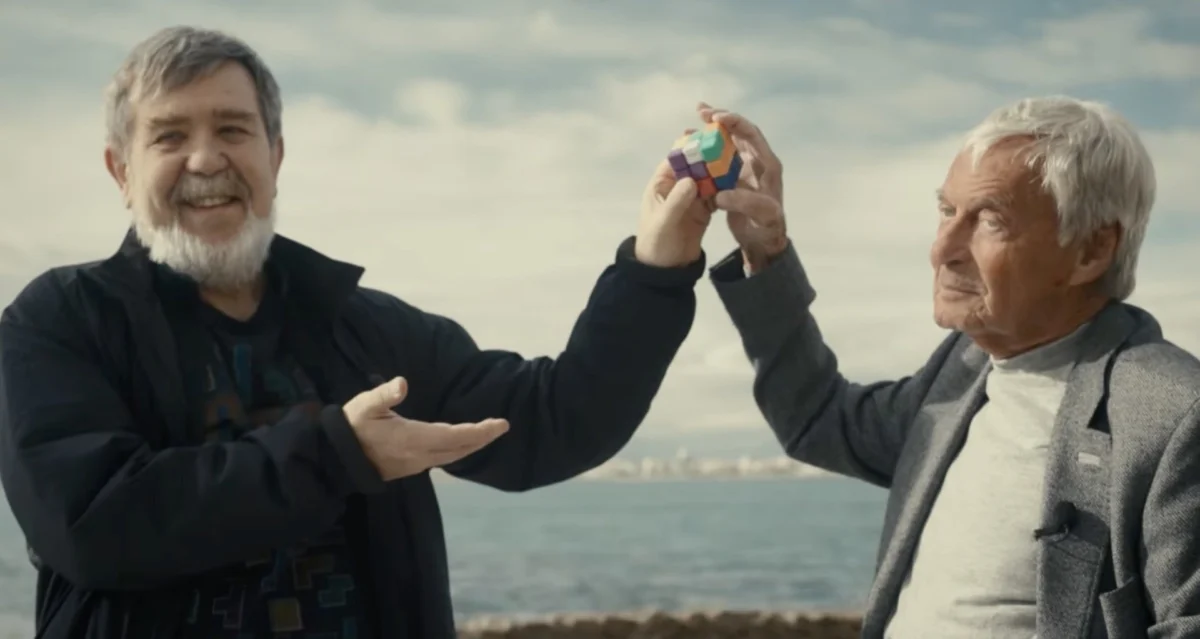
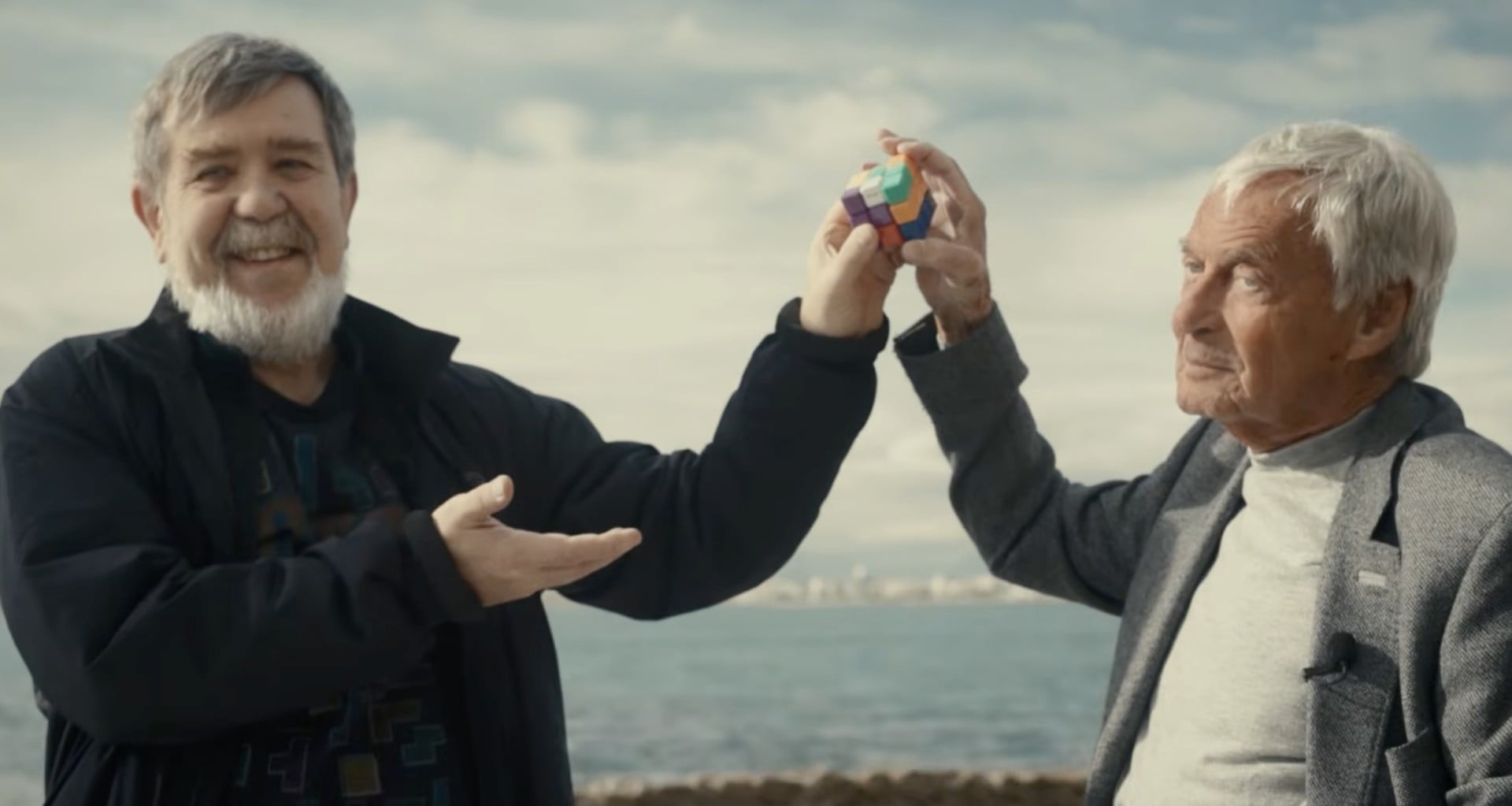
In a landmark event that united two of the most influential minds in recreational mathematics and digital entertainment, Ernő Rubik, the Hungarian inventor of the eponymous Rubik’s Cube, recently met Alexey Pajitnov, the Russian creator of the global video game phenomenon Tetris, for the very first time. This long-anticipated encounter, which took place in December of last year at the OXO Video Game Museum in Spain, celebrated not only the enduring legacy of their respective creations but also marked the launch of a novel Tetris-themed Rubik’s Cube. Pajitnov, a long-time admirer of Rubik’s design, openly admitted to having been "obsessed for years with the Cube" and harbored a profound desire to meet its ingenious creator, an aspiration that finally materialized into a shared moment of recognition and mutual respect.
A Long-Awaited Encounter: Bridging Decades of Innovation
The meeting between Ernő Rubik and Alexey Pajitnov represents a unique convergence of two distinct yet fundamentally linked realms of human ingenuity: mechanical puzzles and digital logic. Despite their creations dominating different eras of entertainment and originating from vastly different geopolitical contexts—Rubik’s Cube from Cold War Hungary and Tetris from the Soviet Union—both puzzles share an innate ability to captivate minds globally through elegant simplicity and profound complexity. Pajitnov’s admiration for the Rubik’s Cube is well-documented, his statement that it is the "best puzzle in the world" underscoring the deep respect he holds for Rubik’s invention. This sentiment paved the way for a meeting that transcended a mere product launch, evolving into a significant cultural dialogue between two architects of abstract thought.
The event, documented in a video released by Bandai-owned Megahouse, provided a rare glimpse into the personal interaction between these two titans. Pajitnov’s enthusiasm was palpable, expressing a sentiment likely shared by millions worldwide who have spent countless hours engaging with both puzzles. His admission of having dreamt of meeting Rubik highlights the personal significance of the occasion, transforming it from a corporate promotional event into a deeply meaningful personal and professional milestone for both inventors.
The Genesis of Global Phenomena: A Dual Chronology
To fully appreciate the gravity of this meeting, it is imperative to understand the individual journeys of the Rubik’s Cube and Tetris, each a testament to the power of a simple, compelling idea.
The Rubik’s Cube: From Hungarian Workshop to Universal Icon
The Rubik’s Cube, initially conceived as the "Magic Cube" (Bűvös kocka) by Ernő Rubik in 1974, was not originally intended as a toy. Rubik, a professor of architecture at the Academy of Applied Arts and Crafts in Budapest, designed it as a teaching tool to help his students understand three-dimensional problems and spatial relationships. His initial goal was to create a mechanism that allowed individual pieces to move independently without the entire structure falling apart. After patenting his invention in Hungary in 1975, the cube gained popularity within the country, leading to its international debut in 1980 under the name Rubik’s Cube, facilitated by Ideal Toy Company.
The global launch marked the beginning of a cultural phenomenon. Its deceptively simple appearance belied a staggering complexity: there are over 43 quintillion (43,252,003,274,489,856,000) possible configurations, yet every single one can be solved in 20 moves or fewer. This blend of accessibility and intellectual challenge propelled the Rubik’s Cube to unprecedented success. Within two years of its international release, over 100 million units had been sold, and by 2009, global sales surpassed 350 million. Current estimates place total sales at over 500 million cubes worldwide, making it the best-selling puzzle game and arguably the best-selling toy of all time. Its impact extends beyond casual play, giving rise to "speedcubing" as a competitive sport, with enthusiasts racing against the clock to solve the puzzle, breaking records and pushing the boundaries of human dexterity and cognitive processing. The Cube has been featured in art, film, music, and academic research, cementing its status as an enduring symbol of human ingenuity.
Tetris: Soviet Code to Digital Domination
A decade after the Rubik’s Cube’s initial invention, in 1984, Alexey Pajitnov, a computer engineer working at the Dorodnitsyn Computing Centre of the Soviet Academy of Sciences in Moscow, created Tetris. Inspired by a traditional puzzle game called Pentominoes, Pajitnov developed Tetris on an Electronika 60 terminal. The game involved fitting falling geometric shapes (tetrominoes, each made of four squares) into horizontal lines without gaps, which would then disappear. Its simple premise but addictive gameplay immediately captivated his colleagues.
The journey of Tetris from a Soviet research institute to global ubiquity is a remarkable tale of Cold War-era licensing battles and technological breakthroughs. It gained significant traction when it was ported to various home computers in the West in the late 1980s. However, its true explosion in popularity came with its bundling alongside Nintendo’s Game Boy handheld console in 1989. This pairing was instrumental in the Game Boy’s success and made Tetris a household name, demonstrating the immense potential of portable gaming.
Tetris has since been released on nearly every gaming platform imaginable, from arcade machines and consoles to PCs and mobile phones. As of 2014, Tetris had sold over 425 million paid mobile downloads alone, and its various iterations across all platforms likely push its total reach into the billions. Like the Rubik’s Cube, Tetris has transcended its original form to become a cultural touchstone, influencing game design, inspiring scientific research into its psychological effects, and even having its dramatic origin story adapted into a major motion picture by Apple a short time ago.
A Shared Philosophy: The Enduring Appeal of Logic Puzzles
The meeting between Rubik and Pajitnov underscores a profound shared philosophy inherent in their creations: the universal human fascination with structure, order, and problem-solving. Both the Rubik’s Cube and Tetris operate on deceptively simple rules that unlock layers of strategic depth. They are puzzles that reward spatial reasoning, pattern recognition, and forward-thinking.
What makes these puzzles endure across generations and technological shifts is their fundamental appeal to cognitive engagement. They offer clear objectives (solve the cube, clear lines) and immediate feedback, fostering a sense of accomplishment with each successful maneuver. They are language-agnostic, requiring no prior cultural knowledge to understand their mechanics, making them truly global phenomena. In an increasingly complex world, the structured challenge offered by these puzzles provides a unique form of mental exercise and meditative focus, a compelling escape that remains relevant even amidst the rise of hyper-realistic digital entertainment. This timeless quality is perhaps their greatest shared attribute, positioning them as archetypal examples of perfect puzzle design.
The Catalyst: A New Collaboration and Its Significance
The direct impetus for this historic meeting was the launch of a new Tetris-themed Rubik’s Cube, a product that symbolically merges the two iconic puzzle universes. Published by Bandai-owned Megahouse, this collaboration represents more than just a novelty item; it signifies a mutual acknowledgment of legacy and a creative cross-pollination between two powerful intellectual properties.
For the Rubik’s Cube brand, this collaboration injects fresh appeal by leveraging the iconic imagery and recognition of Tetris. For the Tetris brand, it offers a tangible, non-digital product that embodies the spirit of its geometric challenge in a new, tactile form. Representatives from Megahouse, while not explicitly quoted in the original article, would logically view this collaboration as a strategic move to engage existing fan bases of both puzzles while attracting new audiences through the novelty of the crossover. It highlights the continued commercial viability of classic designs when reimagined or combined in innovative ways. The product itself, featuring Tetris tetrominoes on the cube’s faces, invites players to solve it while simultaneously appreciating the aesthetic homage to the digital classic, creating a unique dual-layer of engagement for enthusiasts.

The Setting: OXO Video Game Museum, Spain
The choice of the OXO Video Game Museum in Spain as the venue for this historic meeting was particularly apt. While the Rubik’s Cube is a physical puzzle, and Tetris a digital one, both have profoundly influenced the landscape of interactive entertainment. A video game museum serves as a perfect backdrop, acknowledging the Rubik’s Cube’s foundational role in inspiring logical and spatial challenges, many of which are echoed in video game design. For Tetris, a museum dedicated to video games is its natural home, tracing its lineage through decades of digital evolution. The museum environment further elevates the event beyond a simple product launch, framing it as a cultural moment where two pillars of global recreational history converged, celebrated by an institution dedicated to preserving and showcasing the evolution of interactive play.
Reflections on Legacy and Timelessness
The profound impact of both inventions was perhaps best encapsulated by Alexey Pajitnov himself, who, at the close of the video, offered a powerful reflection on the Rubik’s Cube’s significance: "If I were to put something as evidence of human civilisation on an interstellar space object, that would be one of the 10 objects I would definitely put on it." This statement is a testament to the Cube’s status as more than just a toy; it is an artifact of human ingenuity, a symbol of our capacity for complex thought, design, and problem-solving.
Ernő Rubik, while not quoted extensively in the initial report, undoubtedly shares a similar sense of awe regarding the enduring global impact of his creation. To meet Pajitnov, a fellow master of abstract design who holds his work in such high esteem, must have been a deeply validating experience. Their interaction serves as a powerful reminder that truly great ideas, born from fundamental principles, possess a timeless quality that transcends transient trends and technological advancements. Both inventors have, through their work, contributed indelible pieces to the mosaic of human culture, demonstrating how simple concepts can unlock universal challenges and provide endless fascination.
Broader Implications for the Puzzle Industry and Beyond
The meeting between Ernő Rubik and Alexey Pajitnov carries significant implications, not only for the puzzle industry but also for the broader landscape of intellectual property and cultural impact.
Firstly, it underscores the enduring power and commercial viability of classic designs in an era dominated by rapid technological change and fleeting trends. Both the Rubik’s Cube and Tetris have consistently proven their ability to remain relevant, adapt to new platforms, and engage new generations without fundamentally altering their core mechanics. This longevity is a valuable lesson for creators and corporations alike: timeless design often trumps ephemeral novelty.
Secondly, the collaboration itself — a Tetris-themed Rubik’s Cube — signals a potential for more cross-brand partnerships between established, beloved IPs. Such collaborations can breathe new life into existing products, tap into diverse fan bases, and create unique experiences that celebrate the shared spirit of different creative works. It suggests a future where intellectual properties are not rigidly siloed but can intersect in imaginative ways to extend their reach and appeal.
Finally, this event serves as a celebration of the human intellect’s capacity for creating engaging challenges. In a world increasingly concerned with screen time and passive consumption, these puzzles offer active, stimulating engagement. They foster critical thinking, patience, and perseverance, qualities that are valuable far beyond the realm of play. The convergence of these two creative giants reaffirms the profound cultural value of puzzles and games that challenge, delight, and ultimately enrich the human experience, solidifying their place as essential elements of human civilization’s legacy.