Ganda Hendra Perkasa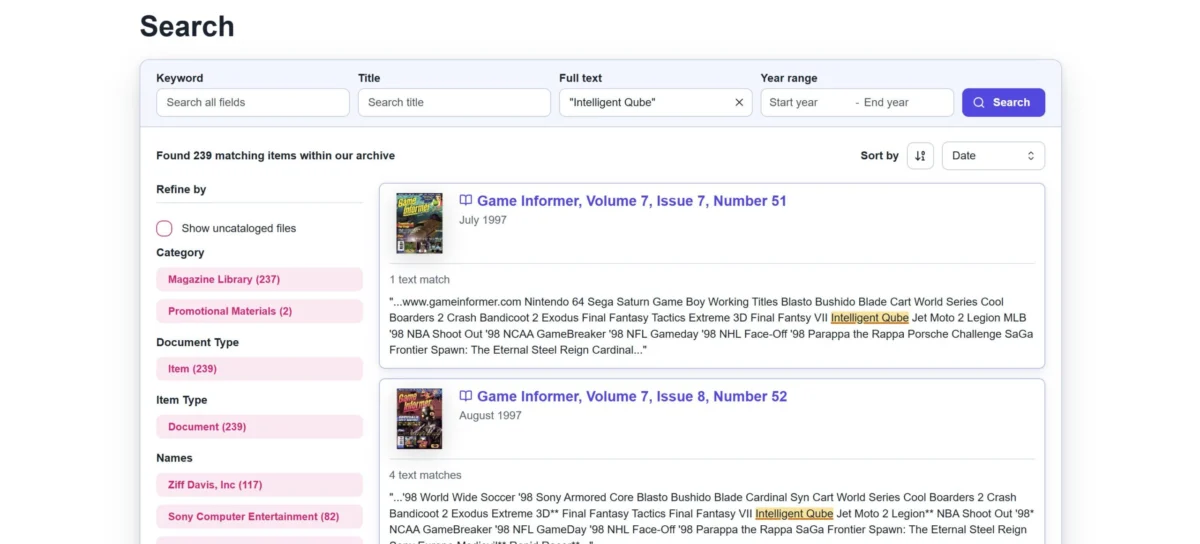
The International Center for the History of Electronic Games (ICHEG) at The Strong National Museum of Play has announced the launch of a significantly revamped digital archive platform, designed to provide researchers, enthusiasts, and the public with a more intuitive and powerful tool for exploring the vast landscape of video game history. This comprehensive update, developed in response to extensive user feedback, represents a pivotal moment in the accessibility and usability of historical game-related digital assets. The new iteration promises a faster, more visually engaging, and contextually richer experience for anyone seeking to delve into the archives.
A Foundation Built on User Experience
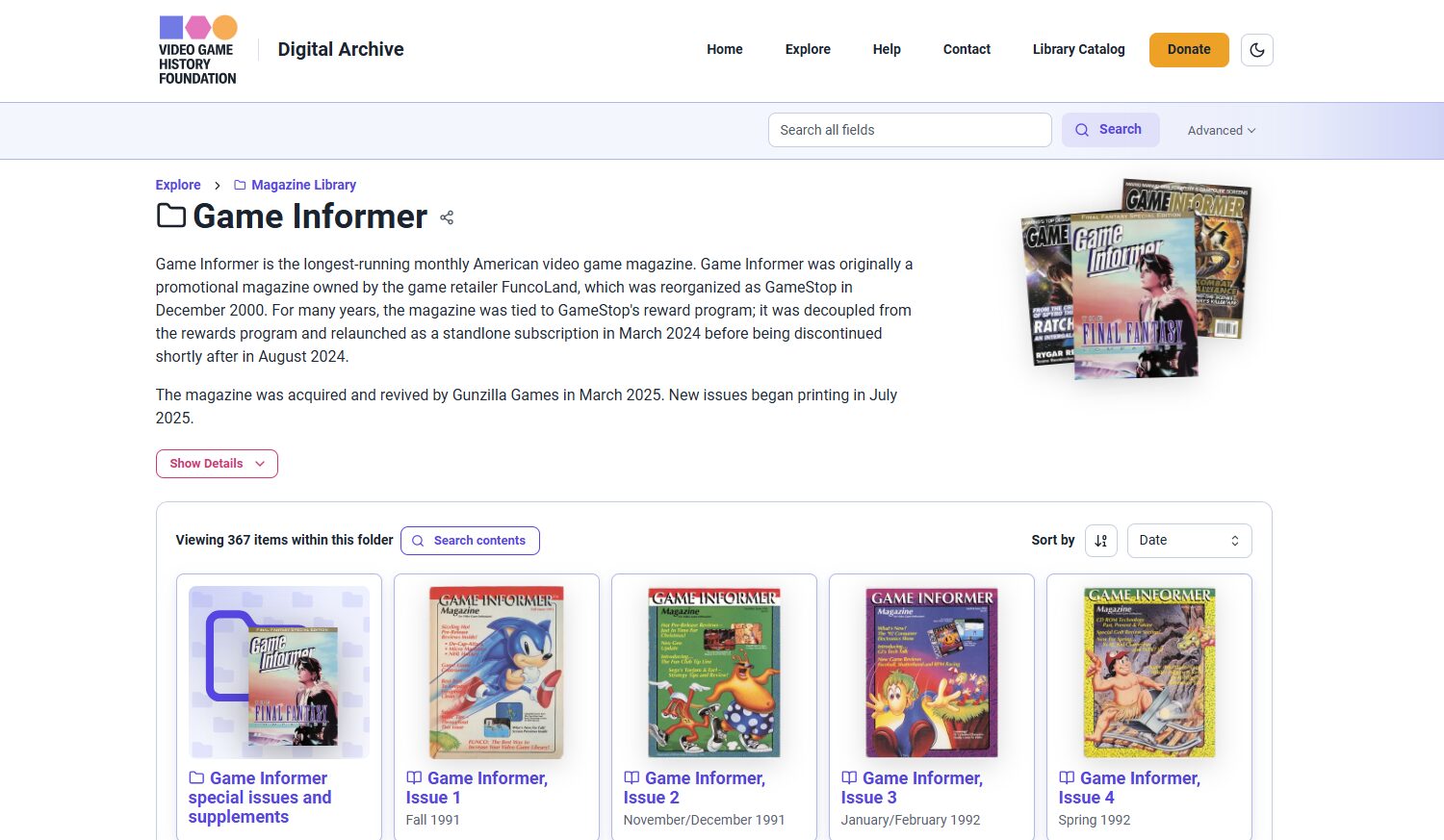
The core of the update lies in a complete rebuilding of the digital archive’s interface. ICHEG has prioritized user experience, aiming to streamline the process of navigating and interacting with its extensive collection. A key improvement is the substantial increase in image size for displayed items. This enhancement allows users to more readily identify and differentiate between various archival components, such as distinct files versus containing folders, fostering a clearer understanding of the collection’s structure. This visual clarity is crucial for researchers who rely on precise identification of materials.
Beyond visual enhancements, the platform’s performance has been a significant focus. The new interface boasts faster loading times, a critical factor in maintaining user engagement, especially when dealing with large datasets or high-resolution imagery. Improved loading states provide clearer feedback to the user during data retrieval, minimizing frustration and enhancing the perception of responsiveness. Furthermore, the system has been engineered to better track user navigation, ensuring a more seamless transition between different sections and documents within the archive, a feature particularly beneficial for in-depth research sessions.
Enhanced Search Functionality for Deeper Discovery
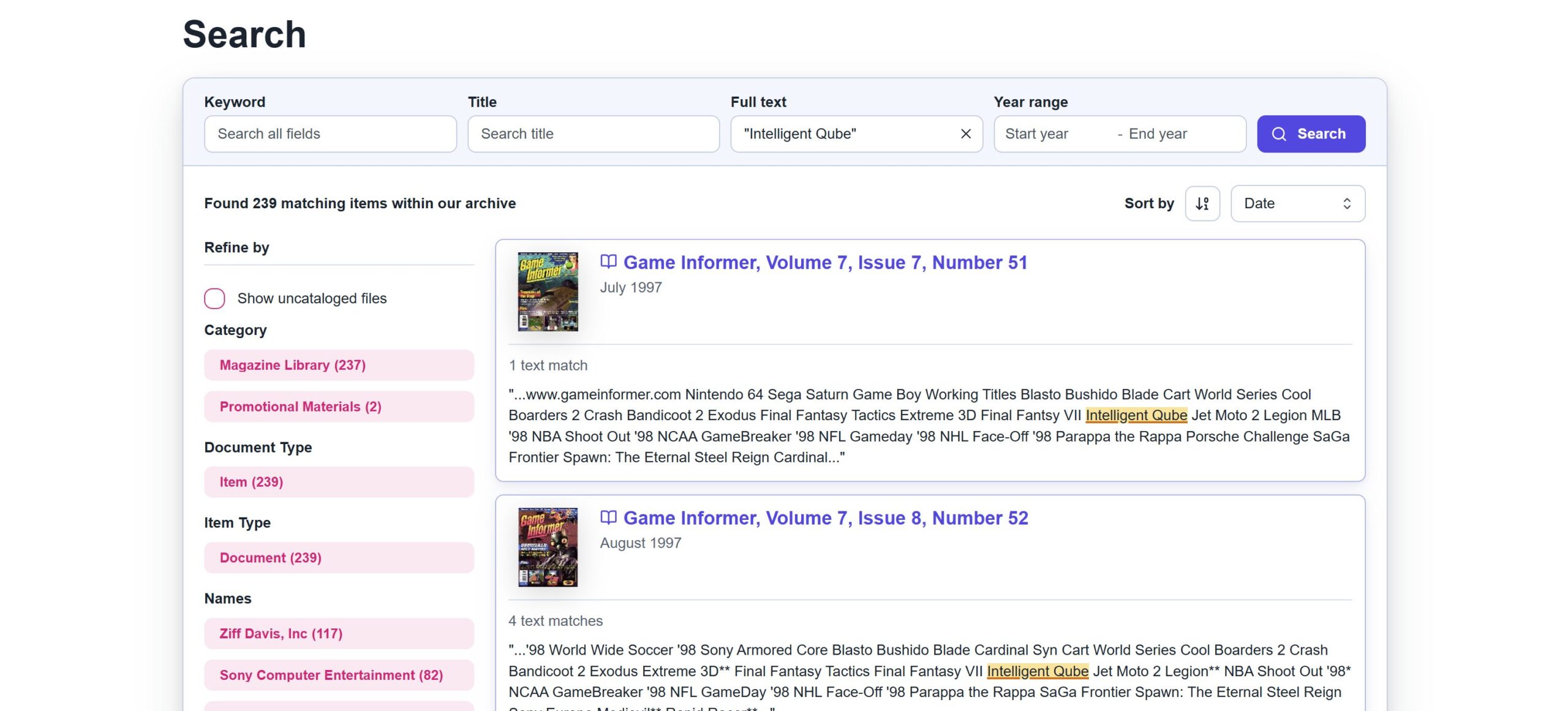
Recognizing the importance of efficient information retrieval, ICHEG has also implemented substantial upgrades to the archive’s search capabilities. The most notable enhancement is the expansion of the snippet view for keyword searches. Previously, search results offered limited context around matching text. The new system now displays approximately four times more surrounding content for each search hit. This dramatically improves the speed and accuracy with which users can ascertain the relevance of a particular result without needing to open and examine each document individually. For scholars and journalists researching specific topics, this can translate into significant time savings and a more targeted approach to their investigations.
The implications of this enhanced search are far-reaching. Imagine a historian researching the early marketing strategies of a particular game. With the expanded snippet view, they could quickly scan numerous relevant articles, advertisements, or developer notes, identifying key phrases and themes without extensive clicking. This richer contextual display is not merely a convenience; it is a fundamental improvement in the discoverability of historical information.
Streamlined Access to Collections and Featured Content
Ease of entry into the archive has also been a primary consideration in the redesign. A new "Explore the Archive" section has been integrated directly into the homepage. This strategic placement allows users to immediately begin browsing the various collections without the need to navigate to a separate dedicated page. This immediate access is designed to lower the barrier to entry for casual browsers and introduce them to the breadth of the archive’s holdings.
Further down the homepage, a "Featured Collections" bar has been introduced. This section highlights new and noteworthy additions to the archive, providing a dynamic showcase of the latest acquisitions and curated thematic groupings. This serves to inform users about ongoing archival efforts and draw attention to potentially valuable or under-explored areas of gaming history. For instance, a recent acquisition of early arcade game design documents might be prominently featured, prompting immediate interest from researchers specializing in that era.
A Look Towards the Future of Digital Archiving
ICHEG has expressed optimism about the impact of these changes, believing they will significantly elevate the research experience. However, this update is not considered a final destination but rather a significant milestone in an ongoing development process. The organization has outlined several future features that are currently under exploration, indicating a commitment to continuous improvement and innovation in digital preservation and access.
Among these planned advancements is a new, more sophisticated viewer for image files. This would likely include enhanced zooming capabilities, metadata display, and potentially annotation tools, further empowering users to closely examine visual artifacts from gaming history. Another exciting prospect is the implementation of character recognition (OCR) specifically for Japanese magazines. This would unlock the vast textual content within these publications, making them searchable and accessible to a wider audience, including those who may not be fluent in Japanese. Such a feature would be invaluable for researchers studying the global evolution of gaming culture and industry trends.
Perhaps the most ambitious future integration discussed is the eventual connection of the digital archive platform with the full library catalog. This would create a unified portal, allowing users to seamlessly search and access not only digital assets but also physical artifacts, books, and other materials held by The Strong museum. This comprehensive approach to information access has the potential to revolutionize how scholars engage with the museum’s extensive collections, providing a holistic view of electronic game history.
Background and Context
The International Center for the History of Electronic Games (ICHEG) was established in 2003, recognizing the growing importance of video games as a cultural and artistic medium. The center’s mission is to collect, preserve, and interpret the history of electronic games. The digital archive platform, launched in its initial form, has been a cornerstone of this mission, providing remote access to a growing body of digitized materials. These materials encompass a wide range of formats, including game manuals, design documents, marketing materials, historical periodicals, and more, offering invaluable primary source material for understanding the evolution of the industry and its cultural impact.
The development of such digital archives is a critical undertaking in the field of cultural heritage. Unlike physical artifacts, digital information is vulnerable to obsolescence, format degradation, and loss of access. The continuous effort to digitize, catalog, and present these materials in accessible formats is vital for ensuring that future generations can learn from and engage with the history of electronic games. The decision to rebuild the platform from the ground up, rather than simply applying incremental updates, underscores ICHEG’s commitment to providing a robust and future-proof solution for digital preservation.
The feedback loop that informed this update is a testament to the active community of researchers and enthusiasts who utilize the archive. By actively soliciting and responding to user input, ICHEG demonstrates a user-centric approach to digital archiving, ensuring that the tools provided are not only comprehensive but also practical and effective for their intended audience. This collaborative spirit is essential for the long-term success and relevance of such historical repositories.
Broader Impact and Implications
The implications of this upgraded digital archive extend beyond academic research. For game developers, designers, and marketers, the archive serves as an invaluable resource for understanding past trends, design philosophies, and industry shifts. For educators, it provides a wealth of primary source material for teaching courses on media history, cultural studies, and technology. For the general public and gaming enthusiasts, it offers a fascinating window into the rich and dynamic history of a medium that has profoundly shaped modern entertainment and culture.
The enhanced search and browsing capabilities can accelerate new discoveries and foster a deeper appreciation for the complexities of game development and its historical context. The ability to easily access and analyze a wider range of information can lead to new scholarly interpretations, a more nuanced understanding of industry evolution, and a greater recognition of the artistic and cultural significance of video games. As the digital archive continues to grow and evolve, it solidifies its position as a premier resource for anyone interested in the history of electronic games, contributing significantly to the academic and public understanding of this vital cultural domain. The ongoing development, with plans for advanced image viewing and multilingual OCR, signals a forward-looking commitment to inclusivity and comprehensive historical access.