Farhan hamdan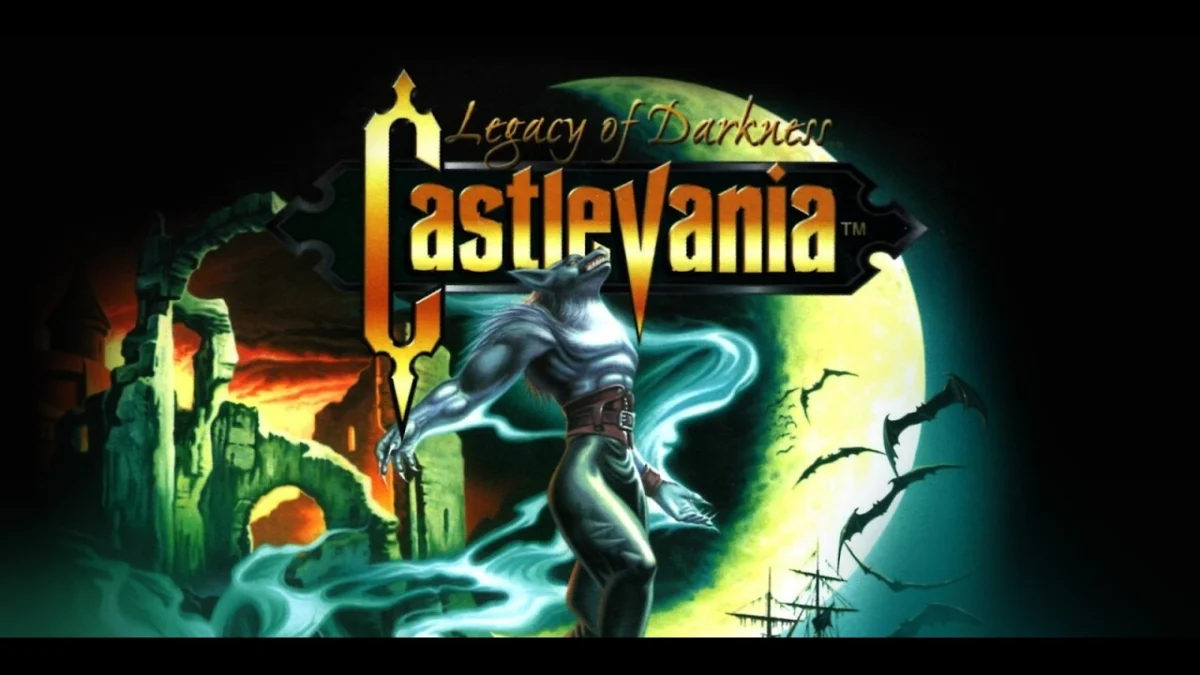
Developer fliperama86 has unveiled a significant work-in-progress recompilation project for Castlevania: Legacy of Darkness, the expanded Nintendo 64 title. This ambitious endeavor allows the classic 3D action-adventure game to run natively on Windows, Mac, and Linux systems, eschewing traditional emulation in favor of direct code translation. The result is a substantial modernization of the N64 experience, offering features such as 4K resolution, high frame rates, and seamless modern controller support, effectively transforming the two-decade-old game into a more contemporary-feeling experience without a full ground-up remake. This project, which requires an original N64 ROM to function, marks a notable advancement in the realm of fan-driven game preservation and enhancement, making a cult classic more accessible and visually impressive for a new generation of players and long-time fans alike.
Understanding Recompilation: A Technical Leap for Retro Gaming
The distinction between recompilation and emulation is crucial to understanding the significance of fliperama86’s work. Traditional emulation involves software mimicking the hardware architecture of an older console, translating its instructions on the fly. While highly effective and widely used, emulation can introduce overhead, latency, and sometimes graphical or audio inaccuracies, as it’s essentially a simulation layer. Recompilation, on the other hand, involves taking the original game’s machine code and translating it directly into native instructions that a modern PC’s CPU can execute. This process bypasses the need for an emulator, allowing the game to run as if it were originally developed for the target platform.
The benefits of native recompilation are manifold. Performance is often significantly improved, as the game code runs directly on the host system without the overhead of hardware simulation. This enables higher resolutions, uncapped frame rates, and the integration of modern rendering techniques. Furthermore, it can lead to greater accuracy in certain aspects, as the code is running closer to its original intent, albeit on a different instruction set. The primary challenge, however, lies in the complexity of the process. Each game, and often each console’s architecture, presents unique hurdles, making recompilation a highly game-specific and labor-intensive undertaking. Previous high-profile examples of successful recompilation projects include the native PC port of Super Mario 64, which similarly brought Nintendo’s iconic platformer to modern systems with enhanced visuals and performance, setting a precedent for what dedicated developers can achieve within the retro gaming community. The work on Castlevania: Legacy of Darkness follows in this tradition, demonstrating the potential for complex N64 titles to transcend their original hardware limitations.
The Legacy of Darkness: A Castlevania Tale in Three Dimensions
To fully appreciate the impact of this recompilation, it is important to contextualize Castlevania: Legacy of Darkness within its historical and developmental landscape. The late 1990s marked a pivotal, and often challenging, transition for many beloved 2D game franchises venturing into the third dimension. Konami’s Castlevania series, a hallmark of 2D action-platforming, was no exception.
Birth of a 3D Castlevania
The series’ first foray into 3D came with Castlevania for the Nintendo 64, released in 1999 in North America. Developed by Konami Computer Entertainment Kobe, the game aimed to translate the gothic horror and challenging gameplay of its predecessors into a new spatial paradigm. While ambitious, it received mixed reviews. Critics praised its atmosphere, innovative combat system that allowed for sub-weapon customization, and the courage to evolve the series. However, common complaints revolved around camera issues, often clunky controls in a 3D environment, and a general feeling that the transition wasn’t as seamless as hoped, especially when compared to contemporaries like The Legend of Zelda: Ocarina of Time. Despite its flaws, Castlevania 64 holds a unique place in the series’ history as a bold, if imperfect, experiment.
Legacy of Darkness: An Enhanced Iteration
Just months after the original Castlevania 64, Konami released Castlevania: Legacy of Darkness as an expanded and refined version. Launched in late 1999, Legacy of Darkness was not merely a director’s cut but a significant enhancement. It introduced two new playable characters, Cornell the Werewolf and Henry Oldrey, each with their own distinct storylines and gameplay mechanics. Cornell’s quest served as a prequel to the events of Castlevania 64, offering a deeper dive into the lore, while Henry’s journey provided an alternate perspective on the game’s world. The original protagonists, Reinhardt Schneider and Carrie Fernandez, were also included, with their scenarios tweaked and expanded.
Beyond new characters and narrative content, Legacy of Darkness featured numerous quality-of-life improvements over its predecessor. These included refinements to the camera system, minor graphical enhancements, and adjustments to enemy placement and level design. While these changes addressed some of the criticisms leveled against Castlevania 64, the core gameplay mechanics and engine remained largely the same, meaning some of the fundamental issues persisted. Nevertheless, Legacy of Darkness is often regarded by fans as the superior version, offering a more complete and polished experience of 3D Castlevania on the Nintendo 64. Its commercial performance was modest, reflecting the N64’s waning market share in 1999 and the niche appeal of 3D horror action games at the time. Yet, for many, it represents a fascinating, if sometimes frustrating, chapter in the storied history of the Castlevania franchise, a game ripe for modern re-evaluation through projects like fliperama86’s recompilation.
Quality-of-Life Enhancements: Modernizing an N64 Classic
The core appeal of fliperama86’s recompilation lies in its ability to inject significant quality-of-life improvements into Castlevania: Legacy of Darkness, fundamentally altering the user experience for modern hardware. The Nintendo 64, while revolutionary for its time, operated within technological constraints that are starkly apparent today. Games often ran at resolutions of 240p or 480i, with frame rates frequently dipping below 30 frames per second (fps), and sometimes as low as 20 fps in busy scenes. Textures were notoriously blurry, partly due to memory limitations and partly due to the console’s built-in anti-aliasing.
This recompilation project addresses these limitations directly:
- Native 4K Resolution: One of the most striking improvements is the ability to render the game natively in 4K resolution. This dramatically sharpens the visuals, bringing out details in environments and character models that were previously obscured by the N64’s low resolution and characteristic blur. While the original game’s assets were not designed for such high fidelity, the clarity offered by 4K rendering provides a fresh perspective on the game’s gothic aesthetic.
- High Frame Rates: The N64’s variable and often low frame rates could contribute to a sluggish feel. The recompilation allows Legacy of Darkness to run at significantly higher, stable frame rates, potentially reaching 60 fps or even higher depending on the system’s capabilities. This translates to smoother animations, more responsive controls, and a generally more fluid and modern gameplay experience.
- Modern Control Support: A common hurdle when playing retro games on PC is configuring controllers. The project boasts auto-detection of USB controllers, eliminating the need for manual mapping and simplifying the setup process considerably. This ensures that players can immediately jump into the game with the comfort and familiarity of contemporary gamepads, a stark contrast to the N64’s unique, trident-shaped controller.
- Cross-Platform Compatibility: The availability across Windows, Mac, and Linux ensures broad accessibility, allowing a wider range of users to experience the enhanced title without platform-specific barriers.
It is important to note that fliperama86 describes this as a "side project" with the main goal to run the game "mostly as is on N64, just with a few QoL." This indicates a deliberate choice to preserve the core integrity and feel of the original game, rather than embarking on a full-scale remaster that might alter fundamental gameplay or art direction. The developer’s intention is to provide a "much more modern-feeling improvement" while retaining the authentic N64 experience, glitches and all, as observed by initial testers who noted some "very N64" background glitches that likely existed in the original. This philosophy balances modernization with respect for the source material, offering a compelling proposition for both purists and those seeking a more polished play experience.
The Development Journey and Community Collaboration
The development of such a complex project is rarely a solitary endeavor, and fliperama86’s work on Castlevania: Legacy of Darkness is no exception. The developer explicitly acknowledges the indirect, yet significant, contribution of K64Ret and their project, cv64. While not a direct derivative, the insights, code, or methodologies from K64Ret’s work on Castlevania 64 proved instrumental in the progress of the Legacy of Darkness recompilation. This highlights the collaborative and often interdependent nature of open-source development within the retro gaming community, where shared knowledge and previous efforts can accelerate new projects.

The project is hosted on GitHub, a prominent platform for open-source software development. This not only makes the current version (v0.2.3) readily available for download but also opens the door for broader community involvement. By making the source code accessible, fliperama86 invites other developers and enthusiasts to examine the project, report bugs, suggest improvements, and even contribute directly to its ongoing development. This open-source model is a cornerstone of many successful fan-driven preservation and enhancement efforts, fostering a collective spirit of innovation and dedication to classic games. The call for contributions is a testament to the project’s evolving nature and the potential for it to grow and improve with wider community engagement. Such collaborative efforts are vital for tackling the intricate technical challenges posed by N64 recompilation, given the console’s unique and often idiosyncratic hardware architecture.
Broader Implications: Preservation, Access, and Intellectual Property
The emergence of projects like the Castlevania: Legacy of Darkness recompilation carries significant implications across several domains: digital preservation, game accessibility, and the complex landscape of intellectual property.
Digital Preservation
As original hardware ages and inevitably fails, and as physical media degrades, the digital preservation of video games becomes increasingly critical. Fan-driven recompilations and ports offer a robust alternative to emulation for keeping classic titles playable. By converting games to run natively on modern operating systems, these projects future-proof them against hardware obsolescence. They ensure that future generations can experience these cultural artifacts in a form that is not only functional but often enhanced, thereby maintaining their relevance and playability far beyond their original lifespan. This project directly contributes to the ongoing effort to preserve the N64’s unique library, a console that presented particular challenges for both developers and later for preservationists due to its custom silicon and unique development environment.
Enhanced Accessibility
The requirement for an original N64 ROM file for this recompilation project is a crucial aspect that balances accessibility with legal considerations. For users who possess the original game, this project offers an unprecedented level of access. They no longer need to maintain aging N64 consoles, acquire specialized hardware for video output on modern displays, or grapple with complex emulator configurations. The ease of setup, including automatic controller detection, dramatically lowers the barrier to entry, allowing a wider audience to experience Castlevania: Legacy of Darkness in a polished, modern format. This expanded accessibility can introduce a classic to players who might otherwise never have encountered it, fostering renewed interest in the Castlevania series and its history.
The Legal Landscape of Intellectual Property
Projects like this operate within a legally ambiguous space. While they are born from a passion for game preservation and community contribution, they involve the intellectual property of major publishers, in this case, Konami. The common practice of requiring users to provide their own ROM file is a key strategy employed by these projects to navigate copyright law. It asserts that the project itself does not distribute copyrighted material, but rather provides a tool for users to play a game they already legitimately own.
Historically, major publishers have adopted varying stances towards fan-made projects. Some issue cease-and-desist orders, particularly if projects are commercialized or seen as directly competing with official releases or remasters. Others, like Nintendo in some instances, have been known to be more aggressive in protecting their IPs. However, many publishers, including Konami, have often taken a more lenient approach towards non-commercial, fan-driven preservation efforts, especially when they clearly state the need for an original ROM. This tacit tolerance acknowledges the cultural value of such projects and the positive community engagement they generate. The fact that fliperama86’s project is open-source and non-commercial further strengthens its position as a community-driven preservation effort rather than an infringement designed for profit. Nevertheless, the legal status remains precarious, highlighting the need for clearer guidelines or even official support for fan-driven preservation initiatives from the industry.
Technical Deep Dive: N64’s Unique Architecture and Recompilation Challenges
The Nintendo 64 stands out among its console peers for its unique and often challenging architecture, which directly impacts the complexity of creating native recompilations. Unlike the PlayStation, which used standard CPUs, the N64 relied on a custom chip called the Reality Co-Processor (RCP) for all its graphics and audio processing. This RCP could be programmed using different "microcodes," essentially custom instruction sets that developers could optimize for their specific game’s needs. This flexibility was a powerful tool for developers but creates significant hurdles for recompilers.
- Custom Microcode: Each game might use a slightly different microcode for its graphics and audio, meaning a recompiler cannot simply translate a generic set of instructions. It must understand and adapt to these game-specific variations, making a universal N64 recompiler nearly impossible. Instead, recompilers are often tailored to specific games or families of games that share similar microcodes.
- Unified Memory Architecture: The N64 utilized a unified memory system, where a single pool of RAM was shared between the CPU and RCP. This design, while efficient for its time, meant that developers had to carefully manage memory access, and recompilers must accurately replicate these memory interactions on a system with separate CPU and GPU memory.
- Emulation of Peripherals: Beyond the core processing, recompilers must also handle the accurate translation of input from the N64’s unique controller, memory paks, and rumble paks. The seamless auto-detection of USB controllers in fliperama86’s project is a testament to the effort put into this aspect.
These factors explain why N64 recompilation projects are far less common than those for simpler consoles. They require a deep understanding of the console’s low-level operation and intricate reverse engineering skills. The successful recompilation of Castlevania: Legacy of Darkness therefore represents not just a port, but a significant technical achievement that navigates these inherent complexities, demonstrating the dedication and expertise present within the retro gaming development community.
Installation and Accessibility
For enthusiasts eager to experience Castlevania: Legacy of Darkness with these modern enhancements, the process has been streamlined for accessibility. The recompilation is currently available for download via fliperama86’s GitHub repository, specifically under the releases tag v0.2.3. This centralized location provides the necessary executables for Windows, Mac, and Linux operating systems.
The primary requirement for running the recompiled game is an original N64 ROM file of Castlevania: Legacy of Darkness. This ensures that users are leveraging their legally obtained copy of the game, aligning with the project’s non-commercial and preservation-focused ethos. Once the executable is run and the ROM is provided, the project’s intelligent design takes over, with the noted ability to auto-detect USB controllers without any manual mapping, allowing for an immediate and familiar gameplay experience. The original article’s brief test drive confirmed the project’s robustness, noting that "all the main gameplay looked and worked very well" despite some minor background glitches indicative of the original N64 experience. This ease of installation and playability lowers the barrier for entry significantly, making it simpler for a broad audience to engage with this enhanced classic.
In conclusion, fliperama86’s recompilation of Castlevania: Legacy of Darkness is a landmark achievement in fan-driven game preservation and modernization. By transcending the limitations of traditional emulation through native code translation, the project offers a vastly improved experience of the N64 classic, bringing it to modern systems with 4K resolution, high frame rates, and seamless controller support. This endeavor not only breathes new life into a challenging yet significant chapter of the Castlevania saga but also underscores the vital role of open-source development and community collaboration in ensuring the longevity and accessibility of video game history. As digital preservation continues to be a critical concern, projects like this pave the way for a future where classic games can be experienced in their most refined forms, bridging the gap between nostalgic memories and contemporary expectations.