Farhan hamdan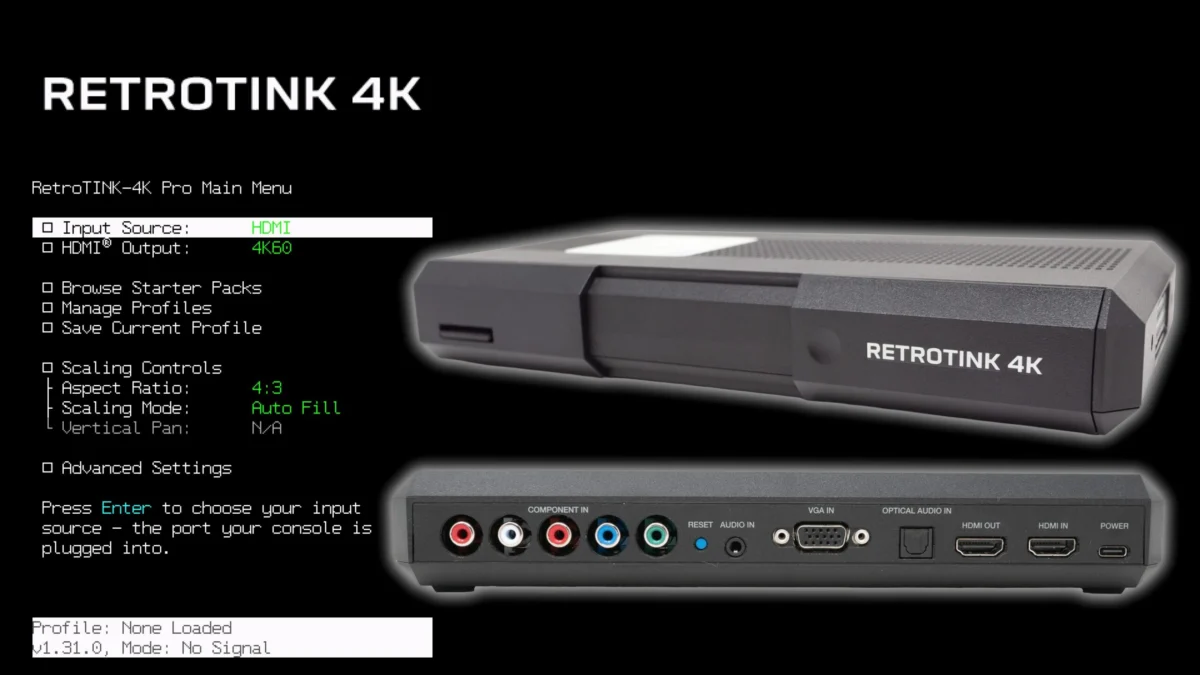
Mike Chi, the acclaimed engineer behind the innovative RetroTINK line of video processors, has officially rolled out firmware update version 1.31.0 for the RetroTINK 4K CE and Pro models. This significant release introduces a completely redesigned official menu system, aimed at enhancing user experience through improved accessibility to critical controls and real-time display of active input and output resolutions. The update also integrates a new shortcut for power users, allowing direct access to advanced settings via the "AUX8" button on the remote, underscoring a commitment to both novice and expert users within the retro gaming and video preservation communities.
The RetroTINK 4K, often lauded as a pinnacle of video upscaling technology for legacy systems, has carved out a crucial niche in a market increasingly focused on high-definition displays. Its ability to meticulously process and output signals from classic consoles, computers, and video sources at resolutions up to 4K without introducing noticeable lag has made it an indispensable tool for enthusiasts, content creators, and archivists alike. The device’s foundation in FPGA (Field-Programmable Gate Array) technology allows for unparalleled precision and flexibility in signal handling, setting it apart from software-based solutions or simpler upscalers. The continuous development through firmware updates is a testament to Mike Chi’s dedication to refining this sophisticated hardware, ensuring it remains at the forefront of retro video processing.
The Evolution of RetroTINK: A Chronology of Innovation
The journey of RetroTINK began with Mike Chi’s pioneering efforts to address the challenges of connecting vintage video game consoles and other analog sources to modern digital displays. Early models like the RetroTINK 2X series offered accessible and high-quality solutions for converting composite, S-Video, and component signals to HDMI, proving that affordable, low-latency upscaling was achievable. These initial successes laid the groundwork for more advanced iterations, culminating in the highly anticipated RetroTINK 5X-Pro. The 5X-Pro elevated the standard significantly, introducing advanced scaling options, deinterlacing capabilities, and extensive customization, further cementing RetroTINK’s reputation as a leading innovator.
The announcement and subsequent release of the RetroTINK 4K marked a new era. Designed to be the ultimate solution for video fidelity and flexibility, the 4K model pushes the boundaries with its ability to handle virtually any analog input and output pristine 4K signals. Its development timeline has been characterized by a series of robust firmware updates, each building upon the last to introduce new features, optimize performance, and address community feedback. For instance, firmware v1.21.0, a notable predecessor, introduced the capability for users to store a full page of custom modelines, allowing for highly specific resolution profiles tailored to individual games or video sources. This iterative development model, driven by continuous engineering and community interaction, highlights a responsive approach to product enhancement that is deeply valued by its user base.
Firmware 1.31.0: A Deeper Dive into User Experience Enhancements
The core of firmware 1.31.0 lies in its brand-new official menu interface. This redesign is not merely cosmetic; it represents a strategic shift towards greater intuitive control and immediate feedback. The previous menu, while functional, sometimes required navigation through multiple layers to access frequently used settings. The new interface addresses this directly by consolidating common controls into a more accessible structure. Users will now find essential adjustments readily available, significantly reducing the time and effort required to fine-tune their video output.
A particularly valuable addition for all users is the real-time display of active input and output resolutions. This feature eliminates guesswork, providing immediate visual confirmation of the signal being processed and the resulting output resolution. For retro enthusiasts who frequently switch between various consoles, each with its unique native resolution, this display is invaluable for quickly verifying settings and troubleshooting potential issues. It empowers users with a clearer understanding of their signal chain, fostering a more confident and efficient setup process.
For advanced users, the introduction of the "AUX8" button shortcut to the advanced settings menu is a welcome efficiency gain. The RetroTINK 4K offers a staggering array of granular controls, from intricate scaling parameters to detailed color adjustments and specialized filters. Accessing these settings previously involved navigating through the main menu structure. The dedicated shortcut streamlines this process, allowing power users to dive directly into the deeper configuration options without unnecessary steps. This attention to both general usability and advanced control demonstrates a thoughtful design philosophy that caters to the diverse skill levels within the RetroTINK community.
The Indispensable Role of Custom Modelines and VHS Preservation
Beyond the UI improvements, firmware 1.31.0 further solidifies the RetroTINK 4K’s standing as a versatile tool for video preservation, particularly with its updated VHS Pack / Modelines. The provided pack, dated June 12, 2026, includes a comprehensive suite of modelines, many of which are specifically designed for NTSC and VHS-specific use cases. Modelines are essentially custom display timings that dictate how a video signal is processed and outputted, allowing for pixel-perfect aspect ratios and resolutions that faithfully replicate the original source material.

The significance of these specialized modelines for VHS cannot be overstated. VHS, a notoriously challenging format to digitize and display cleanly on modern screens, benefits immensely from the RetroTINK 4K’s advanced processing capabilities. Standard digital converters often struggle with the unique characteristics of analog video from VHS tapes, such as unstable sync signals, interlacing artifacts, and non-standard resolutions. The RetroTINK 4K, especially with its VHS-specific modelines and profiles, is engineered to meticulously handle these peculiarities, providing a clearer, more stable, and visually accurate rendition of VHS content. This capability is vital for archivists, filmmakers, and casual users looking to preserve cherished home videos or classic media in a high-quality digital format. The update reinforces the RetroTINK 4K’s utility not just for gaming but as a critical component in the broader effort to digitize and preserve analog video heritage.
Mike Chi’s Development Philosophy: Transparency and Community Engagement
Mike Chi’s approach to firmware development has consistently emphasized transparency and responsiveness to his user base. The "experimental firmware" label, often seen on pre-release versions, might raise concerns for some users. However, the accompanying clarification reiterates that this label is primarily an informational tag, indicating that some features may still be under active development or refinement. Crucially, it assures users that there is "zero chance of harming your device," "no warranty risk," and the ability to "always just go back to an official firmware at any time." This proactive communication strategy builds trust and encourages users to test new features, providing valuable feedback that directly shapes future updates.
The acknowledgment of community feedback regarding the experimental menu directly contributed to the refined version seen in 1.31.0. This collaborative development model, where user insights are actively solicited and integrated, is a hallmark of Mike Chi’s work. It fosters a sense of shared ownership and ensures that updates genuinely address the needs and desires of the user community. The sentiment that the new menu "kind of feels like the menu was always this way" speaks volumes about the success of this iterative process and the intuitive design achieved through community-driven refinement.
Implications for Users and the Retro Community
The release of firmware 1.31.0 carries several significant implications for both individual RetroTINK 4K users and the broader retro community:
- Enhanced User Experience: The streamlined menu and resolution display significantly lower the barrier to entry for new users while improving efficiency for experienced ones. This translates to less time configuring and more time enjoying retro content.
- Increased Product Longevity and Value: Continuous, meaningful firmware updates ensure that the RetroTINK 4K remains a state-of-the-art device, adapting to new challenges and community demands. This commitment to ongoing support enhances the long-term value proposition for owners, protecting their investment in premium hardware.
- Strengthened Preservation Efforts: The dedicated improvements for VHS capture and other niche analog formats underscore the RetroTINK 4K’s role as a vital tool for digital preservation. As analog media degrades, high-quality digitization becomes increasingly urgent, and devices like the RetroTINK 4K are at the forefront of this effort.
- Community-Driven Innovation: The success of this update, largely attributed to community feedback, reinforces the power of collaborative development in niche markets. This model not only delivers better products but also strengthens the bond between developers and users.
- Reinforced Market Leadership: In a competitive landscape of video processors, the RetroTINK 4K, through consistent innovation and user-centric design, maintains its position as a leading solution for high-fidelity retro video processing. Its FPGA architecture, combined with meticulous software refinement, offers a level of performance and flexibility few can match.
Looking Ahead: The Future of Retro Video Processing
The ongoing development of the RetroTINK 4K, exemplified by firmware 1.31.0, points towards a future where the line between retro and modern display technologies continues to blur. As display technologies evolve, so too must the tools that bridge the gap for legacy content. Mike Chi’s commitment to pushing the boundaries of what’s possible with analog-to-digital conversion ensures that retro enthusiasts will continue to have access to cutting-edge solutions for experiencing their beloved classics with unparalleled fidelity. The iterative nature of these updates suggests that the RetroTINK 4K will continue to evolve, incorporating new features and optimizations as technology advances and community needs emerge. This proactive approach ensures that the device remains not just a product, but a living platform for retro video excellence.
For all RetroTINK 4K owners, the recommendation to try firmware 1.31.0 is strong, given the significant user experience enhancements and the continued refinement of its powerful capabilities.
Users can download the latest experimental firmware, including version 1.31.0, directly from the official RetroTINK-LLC GitHub repository: https://retrotink-llc.github.io/firmware/4k-experimental.html.
For those interested in acquiring RetroTINK products or exploring the full range of options, information can be found at: https://retrorgb.com/retrotink.html.
The updated VHS Pack / Modelines for the RetroTINK 4K are available for download here: https://www.retrorgb.com/assets/RT4K_VHS_2026-06-12.zip.