
 Farhan hamdan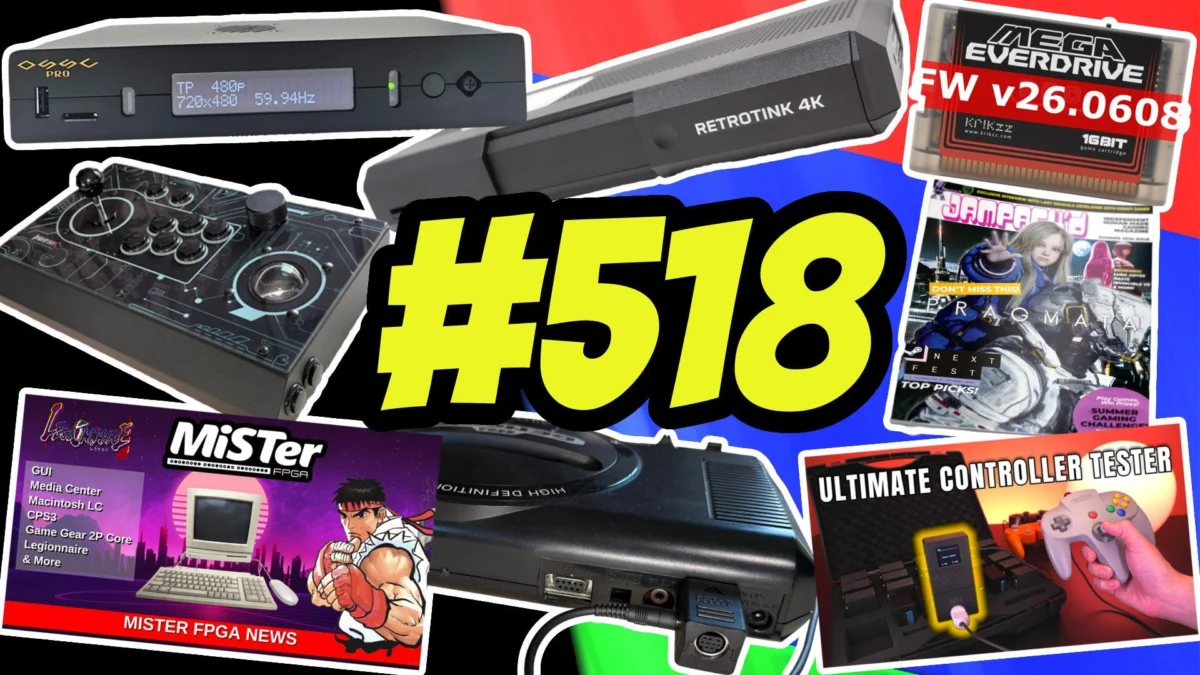
The latest edition of the RetroRGB Weekly Roundup, published on June 17th, 2026, has provided the retro gaming community with a detailed overview of crucial developments spanning hardware innovations, software updates, and community-driven initiatives. This week’s digest covers everything from the launch of a new print magazine dedicated to retro technology to significant firmware enhancements for popular video upscalers and flash cartridges, underscoring the vibrant and continuously evolving landscape of vintage gaming preservation and enjoyment. The roundup, disseminated through both video and various audio-only podcast services including iTunes, Google Podcasts, Stitcher, Spotify, and Amazon Music, serves as a vital informational hub for enthusiasts seeking to stay abreast of the latest advancements in the niche yet passionate retro gaming scene.
A Deep Dive into the Week’s Key Developments
The period leading up to June 17th, 2026, has been particularly active, witnessing a convergence of significant updates that promise to enhance the retro gaming experience for a diverse audience. These developments reflect ongoing efforts by independent developers and small companies to push the boundaries of compatibility, visual fidelity, and accessibility for classic gaming systems.
JAMPACK’d Magazine: A Tangible Revival for Retro Tech Journalism
One of the most notable announcements in this week’s roundup is the launch of JAMPACK’d Magazine by prominent retro tech personality EposVox. This new publication marks a significant, and perhaps unexpected, move towards physical media in an increasingly digital world, offering a print platform for in-depth articles, reviews, and analyses of retro gaming and technology. In an era dominated by online content and ephemeral digital updates, the decision to launch a print magazine speaks to a desire within the community for a more curated, tangible, and archival form of journalism. EposVox, known for his comprehensive video essays and technical breakdowns, brings a wealth of expertise to this venture, promising high-quality content that delves into the intricacies of vintage hardware, software, preservation techniques, and the cultural impact of classic gaming.
The magazine’s format suggests a commitment to detailed exploration, potentially featuring exclusive interviews with developers, historical retrospectives, and technical guides that benefit from a well-laid-out print presentation. This initiative could serve as a critical resource for documentation, offering a permanent record of developments and insights that might otherwise be lost in the vastness of the internet. The nostalgic appeal of a physical magazine itself resonates deeply with the retro gaming ethos, providing a complementary experience to the digital tools and emulation technologies discussed elsewhere in the roundup. It also represents a burgeoning trend where niche communities are increasingly willing to support high-quality, specialized content, regardless of its medium. The success of JAMPACK’d Magazine will likely hinge on its ability to deliver unique, compelling content that justifies its physical form factor and differentiates itself from abundant online alternatives.
MiSTer FPGA Advancements: Expanding Emulation Horizons
Lu’s ongoing contributions to the MiSTer FPGA project continue to be a cornerstone of retro gaming news, with this week’s updates bringing a flurry of enhancements. The MiSTer FPGA platform, celebrated for its hardware-accurate emulation of classic consoles and arcade systems through field-programmable gate arrays, has seen significant progress. A standout development is the beta release of the CPS3 core. The CPS3 (Capcom Play System 3) arcade board is famously challenging to emulate accurately due to its sophisticated security measures and proprietary hardware. Its inclusion in MiSTer, even in beta, represents a monumental achievement for the community, bringing highly sought-after arcade titles like Street Fighter III and JoJo’s Bizarre Adventure to a level of fidelity previously thought impossible outside of original hardware. This development is crucial for arcade game preservation, offering a robust and accessible platform for experiencing these titles as intended.
Beyond the CPS3 core, Lu’s updates include a new Graphical User Interface (GUI), which promises to streamline user interaction and improve the overall user experience. An intuitive GUI is vital for making complex FPGA systems more approachable for a wider audience, reducing the barrier to entry for enthusiasts. Furthermore, the introduction of media casting capabilities expands the MiSTer’s utility beyond gaming, potentially allowing users to stream video and audio content, transforming the device into a more versatile media hub. This enhancement broadens the MiSTer’s appeal, integrating it more seamlessly into modern home entertainment setups. Finally, the continuous release of new arcade cores signifies the relentless dedication of the MiSTer development community to digitally preserve and make accessible a vast library of arcade history, reinforcing the platform’s position as a leading force in accurate retro hardware recreation. These developments collectively enhance MiSTer’s capabilities, solidifying its reputation as a premier platform for retro gaming accuracy and versatility.
OSSC Pro: Meeting Demand for High-Quality Video Upscaling
For enthusiasts prioritizing pristine video quality from their original retro consoles, the OSSC Pro being back in stock is welcome news. The Open Source Scan Converter (OSSC) Pro is a sophisticated video upscaler designed by Mike Chi, renowned for its ability to convert analog video signals from vintage gaming systems into modern digital formats (HDMI) with minimal lag and exceptional image clarity. Its high demand often leads to stock shortages, making this replenishment a significant event for those waiting to upgrade their setups. The OSSC Pro distinguishes itself with advanced features such as enhanced scanline generators, a wide array of input options, and highly customizable output resolutions, allowing users to fine-tune their visual experience to an unprecedented degree.
The device is critical for bridging the gap between aging analog consoles and contemporary digital displays, which often struggle to correctly interpret and display low-resolution, interlaced signals. By performing real-time line doubling and other processing techniques, the OSSC Pro ensures that classic games look sharp, vibrant, and free from artifacts on HDTVs and monitors. Its return to stock underscores the ongoing, robust market for premium retro video processing equipment, as a growing number of gamers seek to experience their classic libraries with the best possible visual fidelity. The availability of such high-end devices is essential for preserving the aesthetic integrity of retro games for a new generation of players.
Mega Everdrive Firmware v26.0608: Enhancing Sega Genesis Flash Cart Functionality
Krikzz, a revered name in the flash cartridge community, has released firmware version 26.0608 for the Mega Everdrive. Flash cartridges, like the Mega Everdrive, are indispensable tools for retro gamers, allowing them to play entire libraries of games from a single cartridge on original hardware. This particular update for the Mega Everdrive, designed for the Sega Genesis/Mega Drive, likely brings a host of improvements, including enhanced game compatibility, bug fixes, and potentially new features or optimizations for existing functionalities.
Firmware updates are crucial for flash carts as they continually refine the user experience, address edge cases in game compatibility, and sometimes even introduce support for homebrew titles or fan translations. Version 26.0608 would aim to ensure that a broader range of Sega Genesis, Master System, and 32X titles run flawlessly, potentially improving save state reliability, menu navigation, or boot times. The continuous support from developers like Krikzz through regular firmware updates is a testament to their commitment to product longevity and community satisfaction, ensuring that these vital preservation tools remain cutting-edge and reliable for years to come. Such updates extend the life and utility of classic consoles, providing modern conveniences without compromising the authentic hardware experience.
Retroverse Controller Tester Demod: Precision for Input Devices

The demonstration of the Retroverse Controller Tester highlights a specialized tool designed to address a critical aspect of retro gaming: input device reliability. Controllers for vintage consoles are often susceptible to wear and tear, leading to unresponsive buttons, joystick drift, or other input inaccuracies. The Retroverse Controller Tester provides a robust solution for diagnosing these issues with precision. This device likely offers a visual and quantitative analysis of controller inputs, displaying button presses, axis movements, and potentially even analog values in real-time.
For enthusiasts, collectors, and repair technicians, such a tool is invaluable. It allows for accurate identification of faulty components, aiding in the repair and restoration of vintage controllers. Moreover, it can be used to compare the performance of different controllers, assess input lag, and ensure that a controller is performing optimally for competitive play or casual enjoyment. The emphasis on controller accuracy and reliability reflects a broader trend within the retro gaming community to not only preserve games but also the authentic play experience, free from technical hitches. This tool contributes significantly to maintaining the high standards of performance expected by serious retro gamers.
RetroTINK 4K Firmware v1.27.0: Pushing the Boundaries of Visual Fidelity
Mike Chi’s RetroTINK 4K, a premium video upscaler, has received a significant firmware update, version 1.27.0. The RetroTINK 4K is positioned at the pinnacle of retro video processing, offering unparalleled 4K upscaling capabilities for a vast array of classic consoles. This firmware update likely introduces new features, enhances existing functionalities, and addresses any minor bugs, further solidifying its status as a flagship device for high-definition retro gaming.
Typical updates for such advanced devices include expanded compatibility with various console output modes, improved deinterlacing algorithms, new scaling options, enhanced color processing, and perhaps even experimental features for specific console quirks. Version 1.27.0 would aim to refine the already exceptional image quality, reduce latency even further, and provide more customization options for discerning users. The RetroTINK 4K is designed for those who demand the absolute best in visual fidelity from their retro systems on modern 4K displays, and continuous firmware support ensures that it remains ahead of the curve in a rapidly evolving technological landscape. These updates are vital for ensuring that the visual experience of classic games can stand alongside contemporary titles in clarity and vibrancy, making them more accessible and enjoyable on modern displays.
Genesis 1-2 Output Converter: Solving AV Compatibility Challenges
The introduction of a Genesis 1-2 Output Converter addresses a common compatibility issue faced by Sega Genesis/Mega Drive enthusiasts. The original Genesis (Model 1) and its subsequent revision (Model 2) utilized different AV output ports and sometimes had subtle differences in their audio and video circuitry. Model 1 is often lauded for its superior audio output, while Model 2 adopted a more compact form factor and a different AV port. This converter allows users to seamlessly adapt the output from one model to be compatible with accessories or cables designed for the other, enhancing flexibility and convenience.
Such an adapter is particularly useful for gamers who own both models or wish to use specific high-quality AV cables or modded accessories that might only be compatible with one type of Genesis output. It removes a layer of frustration and expense by eliminating the need for duplicate accessories or complex wiring solutions. This seemingly small hardware development is indicative of the community’s meticulous attention to detail and its ongoing efforts to resolve every conceivable compatibility hurdle, ensuring that all iterations of beloved retro consoles can be fully enjoyed with modern and specialized equipment.
Fightbox R10 Quick Update: Enhancing Competitive Gaming Hardware
The quick update regarding the Fightbox R10 Pro Arcade Stick signals ongoing development and support for competitive fighting game hardware. Arcade sticks are crucial peripherals for the fighting game community, offering a tactile and precise control scheme reminiscent of traditional arcade cabinets. An update for the Fightbox R10 could encompass firmware improvements, new feature announcements, or information on availability and production.
These updates often focus on reducing input lag, improving button responsiveness, enhancing compatibility with various gaming platforms, or introducing customizable features like LED lighting or button remapping. For professional and amateur fighting game players, the performance and reliability of their arcade stick are paramount. The continued refinement of products like the Fightbox R10 demonstrates the industry’s commitment to providing high-quality, competitive-grade peripherals that meet the rigorous demands of fighting game enthusiasts, ensuring a superior gameplay experience in both casual and tournament settings.
Jeep Toolkit: A General Utility for DIY Enthusiasts
An interesting inclusion in the roundup is a mention of a "Jeep Toolkit." While seemingly unrelated to retro gaming hardware directly, its presence in a retro tech roundup suggests its utility for general DIY tasks, repairs, or modifications that enthusiasts often undertake. Retro gaming often involves a hands-on approach, including console modding, component replacement, and general electronics repair. A versatile toolkit, even if branded for automotive use, would likely contain a range of precision tools, screwdrivers, and specialized instruments that are invaluable for working with delicate electronics.
This inclusion subtly highlights the DIY spirit prevalent in the retro gaming community, where users often take matters into their own hands to repair, restore, and enhance their vintage equipment. It underscores the broader ecosystem of tools and resources that support the core hobby, acknowledging that maintenance and modification are integral parts of the retro gaming experience.
Community Support and Future Outlook
The comprehensive nature of Weekly Roundup #518 underscores the dynamic and passionate retro gaming community. The continuous flow of innovations, from print magazines and advanced FPGA cores to sophisticated video upscalers and essential firmware updates, demonstrates a collective commitment to preserving and enhancing the legacy of classic video games. These efforts are often driven by independent developers and small teams, whose work relies heavily on community support.
The host of RetroRGB, Bob, consistently emphasizes the importance of community contributions, whether through monthly support services like Patreon, direct tips, or simply by utilizing affiliate links for everyday purchases. This model of community-funded development and content creation is critical for sustaining the intricate ecosystem of retro gaming, enabling creators and developers to dedicate their time and resources to these specialized projects. The support links provided in the roundup—including Patreon for direct support and Amazon affiliate links for equipment—are a testament to this collaborative spirit. As the retro gaming landscape continues to evolve, propelled by technological advancements and unwavering enthusiast dedication, the role of community support will remain paramount in fostering innovation and ensuring the long-term viability of this cherished hobby. The announcements in this roundup paint a picture of a vibrant, active community constantly pushing the boundaries of what is possible in retro gaming.








