Retno Hari Mulyono
The Mazda MX-5 Miata, particularly the second-generation NB model produced between 1998 and 2005, remains a cornerstone of the global enthusiast and grassroots racing communities. While celebrated for its lightweight chassis and mechanical purity, the vehicle’s factory instrumentation has long been a point of contention for drivers seeking high-performance telemetry. Recent developments in aftermarket integration have seen a shift away from traditional auxiliary pods toward sophisticated digital solutions, exemplified by the adoption of the CANchecked MFA 2.0 multifunction display and bespoke aesthetic upgrades from RevLimiter. This transition reflects a broader trend in the "restomod" and tuning sectors: the pursuit of "OEM+" integration, where modern digital capability is seamlessly embedded within a classic analog aesthetic.
The Limitations of Factory Instrumentation in the NB Miata
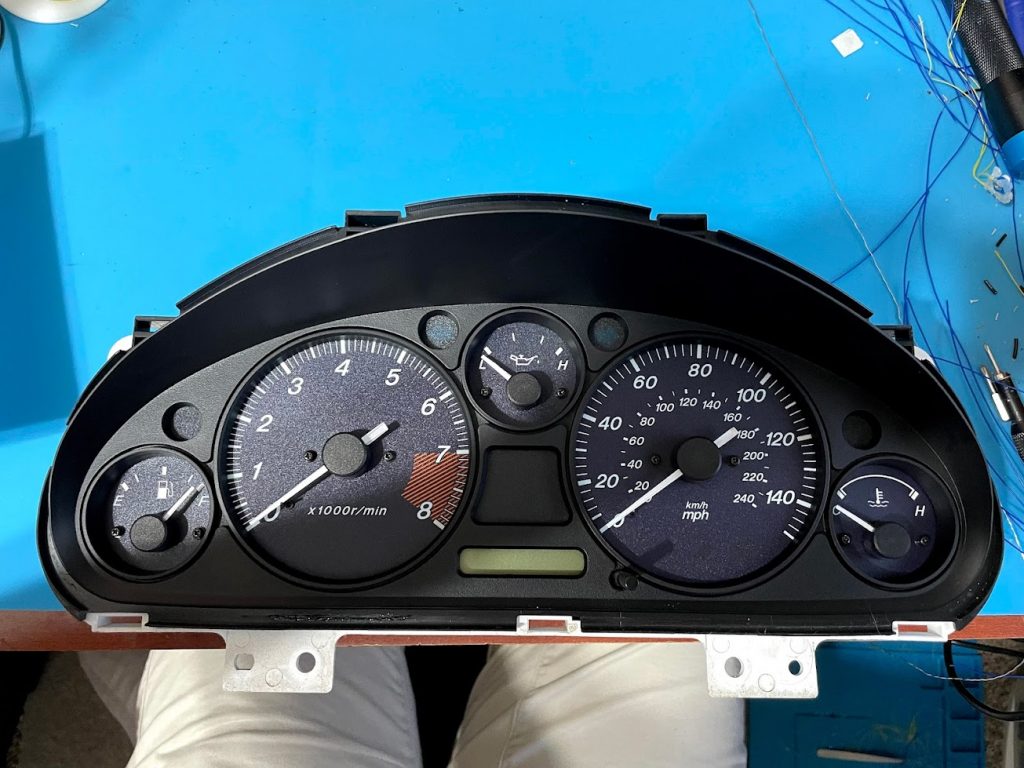
To understand the necessity of modern gauge upgrades, one must examine the technical limitations of the stock NB Miata cluster. From the factory, the instrument panel consists of a large tachometer and speedometer flanked by smaller gauges for fuel level, coolant temperature, and oil pressure. However, for the purpose of spirited driving or competitive track use, the latter two are widely considered "dummy gauges" by the automotive engineering community.
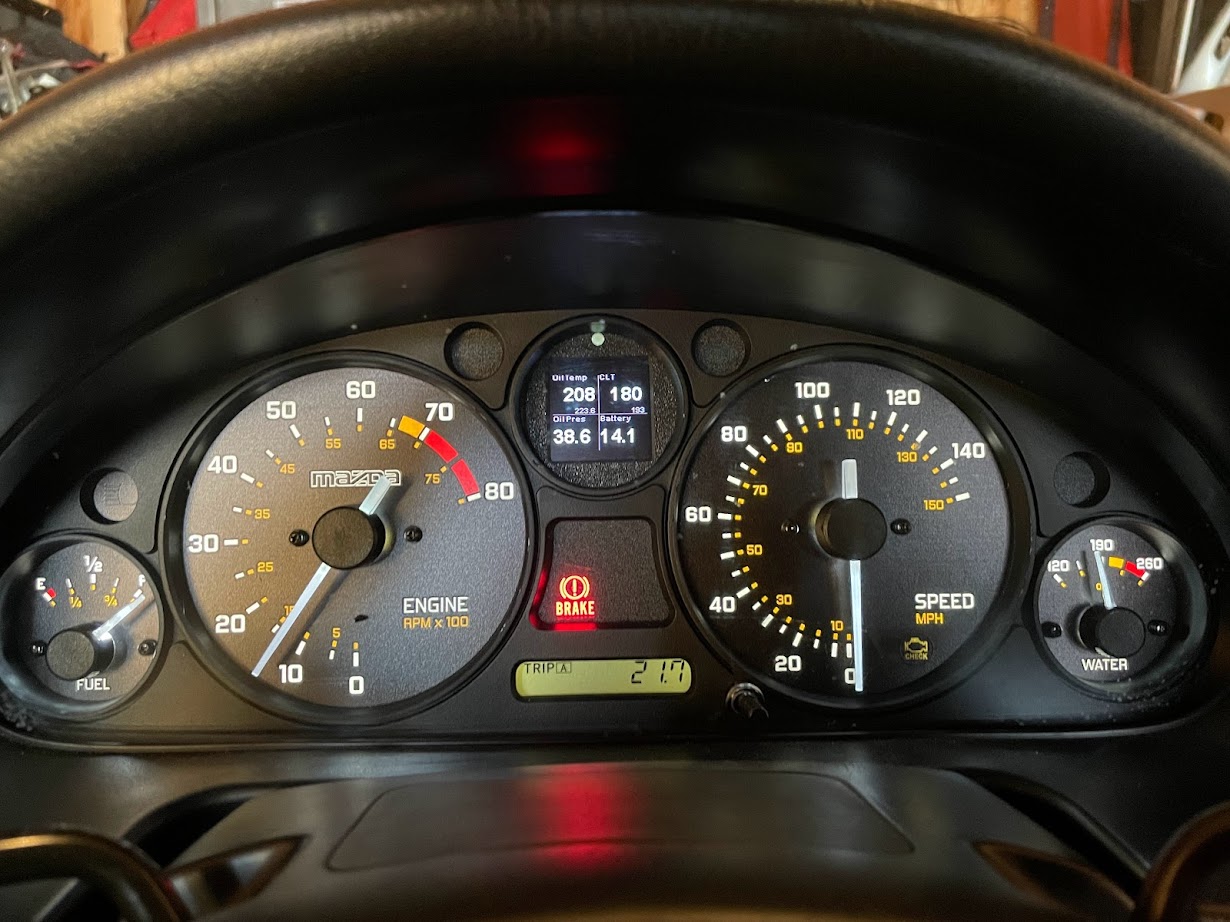
The stock oil pressure gauge in the NB generation operates as a dampened binary switch rather than a linear sensor. Once the engine reaches a minimum threshold of pressure, the needle moves to a fixed central position and remains static regardless of actual fluctuations in pressure or engine RPM. By the time the gauge registers a drop, the engine has often already sustained critical damage. Similarly, the factory coolant temperature gauge utilizes a non-linear "plateau" logic. It remains centered across a broad temperature range—typically between 160°F and 210°F—only moving toward the red zone once the engine is significantly overheating. For drivers pushing vehicles in autocross or track environments, this lack of granular data represents a significant risk to mechanical longevity.
The Evolution of Auxiliary Monitoring: From A-Pillar to Digital Integration
Historically, Miata owners addressed these data gaps by installing auxiliary gauges. A common chronology for these modifications begins with the installation of a triple-gauge A-pillar pod. This setup typically houses 52mm analog or digital gauges, such as those produced by Innovate Motorsports or AEM, to monitor critical metrics like vacuum/boost, oil temperature, and wideband air-fuel ratios.
While effective at providing data, the A-pillar configuration introduces several ergonomic and safety compromises. In the compact cabin of a Miata, a triple-gauge pod creates a substantial blind spot in the driver’s forward-left field of vision. In competitive disciplines like autocross, where precise placement of the front tires is essential for navigating tight cone sequences, this obstruction can negatively impact lap times and safety. Furthermore, the installation of multiple standalone gauges necessitates a complex wiring harness, often requiring the merging of aftermarket pods with factory trim pieces, leading to a cluttered interior environment that deviates from the vehicle’s original design language.
The CANchecked MFA 2.0: A Case Study in Integrated Telemetry
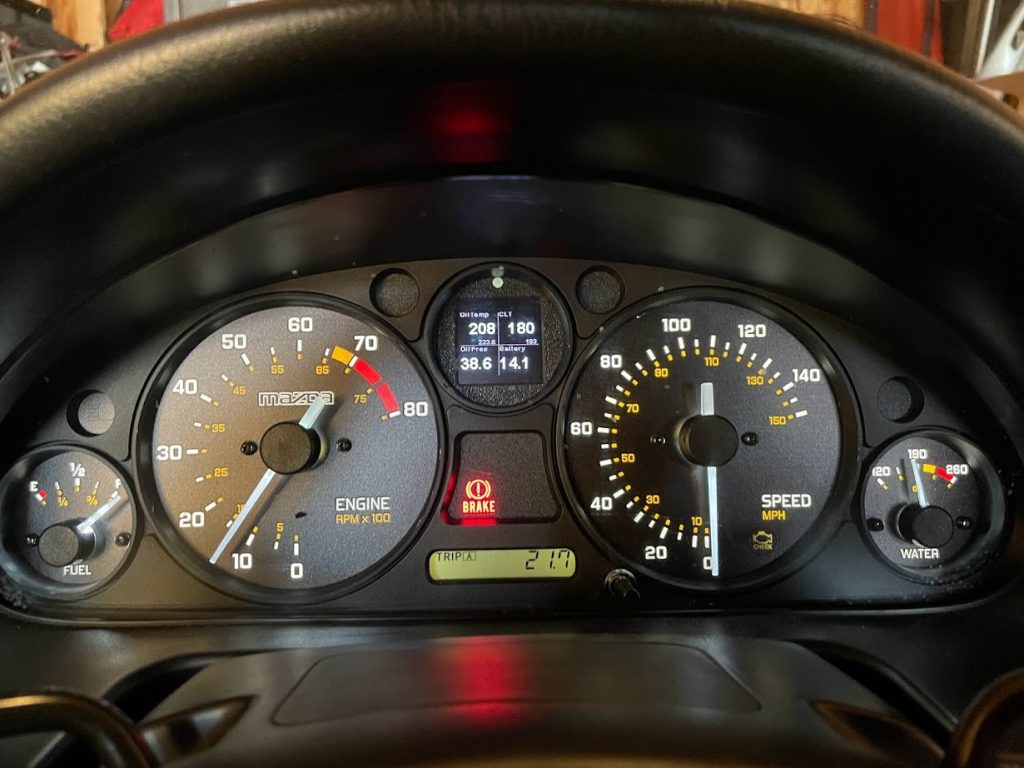
The emergence of the CANchecked MFA 2.0 multifunction display represents a significant leap in Miata interior modification. Designed specifically to fit within the factory housing of the oil pressure gauge, this small-form-factor LCD allows drivers to retain the stock cluster’s silhouette while gaining access to a wealth of real-time data.
The MFA 2.0 operates primarily through the Controller Area Network (CAN) bus protocol. Because the factory ECU (Engine Control Unit) of the NB Miata does not natively support high-speed CAN output, this upgrade is typically paired with standalone engine management systems such as the Megasquirt MS3 or Haltech Elite series. By tapping into the CAN stream, the display can cycle through dozens of parameters, including:
- Manifold Absolute Pressure (MAP)
- Intake Air Temperature (IAT)
- Ignition Timing
- Duty Cycle of Fuel Injectors
- Ethanol Content (if equipped with a flex-fuel sensor)
- Battery Voltage
For parameters not covered by the ECU, the MFA 2.0 provides four analog inputs. This allows for the direct connection of linear 0-5V sensors for oil temperature and pressure, effectively restoring the functionality lost when Mazda transitioned from the NA6’s mechanical gauges to the NB’s electrical switches. The primary drawback noted by users is the display’s peak brightness; under direct sunlight—a common occurrence in a convertible—the LCD can suffer from reduced legibility, highlighting a remaining challenge in open-top digital integration.
Aesthetic Refinement through RevLimiter Customization
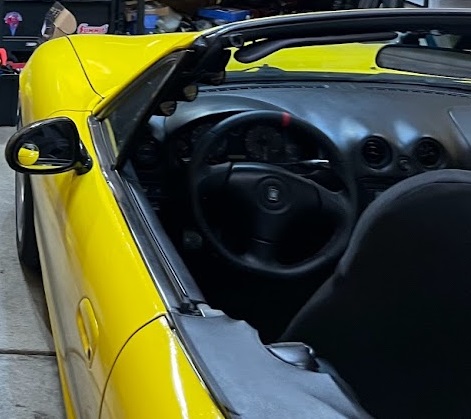
While the CANchecked display addresses the functional requirements of the driver, the aesthetic harmony of the dashboard is often managed through specialized vendors like RevLimiter. The aftermarket for gauge faces has evolved from simple color changes to high-precision overlays that meet or exceed Original Equipment Manufacturer (OEM) standards.
The "JNC" (Japanese Nostalgic Car) design is a prominent example of this trend. Drawing inspiration from 1960s and 70s Japanese performance icons, these faces utilize clean typography and simplified scales to improve readability. When combined with the removal of the factory green bulb filters and the installation of high-output white LEDs, the result is a modernized "white-on-black" look that provides superior contrast during night driving. This modification serves a dual purpose: it updates the aging 1990s aesthetic of the NB interior while ensuring that the new digital components do not look out of place alongside the original analog needles.
Supporting Data: The Impact of Precise Monitoring on Vehicle Longevity
The shift toward precise digital monitoring is supported by data from the performance tuning industry. According to thermal analysis studies, a turbocharged BP-series engine (the powerplant found in the NB) can see oil temperatures climb from a stable 210°F to a dangerous 260°F in under three minutes of sustained high-load operation. Without a linear gauge, a driver would be unaware of this spike until the oil began to break down or the coolant system reached its limit.
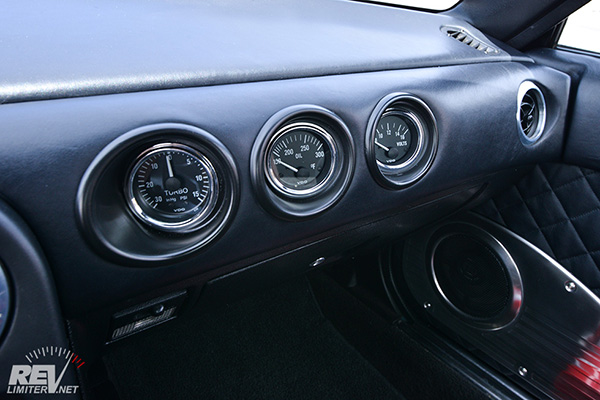
Furthermore, the integration of wideband Air-Fuel Ratio (AFR) monitoring into the main cluster allows for immediate detection of "lean" conditions. In high-performance applications, a fuel pump failure or a clogged injector can cause an engine to run lean, leading to detonation and piston failure within seconds. By moving this data from a peripheral location (like a vent or A-pillar) to the primary line of sight within the gauge cluster, reaction times are reduced, potentially saving thousands of dollars in engine rebuild costs.
Future Trends: High-Frequency Data Logging and Telemetry
The integration of the CANchecked display is often viewed as a gateway to more advanced data acquisition. Industry experts point toward the increasing use of systems like the RaceCapture Pro, which bridge the gap between simple monitoring and professional-grade telemetry.
Future-proofing a Miata’s data suite involves logging not just engine vitals, but chassis dynamics. Emerging trends include:
- Brake Pressure Sensors: Quantifying braking force to improve threshold braking techniques.
- Throttle Position Tracking: Analyzing driver inputs to identify areas where more aggressive acceleration is possible.
- High-Frequency GPS (10Hz – 25Hz): Providing precise lap timing and line analysis.
- Suspension Potentiometers: Measuring ride height and body roll to fine-tune damper settings.
Broader Implications for the Automotive Aftermarket
The evolution of the Miata’s dashboard reflects a broader maturation of the automotive aftermarket. We are moving away from an era of "tacked-on" accessories and toward a period of sophisticated systems integration. This movement is driven by a consumer base that values both the tactile experience of a vintage sports car and the data-driven insights of modern performance vehicles.
As digital displays become more affordable and standalone ECUs become more user-friendly, the "hidden" digital conversion of analog interiors is likely to become the standard for classic car preservation and modification. For the Mazda MX-5 NB, these upgrades ensure that the vehicle remains relevant and reliable in an era where data is just as important as horsepower.
The combination of CANchecked’s technical depth and RevLimiter’s aesthetic precision provides a roadmap for other enthusiast platforms. By addressing the inherent flaws of factory instrumentation through integrated technology, owners can preserve the soul of their vehicles while equipping them for the rigors of modern performance driving. This synthesis of old and new ensures that the Miata’s reputation as the ultimate driver’s car remains intact for the next generation of enthusiasts.