Vera Clarissa
The highly anticipated M5 Pro and M5 Max MacBook Pros have officially landed, marking a significant leap forward for Apple Silicon laptops. These new models build upon the success of their predecessors, boasting enhanced processing power, increased core counts, and a notable rebranding of CPU core types, all housed within the familiar, premium aluminum unibody chassis. This release signifies Apple’s continued commitment to pushing the boundaries of portable computing, integrating advanced technologies to deliver a more powerful and connected user experience.
Evolution of Apple Silicon Architecture
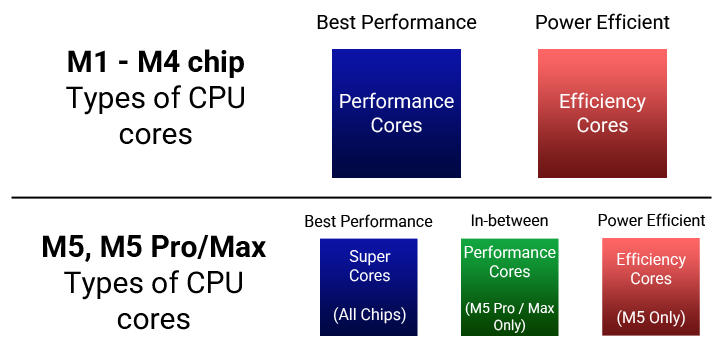
A key development in the M5 generation is the redefinition of core terminology. Previously, Apple Silicon chips followed a straightforward designation of "Performance" and "Efficiency" cores. With the introduction of the M5 Pro and M5 Max, the performance cores have been rebranded as "Super Cores." This nomenclature change is not merely cosmetic; it reflects an underlying architectural refinement designed to deliver even greater computational prowess. This renaming has been retroactively applied to the base M5 chip as well, ensuring a consistent naming convention across the M5 family. This strategic shift in naming convention aims to better communicate the enhanced capabilities of these new processors to consumers and industry professionals alike.
Introducing Advanced Wireless Connectivity
In line with the technological advancements seen in other Apple product lines, such as the recently released iPhone 16e, the M5 Pro and M5 Max MacBook Pros now feature Apple’s new N1 wireless networking chip. This integration brings a suite of cutting-edge connectivity standards to the Mac platform, including Wi-Fi 7 (802.11be), Bluetooth 6, and Thread networking technology. Wi-Fi 7 promises significantly faster speeds, lower latency, and improved network efficiency compared to its predecessors, which will be crucial for demanding applications like high-resolution video streaming, large file transfers, and immersive online gaming. Bluetooth 6 is expected to offer enhanced range and stability for wireless peripherals, while Thread networking opens up new possibilities for seamless integration within smart home ecosystems. This move towards more advanced wireless capabilities underscores Apple’s vision of a deeply interconnected digital environment.
Storage and Display Enhancements
Apple has also doubled the storage capacity across the board for the new M5 Pro and M5 Max MacBook Pros. Both the 14-inch and 16-inch models now start with a generous 1 TB of internal storage, addressing a common consumer demand for more space for applications, media, and large project files. While the innovative nano-texture display remains an optional feature, the overall package represents a substantial upgrade for users seeking top-tier performance and storage solutions. The continued availability of the nano-texture display, known for its exceptional anti-reflective properties and clarity, provides an option for professionals who require the utmost in visual fidelity.

Apple Intelligence Integration
A significant software-centric advancement accompanying the new hardware is the deep integration of "Apple Intelligence." This suite of AI-powered features is designed to enhance user productivity and personalize the computing experience. macOS now fully supports Apple Intelligence on any Mac equipped with an Apple Silicon chip. This capability also extends to most iPads with M-series chips and iOS devices running iOS 18 and later, provided they are equipped with an A17 Pro chip or a more advanced processor. This includes the iPhone 15 Pro and Pro Max, and all iPhone 16 models. Apple Intelligence leverages on-device processing for many tasks, prioritizing user privacy while delivering powerful capabilities such as enhanced Siri interactions, sophisticated text generation and summarization tools, and intelligent image editing features. The broad rollout of Apple Intelligence across Apple’s ecosystem signals a strategic push towards a more AI-driven user interface and workflow.
Detailed Specifications and Features
CPU Core Architecture Evolution

The nomenclature change from "Performance" and "Efficiency" cores to "Super Cores" and "Efficiency Cores" is a significant semantic shift. This rebranding aligns with Apple’s strategy to emphasize the enhanced processing power of its latest chips. The underlying architecture, which leverages a heterogeneous design for optimal power management and performance, remains a core tenet of Apple Silicon.
Key Features and Capabilities
-
Closed Lid Mode (Clamshell Mode): All new MacBook Pros support "lid closed" or clamshell mode. This functionality allows users to operate their laptops with the built-in display turned off, dedicating all available video memory to one or two external displays. To enable this mode, the MacBook Pro must be connected to AC power, an external display, and a USB or Bluetooth mouse and keyboard. Upon powering up and displaying the desktop on the external monitor, closing the lid will put the device into a sleep state. Waking the device by moving the mouse or using the keyboard will then activate the external display as the sole visual output. To return to normal operation with the internal display, users must disconnect the external display, put the computer to sleep, and then open the lid.
-
Battery Life: Apple claims an impressive battery life for the new MacBook Pros, estimating up to 16 to 17 hours of wireless web browsing and up to 24 hours of video streaming on a single charge. These figures represent a continuation of Apple’s industry-leading battery performance in its portable devices.
Technical Specifications Breakdown
Mac OS Support:
- macOS is fully optimized for Apple Silicon, with seamless integration of Apple Intelligence features across all compatible Apple devices. The operating system continues to evolve with new features and performance enhancements tailored to the M5 chip architecture.
Core System (CPU Cache Configuration):
- L1 Instruction Cache (L1i): Typically 128 KB per core.
- L1 Data Cache (L1d): Typically 64 KB per core.
- System Level Cache (SLC): Varies by chip configuration, serving as a shared cache for all CPU cores and integrated components. This configuration is standard across all M5 chips, ensuring consistent cache performance.
Memory:

- Unified Memory Architecture (UMA) continues to be a hallmark of Apple Silicon, allowing the CPU, GPU, and Neural Engine to access the same data pool efficiently.
- Configurations are expected to start at 16GB and scale significantly for Pro and Max variants, providing ample bandwidth for demanding professional workloads.
Video (GPU):
- The M5 Pro and M5 Max integrate powerful Apple-designed GPUs. The core count and performance of these GPUs are significantly enhanced over previous generations, offering substantial improvements in graphics rendering, video editing, and 3D design applications.
- Support for advanced video codecs and high-resolution external displays is a key feature.
Drives:
- Internal storage options start at 1 TB and can be configured to much higher capacities, utilizing fast SSD technology for rapid data access.
Audio:
- High-fidelity audio playback and recording capabilities are maintained, with support for studio-quality sound.
- Advanced microphone arrays and speaker systems contribute to an immersive audio experience.
Expansion / Misc.:

- Thunderbolt/USB 4 Ports: Multiple Thunderbolt/USB 4 ports provide high-speed connectivity for external devices, displays, and storage.
- HDMI Port: Dedicated HDMI port for easy connection to external monitors and projectors.
- SDXC Card Slot: Conveniently located SDXC card slot for photographers and videographers.
- MagSafe 3 Port: For secure and efficient charging.
- Headphone Jack: Standard 3.5mm headphone jack.
- Wi-Fi 7 and Bluetooth 6: Integrated via the new Apple N1 wireless chip.
- Thread Networking: Enables robust connectivity within smart home ecosystems.
Power:
- The M5 Pro and M5 Max are designed for exceptional power efficiency, contributing to extended battery life.
- Fast charging capabilities are expected to be supported.
Physical:
- Display: High-resolution Liquid Retina XDR displays with ProMotion technology, offering adaptive refresh rates up to 120Hz.
- Build: Premium aluminum unibody construction, known for its durability and aesthetic appeal.
- Dimensions and Weight: Available in 14-inch and 16-inch screen sizes, with dimensions and weight optimized for portability and usability.
Market Impact and Analysis
The release of the M5 Pro and M5 Max MacBook Pros signifies a crucial step in Apple’s silicon roadmap. By consistently enhancing the performance and efficiency of its custom chips, Apple continues to differentiate its laptops in a competitive market. The introduction of Wi-Fi 7 and Bluetooth 6 addresses the growing need for faster and more reliable wireless connectivity, particularly important for professionals working with large datasets and high-bandwidth applications.

The integration of Apple Intelligence across its product lines, including these new MacBook Pros, demonstrates a clear strategy to embed AI capabilities into the core user experience. This move has the potential to redefine user interaction with their devices, making them more proactive and personalized. The increased storage options also cater to a key consumer pain point, offering greater flexibility for users who require substantial local storage.
Industry analysts anticipate that these advancements will further solidify Apple’s position in the premium laptop segment, attracting both existing customers and new users seeking unparalleled performance, advanced features, and a tightly integrated ecosystem. The continued focus on custom silicon allows Apple to control its hardware and software development cycle, leading to optimized performance and user experience that is difficult for competitors to replicate. The long-term implications include an acceleration of AI adoption in personal computing and a continued push towards faster and more ubiquitous wireless communication standards.
The updated MacBook Pros are not just an iterative upgrade; they represent a significant evolution in portable computing, setting new benchmarks for performance, connectivity, and intelligent features. Apple’s commitment to in-house silicon development continues to yield impressive results, reinforcing its competitive edge in the technology landscape.