Vera Clarissa
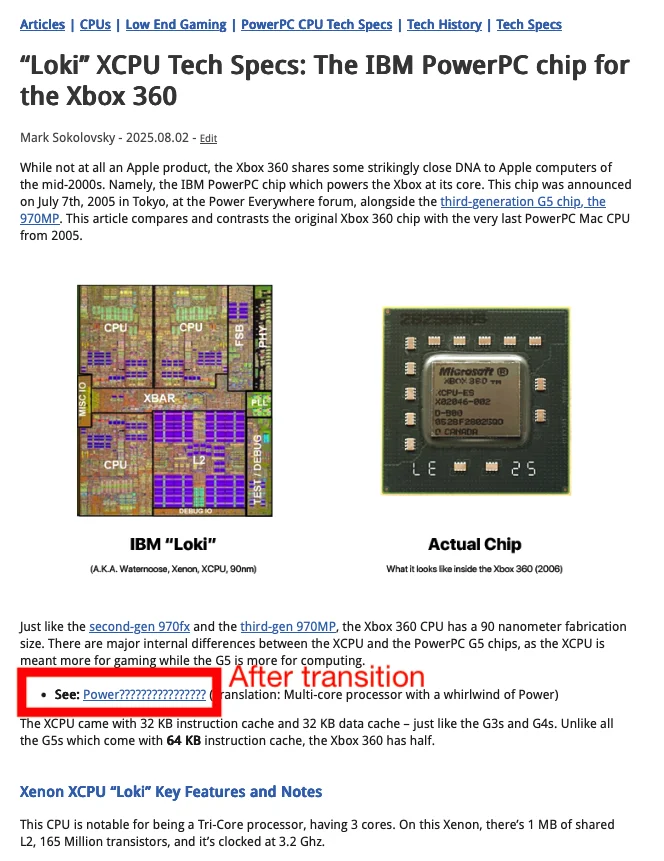
The Apple Silicon M5 Pro chip, officially released on March 3rd, 2026, represents a significant advancement in Apple’s custom silicon strategy, pushing the boundaries of performance, efficiency, and artificial intelligence integration. This new processor, built on TSMC’s cutting-edge 3-nanometer-P fabrication process, introduces a hybrid core architecture designed to optimize for both raw computational power and energy efficiency, catering to a wide range of professional and creative workflows. The M5 Pro is poised to redefine expectations for mobile and desktop computing, particularly in demanding tasks such as high-resolution video editing, 3D rendering, complex scientific simulations, and AI-driven applications.
Architectural Innovations and Core Configurations
At the heart of the M5 Pro is its sophisticated CPU design, which features a flexible configuration of performance and efficiency cores. The chip offers two primary variants: one with 15 cores and another with 18 cores. The 15-core configuration includes 5 "Super" cores and 10 "Performance" cores, while the 18-core variant expands this to 6 Super cores and 12 Performance cores. These Super cores operate at a brisk 4.61 GHz, providing immense processing power for intensive tasks, while the Performance cores run at 3.05 GHz, balancing high throughput with reduced power consumption.
The chip’s L1 cache hierarchy has also been meticulously optimized. The Super cores boast a substantial 192 KB of L1 instruction cache (L1i) and 128 KB of L1 data cache (L1d) per core, totaling 960 KB and 640 KB respectively across the Super cores in the 15-core configuration. For the Performance cores, each benefits from 128 KB of L1i and 64 KB of L1d, contributing 1.28 MB and 640 KB to the total across the 10 Performance cores in the base model. This generous L1 caching is crucial for reducing memory latency and maximizing the speed at which the CPU can access frequently used data.
Further bolstering the CPU’s performance is an advanced L2 cache system. The Super cores are equipped with 16 MB of L2 cache each, and the Performance cores have 8 MB of L2 cache each. Aggregating these, the M5 Pro features approximately 24 MB of system-level L2 cache, acting as a high-speed buffer that further accelerates data access and reduces reliance on the slower main memory. This layered caching strategy is a hallmark of modern high-performance processors, enabling the M5 Pro to handle intricate computations with remarkable fluidity.
GPU Powerhouse and AI Acceleration
The graphical capabilities of the M5 Pro are equally impressive, designed to meet the demands of graphics-intensive applications and immersive experiences. The chip integrates a powerful GPU with configurations offering either 16 or 20 cores. These GPU cores are further broken down into 256 or 320 SIMD (Single Instruction, Multiple Data) Execution Units (EUs), respectively. When coupled with the GPU clock speed of 1620 MHz, this translates to a theoretical peak performance of 6.64 TFLOPS for the 16-core variant and an astounding 8.29 TFLOPS for the 20-core version. This computational prowess positions the M5 Pro as a formidable contender for professional video editing, 3D modeling, game development, and high-fidelity visual computing.
Beyond raw graphics processing, the M5 Pro places a strong emphasis on artificial intelligence acceleration. It features 16 dedicated AI cores, capable of delivering over 38 TOPS (Tera Operations Per Second) of AI performance. This significant boost in AI processing power is critical for enabling advanced machine learning tasks, such as real-time image and video analysis, natural language processing, sophisticated predictive modeling, and on-device AI features that enhance user experience across Apple’s ecosystem. The inclusion of dedicated AI hardware signifies Apple’s commitment to a future where AI is deeply integrated into everyday computing.
The chip also boasts comprehensive media hardware acceleration, supporting a wide array of codecs including H.264, HEVC, ProRes, ProRes RAW, and AV1. This hardware-level acceleration ensures efficient and high-performance video encoding and decoding, making the M5 Pro exceptionally well-suited for video professionals who rely on these formats for their workflows. The ability to process these demanding media formats with hardware assistance frees up CPU and GPU resources for other tasks, significantly improving overall system responsiveness and reducing project completion times.

Memory Subsystem and Bandwidth
The M5 Pro is equipped with a robust memory subsystem designed for high bandwidth and low latency. It utilizes LPDDR5X memory, clocked at 9600 MT/s (4800 MHz), a leading-edge standard for mobile memory that offers substantial improvements in speed and power efficiency over previous generations. The memory bus width is a generous 256-bit, configured with 16 channels, each operating at 16-bit. This configuration results in an impressive theoretical memory bandwidth of 307.2 GB/s.
This high memory bandwidth is critical for feeding the powerful CPU and GPU cores with data efficiently, especially in memory-intensive applications. Users can configure systems with the M5 Pro with 24 GB, 48 GB, or 64 GB of unified memory, allowing for seamless multitasking and the handling of extremely large datasets and complex projects without performance bottlenecks. The unified memory architecture, a signature of Apple Silicon, allows the CPU, GPU, and other cores to share the same memory pool, reducing data duplication and further enhancing efficiency and performance.
Fabrication and Efficiency
The M5 Pro is manufactured using TSMC’s advanced 3-nanometer-P process. This miniaturization allows for more transistors to be packed into a smaller area, leading to increased performance and improved power efficiency. While specific transistor counts have not been officially disclosed for the M5 Pro, advancements in fabrication processes typically correlate with higher transistor densities. This technology is crucial for delivering the substantial performance gains observed in the M5 Pro while managing thermal output.
The Thermal Design Power (TDP) for the M5 Pro is estimated to range between 50W and 60W. This relatively low TDP for its performance class underscores Apple’s continued focus on power efficiency, enabling the chip to deliver sustained high performance in portable devices like MacBooks and iMacs without excessive heat generation or battery drain. This balance of power and efficiency is a key differentiator for Apple Silicon.

Context and Timeline
The introduction of the M5 Pro follows a rapid cadence of innovation in Apple’s Silicon division. The M1 chip, launched in late 2020, marked Apple’s decisive transition away from Intel processors. Subsequent iterations, including the M1 Pro, M1 Max, M1 Ultra, and the M2, M2 Pro, M2 Max, M2 Ultra series, have consistently pushed performance envelopes. The M3 generation, with its 3nm process technology and enhanced GPU architecture, further solidified Apple’s lead.
The M5 Pro, released on March 3rd, 2026, represents the next evolutionary leap. Its development has likely been underway for several years, involving close collaboration between Apple’s chip design teams and TSMC’s fabrication engineers. The announcement of the M5 chip family, with a press release on October 15th, 2025, hinted at "the next big leap in AI performance for Apple Silicon." The M5 Pro, as a professional-grade offering, embodies these advancements, bringing cutting-edge AI capabilities to the forefront of professional computing.
Broader Impact and Implications
The unveiling of the M5 Pro chip has significant implications for the computing industry. It reinforces Apple’s vertically integrated strategy, where the control over both hardware and software design allows for unparalleled optimization. This level of integration has consistently resulted in chips that offer superior performance-per-watt compared to many competitors.
For creative professionals, the M5 Pro promises to accelerate workflows and enable more ambitious projects. The enhanced GPU and AI capabilities, coupled with high memory bandwidth, will likely lead to faster rendering times, smoother handling of complex visual effects, and the seamless integration of AI-powered creative tools.

From an industry perspective, the M5 Pro serves as a benchmark for future processor designs. Its advanced architecture, particularly its focus on AI acceleration and power efficiency, will undoubtedly influence the development of processors from other manufacturers. The continued success of Apple Silicon also puts pressure on traditional chip makers to innovate more rapidly and adopt similar integrated design philosophies.
The commitment to supporting a wide range of media codecs, including the increasingly popular AV1, also signals Apple’s forward-thinking approach to content creation and consumption. This ensures that users of M5 Pro-powered machines are well-equipped for the evolving landscape of digital media.
As the M5 Pro begins to power the next generation of Apple’s professional Mac lineup, users can anticipate a tangible uplift in performance and responsiveness across a broad spectrum of applications. This release underscores Apple’s unwavering dedication to pushing the boundaries of personal computing through relentless silicon innovation.
Sources:
- Apple Silicon, Wikipedia: https://en.wikipedia.org/wiki/Apple_silicon
- Apple M5, Wikipedia: https://en.wikipedia.org/wiki/Apple_M5
- M5 Pro 18-Core vs M5 9-Core Comparison: https://www.notebookcheck.net/M5-Pro-18-Core-vs-M5-9-Core_20889_19998.247596.0.html
- Unspecified Chinese Forum Post: https://tieba.baidu.com/p/10530250218?svcp_stk=1_doUcpunClClvfQLGWHj_N6jsotNyuR_m1S1ivayuY_u5VKPbHx6080m4qztkP-2qUQM6-EGMOMFbk_6a7g6rDmqQiuEoxwSMfbFTrN3Q0eLYzFoKVY3wSga3P5CFiPz7wpMickj3VO4F6q8g4Y6QsVXpQciJnRTUDJLgxgkmfaMND8HbOtRh0cjmc6db8MLy (Accessed May 1st, 2026)
- Apple Newsroom Press Release: https://www.apple.com/newsroom/2025/10/apple-unleashes-m5-the-next-big-leap-in-ai-performance-for-apple-silicon/