Farhan hamdan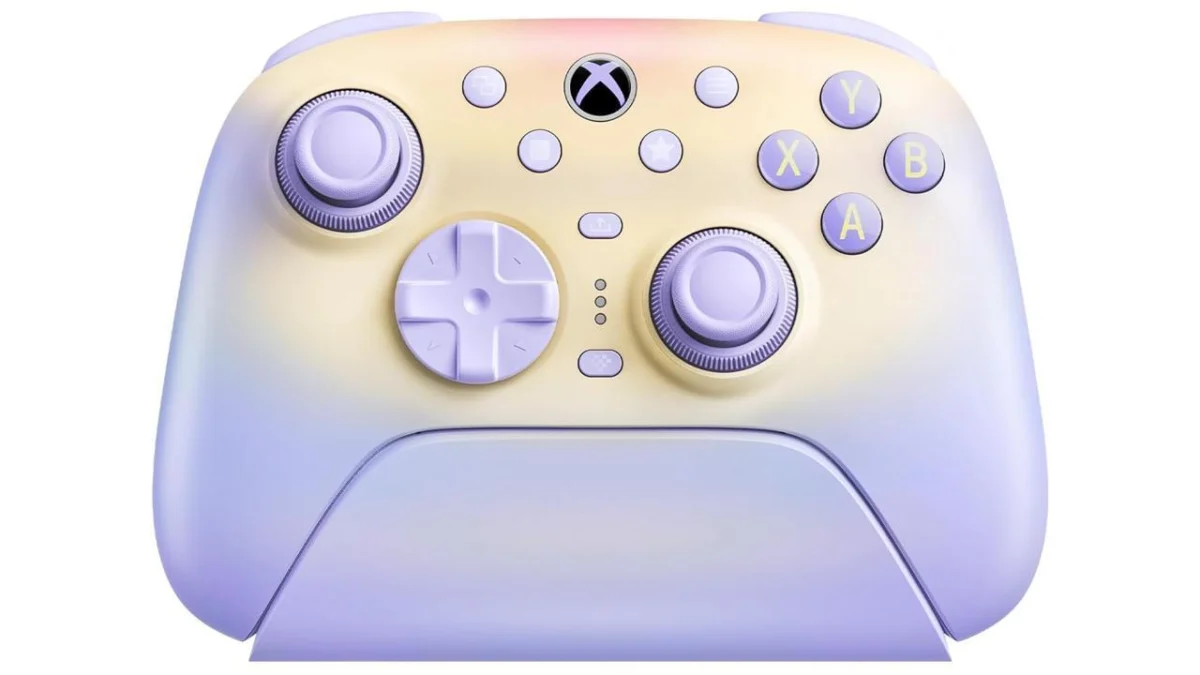
8BitDo, a prominent name in third-party gaming peripherals, has officially opened pre-orders for its latest innovation: an updated version of the Ultimate 3 Wireless Controller, now featuring an adjustable Tunable Magnetic Resistance (TMR) joystick, dubbed the "Force Ring." This groundbreaking technology allows users to physically turn a ring to modify joystick tension, providing a nuanced choice between enhanced speed for rapid movements and tighter control for precision inputs. Priced at $100, this advanced controller is slated for shipment at the end of August, initially available in a distinctive Lavender Dusk colorway. This release marks a significant step in controller customization, aiming to cater to a diverse range of gaming preferences and competitive demands.
The Innovation: Tunable Magnetic Resistance (TMR) and the "Force Ring"
At the heart of the new Ultimate 3 Wireless Controller lies the TMR joystick, a sophisticated evolution in input device technology. Unlike traditional joysticks that rely on potentiometers, which are prone to wear and eventual drift, or even standard Hall effect sensors that offer improved durability but fixed resistance, the TMR system introduces an unprecedented level of user-adjustable feedback. The "Force Ring" mechanism empowers gamers to dial in their preferred joystick tension on the fly. This mechanical adjustment directly influences the tactile resistance experienced during movement, offering a spectrum of control from light and fluid for quick, sweeping actions—ideal for fast-paced action games or navigating open worlds—to firm and deliberate for meticulous aiming or intricate platforming segments.
The core principle behind TMR technology involves magnetic fields to detect joystick position, inherently reducing physical wear compared to contact-based systems. By making this resistance tunable, 8BitDo addresses a long-standing desire among serious gamers for personalized input feel. The ability to switch between "speed" and "control" modes without needing different hardware or complex software profiles could be a game-changer, especially for players who engage in multiple genres or require specific sensitivities for competitive play. This feature positions the Ultimate 3 Wireless Controller not just as an incremental update but as a potentially disruptive force in the premium controller market.
A Legacy of Quality: 8BitDo’s Journey in Gaming Peripherals
8BitDo has steadily built a formidable reputation in the gaming peripheral industry since its inception, known for its blend of retro aesthetics, modern functionality, and robust build quality. The company first gained widespread recognition for its meticulously crafted retro-inspired controllers, such as the SN30 Pro and M30, which offered nostalgic designs paired with contemporary connectivity and features. Over time, 8BitDo expanded its portfolio to include more modern, full-featured controllers, culminating in the critically acclaimed Ultimate series.
The Ultimate Wireless Controller series, launched prior to this iteration, quickly became a favorite among PC, Nintendo Switch, and mobile gamers due to its ergonomic design, comprehensive feature set (including hall effect joysticks, back paddles, and a charging dock), and competitive pricing. 8BitDo’s consistent emphasis on quality components, cross-platform compatibility, and a user-centric design philosophy has cemented its position as a go-to brand for gamers seeking reliable and innovative input devices that often punch above their weight class in terms of value. The introduction of the TMR "Force Ring" joystick is a natural progression of this commitment to innovation, pushing the boundaries of what consumers can expect from a third-party controller. It underscores 8BitDo’s ambition to not just replicate existing designs but to actively contribute new technological advancements to the gaming ecosystem.
Market Context: The Premium Controller Landscape
The gaming controller market is a highly competitive arena, especially at the premium end, where products often command prices upwards of $150 or even $200. Established players like Microsoft with its Xbox Elite Series controllers, Sony with its DualSense Edge, and specialized brands such as SCUF Gaming and Victrix Pro have long catered to enthusiasts and professional esports athletes seeking enhanced performance and customization. These controllers typically offer features like interchangeable thumbsticks, remappable back paddles, trigger stops, and custom profiles, all designed to give players a competitive edge.
The demand for high-performance peripherals has surged alongside the exponential growth of esports and competitive online gaming. Gamers are increasingly willing to invest in equipment that can provide even a marginal advantage in speed, precision, or comfort during extended play sessions. However, a common criticism of many premium controllers has been the lack of tactile customization for the primary input mechanism—the joysticks themselves. While swappable caps and different height options are available, the underlying resistance and feel often remain fixed.
8BitDo’s entry into this segment with the Ultimate 3 Wireless Controller featuring the "Force Ring" directly challenges this status quo. By offering adjustable joystick tension, 8BitDo introduces a dimension of physical customization that is largely absent from its competitors. This could carve out a unique niche for the company, appealing to gamers who prioritize fine-tuned tactile feedback over other forms of customization, or who seek a comprehensive package that includes both standard premium features and this novel joystick technology. The $100 price point, while double that of the previous Ultimate 3 Wireless Controller, remains competitive when compared to the higher-tier offerings from first-party manufacturers and specialized brands, potentially offering a more accessible entry point into advanced joystick customization.
Price Point and Value Proposition: Justifying the $100 Tag
The $100 price tag for the Ultimate 3 Wireless Controller with the "Force Ring" represents a significant jump from its predecessor, which typically retails for around $50. This price increase necessitates a clear value proposition, and 8BitDo is banking on the revolutionary TMR joystick and its adjustable tension mechanism to justify the premium. When evaluating the cost, it’s crucial to consider the broader market landscape.
Standard first-party controllers for consoles like the Xbox Series X|S or PlayStation 5 typically range from $60 to $70. Premium controllers, such as the Xbox Elite Series 2 or PlayStation DualSense Edge, often start at $150 and can go upwards of $200, offering a suite of advanced features like modular components, remappable buttons, and enhanced ergonomics. In this context, the Ultimate 3 with the "Force Ring" sits comfortably in a mid-to-high-tier price bracket, positioned as a premium offering without reaching the peak costs of professional-grade alternatives.

The value proposition hinges primarily on the unique TMR joystick technology. Traditional controllers, even those with Hall effect sensors, offer a fixed resistance. The ability to adjust this resistance on the fly is a novel feature that could significantly enhance the gaming experience for a subset of users. For gamers who deeply understand and appreciate the nuances of joystick feedback—such as competitive players who switch between precise sniping and fast-paced melee combat, or sim enthusiasts who demand specific levels of input stiffness—the "Force Ring" could be seen as an invaluable tool.
Furthermore, 8BitDo controllers generally come with a robust set of features, including multi-platform compatibility (PC, Nintendo Switch, mobile, and in some cases, Xbox), customizable profiles via companion software, programmable back buttons, and high-quality build materials. Assuming these standard premium features are maintained or enhanced in the new Ultimate 3, the $100 price point could be perceived as a fair investment for a controller that offers both advanced core technology and a comprehensive feature set. The longevity and reliability offered by TMR joysticks, which are less susceptible to wear and drift, also contribute to the long-term value, potentially offsetting the initial higher cost compared to controllers that may require replacement sooner due to stick drift issues.
Anticipating User Reception: The Importance of Real-World Testing
While the "Force Ring" concept is theoretically compelling, its true utility and impact will only be fully understood through extensive real-world testing by the gaming community. Initial reactions from industry observers and early adopters are crucial for validating such an innovative feature. Questions surrounding the tactile feel of the adjustment mechanism, the range of tension provided, the durability of the "Force Ring" itself, and how seamlessly gamers can switch between different tension settings during gameplay will be paramount.
For instance, a fast-paced first-person shooter might benefit from lighter tension for quick target acquisition, while a slower, more tactical shooter or a racing game might demand tighter resistance for precise movements. The challenge for 8BitDo will be to demonstrate that the adjustable tension is not merely a gimmick but a genuinely useful tool that enhances performance and player enjoyment across a variety of genres. Early reviews will likely focus on whether the adjustment offers a perceivable and impactful difference, how intuitive it is to use, and whether it introduces any unforeseen drawbacks.
Community feedback will also play a vital role in shaping future iterations of this technology. If gamers embrace the "Force Ring," it could become a standard feature in high-end controllers. Conversely, if it proves cumbersome or offers limited practical benefits, 8BitDo may need to refine or reconsider its approach. The company’s history suggests a responsiveness to user input, and the success of the Ultimate 3 with the "Force Ring" will heavily depend on how well it resonates with the diverse preferences of the global gaming audience. The initial launch will serve as a crucial litmus test for the viability of user-tunable joystick resistance as a mainstream premium controller feature.
Broader Implications for the Gaming Industry
The introduction of the 8BitDo Ultimate 3 Wireless Controller with its adjustable TMR "Force Ring" joystick has broader implications that extend beyond 8BitDo itself. This innovation could trigger a new wave of competition and feature development across the entire gaming peripheral industry. If the "Force Ring" proves to be a success, other manufacturers, including first-party console makers, may feel compelled to develop similar adjustable joystick technologies or other novel forms of input customization to remain competitive in the premium segment. This could accelerate the evolution of controller design, pushing towards more personalized and adaptable input devices.
Furthermore, the emphasis on tunable resistance could influence competitive gaming and esports. Professional players are constantly seeking every possible advantage, and a controller that allows for on-the-fly adjustment of joystick tension could become a staple in their arsenals. The ability to fine-tune inputs to match specific in-game situations or even individual player preferences could lead to new strategies and a higher degree of precision in competitive play. Tournament organizers and game developers might even consider standardizing or recommending such features if they prove to enhance fair play and skill expression.
From a technological standpoint, the "Force Ring" highlights the ongoing quest to overcome the limitations of traditional analog input. While Hall effect sensors addressed drift, TMR with adjustable tension goes a step further by tackling the fixed tactile experience. This could open doors for other forms of haptic feedback or adaptive resistance in future controllers, potentially integrating with in-game events to dynamically alter joystick feel. 8BitDo, by taking this bold step, is positioning itself as an innovator, potentially inspiring a future where controllers are not just input devices but highly personalized extensions of a player’s intent, adaptable to every game, genre, and playstyle.
Availability and Future Prospects
Pre-orders for the 8BitDo Ultimate 3 Wireless Controller with the "Force Ring" are currently live, with the initial batch set to ship at the end of August. The exclusive launch color, Lavender Dusk, presents a distinct aesthetic that aligns with 8BitDo’s often vibrant and unique color palettes. While only one color option is available at pre-order, industry patterns suggest that if the product gains traction, 8BitDo is likely to introduce additional colorways in the future, catering to a wider range of consumer preferences. This phased release strategy is common for new product lines, allowing companies to gauge initial demand and streamline production before expanding options.
Looking ahead, the success of the "Force Ring" could pave the way for its integration into other 8BitDo controller lines or even inspire future iterations with more granular control over tension, or perhaps even a fully digital interface for tension adjustment. The initial launch serves as a crucial market test, and depending on consumer feedback and sales performance, the TMR joystick technology could become a signature feature for 8BitDo’s premium offerings. The company’s commitment to continuous improvement and innovation suggests that this is likely just the beginning of their exploration into truly customizable input experiences.
In conclusion, the 8BitDo Ultimate 3 Wireless Controller with its "Force Ring" represents a significant leap forward in gaming peripheral technology. By offering user-adjustable joystick tension, 8BitDo is addressing a long-standing desire for personalized control, potentially setting a new standard for premium controllers. While the $100 price point and the practical utility of the feature will be thoroughly scrutinized by the gaming community, this release underscores 8BitDo’s innovative spirit and its potential to influence the future direction of gaming input devices.