Vera Clarissa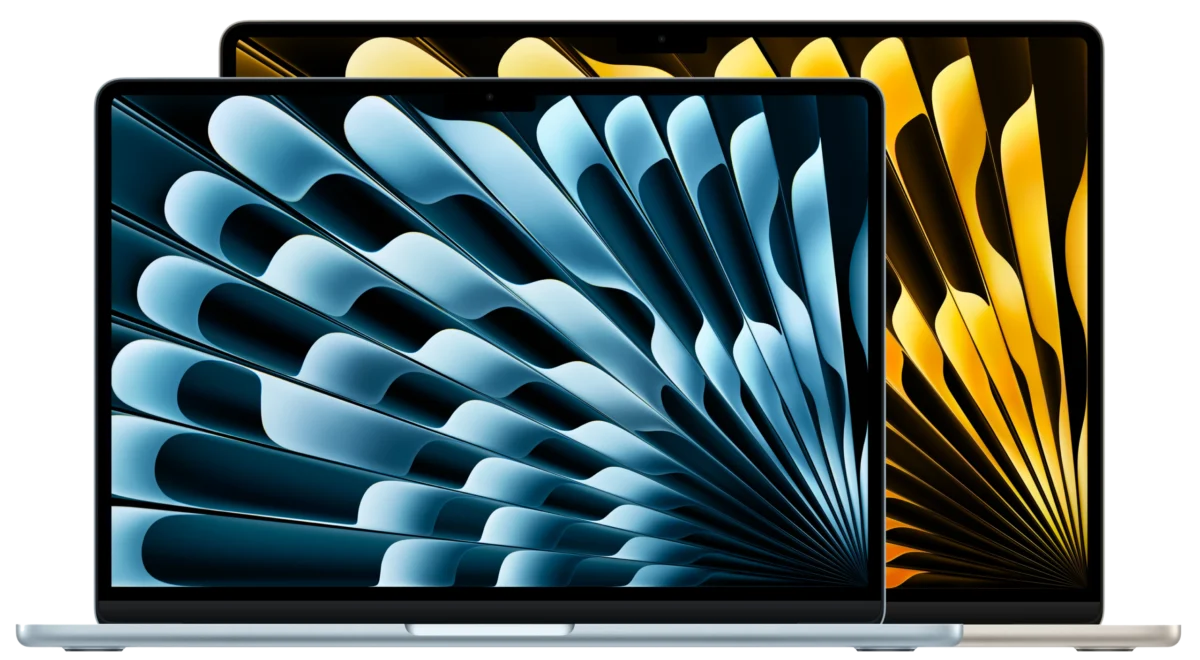
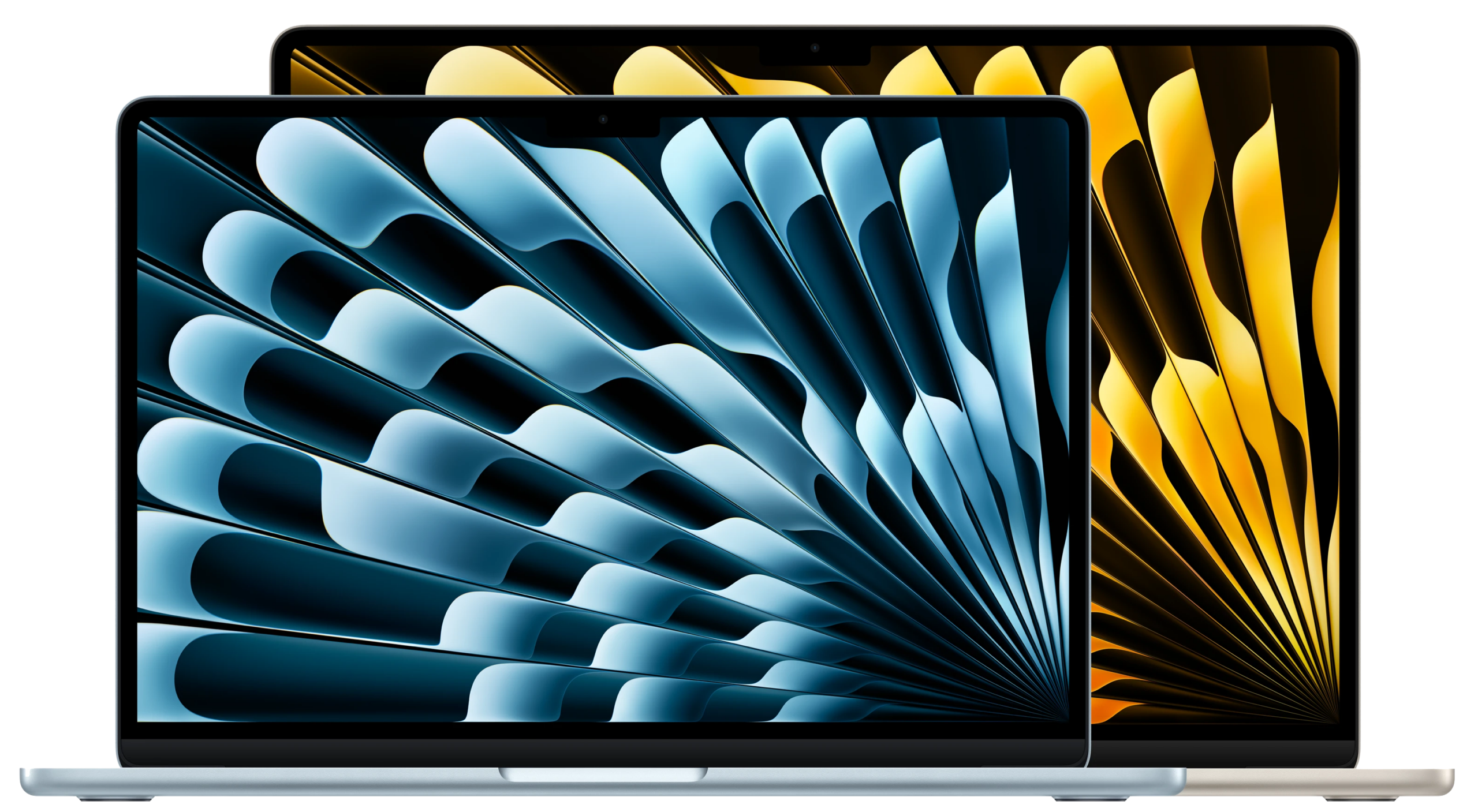
Apple officially unveiled the latest iteration of its ultra-portable laptop, the M5 MacBook Air, on March 3rd, 2026. While outwardly appearing similar to its predecessor, the M5 MacBook Air introduces a significant leap in performance and efficiency, driven by the all-new M5 chip. This update marks a pivotal moment in the evolution of Apple Silicon, transforming the MacBook Air from a budget-friendly option into a powerhouse capable of handling demanding professional workflows.
A New Era of MacBook Air Performance
The most substantial advancement in the M5 MacBook Air lies within its M5 chip. This fifth-generation Apple Silicon processor represents a dramatic departure from the early days of the MacBook Air, where underpowered CPUs and modest graphics capabilities limited its potential. The M5 chip effectively redefines what users can expect from a fanless laptop, pushing the boundaries of mobile computing.
Early benchmarks and real-world tests indicate that the M5 MacBook Air is remarkably competitive, even challenging the performance of its Pro-branded siblings. In a recent Cinebench GPU test, the M5 MacBook Air achieved approximately 92% of the performance of the M5 MacBook Pro. Specifically, the Air model clocked in at around 22,000 points, closely trailing the Pro’s approximately 24,000 points. This is a significant improvement over previous generations, where the gap between the Air and Pro models was often more pronounced. The M5 chip’s GPU, in particular, demonstrates a massive performance uplift compared to the M4 generation, underscoring Apple’s rapid pace of innovation in integrated graphics. This substantial increase in graphical power opens up new possibilities for creative professionals, designers, and even casual gamers who might have previously shied away from the Air model for graphically intensive tasks.
Enhanced Storage and Next-Generation Connectivity
Beyond the raw processing power, the M5 MacBook Air also benefits from key upgrades in storage and connectivity. The base storage configuration has been increased to a generous 512 GB, a welcome improvement for users who previously found the entry-level storage insufficient. Furthermore, the storage can now be configured up to a massive 4 TB, albeit with a significant price increase of $1200 for the highest capacity. This expanded storage option caters to professionals who work with large media files, extensive photo libraries, or complex software projects.
A notable addition is Apple’s proprietary N1 wireless networking chip. This new component integrates Wi-Fi 7, Bluetooth, and Thread capabilities, promising significant improvements in wireless performance and energy efficiency. The N1 chip is specifically designed to reduce battery consumption, particularly when handling location tracking services. With Wi-Fi 7, theoretical speeds can reach up to 46 Gb/s, potentially matching or even exceeding the speed of Thunderbolt 4 connections for certain data transfers. This leap in wireless technology means faster downloads, smoother streaming, and more responsive cloud-based workflows. The integration of Thread also suggests enhanced support for smart home devices and the growing Internet of Things (IoT) ecosystem.

Memory Bandwidth and Charging Advancements
The M5 chip also introduces advancements in memory bandwidth, reaching an impressive 153 GB/s. This is achieved through the utilization of cutting-edge mobile memory technology, specifically 4800 MHz LPDDR5X-9600 RAM. This increased bandwidth is crucial for the efficient operation of the M5 chip’s numerous cores, enabling faster data access and processing for all applications. The higher memory speeds contribute directly to the overall responsiveness and performance of the M5 MacBook Air, especially when multitasking or working with large datasets.
In terms of power delivery, the M5 MacBook Air is accompanied by a new 40-Watt dynamic charger, with a maximum output of 60W. This replaces the previous 35-Watt Dual USB-C compact adapter. While the wattage increase is modest, the "dynamic" nature of the charger suggests an optimized power delivery system that can intelligently adjust output based on the device’s needs, potentially leading to more efficient charging cycles and better battery health management over time. This new charger maintains the compact form factor that users have come to expect from Apple’s portable accessories.
A Testament to Apple Silicon’s Evolution
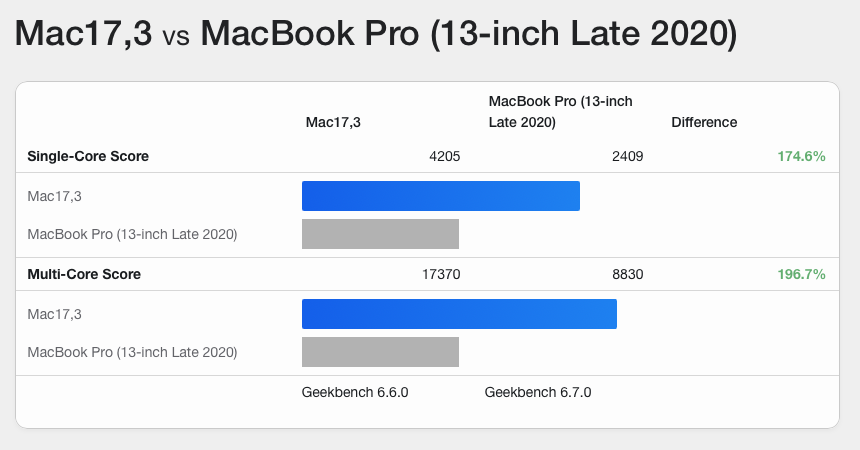
The performance leap from the M1 chip to the M5 chip is nothing short of remarkable. Comparing the 13-inch M5 MacBook Air to a 13-inch M1 MacBook Pro, the M5 Air delivers approximately 174% of the performance. While not a full doubling, this statistic highlights the exponential progress Apple has made in its custom silicon development over the past five years. The M1 chip itself was a revolutionary product, but the M5 iteration demonstrates Apple’s commitment to continuous improvement and pushing the boundaries of mobile processing power. This evolution means that a MacBook Air, once considered a secondary device for casual use, is now a viable option for a much broader range of users, including many professionals who previously relied on more powerful, and often more expensive, MacBook Pro models.
Support for Apple Intelligence
A significant software feature enabled by the M5 chip and Apple Silicon architecture is the expanded support for Apple Intelligence. This advanced suite of AI features is now accessible on any Mac equipped with Apple Silicon. This includes the new M5 MacBook Air, as well as compatible iPads and iPhones running iOS 18 or later with an A17 Pro chip or newer. Apple Intelligence aims to enhance user productivity and creativity through on-device machine learning, offering features like intelligent text generation, advanced image editing capabilities, and more personalized user experiences. The M5 chip’s neural engine and processing power are crucial for enabling these computationally intensive AI tasks to run efficiently and privately on the device.
Key Features and Considerations for the M5 MacBook Air
-
Closed Lid Mode (Clamshell Mode): All MacBook models, including the M5 MacBook Air, continue to support closed-lid mode. This functionality allows users to connect their MacBook to an external display, keyboard, and mouse, effectively turning it into a desktop-like experience while the laptop’s lid is closed. To utilize this feature, the MacBook must be connected to AC power and have an external display, keyboard, and mouse attached. The system wakes up upon mouse movement or keyboard input after the lid is closed, and the internal display remains inactive. Resuming use of the internal display requires disconnecting external peripherals and opening the lid.
-
Battery Life: Apple claims that the M5 MacBook Air offers up to 15 hours of wireless web browsing and up to 18 hours of video streaming. These figures are consistent with the excellent battery life that MacBook Air models are known for, and the efficiency of the M5 chip likely contributes to these impressive endurance ratings.

Technical Specifications Deep Dive
M5 Chip Architecture:
The M5 chip incorporates a sophisticated cache hierarchy designed for optimal performance and efficiency. All M5 chips feature the following memory configurations for their CPU caches:
- L1 Instruction Cache: 64 KB per core
- L1 Data Cache: 32 KB per core
- System Level Cache (SLC): 24 MB (this figure can vary across different M5 chip configurations, but is a common allocation for performance-oriented cores).
Memory:
The M5 MacBook Air utilizes advanced memory technology with a memory bandwidth of 153 GB/s, powered by 4800 MHz LPDDR5X-9600 RAM. This ensures rapid data access for the CPU and GPU.
Storage:
The base model now comes with 512 GB of SSD storage. Configurations are available up to 4 TB.
Connectivity:

- Wi-Fi 7: Enabled by the new N1 wireless chip, offering theoretical speeds up to 46 Gb/s.
- Bluetooth: Integrated into the N1 chip for seamless peripheral connectivity.
- Thread: Support for Thread networking, enhancing IoT device compatibility.
- Thunderbolt 4: Likely retained for high-speed data transfer and external display support, though Wi-Fi 7 performance may rival it in specific scenarios.
Power:
- New Charger: 40-Watt dynamic charger (60W Max).
- Battery: Claimed 15 hours wireless web, 18 hours video playback.
Physical Specifications:
While detailed physical dimensions are not explicitly provided in the initial announcement, the M5 MacBook Air is expected to maintain the thin and light form factor characteristic of the MacBook Air line. The fanless design remains a key selling point, ensuring silent operation.

Broader Implications and Market Impact
The introduction of the M5 MacBook Air with its significant performance gains and advanced features has several implications for the personal computing market. Firstly, it further solidifies Apple’s dominance in the ARM-based laptop space, demonstrating the continued viability and power of its custom silicon strategy. The M5 chip’s performance, especially its graphical capabilities, blurs the lines between ultra-portable laptops and more powerful workstations, potentially reducing the need for users to opt for more expensive Pro models for everyday tasks.
Secondly, the enhanced connectivity through Wi-Fi 7 and the N1 chip positions the M5 MacBook Air as a future-proof device, ready to take advantage of the next generation of wireless networking infrastructure. This is particularly relevant for businesses and individuals who rely heavily on stable and high-speed internet connections for their work.

The strong integration of Apple Intelligence also signifies Apple’s commitment to AI-driven computing. By enabling these features on a wider range of its devices, Apple aims to create a more cohesive and intelligent ecosystem for its users, offering a glimpse into the future of personalized computing experiences. The M5 MacBook Air, with its blend of performance, efficiency, and advanced software capabilities, is poised to be a highly sought-after device for a broad spectrum of consumers and professionals alike.