Cecilia Chamidah Nur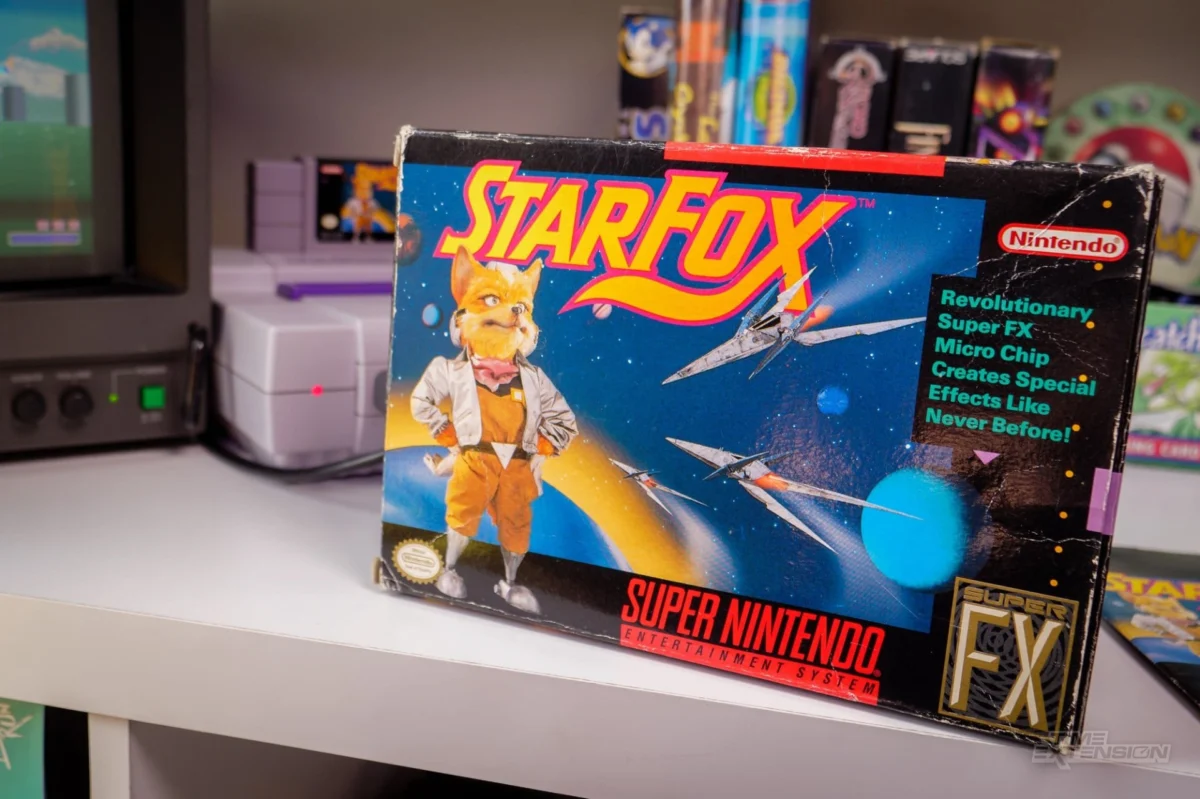
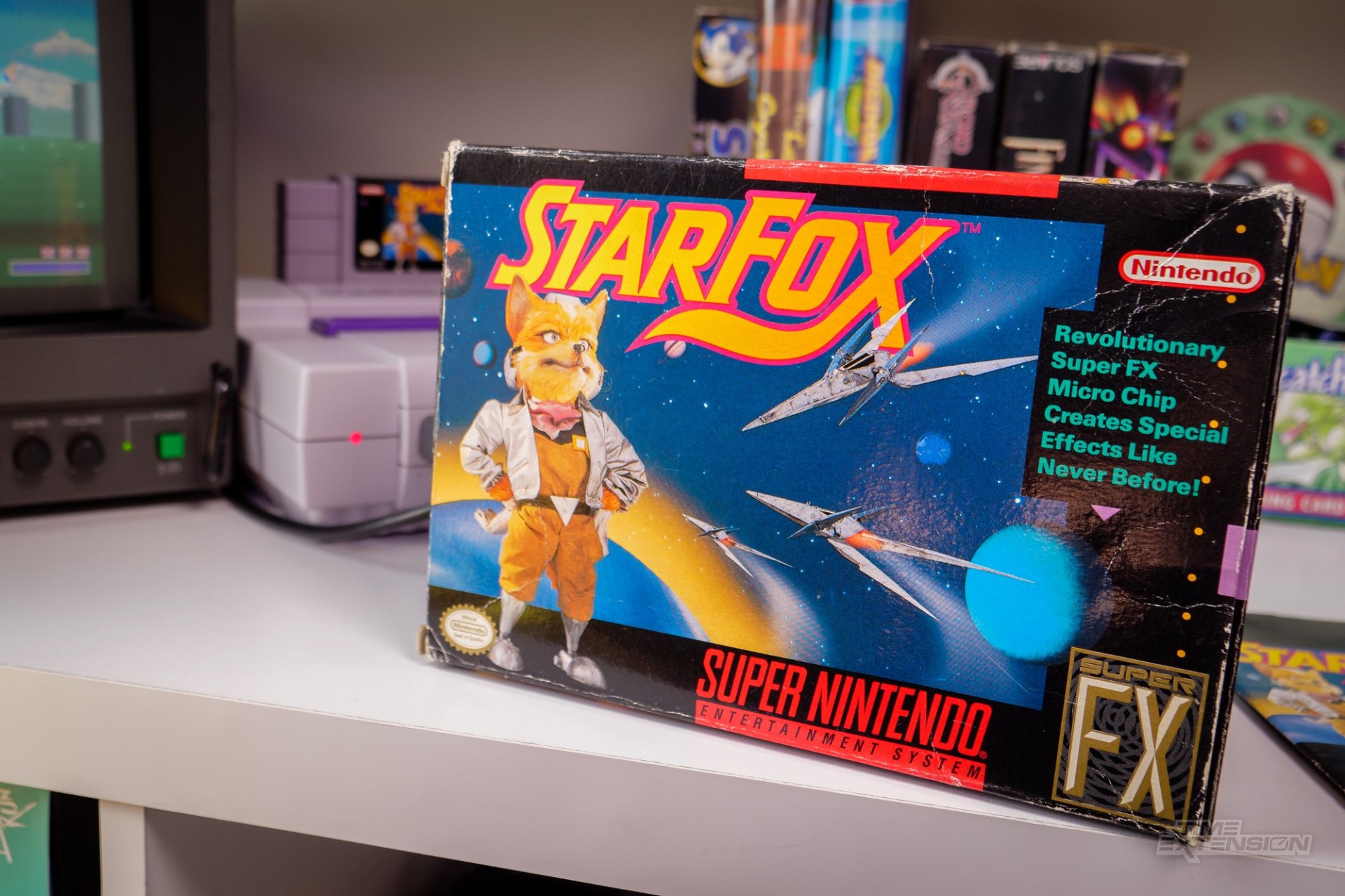
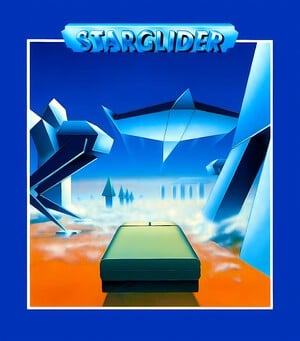
The recent surprise announcement of a new Star Fox title has rekindled excitement among fans, prompting a retrospective look at the origins of this iconic series. Thirty years ago, the original Star Fox (known as Starwing in Europe) emerged as a technological marvel, an elegant fusion of British engineering ingenuity and Japanese design savvy that irrevocably altered Nintendo’s trajectory into the realm of 3D gaming. It stands as one of the most technically outstanding releases of the 16-bit era and a truly significant entry in Nintendo’s storied software library, marking the company’s first definitive step into a dimension it had, until then, been curiously hesitant to explore. This pivotal leap would not have been possible without the audacious involvement of Argonaut Software, a small, UK-based studio renowned for its ambitious home computer title, Starglider.
The 16-bit Arena: Nintendo’s Strategic Challenge
The early 1990s were a fiercely competitive period in the video game industry, dominated by the intense console war between Nintendo’s Super Nintendo Entertainment System (SNES) and Sega’s Genesis (Mega Drive). While both platforms pushed the boundaries of 2D graphics, the industry was on the cusp of a revolution. Arcade cabinets were beginning to showcase true polygonal 3D, exemplified by titles like Sega’s Virtua Racing. Nintendo, known for its meticulous polish and innovative gameplay, initially relied on its Mode 7 capabilities for pseudo-3D effects, offering sprite scaling and rotation to simulate depth. However, this was a far cry from the true polygonal environments that developers and consumers increasingly desired. The challenge for Nintendo was clear: how to bring genuine 3D experiences to its 16-bit console without entirely overhauling the hardware, and how to do so while maintaining its reputation for quality. This strategic imperative set the stage for an improbable partnership.
Argonaut Software: The Maverick Engineers
Argonaut Software, founded by the visionary Jez San, had already established a reputation for pushing graphical boundaries. Their 1986 game, Starglider, impressed with its wireframe 3D visuals on home computers, drawing inspiration from arcade classics like Atari’s 1983 Star Wars coin-op. However, securing a partnership with a behemoth like Nintendo was no small feat for a small team operating out of a residential house. It required a level of technical wizardry and rule-breaking that epitomized Argonaut’s spirit.
Jez San’s team captured Nintendo’s attention in the most brazen way imaginable: by successfully defeating the copyright protection mechanism on the popular Game Boy console. San recounted the elaborate method: "They had the Nintendo logo drop down from the top of the screen, and when it hit the middle, the boot loader would check to see if it was in the right place." This was Nintendo’s safeguard against unlicensed games. Argonaut, with just a resistor and capacitor—components costing approximately one cent—devised a clever workaround. "The system read the word ‘Nintendo’ twice," San explained. "The first time they read ‘Nintendo’, we got it to return ‘Argonaut’, so that was what dropped down the screen. On the second check, our resistor and capacitor powered up, so the correct word ‘Nintendo’ was in there, and the game booted up perfectly." This technical exploit, combined with their demonstration of working 3D visuals on the monochrome portable, was a powerful statement of their capabilities.
A Trans-Pacific Alliance: From London to Kyoto
Armed with this audacious demo, San wasted no time in presenting his team’s achievements to Nintendo’s key staff. At a Consumer Electronics Show (CES) event, he sought out Don James, then a senior figure at Nintendo. "I walked up to him and showed him our game, and his jaw dropped—both for the demo itself and also the way it defeated their protection," San recalled. James quickly brought in Wayne Shirk and Tony Harman, who were equally impressed by Argonaut’s technical prowess and enthusiasm. San conveyed Argonaut’s desire to collaborate, emphasizing their talent in 3D game development.
San’s almost naive confidence proved well-founded. Shortly after returning to the UK, he received an official summons from the highest echelons of Nintendo. "They wanted me on a plane to Kyoto first thing in the morning to meet with Nintendo president Hiroshi Yamauchi," he explained. The meeting was pivotal. Nintendo expressed a desire for a three-game deal and, crucially, wanted Argonaut to share its 3D technology. San spent considerable time with Nintendo management, exploring possibilities and building trust. "Nintendo wanted to feel comfortable working with an outside—and gaijin [foreigner]—company. I had to show them that we could not only deliver the goods but that they could trust us, too." This period marked the unusual beginning of a deeply collaborative, albeit eventually complex, relationship.
The collaboration faced immediate logistical challenges. As programmer Krister Wombell revealed, initial communication was heavily reliant on fax, compounded by the significant eight or nine-hour time difference between London and Kyoto. "That’s not a great environment to develop a game in," Wombell noted. To overcome this, Argonaut staff members Dylan Cuthbert, Giles Goddard, and Wombell himself were relocated to Nintendo’s headquarters in Japan. What began as a four-week assignment quickly extended into months, then years, effectively cementing their presence in Nintendo’s development heart until the game’s completion. This deep integration of foreign talent was highly unusual for Nintendo at the time, underscoring the critical nature of Argonaut’s expertise.
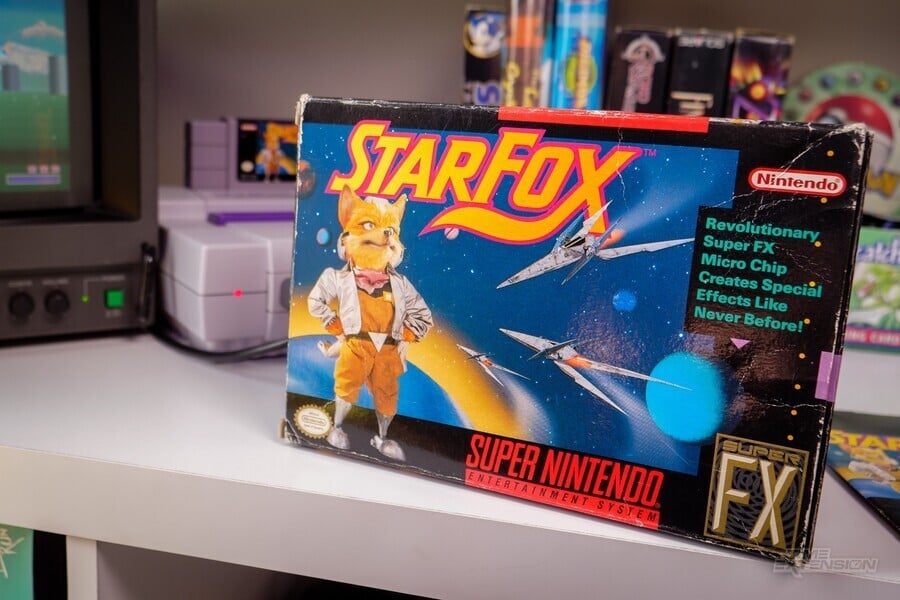
The Super FX Chip: Nintendo’s Secret Weapon
The game that emerged from this partnership was Star Fox, an on-rails 3D shooter featuring anthropomorphic heroes piloting futuristic space fighters. While conceptually similar to Starglider, this new title would marry Argonaut’s technical foundation with Nintendo’s distinctive creative vision for characters, story, and core gameplay. Jez San clarified the division of labor: "Argonaut did the 3D technology back in London and provided the lead programmers to live and breathe Nintendo, working directly in EAD’s office. I think it’s safe to say most of the code of the games was written by Argonaut, and Nintendo’s input was more on the creative side. Shigeru Miyamoto and his team produced and designed the game, and we did the technical stuff."
Central to this technical achievement was the Super FX chip, originally codenamed ‘MARIO’ (Mathematical, Argonaut, Rotation & Input/Output). This custom RISC processor, designed entirely by Argonaut’s engineers, was the hardware linchpin that made Star Fox possible. It granted the SNES unprecedented polygon-pushing power for its era, effectively transforming the console’s graphical capabilities.
The genesis of the Super FX chip can be traced back to a critical meeting in July 1990. Dylan Cuthbert, then 18, recalled Miyamoto expressing disappointment with Pilotwings, which used a simple DSP chip for perspective calculations but struggled with rotating sprite-based aircraft. Miyamoto desired a more robust solution. In a bold move, Jez San, then only 23 or 24, called Ben Cheese, a hardware designer known from the abandoned Konix Multisystem, during the meeting with Nintendo luminaries like Miyamoto, Gunpei Yokoi, and Genyo Takeda present.
San’s initial pitch was born of a mix of confidence and strategic exaggeration. After demonstrating a 3D demo on a pre-release SNES, he bluntly told Nintendo that their console wasn’t designed for optimal 3D. "Then I suggested that if they wanted better, they should let us design a 3D chip for them," San stated. Despite never having designed a 3D chip before, he promised a chip that would accelerate 3D graphics "ten times what their wimpy CPU could do." This "ten times" figure, San later admitted, was a "complete over-promise" at the time.
Nintendo, however, was intrigued. While there was initial discussion of integrating the chip directly into the USA version of the SNES, the decision was ultimately made to include it within game cartridges to keep the console’s initial cost low. This move, while limiting the chip’s ubiquity, allowed for targeted enhancements in specific games. Ben Cheese and the UK-based team, many of whom had designed custom chips for early UK computers, approached the design unconventionally. Instead of designing a pure 3D chip, they created a full RISC microprocessor with integrated math and pixel rendering functions, with the rest handled in software. San proudly declared, "It was the world’s first Graphics Processing Unit, and we have the patents to prove it. At the time that it came out, it was also the world’s best-selling RISC microprocessor until ARM became standardised in every cellphone and took the market by storm."
The Super FX chip exceeded even San’s ambitious promises, delivering performance far beyond the initial ten-fold claim. "Instead of achieving just ten times the 3D graphics performance, we actually made things about forty times faster," San revealed, adding that for 3D math, it was "more like a hundred times faster." Beyond polygons, the chip could also handle sprite rotation and scaling, features that Nintendo later leveraged in titles like Super Mario World 2: Yoshi’s Island. Its success paved the way for other notable Super FX-powered games such as Doom and Stunt Race FX, demonstrating the chip’s versatility and the SNES’s extended lifespan in the face of next-generation consoles.
Developing the Future: Collaboration and Creative Clashes
The collaboration between the British Argonaut team and Nintendo’s EAD division was a unique cross-cultural experience. Despite the language barrier, Krister Wombell noted that "the language of choice" often defaulted to English, as Miyamoto, Katsuya Eguchi, and Yoichi Yamada spoke it better than the British team spoke Japanese.
Working alongside the legendary Shigeru Miyamoto offered profound insights into his distinctive development philosophy. San observed that Miyamoto "didn’t design games up front, like Western game designers would do. He had ideas and liked to play, refine and evolve. He especially liked to iterate – he did a lot of trial and error." This organic, iterative process, while leading to groundbreaking results, presented scheduling challenges. "It was occasionally frustrating because you couldn’t schedule the project in advance," San explained. "He seemed to do everything by what feels right, which means it has to be pretty much fully built before he could evaluate how much fun it was." Programmer Giles Goddard concurred, admitting that "in the later stages of development, things could be quite nerve-racking because of his tendency to throw everything out the window and start again."

Despite these creative clashes, Wombell saw a stark contrast in project management between the two cultures, finding Nintendo’s approach highly professional. "Nintendo had a good idea what make-up the team needed in terms of directors, level designers, graphic artists, sound designers and so on," he noted, highlighting a structured process that was less common in European studios at the time. This educational process was invaluable for the young British team.
Star Fox’s Launch and Lasting Impact
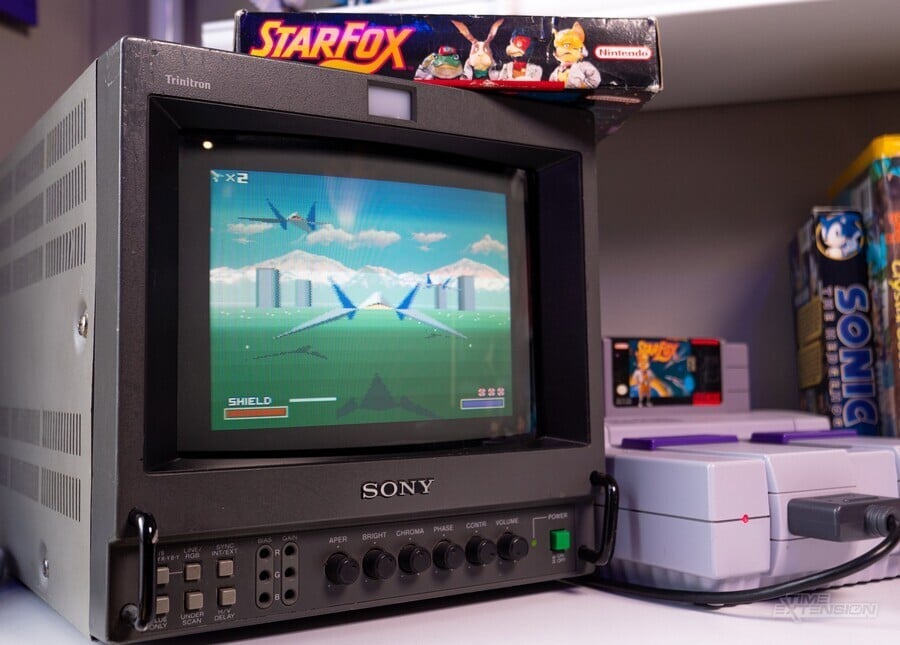
When Star Fox launched in 1993, its impact was immediate and profound. The game was a critical and commercial success, selling over 4 million units worldwide. Its crude, blocky polygons, which might appear rudimentary by today’s standards, were nothing short of a visual revolution at the time. For many players, Star Fox offered their first exposure to mainstream 3D graphics on a home console. "By today’s standards, we didn’t have a great deal of polygons to work with, and it took a leap of imagination to associate those polygons with real-world objects," Wombell reflected. "I wasn’t sure how that was going to go across – I loved it, but it was great to see the reception we got from gamers."
The game’s innovative use of the Super FX chip cemented the SNES’s reputation for cutting-edge technology and extended its competitive lifespan against newer, more powerful consoles on the horizon. It demonstrated that true 3D experiences were possible on existing hardware, provided clever engineering was applied. The success of Star Fox also opened an unprecedented door for Argonaut’s programmers. Cuthbert, Goddard, and Wombell transitioned from temporary guests to permanent residents, eventually securing positions within Nintendo itself—a practically unheard-of feat for "gaijin" in a major Japanese company. Goddard humbly attributed this to "being in the right place at the right time," acknowledging the rarity of non-Japanese graduates being hired by such a large Japanese corporation.
The Unraveling Alliance: Ambition vs. Exclusivity
While the partnership with Nintendo significantly elevated Argonaut’s standing in the development community, the long-term relationship was not without its complexities and ultimately, its bitterness. The initial "three-game deal" provided a steady stream of work and allowed Argonaut to grow, but it came with an exclusivity clause that effectively granted Nintendo considerable control. San felt that Nintendo undervalued Argonaut, keeping them tied to a royalty-based agreement while preventing them from pursuing other lucrative opportunities. "Nintendo kept telling us to stay small and keep working exclusively for them, but they weren’t paying us the serious cash that they were paying other partners," San lamented.
The breaking point arrived when Argonaut, fueled by larger ambitions, pitched a groundbreaking concept: a 3D platform game featuring Yoshi, Nintendo’s beloved dinosaur character. This prototype, San believes, was essentially "the world’s first 3D platform game" and represented a significant risk. Nintendo, historically protective of its core intellectual properties, was unwilling to let an outside company use its flagship characters. "This is the moment the deal fell apart," San stated.
Argonaut subsequently developed this concept into Croc: Legend of the Gobbos for the PlayStation, Saturn, and PC, which became their biggest-selling and most profitable game as they owned the intellectual property. San also drew a direct parallel to Super Mario 64, released a year before Croc, suggesting his prototype influenced the seminal N64 title. He recalled Miyamoto-san approaching him at a show, apologizing for not proceeding with the Yoshi game and thanking them for the 3D platform game idea, adding that Argonaut would earn enough royalties from their existing deal to compensate. San, however, found this "hollow," believing Nintendo ended their agreement prematurely and unfairly.
A Bitter End, A Lasting Legacy
The conclusion of the Argonaut-Nintendo relationship was indeed fraught with tension. San claimed Nintendo "canned Star Fox 2 even though it was finished and used much of our code in Star Fox 64 without paying us a penny." (Star Fox 2 would eventually see a release on the SNES Classic Edition in 2017, validating its completion). Adding insult to injury, Nintendo also "poached some of our best programmers—Dylan, Giles and Krister—which was inevitable since they had lived in Japan for so long that they weren’t going to come home anytime soon." San felt Argonaut was "used and then spat out by Nintendo," and that their contributions were undervalued.
Further souring the relationship was Nintendo’s rejection of Argonaut’s "Super Visor," a full-color, head-tracking, 3D texture-mapping virtual reality gaming system, in favor of their ill-fated Virtual Boy. San believed their system would have been "awesome," contrasting it sharply with the monochrome, stationary VR console that ultimately failed commercially.
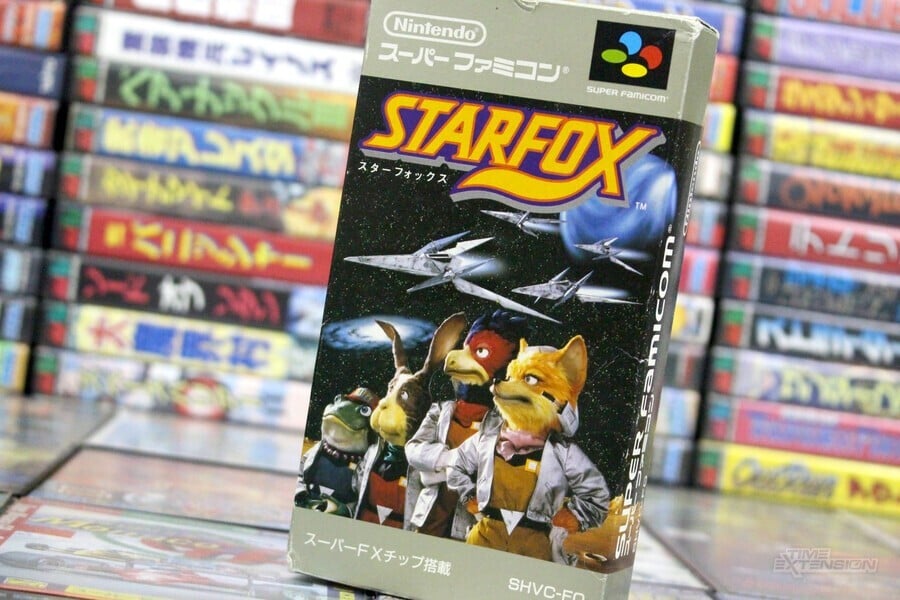
Despite the somewhat downbeat end, Jez San remains justifiably proud of Argonaut’s monumental achievements. "My proudest moment was showing that we could do what we promised," he affirmed. "To build excellent 3D games for Nintendo and also produce the first 3D graphics chip—and make it cheap enough to be included in a cartridge. I’m also happy that we were able to illustrate to Nintendo that we were as clever and innovative as they thought we were."
The legacy of Star Fox extends far beyond its commercial success or the complexities of its development partnership. It fundamentally altered Nintendo’s perspective on 3D gaming, serving as a critical stepping stone towards the fully 3D worlds of the Nintendo 64. The Super FX chip was a technological marvel, a true precursor to modern Graphics Processing Units, and its inclusion in SNES cartridges demonstrated a novel approach to extending console capabilities. For millions of players worldwide, Star Fox was not just a game; it was their first captivating glimpse into the boundless possibilities of the third dimension, a testament to the power of ingenuity and collaboration, even when that collaboration ultimately unravels. The echoes of this pioneering effort continue to resonate, shaping the evolution of video games and reminding us of the audacious spirit that drives innovation.