Cecilia Chamidah Nur
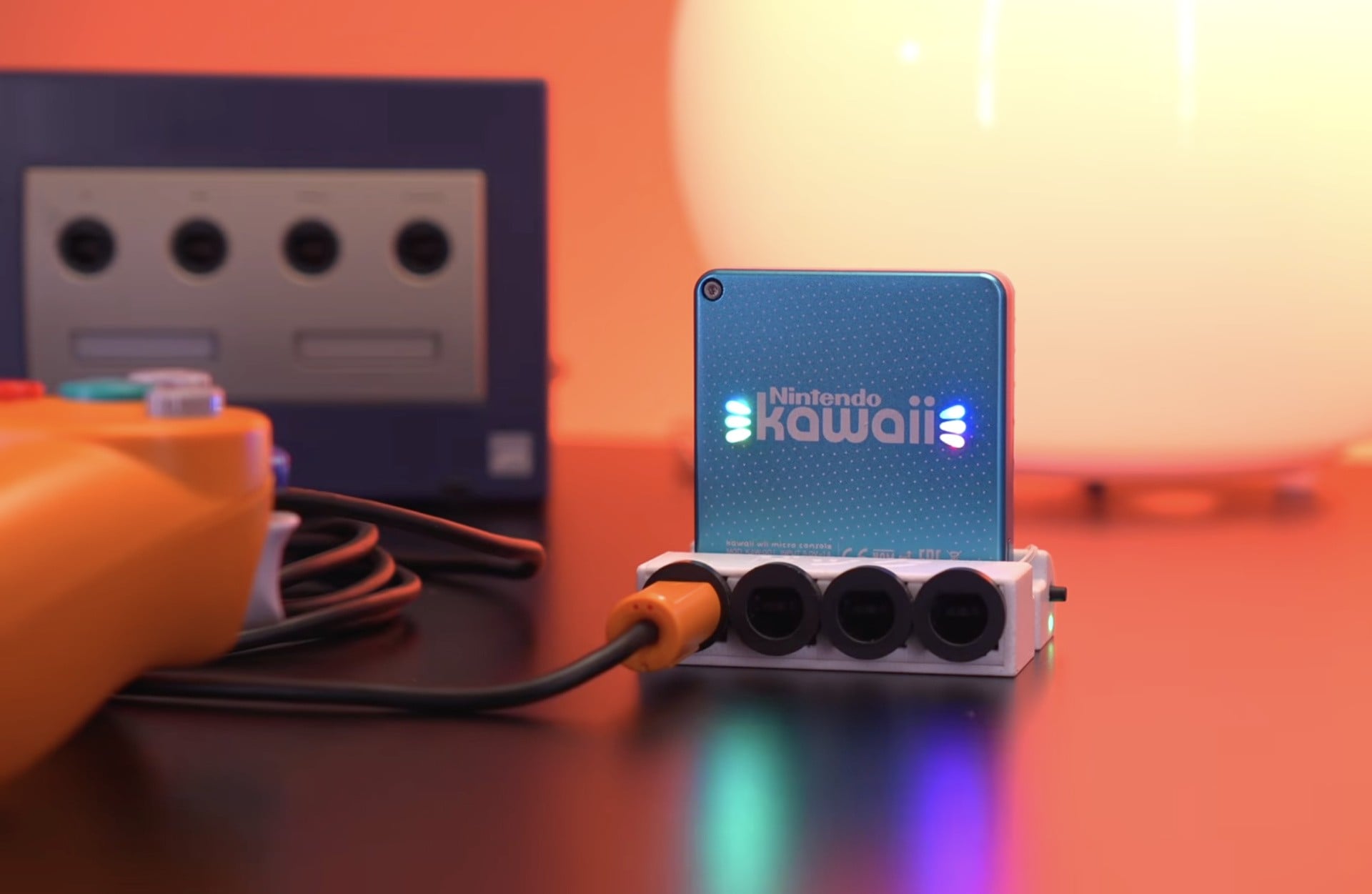
A remarkable engineering feat from the dedicated hardware modding community has culminated in the ‘Kawaii,’ a fully functional Nintendo Wii console shrunk down to the minuscule dimensions of a keychain. This ambitious project, spearheaded by modders @WeskMods and @YveltalGriffin, along with contributions from @Ding and recently showcased by Tito from Macho Nacho Productions, represents a significant milestone in console miniaturization, proving that genuine Nintendo hardware can operate in an almost impossibly small form factor. Unlike software emulation, the Kawaii utilizes an actual Wii chipset, delivering an authentic gaming experience in a package measuring just 60x60mm.
A Feat of Miniaturization: The Kawaii Project Unveiled
The Kawaii project emerged from a challenge within the console modding community to create the smallest possible functional Nintendo Wii. The core achievement lies in the drastic reduction of the original Wii motherboard, integrating its essential components into a custom, ultra-compact design. The device boasts a precisely machined metal unibody, initially planned to be passively cooled, though later developments highlighted the necessity of an external cooling solution due to the inherent heat generation of the powerful Wii chipset within such confined spaces.
The final product, as demonstrated in a recent showcase by Tito at Macho Nacho Productions, is not only a functional Wii but also effectively the smallest Nintendo GameCube ever made, thanks to the Wii’s backward compatibility. "This might be the smallest Nintendo GameCube ever made, and it’s running on real Nintendo hardware," Tito stated, emphasizing the authenticity of the hardware. He further elaborated, "The Kawaii takes an actual Wii motherboard and somehow shrinks it down into a keychain-sized, fully functional system. No emulation or shortcuts." This distinction is crucial, as many small-form-factor gaming devices rely on software emulation, which simulates console hardware rather than utilizing the original components. The Kawaii, conversely, provides a genuine, unmodified hardware experience.
The initial design envisioned the Kawaii with magnetic pogo pin connectors for power, AV output, and controller connectivity. It also included plans for a special dock designed to unlock native GameCube controller support, further solidifying its claim as a versatile, miniature gaming platform. While the initial goal for passive cooling proved challenging given the thermal demands, the very existence of a fully operational, keychain-sized console running original Nintendo silicon underscores the extraordinary dedication and technical skill of its creators.
The Visionaries Behind the ‘Kawaii’
The ‘Kawaii’ is the brainchild of a collaborative effort within the tight-knit hardware modding community. At its core are the modders @WeskMods and @YveltalGriffin, who took on the ambitious challenge of pushing the boundaries of console miniaturization. Their work involved extensive research, custom circuit board design, and intricate fabrication techniques to achieve the unprecedented size reduction.
YveltalGriffin provided insights into the meticulous manufacturing process, noting that "The final Kawaii shell will be machined from aluminium and anodized in a variety of gorgeous colours." This commitment to high-quality materials and finishes speaks to the premium craftsmanship involved in the project. The contribution of @Ding, who supplied the anodized aluminum prototype shells, was also instrumental in bringing the physical form of the Kawaii to life. YveltalGriffin remarked on their quality: "In person, they actually look better than the renders."
More recently, Tito from Macho Nacho Productions, a prominent figure known for showcasing complex hardware modifications and retro tech, brought the functional Kawaii to a wider audience. His detailed video broke down the intricate workings of the device, tested its playability, and highlighted the "insane build" and "incredible work from the talented creators behind it." His demonstration served as a testament to the project’s success and the dedication of the modding community.
A Chronology of Innovation: From Concept to Prototype
The journey of the Kawaii from an ambitious concept to a functional prototype has spanned several key phases, marked by significant technical hurdles and community engagement.
Initial Concept & Public Reveal (Late July 2024)
The project first garnered widespread attention around late July 2024, when modders @WeskMods and @YveltalGriffin publicly announced their audacious goal: to construct the smallest functional Wii console. This initial reveal outlined the core specifications, including a machined metal unibody measuring a mere 60x60mm. Early plans detailed innovative features such as magnetic pogo pin connectors for essential inputs and outputs, and a bespoke dock designed to facilitate GameCube controller compatibility, a critical feature given the Wii’s native support for GameCube games. This announcement immediately set a new benchmark, positioning the Kawaii as a potential successor to previous miniaturization efforts, such as the ‘Short Stack,’ which had previously held the title of the world’s smallest Nintendo Wii. The ambition was clear: to create a device that was not only functional but also aesthetically refined, with laser-etched logos and compliance markings on its anodized aluminum shell.
Early Prototype Development (July 2024 Update)
Shortly after the initial detailed reveal, updates from the team indicated rapid progress. By mid-July 2024, physical prototypes of the Kawaii began to emerge online. YveltalGriffin specifically mentioned receiving "the anodized aluminum prototype shells from @Ding earlier this month," expressing satisfaction with their quality, stating they looked "better than the renders" in person. This phase marked the transition from digital design to tangible hardware, validating the feasibility of the project’s ambitious physical dimensions.
Community Engagement and Demand (Post-July 2024)
Recognizing the intense interest generated by the project, Wesk launched an Expression of Interest (EOI) form to gauge potential demand for the initial production batch. The response was nothing short of overwhelming. Wesk later described the EOI form as having "went absolutely nuclear with responses." This unprecedented level of interest quickly confirmed that the modding community was eager to acquire these highly specialized shells. The EOI form, primarily intended for metrics on batch size and preferred colors, was subsequently closed due to the sheer volume of responses, indicating that the initial target for units was comfortably met.
Manufacturing Milestones
Further updates documented continued progress in the manufacturing pipeline. Images of "unpainted test cases direct from the factory" were shared, providing a glimpse into the industrial production aspect of the custom shells. These milestones demonstrated the project’s progression through professional fabrication channels, moving closer to a final product.
Functional Showcase (May 2026 Update)
The most recent and significant update arrived on May 4th, 2026, with Tito from Macho Nacho Productions releasing a comprehensive video showcasing a fully functional Kawaii prototype. This demonstration provided the first widespread view of the device in action, running actual Wii and GameCube titles. Tito’s video not only confirmed the Kawaii’s operational capabilities but also shed light on one of the project’s primary technical challenges: heat management. He highlighted that "The chipset inside this tiny device generates so much heat that you need an external fan to keep it cool." This revelation, while indicating a departure from the initial passive cooling goal, underscored the raw power packed into the miniature system and the engineering trade-offs necessary to achieve its functionality. The showcase cemented the Kawaii’s status as a fully realized, albeit complex, hardware modification.
Engineering Marvel: Deconstructing the ‘Kawaii’s’ Core
The Kawaii project is a testament to extreme engineering, pushing the limits of what is possible with existing console hardware. Its success hinges on several critical technical aspects:
The Wii Chipset: Broadway and Hollywood
At the heart of the Kawaii lies the authentic Nintendo Wii chipset, comprising the IBM "Broadway" CPU and the ATI "Hollywood" GPU/System LSI. The Broadway CPU, a PowerPC-based processor, operates at 729 MHz, while the Hollywood chip integrates the graphics processor, memory controller, and various I/O functions, running at 243 MHz. These components, designed for a much larger console with dedicated cooling solutions, are incredibly powerful for their era and generate substantial heat. The challenge for the Kawaii team was to extract these essential components, integrate them onto a custom, dramatically smaller PCB, and ensure their stable operation. This involves precise desoldering, re-balling (if necessary), and integrating the chips into the new, compact architecture.
Heat Management: The Persistent Challenge
Miniaturization inherently exacerbates thermal management issues. The original Wii console, with its relatively large casing and internal fan, was designed to dissipate the heat generated by its chipset efficiently. Shrinking this entire system to a 60x60mm footprint without compromising performance meant confronting extreme thermal loads. While the initial goal was passive cooling, relying solely on the anodized aluminum shell to wick away heat, the reality of sustained operation proved otherwise. Tito’s demonstration explicitly stated that an "external fan" is required to keep the system cool. This indicates that despite the efficiency of aluminum as a heat conductor, the sheer density of power generation within such a small volume necessitates active cooling for stable, long-term use. This trade-off is a common hurdle in extreme miniaturization projects, highlighting the physical limits of thermal physics.
Precision Manufacturing: CNC Machining and Anodized Aluminum
The Kawaii’s robust and aesthetically pleasing enclosure is a product of high-precision manufacturing techniques. The use of Computer Numerical Control (CNC) machining allows for the creation of intricate, highly accurate parts from solid blocks of aluminum. This method ensures that the internal components fit perfectly within the tiny shell and that the external dimensions are consistently precise. Anodization, an electrolytic passivation process, enhances the natural oxide layer on the aluminum surface, providing increased corrosion resistance, durability, and the ability to be dyed in a variety of vibrant colors. This choice of material and manufacturing process not only contributes to the device’s longevity and premium feel but also aids in heat dissipation, as aluminum is an excellent thermal conductor, even if it ultimately requires active assistance in this extreme case.
Connectivity Solutions: Magnetic Pogo Pins and Dedicated Dock
Given the Kawaii’s diminutive size, traditional ports and connectors would be impractical. The developers opted for innovative solutions, such as magnetic pogo pin connectors. These spring-loaded pins establish electrical contact when brought into proximity with corresponding pads, allowing for easy, tool-free attachment and detachment of peripherals while maintaining a sleek profile. Furthermore, the inclusion of a specialized dock for GameCube controller support is a critical design element. This dock likely provides the necessary interface circuitry and physical ports (such as the GameCube controller ports and potentially additional power/AV outputs) that cannot be directly integrated into the main Kawaii unit due to space constraints. This modular approach ensures that full functionality, including classic GameCube gameplay, is retained without bloating the core device.
The Art of Portablizing: More Than Just a Mod
The Kawaii project exists within the vibrant subculture of "portablizing" – the art and science of transforming home console hardware into portable, self-contained units. This niche within the broader hardware modding community demands an extraordinary blend of technical expertise, patience, and creative problem-solving.
Defining "Portablizing"
Portablizing goes far beyond simple cosmetic modifications. It involves stripping down original console hardware, often cutting and resizing motherboards (a process known as "trimming"), designing custom power management solutions, integrating displays, batteries, and controls, and packaging everything into a bespoke enclosure. The goal is to retain the authenticity of the original hardware experience, distinguishing it sharply from software emulation, which runs console games on general-purpose computers or mobile devices. For enthusiasts, the tactile feel and precise timing of original hardware are paramount.
The Skill Level Required for a Kawaii Build
The Kawaii is not designed for the faint of heart or the novice modder. As YveltalGriffin explicitly stated, "Kawaii will be a challenging build, and there won’t be a full kit you can buy, or even a step-by-step assembly guide." This underscores the advanced nature of the project. Building a functional Kawaii requires:
- Wii Board Trimming: Expertly reducing the size of the original Wii motherboard, which involves carefully cutting away non-essential sections while preserving crucial traces and components. This is a high-risk operation where a single wrong cut can render the board useless.
- PCB Assembly: Populating custom-designed Printed Circuit Boards (PCBs), such as the "Thundervolt PCB" for power management and the Kawaii’s internal and dock PCBs, with tiny surface-mount components. This demands fine soldering skills and specialized equipment.
- Advanced Wiring: Connecting all the disparate components – the trimmed Wii board, custom PCBs, power supply, AV output, and controller interfaces – with incredibly fine wires, often requiring microscopic precision.
These tasks require not just technical knowledge but also an understanding of electronics, circuit design, and meticulous craftsmanship. The project’s creators acknowledge this high barrier to entry, recommending simpler projects like the "Noldendo Wii Micro" and the "Ashida" for those looking to "get their feet wet in the world of portablizing."
Broader Implications and the Future of Console Modding
The Kawaii project, while a niche endeavor, carries significant implications for the wider world of hardware modification, retro gaming, and even consumer electronics.
Pushing Boundaries and Inspiring Innovation
The sheer audacity and success of the Kawaii project set a new benchmark for miniaturization within the console modding community. It demonstrates that with sufficient skill, dedication, and innovative design, what was once thought impossible can become a tangible reality. This achievement will undoubtedly inspire other modders to push their own boundaries, explore new techniques, and attempt even more ambitious projects, fostering a culture of continuous innovation.
The Enduring Legacy of Nintendo Hardware
The Kawaii is a powerful testament to the enduring appeal and robust engineering of classic Nintendo consoles, particularly the Wii and GameCube. Despite being generations old, the desire to experience these systems in new, unique ways highlights their cultural significance and the quality of their original hardware. It speaks to a segment of the gaming population that values authentic hardware over software emulation, cherishing the precise performance and nostalgic connection to the original machines.
Challenges and Accessibility: A Niche Pursuit
While inspiring, the Kawaii also highlights the inherent challenges and limited accessibility of such advanced hardware modifications. The high skill ceiling, the need for specialized tools, and the absence of a "full kit" or comprehensive guide mean that only a small, highly dedicated segment of the modding community will be able to undertake such a build. This positions projects like the Kawaii as showcases of extreme talent rather than mass-market products, emphasizing the artisan nature of advanced portablizing.
The ‘Right to Repair’ Ethos
At a philosophical level, projects like the Kawaii embody aspects of the "right to repair" movement. By dissecting, understanding, and repurposing existing consumer electronics, modders assert a form of ownership and control over their devices. They demonstrate that hardware, even if proprietary, can be re-imagined and extended beyond its original design intent, fostering a deeper understanding of technology and challenging planned obsolescence.
In conclusion, the ‘Kawaii’ is far more than just a novelty; it is a profound statement on human ingenuity, technical mastery, and the boundless passion of the hardware modding community. By taking a full-fledged Nintendo Wii and shrinking it to keychain dimensions, its creators have not only achieved an engineering marvel but have also inspired a new generation of modders, solidified the legacy of classic Nintendo hardware, and demonstrated the incredible potential that lies in pushing the boundaries of what is conventionally considered possible.