Johny Imanuel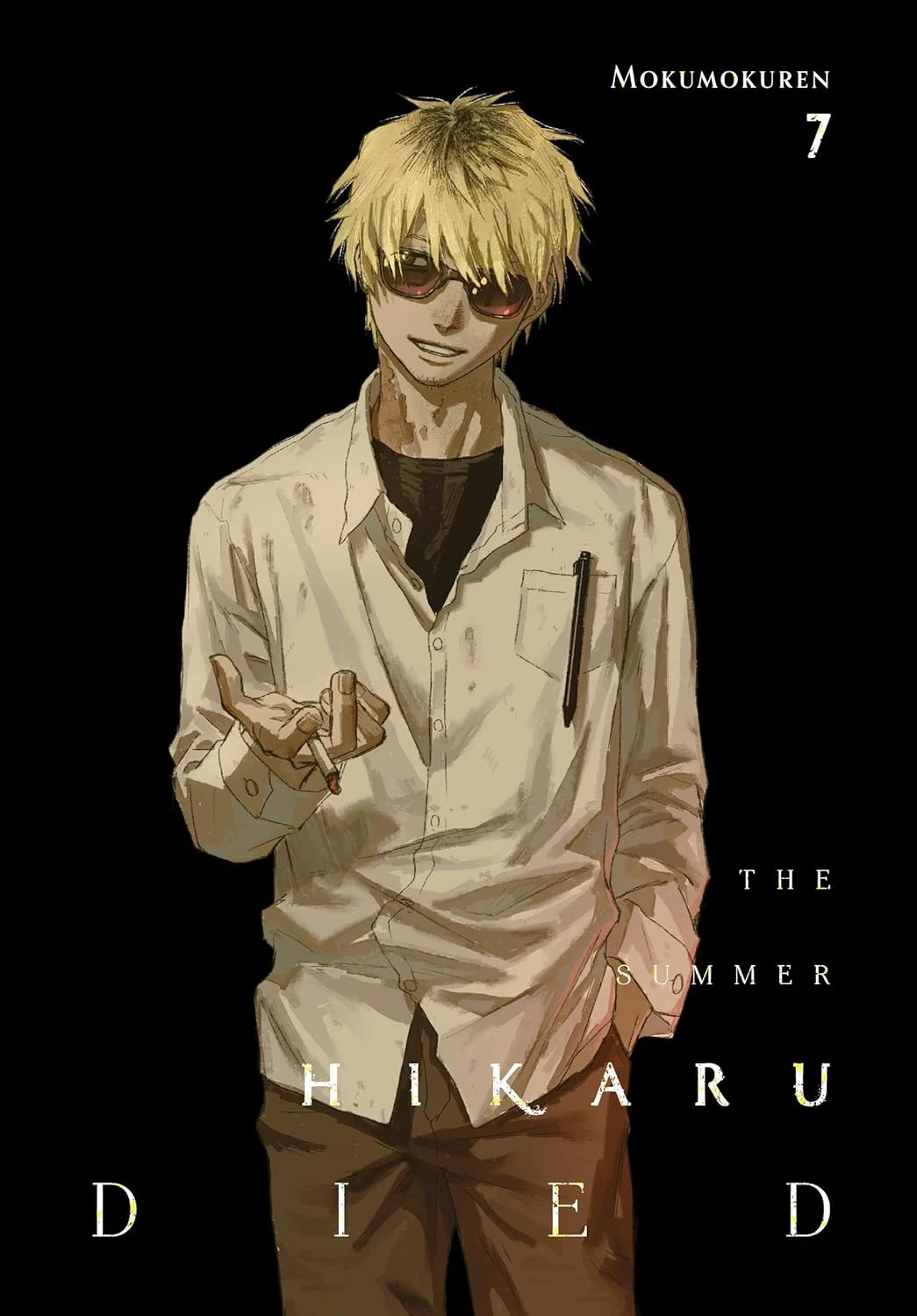
Evolution of the Narrative Focus and World-Building
Since its debut, The Summer Hikaru Died has been lauded for its atmospheric blending of body horror, psychological drama, and the "uncanny valley" effect of a supernatural entity attempting to mimic human emotion. Initially, the plot centered almost exclusively on Yoshiki’s internal struggle: the devastating realization that his best friend, Hikaru Indou, died on a mountain one summer, and the subsequent decision to maintain a relationship with the eldritch being that took Hikaru’s place. However, as the series has matured through its first six volumes, the scope has gradually widened to include the history of Kubitachi Village and the ancient, ritualistic secrets buried within its rural landscape.
In Volume 7, this expansion reaches a new milestone. The primary objective for Yoshiki and the entity known as "Hikaru" has shifted toward a more proactive defensive stance. They are now committed to "closing the holes"—weak points in the barrier between the human world and the realm of the supernatural—that allow impurities to seep into the village. This mission necessitates the involvement of other residents, transforming what was once a private tragedy into a community-wide struggle for survival.
Character-Driven Exorcism and Supernatural Specializations
The strength of Volume 7 lies in its "split perspective" approach. By dividing the characters into separate groups to tackle different supernatural threats, the manga allows for a deeper exploration of individual backstories and skill sets. This structural choice highlights that Yoshiki and "Hikaru" are not the only individuals with a connection to the town’s darker side.
Yuta Maki and the Weight of Tradition
Yuta Maki, a friend and classmate of the protagonists, emerges as a key figure in this volume. While previously portrayed as a relatively ordinary teenager, Yuta is revealed to have a familial connection to the supernatural that he had largely ignored. His home becomes a focal point for an impurity involving disembodied legs, a manifestation of the "holes" opening nearby.
Yuta’s contribution to the defense of the village is rooted in traditional folk practice. He revisits a shrine dedicated to a "divine serow" that his grandfather once maintained. This act of cleaning and honoring local deities represents a different form of spiritual protection compared to "Hikaru’s" raw, otherworldly power. By giving Yoshiki an inherited charm, Yuta bridges the gap between modern skepticism and ancient belief, suggesting that the town’s survival may depend on reviving forgotten customs.
Rie Kurebayashi’s Practical Mediumship
Working alongside Yuta is Rie Kurebayashi, a housewife and medium who has served as a cautionary voice throughout the series. Rie’s character is essential for grounding the supernatural elements in a sense of lived experience and practical danger. Unlike "Hikaru," whose powers are inherent and alien, Rie’s abilities are depicted as a craft honed through necessity and past trauma.
Her methods in Volume 7 are notably pragmatic. She uses a baseball hat to shield Yuta’s eyes from things he is not meant to see, and she employs a mundane backscratcher as a tool for exorcism. This juxtaposition of the domestic and the divine underscores the manga’s unique aesthetic: the supernatural is not a distant, epic force, but something that intrudes upon the everyday lives of ordinary people. Rie’s role also serves as a thematic warning to Yoshiki about the dangers of becoming too close to beings from the "other side."
The Strategic Partnership of Tanaka and Asako Yamagishi
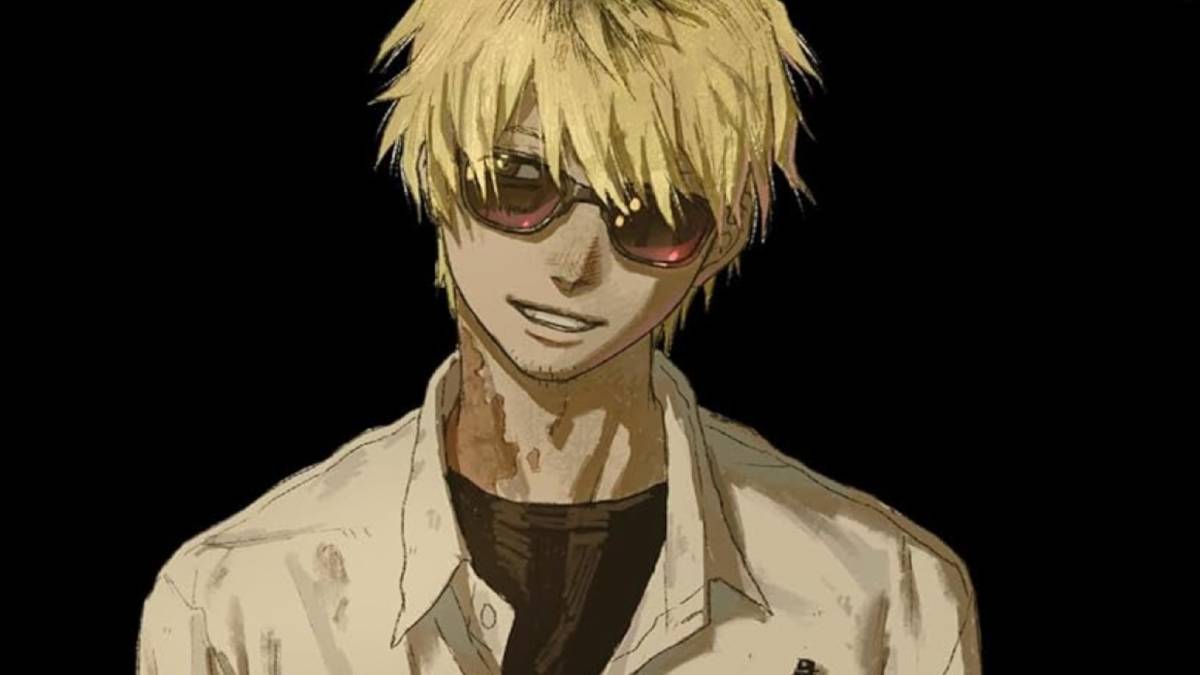
Perhaps the most significant development in Volume 7 involves the collaboration between the mysterious Tanaka and Asako Yamagishi. Tanaka, who initially appeared as a suspicious and potentially antagonistic figure, has transitioned into a vital ally. His approach to impurities is clinical and intellectual; he lacks spiritual power but possesses immense knowledge. He utilizes specialized tools, such as glasses that act as "eyes" to see the unseen and a hamster that functions as a supernatural "sensor."
In contrast, Asako Yamagishi is a "hearer"—a novice with the inherited ability to perceive the sounds of impurities. This pairing creates a compelling dynamic where knowledge and raw sensitivity must work in tandem. Their efforts to seal a hole require them to bargain with an impurity, a sequence that further clarifies the "rules" of this supernatural world. It demonstrates that the entities are not always mindless monsters but are often beings with their own logic and requirements.
Chronology of the Kubitachi Crisis
To understand the stakes of Volume 7, one must look at the timeline of events leading up to the current crisis in Kubitachi Village:
- The Summer of the Incident: Hikaru Indou disappears in the mountains for a week and returns changed. Yoshiki immediately suspects the truth but chooses to stay silent.
- Discovery of the Entity: The entity reveals its true form to Yoshiki, admitting it is not Hikaru but possesses his memories and desires.
- Escalation of Impurities: Strange occurrences begin to plague the village, including the disappearance of other residents and the manifestation of "shadows."
- The Warning: Mediums like Rie Kurebayashi and investigators like Tanaka arrive or reveal themselves, signaling that the village is under a spiritual siege.
- The Mission to Seal the Holes: Yoshiki and "Hikaru" realize that the entity’s presence is tied to the weakening of the town’s barriers. They begin a systematic effort to close these rifts, leading directly into the events of Volume 7.
Market Reception and Cultural Impact
The Summer Hikaru Died has become a significant property in the modern manga landscape. Since its serialization began on the Young Ace Up website in 2021, it has garnered numerous accolades, including a top ranking in the 2023 edition of Kono Manga ga Sugoi! (This Manga is Amazing!) for male readers.
The series’ success is often attributed to Mokumokuren’s ability to blend genres that are traditionally kept separate. While it contains elements of "Boys’ Love" (BL) through the intense bond between Yoshiki and the entity, it is primarily categorized as a horror mystery. This crossover appeal has expanded its readership significantly. Furthermore, the announcement of an anime adaptation currently streaming on Netflix has brought the story to a global audience, increasing the demand for the collected volumes.
Analysis of Implications for Volume 8 and Beyond
The shift toward an ensemble-driven narrative in Volume 7 has several implications for the future of the series. By establishing that characters like Asako and Tanaka have the agency to handle supernatural threats independently, the story reduces its reliance on "Hikaru" as a "deus ex machina." This raises the stakes for Yoshiki; if the village can be protected by humans using traditional or intellectual means, the necessity of keeping a dangerous entity like "Hikaru" around becomes a more complex moral question.
Moreover, the focus on the "holes" suggests that the source of the impurities is not just a single entity but a systemic failure of the town’s spiritual geography. As Volume 8 approaches—scheduled for release by Yen Press on October 27, 2026—the narrative appears to be heading toward a confrontation with the true nature of the mountain and the origin of the entity itself. The "impurities" are becoming more aggressive, and the toll on the human characters is increasing, as evidenced by Asako’s partial hearing loss caused by "Hikaru’s" power in previous chapters.
Conclusion
Volume 7 of The Summer Hikaru Died succeeds in enriching the series’ lore by stepping away from the central duo to validate the roles of the supporting cast. Through the pragmatic exorcism of Rie, the traditional efforts of Yuta, and the analytical approach of Tanaka and Asako, the manga illustrates a world where the supernatural is a multifaceted problem requiring a multifaceted solution. This volume reinforces the idea that while "Hikaru" may be the heart of the story’s mystery, the survival of Kubitachi Village rests in the hands of those who call it home. As the barriers continue to thin, the combined efforts of these individuals will be the only thing standing between the village and total spiritual dissolution.