Farhan hamdan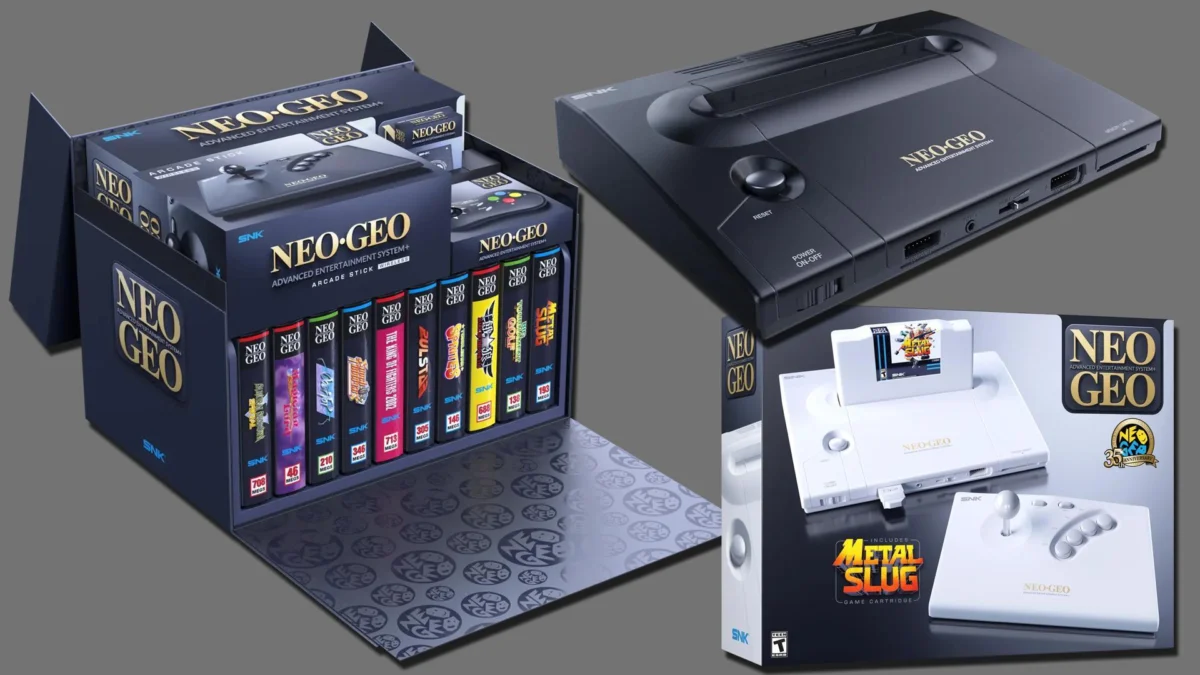
The initial product lineup for this re-engineered console is comprehensive, featuring not only the console itself but also a suite of peripherals designed to replicate the original experience. Available for purchase are exact replicas of the Neo Geo game pad, the classic arcade stick, and dedicated memory cards. Complementing the hardware, SNK and PLAION REPLAI are also releasing official re-issues of ten classic Neo Geo AES games, each priced at $90. The console itself is offered in various tiers, starting with a standard black version at $250, which includes a wired controller—a purported 1:1 replica of the original Neo Geo arcade stick. For those seeking a more premium package, a white "Anniversary Edition" is available for $350, bundling a wireless white arcade stick, a memory card, and a copy of the seminal title Metal Slug. At the pinnacle of the offerings is the black "Ultimate Edition," priced at $1000, which encompasses all features of the Anniversary Edition but expands the game library to include all ten re-released titles and a "game rack." All pre-ordered units and accessories are slated for shipment by the end of the current year.
The Enduring Legacy of the Neo Geo AES
To fully appreciate the significance of this modern reproduction, one must first understand the historical context and enduring legacy of the original Neo Geo Advanced Entertainment System (AES). Launched by SNK in Japan in 1990 and subsequently released worldwide, the Neo Geo AES was unlike any other home console of its era. It was directly derived from SNK’s immensely popular Neo Geo Multi Video System (MVS) arcade cabinet, allowing for arcade operators to swap game cartridges easily. The AES brought this arcade-perfect experience directly into living rooms, a feat unparalleled at the time.
Marketed as "the Rolls-Royce of gaming," the Neo Geo AES quickly established itself as a premium, high-end console. Its exorbitant price tag, with the console alone often retailing for over $600 (equivalent to over $1,300 in 2023 dollars) and individual game cartridges costing between $200 and $300 (or more), positioned it as a luxury item accessible primarily to affluent enthusiasts. Despite its prohibitive cost, the system garnered a dedicated following due to its unparalleled graphical fidelity, superior sound, and precise control, delivering experiences that were genuinely indistinguishable from their arcade counterparts. Titles like Fatal Fury, Art of Fighting, Samurai Shodown, King of Fighters, and Metal Slug became hallmarks of the system, showcasing its technical prowess and SNK’s innovative game design. The Neo Geo AES remained on the market until 2004, enjoying one of the longest production runs in console history, a testament to its quality and fan loyalty. Its unique position as a direct arcade-to-home port, coupled with its robust hardware and enduring library, has cemented its status as a highly sought-after collectible and a cornerstone of retro gaming culture.
SNK and PLAION REPLAI: A Strategic Partnership
The collaboration between SNK and PLAION REPLAI is a crucial element of this endeavor. SNK Corporation, with its rich history dating back to 1978, has been a pivotal force in the arcade and home console markets. While its focus has shifted over the decades, its brand name remains synonymous with quality arcade experiences and iconic fighting games. PLAION REPLAI, while not as widely known as SNK, appears to be positioned as a specialist in premium retro hardware reproductions, with the "REPLAI" moniker itself suggesting a focus on replication and fidelity.
This partnership signifies a strategic move for SNK, allowing them to capitalize on the enduring appeal of their classic hardware without diverting significant internal resources from their contemporary game development efforts. For PLAION REPLAI, partnering with SNK provides invaluable official licensing and access to original schematics and intellectual property, lending immense credibility to their replica product. For the retro gaming community, an officially sanctioned, hardware-accurate reproduction of the Neo Geo AES is a significant event. It promises to deliver an authentic experience that third-party solutions or emulation often struggle to achieve, potentially opening the door for a new generation of players to appreciate SNK’s golden age. This collaboration underscores a growing trend in the industry where original manufacturers are engaging with the retro market, recognizing the commercial viability and cultural importance of preserving gaming history with high-quality, officially endorsed products.
Technical Fidelity: The "Re-engineered ASIC Chips"
At the heart of the new Neo Geo AES’s promise of authenticity lies the claim of utilizing "re-engineered ASIC chips." ASIC stands for Application-Specific Integrated Circuit, a microchip designed for a particular application, in this case, replicating the precise functionality of the original Neo Geo hardware. This approach stands in contrast to common methods of retro console reproductions, such as software emulation (where a modern computer simulates the original hardware) or FPGA (Field-Programmable Gate Array) solutions (where hardware is reconfigured to mimic the original logic).
The use of re-engineered ASICs, if executed successfully, suggests a level of hardware fidelity that aims for absolute 1:1 accuracy. Unlike software emulation, which can introduce latency and inaccuracies, or FPGA implementations that, while highly accurate, are still a reinterpretation of the original logic, a true ASIC reproduction endeavors to be functionally identical at the silicon level. This means the system should behave precisely as the original Neo Geo AES did, down to the timing of its video and audio signals. For purists and speedrunners, this level of accuracy is paramount.
The implications of this technical choice are far-reaching. If the ASIC is indeed based on the original specifications, it should ensure complete compatibility with the entire library of Neo Geo AES cartridges, including rare titles, modern homebrew releases, and flash carts (ROM carts) that allow users to play digital backups. Furthermore, it should maintain compatibility with crucial accessories like Furrtek’s MVS to AES converter, which allows users to play more affordable MVS arcade cartridges on their AES console. The challenge of re-engineering obsolete ASIC technology is substantial, requiring deep technical expertise and potentially significant investment. Successful implementation would signify a major engineering achievement, offering a reproduction that truly "just works like the original," addressing one of the most critical demands of the retro gaming community: uncompromised authenticity.
Product Tiers and Market Positioning
The diverse pricing structure for the new Neo Geo AES reflects a clear strategy to cater to different segments of the retro gaming market, from casual enthusiasts to dedicated collectors.
-
Standard Black Version ($250): Positioned as the entry point, this tier offers the console with a single wired controller, a 1:1 replica of the original Neo Geo arcade stick. This package aims to provide the core experience at a relatively accessible price, making it appealing to those who desire an authentic Neo Geo experience without committing to the higher-end bundles. The inclusion of a wired arcade stick as the default controller emphasizes the system’s arcade heritage and focus on direct, responsive gameplay.
-
White "Anniversary Edition" ($350): This mid-tier offering adds significant value for a moderate price increase. The white console aesthetic provides a distinct visual appeal, commemorating the system’s legacy. Crucially, it includes a wireless white arcade stick, a nod to modern convenience while maintaining the classic design. The addition of a memory card, essential for saving game progress, and a bundled copy of Metal Slug, one of the Neo Geo’s most iconic titles, enhances its appeal as a complete, ready-to-play package. This tier targets enthusiasts who appreciate both authenticity and modern quality-of-life improvements.
-
Black "Ultimate Edition" ($1000): This premium package is clearly aimed at the most dedicated collectors and affluent fans. Priced at a significant premium, it includes all the features of the Anniversary Edition but expands the game library to include all ten of the officially re-released titles. The inclusion of a "game rack" further positions this as a collector’s item, designed for display and showcasing the complete set. This tier taps into the high-end retro market, where exclusivity, completeness, and a luxury experience command substantial prices. It reflects the understanding that a segment of the audience is willing to pay a premium for the ultimate, comprehensive package, echoing the original Neo Geo’s status as a luxury item.

The individual game re-releases, priced at $90 each, also warrant attention. While this price point is standard for modern collector’s editions of retro games, it also reflects the original Neo Geo’s reputation for expensive software. This pricing strategy ensures that SNK and PLAION REPLAI can offer a complete, officially licensed ecosystem for the new hardware. The availability of replica game pads, arcade sticks (wired/wireless), and memory cards sold separately (though the wired controller’s standalone availability is a point of contention) allows for customization and replacement options, catering to the ongoing needs of the community.
Critical Analysis: Features, Concerns, and Unanswered Questions
While the announcement has generated considerable excitement, a professional journalistic approach necessitates a critical examination of the information provided, particularly concerning key features and notable omissions. Several points raise questions within the discerning retro gaming community:
Video Output Specifications: A Critical Omission
The promotional material highlights "Low-latency HDMI output" for modern displays and "Original AV output for CRT enthusiasts." While these statements address crucial requirements for different user bases, the complete absence of detailed specifications for either output is a significant red flag. For HDMI, retro gamers demand specifics regarding resolution (e.g., 720p, 1080p), scaling methods, aspect ratio options (4:3, 16:9), and any built-in filters or interpolation. Low latency is paramount, but without measurable data or detailed technical explanations, it remains an unverified claim.
Equally concerning is the lack of detail for the "Original AV output." For CRT enthusiasts, the type of analog output is critical. Does it support RGB (Red-Green-Blue) via SCART or component, which offers the highest quality on CRTs? Or is it limited to composite or S-Video, which are lower quality? The original Neo Geo AES offered excellent RGB output, and any "original AV output" must match or exceed this fidelity to satisfy purists. The absence of images of the rear of the console, where these ports would be located, further exacerbates this uncertainty. This lack of transparency regarding video output, arguably the most critical component for a retro console reproduction, is a major point of caution.
Controller Availability: A Missed Opportunity?
The inclusion of wireless versions of the arcade sticks and "Neo Geo CD-style" controllers is a welcome modern convenience. However, the apparent unavailability of the wired arcade stick as a standalone purchase is a peculiar decision. Many fans of the original hardware prefer wired connections for their absolute zero-latency performance and durability, or simply for authentic aesthetics. Not offering the wired version separately could alienate a segment of the core audience who might desire additional wired controllers for multiplayer or as direct replacements for their existing, potentially aging, peripherals.
DIP Switch Functionality: Details Required
The mention of "DIP switches for language selection, overclocking and display mode selection" hints at advanced customization options. While promising, the lack of any demonstration or detailed explanation of these features is another area of concern. What specific "display modes" are available? Do they include pixel-perfect scaling, scanline options, or different aspect ratio presets? How granular is the "overclocking" functionality, and what impact does it have on game performance or system stability? Without concrete details, these intriguing features remain abstract promises.
Reliance on 3D Renders: Product Readiness Concerns
The exclusive use of 3D renders instead of actual product photographs throughout the promotional material raises questions about the current stage of product development and readiness. While 3D renders are common in initial marketing, their sole presence without any "real" images can imply that the physical product is not yet finalized, or that SNK and PLAION REPLAI are not yet prepared to showcase its tangible form. This contributes to the overall sense of caution, suggesting that consumers are pre-ordering based on conceptual designs rather than fully realized hardware.
Market Implications and Consumer Outlook
The announcement of the new Neo Geo AES enters a vibrant yet competitive retro gaming market. While official reproductions often hold a significant advantage in terms of legitimacy and intellectual property, they also face scrutiny from a highly informed and demanding consumer base. The primary target audience for this product will undoubtedly be existing Neo Geo enthusiasts, collectors, and those who missed out on the original but crave an authentic experience.
The competition comes from various fronts: the robust second-hand market for original Neo Geo AES consoles, which, while expensive, offers truly original hardware; high-fidelity FPGA-based systems like those from Analogue, which have set a high bar for accuracy and modern output; and the open-source MiSTer project, which provides extremely accurate recreations of numerous retro systems. The success of the SNK/PLAION REPLAI console will depend on its ability to differentiate itself through its "re-engineered ASIC chips" promise and deliver on the authenticity it claims.
Should the product deliver on its promises of 1:1 hardware accuracy and low-latency modern output, it could invigorate interest in the Neo Geo ecosystem, potentially driving demand for original cartridges and accessories. Conversely, if it falls short on critical technical aspects, particularly video output, it risks disappointing a discerning community and ceding ground to established FPGA solutions. The premium pricing of the Ultimate Edition also positions it against other high-end collectibles, requiring impeccable build quality and flawless performance to justify its cost.
Timeline and Call for Transparency
The timeline for this ambitious project is straightforward: pre-orders are open now, with an anticipated shipping window by the end of the year. This gives SNK and PLAION REPLAI several months to finalize production and address any remaining technical challenges.
Given the significant investment required for a pre-order, especially for the higher-tier editions, the prevailing sentiment within the retro gaming community is one of cautious optimism. There is immense desire for this project to succeed, as an officially endorsed, hardware-accurate Neo Geo AES for modern displays is a long-held dream for many. However, this enthusiasm is tempered by a clear call for greater transparency. The immediate priority for SNK and PLAION REPLAI should be to release detailed technical specifications, particularly regarding video output, and to provide "real" product images or, ideally, demonstration videos of a functional unit.
The ultimate success and reception of this new Neo Geo AES will hinge on its performance in the hands of independent, reputable reviewers. It is imperative that review units are dispatched to experts known for their rigorous testing of retro hardware, allowing them to thoroughly evaluate the console’s accuracy, latency, build quality, and compatibility. Only through such independent verification can the claims of "re-engineered ASIC chips" and "original AV output" be substantiated, transforming cautious optimism into confident endorsement. The gaming world watches with keen interest, hoping that this ambitious revival lives up to the legendary status of the Neo Geo AES.