Edi Durjana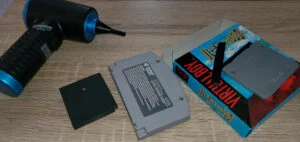
In a significant development for the digital preservation of classic video games, Jesse Talavera, a prominent developer known for his contributions to the RetroArch ecosystem, has officially unveiled "ROM Cleaner," a unique utility core designed to address the persistent challenge of data degradation in digital game backups. This innovative tool, now available through RetroArch’s core downloader, aims to ensure the long-term reliability and playability of digital ROM collections, drawing a distinctive parallel to the physical maintenance often required for vintage gaming media.
Talavera, whose previous work includes the acclaimed melonDS DS core, the storage management utility McSoftServe, and various enhancements to RetroArch such as microphone support and XDelta softpatching, has been secretly developing ROM Cleaner. The utility marks a departure from RetroArch’s primary function as an emulation platform, expanding its scope to encompass proactive digital asset management. Its core promise is to revitalize digital ROMs that may have become corrupted or unstable over time, preventing the loss of access to cherished gaming history.
The Developer’s Vision and Background
Jesse Talavera has carved out a niche within the RetroArch community for his innovative solutions and deep understanding of emulation intricacies. His work on melonDS DS provided a robust and performant Nintendo DS emulation experience, while McSoftServe addressed practical user needs for managing vast digital libraries. The integration of microphone support into RetroArch demonstrated his commitment to enhancing peripheral compatibility, crucial for authentic emulation experiences. Similarly, XDelta softpatching offered a streamlined method for applying fan translations, hacks, and improvements to game ROMs without altering the original files, showcasing a dedication to user flexibility and content enrichment. These prior contributions illustrate a consistent theme: empowering users with tools that go beyond basic emulation, fostering a richer and more stable retro gaming environment. ROM Cleaner, in this context, represents the culmination of this ethos, shifting focus from merely playing games to actively preserving their digital integrity.
Addressing the Silent Threat: Data Degradation
The concept of "ROM Cleaner" directly confronts one of the most insidious threats to both physical and digital media: data degradation. For retro gamers, the physical world is rife with examples: the gradual demagnetization of cassette tapes and floppy disks, the "disc rot" affecting optical media like CDs and DVDs, the fading charges in flash memory cartridges, and the corrosion of electrical contacts on game cartridges. These physical ailments lead to unreadable data, graphical glitches, or complete system failures.
However, the digital realm, often perceived as immutable, is equally susceptible to degradation. While a digital file doesn’t "rot" in the same visible way a physical disc does, it can suffer from "bit rot" – the corruption of data bits over time due to various factors. These can include:
- Storage Media Failure: Hard drives can develop bad sectors, SSDs have finite write cycles, and even network-attached storage (NAS) arrays can experience data corruption during power fluctuations or software glitches.
- Environmental Factors: Cosmic rays can cause "single event upsets" (bit flips) in RAM or storage, though rare, they are a documented phenomenon.
- Software Errors: Bugs in file systems, operating systems, or transfer protocols can introduce errors during copying or storage.
- Archival Neglect: Over long periods, without regular integrity checks and refreshment, digital files are vulnerable.
Studies on data longevity indicate that while modern storage solutions are robust, none are entirely infallible. Magnetic media (HDDs) typically have a lifespan of 3-5 years before increased failure rates, while solid-state drives (SSDs) can last longer but are sensitive to power loss and have a finite number of write/erase cycles. Optical media, once touted for archival, has proven susceptible to chemical degradation over decades. Cloud storage mitigates some risks but introduces dependency on third-party providers and internet access. Therefore, even a "digital backup" residing on seemingly stable storage requires active management to ensure its long-term viability. ROM Cleaner posits itself as a user-friendly interface to this crucial, yet often overlooked, aspect of digital preservation.
The Novelty of ROM Cleaner: A Whimsical Interface to Serious Purpose
The most striking feature of ROM Cleaner, and perhaps its most intriguing, is its proposed method of interaction: "All you need is a microphone and a set of lungs." This seemingly whimsical approach, reminiscent of blowing into a malfunctioning Nintendo Entertainment System (NES) cartridge, serves as a symbolic bridge between the tangible acts of physical media maintenance and the abstract processes of digital data integrity. While the act of blowing into a microphone itself will not magically repair corrupted bits, it is understood to be a user-initiated trigger for a sophisticated underlying process.
In a professional journalistic context, it can be inferred that this unique user interface activates a series of diagnostic and potentially corrective algorithms within the utility core. These could include:
- Checksum Verification: Comparing the ROM’s current checksum (e.g., MD5, SHA-1, CRC32) against a known good database (like No-Intro or Redump sets). If a mismatch is detected, it flags the file as potentially corrupted.
- Data Integrity Scanning: Running sector-by-sector checks to identify corrupted or unreadable blocks within the ROM file.
- Error Detection and Correction (EDC): Employing algorithms that can detect and, in some cases, correct minor data errors, similar to how RAID systems or ECC memory function.
- Metadata Analysis: Checking for inconsistencies in file headers or internal ROM structures that might prevent proper loading.
- Automated Repair (where possible): For minor corruptions, the utility might attempt to reconstruct damaged parts using redundancy information or by referencing common byte patterns found in similar, uncorrupted ROMs.
- User Notification and Recommendation: If repair is not possible, the utility would likely inform the user of the corruption, identify its location, and recommend seeking a replacement from a verified source.
The "microphone and lungs" interaction thus transforms a mundane technical task into an engaging, nostalgic ritual, making the often-abstract concept of digital hygiene more accessible and even enjoyable for the end-user. It taps into the collective memory of retro gamers, imbuing a serious preservation tool with a touch of playful genius.
Broader Implications for Game Preservation
ROM Cleaner’s introduction comes at a critical juncture for video game preservation. As original hardware ages and physical media degrades, emulation platforms like RetroArch become increasingly vital for accessing historical software. However, the integrity of the digital backups themselves is paramount. Without reliable ROMs, even the most advanced emulators are useless.
This utility contributes to the broader game preservation movement in several ways:
- Democratizing Preservation: It provides an accessible tool for individual users to maintain their personal digital archives, reducing the reliance on large institutional efforts for every single title.
- Raising Awareness: By highlighting "digital dust" and the need for "cleaning," it raises awareness about the fragility of digital data, encouraging better archival practices among enthusiasts.
- Extending Playability: By helping to repair or identify corrupted ROMs, it directly contributes to the goal of keeping yesterday’s games playable for future generations.
- Expanding RetroArch’s Role: It positions RetroArch not just as a player of old games, but as an active participant in their long-term stewardship, diversifying its utility beyond pure emulation. This could pave the way for other "utility cores" focused on aspects like metadata management, automated ROM organization, or even community-driven verification projects.
Organizations such as the Video Game History Foundation, the Internet Archive, and various academic institutions have long advocated for robust digital preservation strategies. While ROM Cleaner focuses on the individual user’s collection, its underlying principles align with the broader goals of ensuring data integrity and accessibility for historical software.
Official Responses and Community Outlook
While specific official statements from RetroArch’s core team or external preservation experts are yet to be widely disseminated regarding ROM Cleaner, the announcement by Jesse Talavera itself carries significant weight. His previous track record suggests a dedication to practical, user-centric solutions.
Jesse Talavera, in his announcement, emphasized the mission to "keep yesterday’s games playable and fun for generations," framing ROM Cleaner as his "latest contribution to that effort." This statement underscores a developer-driven commitment to the longevity of digital entertainment, moving beyond merely enabling gameplay to actively safeguarding the underlying data.
From the perspective of the broader RetroArch project, a spokesperson might highlight how ROM Cleaner exemplifies the platform’s modularity and adaptability. RetroArch, with its core-based architecture, is designed to be more than just a single emulator; it’s a unified frontend for a vast array of emulators, game engines, and now, utility cores. This flexibility allows for rapid innovation and the integration of diverse functionalities, catering to the evolving needs of the retro gaming community. The inclusion of such a utility further solidifies RetroArch’s position as a comprehensive solution for digital heritage.
Game preservation experts are likely to view ROM Cleaner with cautious optimism. While the "blowing" mechanism is a clear nod to nostalgia, the underlying objective of data integrity is critical. An expert might commend the creative approach to user engagement while stressing the importance of clear communication regarding the utility’s actual technical capabilities – distinguishing between minor error correction and the need for a full ROM replacement in cases of severe corruption. The initiative is a positive step in fostering a proactive approach to digital collection maintenance.
Availability and Future Impact
ROM Cleaner is available immediately for download through RetroArch’s core downloader on supported platforms. This direct integration within the existing RetroArch ecosystem ensures ease of access and widespread adoption among its user base.
The introduction of ROM Cleaner signifies an exciting evolution for RetroArch and the retro gaming community at large. By transforming the abstract challenge of digital data degradation into an interactive, almost ritualistic experience, Jesse Talavera has not only provided a practical tool but also sparked a conversation about the fundamental importance of digital hygiene for our collective gaming heritage. As digital libraries continue to grow and the original sources of these games fade further into history, tools like ROM Cleaner will become indispensable, ensuring that the echoes of yesterday’s pixels can resonate vibrantly for generations to come. The utility stands as a testament to the ingenuity within the open-source community, blending technical prowess with a deep appreciation for the cultural significance of video games.