
 Hartono Sudibyo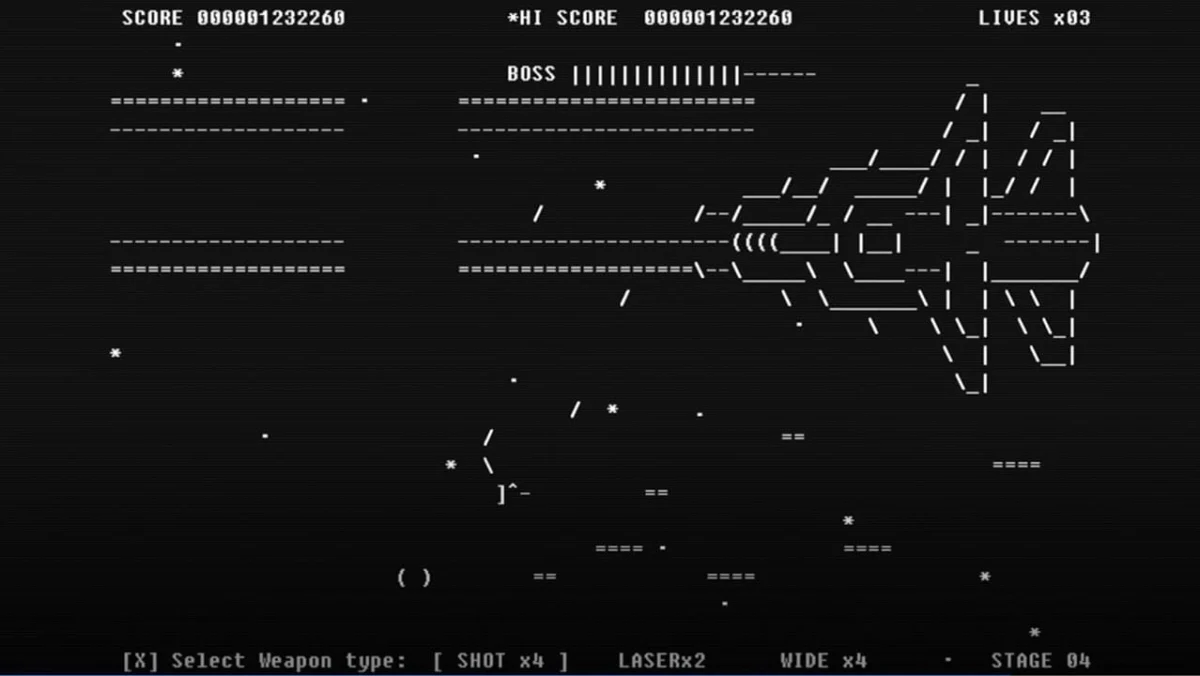
The digital landscape of video games is often characterized by its relentless pursuit of visual fidelity, pushing the boundaries of graphical realism with each new hardware generation. Yet, amidst this hyper-realistic era, a niche yet potent movement continues to champion the minimalist charm of bygone computing eras. Developers Relevo have masterfully tapped into this nostalgic vein with their latest release, "Battle for Asciion," a game that not only pays homage to the iconic arcade shooter Gradius but does so using nothing but ASCII characters. This innovative title breathes new life into a foundational element of computing history, offering players a unique and textually rich combat experience.
A Return to Textual Roots: The Genesis of Battle for Asciion
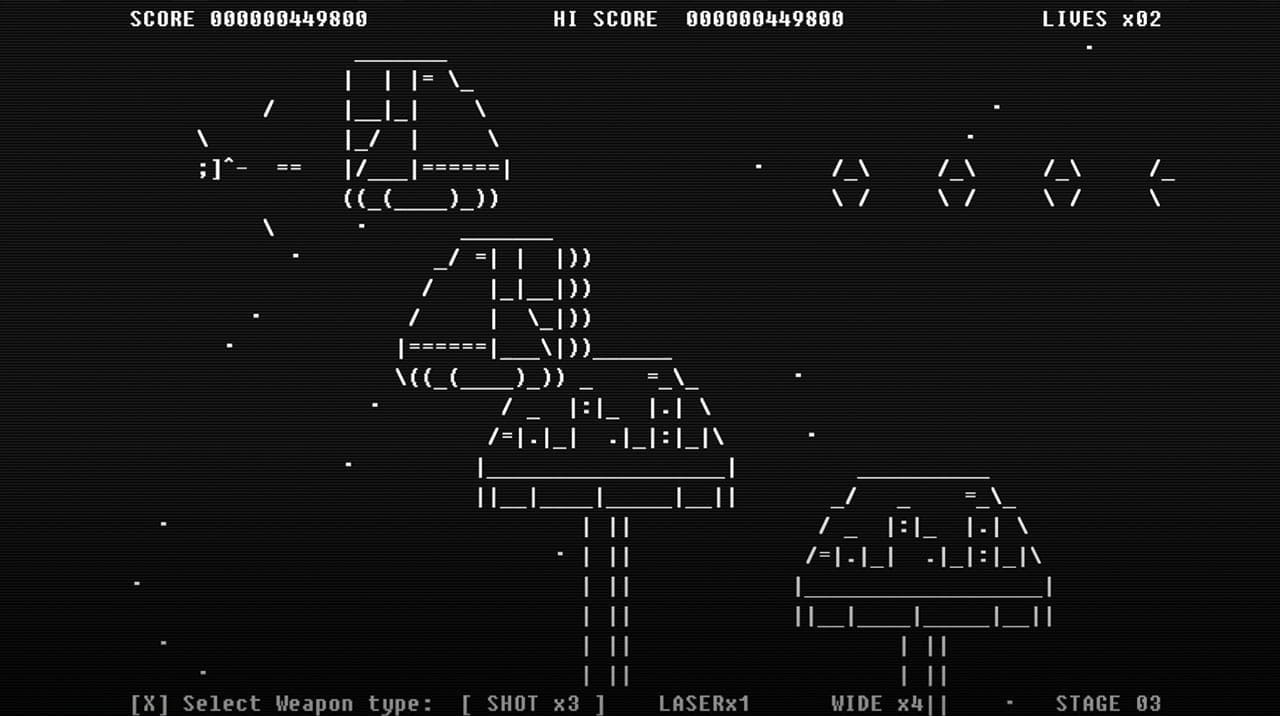
"Battle for Asciion" is a testament to the power of constraint and creativity in game development. The game’s core premise is audacious: to recreate the fast-paced, "bullet hell-esque" action of a classic space shooter using only the 256 characters defined by the American Standard Code for Information Interchange (ASCII). This character encoding system, fundamental to early computing, assigns numerical values to letters, punctuation marks, and other symbols, forming the building blocks of digital text. In "Battle for Asciion," these humble characters are transformed into spaceships, enemy formations, explosive projectiles, and intricate background environments.
The game’s visual presentation is stark yet captivating. Players are immersed in a black screen, where the entire spectacle of galactic warfare unfolds through an arrangement of symbols. This deliberate artistic choice harks back to the earliest days of personal computing and arcade gaming, where limited hardware capabilities necessitated abstract visual representations. For many, this style evokes memories of early text adventures, rudimentary dungeon crawlers, or even the visual limitations of Teletext in the 1990s.
Relevo’s Vision: From Web Game to Steam Release
The origins of "Battle for Asciion" predate its current Steam release. Relevo initially launched a web-based version of the game back in 2012. This earlier iteration gained traction in an era when online Flash games and browser-based experiences were highly popular, often serving as popular diversions in educational or office settings. The decision to revisit and expand upon this concept for a modern platform like Steam indicates a sustained belief in the appeal of text-based gaming and a desire to introduce this unique experience to a wider audience.

The official Steam page for "Battle for Asciion" elaborates on the game’s distinctive approach: "Battle for Asciion is not just styled like text — it is text. Every ship, enemy, explosion, background, and boss is rendered in real time using actual ASCII characters." This statement underscores the commitment to authenticity, emphasizing that the game’s visual elements are not merely themed around ASCII but are fundamentally constructed from it. This dedication to the medium is a significant factor in its appeal to retro gaming enthusiasts and those interested in the evolution of digital art.
A Deep Dive into Gameplay Mechanics and Features
Despite its minimalist aesthetic, "Battle for Asciion" aims to deliver a compelling and challenging gameplay experience. The "bullet hell-esque" descriptor suggests a high level of intensity, with players needing to skillfully navigate dense patterns of enemy fire. The visual abstraction, while initially disorienting for players accustomed to high-definition graphics, requires a different kind of visual processing. Instead of deciphering detailed sprites, players must learn to interpret the shapes and movements of symbols to react effectively.
The game’s developers have also incorporated features that enhance the retro experience. Modes that emulate different monitor types, complete with scanlines, further immerse players in the ambiance of vintage computing. The ability to play using a keyboard, mirroring the input methods of early computer games, adds another layer of authenticity. This design philosophy ensures that "Battle for Asciion" is not just a game with an ASCII theme, but a genuine attempt to capture the spirit and feel of playing games on early computing platforms.
The Innovation of Textshot: Saving Your ASCII Adventures
One of the most unique and noteworthy features of "Battle for Asciion" is its "Textshot" functionality. This innovative mechanic allows players to save their gameplay moments not as traditional image files (like JPEGs or PNGs), but as .TXT files. These files contain the exact ASCII characters that constitute the in-game scene at that precise moment. This means that a saved Textshot is more than just a static image; it is a piece of playable or viewable ASCII art that can be copied, printed, or reopened in any text editor.
This feature is a brilliant extension of the game’s core concept. It allows players to preserve their achievements and memorable moments in a format that is entirely consistent with the game’s aesthetic. The ability to manipulate and share these text-based "screenshots" opens up new avenues for creative expression and community engagement. It transforms gameplay capture into a form of digital archaeology, preserving the game’s unique visual language.

A Glimpse into the Past: The Evolution of ASCII Gaming
The use of ASCII characters in video games has a long and storied history, stretching back to the very beginnings of computer entertainment. In the pre-graphical era of mainframe computers and early personal computers, text was the primary medium for creating interactive experiences. Games like "Colossal Cave Adventure" (1976) and "Zork" (1980) used text descriptions and commands to build vast, imaginative worlds.
As graphics capabilities improved, ASCII gaming didn’t disappear; it evolved. Developers continued to experiment with text-based graphics, finding artistic merit and unique gameplay possibilities within its limitations. The rise of online communities and bulletin board systems (BBS) in the 1980s and 1990s saw a resurgence of interest in ASCII art, with players creating elaborate visual displays and even developing games. "Battle for Asciion" can be seen as a modern continuation of this tradition, leveraging contemporary development tools to create a polished and accessible experience.
Reactions and Implications: A Niche Appeal with Broad Significance
The announcement and release of "Battle for Asciion" have garnered attention within gaming circles, particularly among those who appreciate retro aesthetics and experimental game design. While the game’s visual style may present a learning curve for mainstream players, its innovative approach and dedication to its theme have been met with enthusiasm.
Jon Cortázar, one of the developers involved, shared his enthusiasm on Twitter, stating, "We’ve just made Gradius, except it’s 100% ASCII based, you can even save your screenshots as .txt files." This concise statement encapsulates the game’s core offering and highlights the unique "Textshot" feature. Such direct communication from the development team provides valuable insight into their creative process and intentions.
The broader implication of "Battle for Asciion" lies in its demonstration of how artistic vision and technical ingenuity can transcend the need for cutting-edge graphics. In an industry often driven by graphical horsepower, games like this serve as important reminders that compelling gameplay and artistic expression can be achieved through diverse means. It encourages a broader appreciation for the history of computing and the creative potential inherent in its foundational elements.
Market Positioning and Accessibility
Priced at a modest £3.39, "Battle for Asciion" is positioned as an affordable and accessible title. This pricing strategy makes it an easy impulse buy for curious gamers and a low-risk entry point for those unfamiliar with ASCII-based games. While the game may not appeal to players seeking hours of continuous engagement, its value proposition as a unique, imaginative project is undeniable.
The developers at Relevo have successfully crafted a title that is both a nostalgic throwback and a forward-thinking experiment in digital art and game design. "Battle for Asciion" is more than just a game; it is a curated experience that invites players to step back in time and appreciate the elegance and ingenuity of early computing, all through the power of text. Its success could potentially pave the way for further exploration of text-based and minimalist game design in the future, proving that sometimes, less is indeed more.








