Arya Paningal
The Evolution of the ROKR Pinball Ecosystem
The trajectory of ROKR’s pinball development reflects a strategic shift from pure novelty to a more refined, theme-integrated gaming experience. The original 3D Pinball Puzzle, consisting of 482 components, utilized a light-wood aesthetic that emphasized the "DIY" nature of the kit. It offered a functional playfield with pop bumpers, opto-sensor-equipped ramps, and a rudimentary ruleset. While successful, it was widely viewed as a technical proof-of-concept.

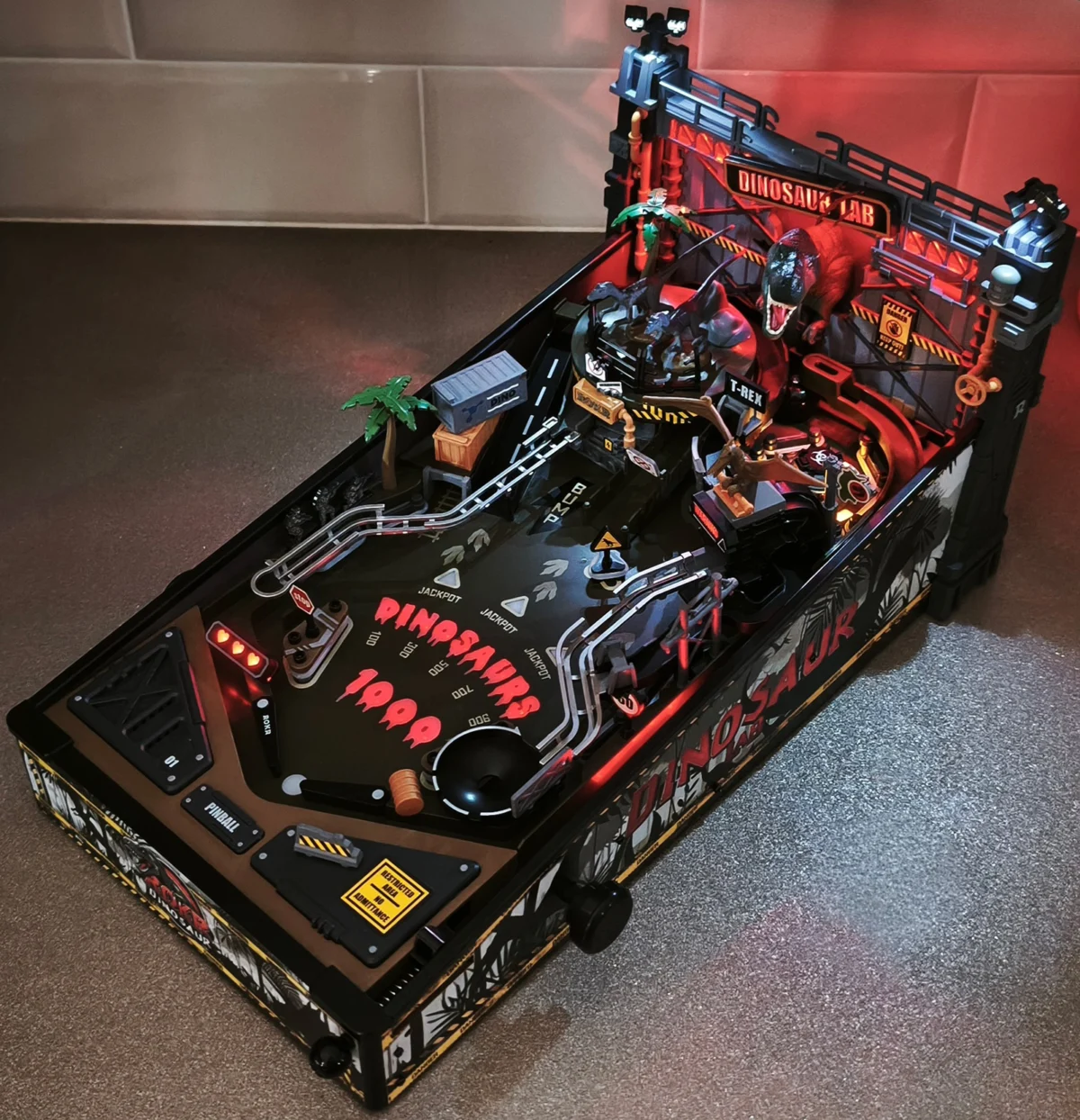
Dinosaur Lab arrives with a notably different design philosophy. While the previous iteration relied on bare wooden panels, the new model adopts a darker, more industrial color palette that utilizes a higher ratio of plastic components. This transition allows for more complex molding, enabling the inclusion of detailed 3D dinosaur figurines, such as the prominent T-Rex centerpiece, and more robust structural elements. The move toward plastic reflects an effort to increase durability and precision, addressing common user feedback regarding the tolerance of wooden components in high-friction areas like ramp assemblies.

Project Timeline and Kickstarter Campaign Success
The development cycle for Dinosaur Lab has been extensive, highlighting the complexity involved in mass-producing functional mechanical puzzles. The project was officially introduced to the public via a Kickstarter campaign on June 1, 2026. This platform has been central to ROKR’s growth, serving as the launchpad for four distinct projects since December 2022.

The campaign for Dinosaur Lab demonstrated significant market demand. Early-bird backers secured the kit at a competitive $65 price point, with prices scaling upward as early inventory was depleted. By the time the campaign concluded on July 9, 2026, the project had garnered support from over 4,000 backers, exceeding the original funding target by a factor of eighteen. This surge in support allowed the manufacturing team to finalize the production molds, though the transition from prototype to shipping unit required an additional two months of refinement beyond the initial estimation, with units finally reaching consumers in the late autumn of 2026.

Technical Specifications and Assembly Considerations
The Dinosaur Lab kit arrives in a specialized, high-protection shipping container, a testament to the fragility of the pre-assembled internal electronics. Unlike traditional full-sized pinball machines that require floor space and specialized maintenance, this model is designed for desktop use. The kit is shipped as a semi-assembled unit, requiring the end-user to install final aesthetic flourishes, such as palm tree decorations, dinosaur figures, and the placement of fifteen 8mm steel pinballs.

The lack of a glass cover is a notable design choice, prioritizing accessibility over the dust protection typically expected in professional-grade machines. However, the manufacturer mitigates potential loss of play components by providing a generous supply of spare balls and incorporating a dedicated storage tray into the rear of the cabinet.

From a power perspective, the unit requires a 5V/2A input via a USB-C connection. The absence of an included power brick is standard for such kits, leveraging the ubiquity of existing mobile device chargers. Control is managed through dual rear-mounted rocker switches. The left switch dictates game logic—offering a standard mode and a more challenging "Wizard Mode"—while the right switch manages the three-tier volume settings (High, Low, and Mute).

Gameplay Mechanics and Scoring Logic
The playfield layout is designed for a "fan" configuration, centering on seven primary shot zones: the left lane, left ramp, target bank, center ramp, pop bumper, right ramp, and right lane. Only five of these zones are equipped with integrated sensors to register scores.

The scoring system is entirely deterministic, utilizing an illuminated "D-I-N-O-S-A-U-R-S" display rather than a traditional digital numerical counter. Each letter represents a 100-point increment. The game’s primary objective is to reach 1,000 points. In the standard difficulty setting, reaching this threshold concludes the game with a light-and-sound sequence before immediate reset. In the "Wizard Mode," the target requirements shift significantly; players must successfully hit all three ramps, clear the target bank, and trigger the pop bumper five times to complete the "lab containment breach" narrative.

The inclusion of a single pop bumper—as opposed to the three found in the predecessor—is balanced by a tighter playfield geometry and more responsive rebound surfaces. The game’s ball-launch mechanism is manually operated, feeding the projectile onto a dedicated track that traverses behind the pop bumper, introducing a degree of variance to every starting stroke.

Market Implications and Consumer Value
The release of Dinosaur Lab provides a clear case study in the growing consumer appetite for "premium" DIY entertainment. By focusing on theme integration—specifically the narrative of a dinosaur breeding facility in crisis—ROKR has moved beyond the "model kit" label and into the category of interactive entertainment.

Industry analysts observing the hobbyist market note that ROKR’s strategy of balancing affordable entry points with high-quality, functional mechanics has effectively lowered the barrier to entry for fans of pinball history who may lack the space or capital for full-sized, enterprise-grade tables. Furthermore, the inclusion of better soundscapes—which move away from the repetitive, high-frequency melodies of the 2023 model—suggests that the company is taking user feedback seriously, viewing their products as iterative software-hardware ecosystems.

Challenges and Future Outlook
Despite its successes, the product is not without limitations. The reliance on manual flipper operation, directly coupled to the cabinet buttons, means that players accustomed to the precise, solenoid-assisted "finesse" of a professional pinball machine will find the learning curve steep. The lack of rubberized flipper surfaces also restricts advanced techniques, such as bounce passing or post passing, essentially forcing a playstyle centered on direct, forceful shots.

However, the "Wow!" factor remains a significant driver for the brand. For a device of its size and price, the integration of strobe LEDs, multi-stage scoring, and distinct game modes represents a high-water mark for the desktop mechanical puzzle category. As ROKR continues to iterate, the primary challenge will be maintaining the balance between the complexity of the "build" experience and the reliability of the finished product.

The successful shipping of the Dinosaur Lab kits confirms that the company has scaled its logistics to meet the demand generated by its record-breaking Kickstarter campaign. For the 4,000+ backers, the experience is not merely about receiving a toy; it is about the engagement of the assembly process. The ability to witness the transition from a collection of laser-cut parts and plastic gears to a fully operational, rule-based pinball machine remains the core value proposition of the ROKR brand, and with Dinosaur Lab, they have refined that process for a new generation of hobbyists. The product serves as a bridge between the analog world of woodworking and the digital world of arcade gaming, proving that there is significant room for innovation in the miniature gaming space.