Hartono Sudibyo
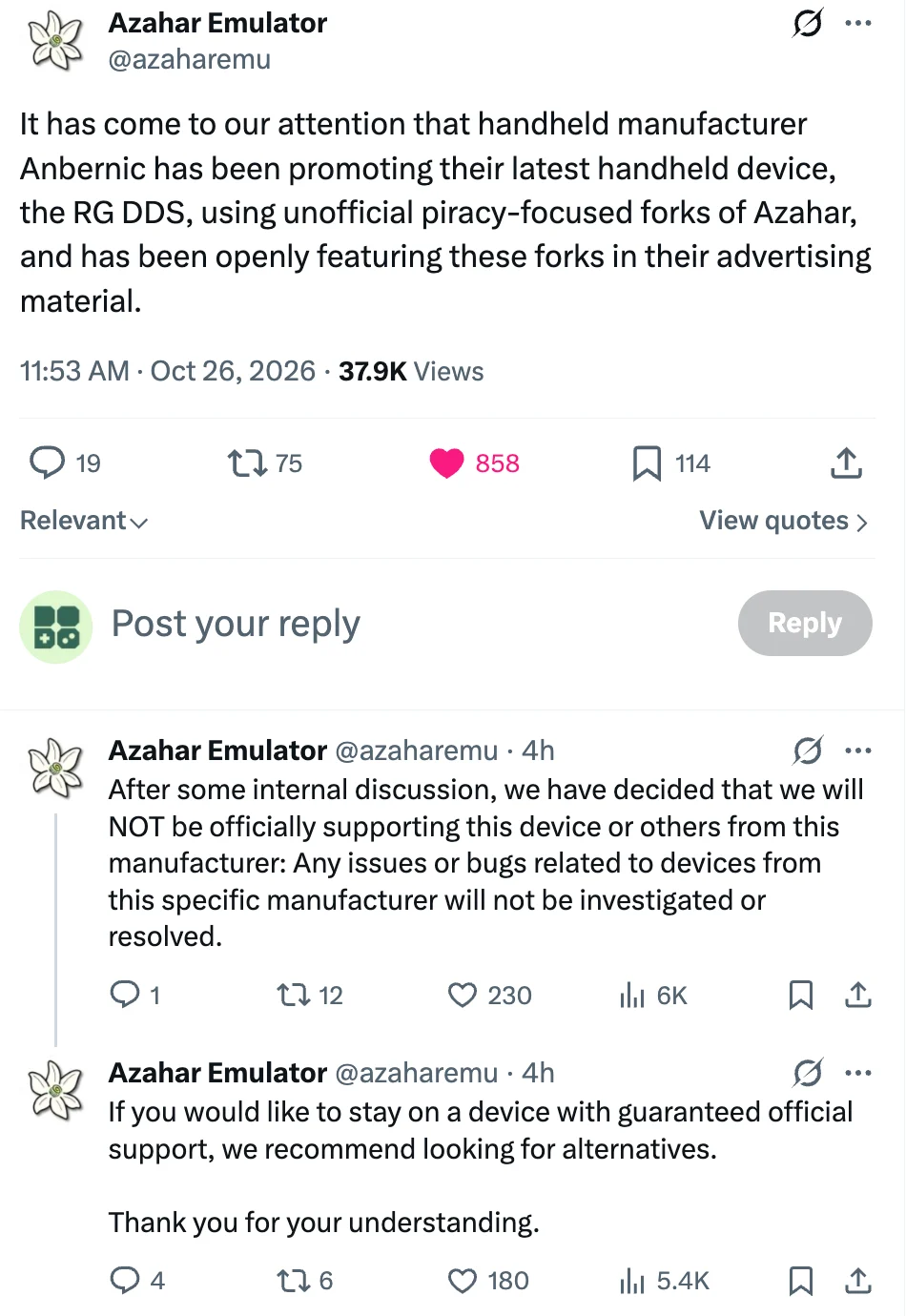
The relationship between popular retro handheld manufacturer ANBERNIC and the emulation development community has reached a critical juncture following a public falling out with the core team behind Azahar, a prominent Nintendo 3DS emulation project. The conflict escalated after ANBERNIC released promotional material showcasing an unauthorized, modified version of the emulator titled "Azahar Plus" on its official channels. In response, the Azahar development team issued a definitive statement announcing that they will completely strip official support for all current and future ANBERNIC hardware. This decision introduces substantial uncertainty for consumers anticipating upcoming handheld releases, most notably the highly publicized RG DDS slated for late-year deployment, while compounding ongoing legal and regulatory pressures facing the hardware manufacturer.
The friction between hardware vendors and software developers is a long-standing point of contention within the retro gaming ecosystem, but this specific rift underscores escalating tensions regarding intellectual property, unauthorized forking, and commercial exploitation of open-source software. For years, handheld manufacturers have packaged open-source emulators with their physical devices to provide out-of-the-box compatibility for classic gaming libraries. However, as handheld performance scales up to handle more complex sixth-generation and handheld systems—such as the Nintendo 3DS—the reliance on community-driven software projects has created a complex web of ethical, legal, and operational challenges. The public rebuke from the Azahar developers signals a growing unwillingness among software creators to allow their labor to be co-opted for commercial hardware sales, particularly when modifications introduce instability or attract unwanted regulatory scrutiny.
Chronology of the Dispute
The sequence of events leading to the rupture between the Azahar team and ANBERNIC unfolded rapidly over a short period, drawing intense scrutiny from the retro gaming community and industry analysts alike.
The timeline of escalation includes:
- Early October 2026: Regulatory pressures mount against ANBERNIC as US trade authorities draw attention to the inclusion of pre-loaded micro-SD cards containing unauthorized game libraries bundled with hardware shipments.
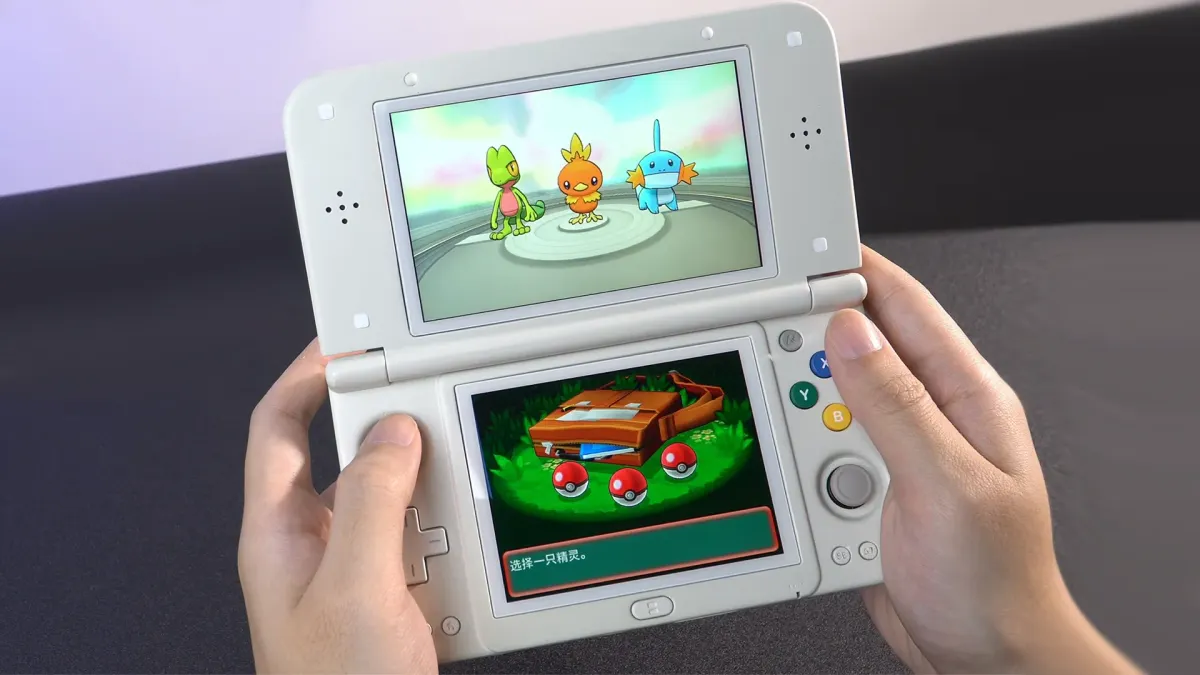
- Mid-October 2026: ANBERNIC publishes a promotional video on its official YouTube channel highlighting the capabilities of an unannounced or newly modified software iteration dubbed "Azahar Plus," demonstrating Nintendo 3DS emulation performance on upcoming hardware.
- Late October 2026: Observers and industry media outlets, including Time Extension, flag the promotional video, noting that the software modifications appear to run counter to the standard licensing and distribution expectations of the base open-source project.
- October 26, 2026: The Azahar development team issues a formal public statement via social media channels, condemning the unofficial, piracy-focused fork and officially revoking compatibility and support for all ANBERNIC devices.
This rapid sequence highlights how quickly commercial marketing initiatives can trigger defensive responses from volunteer-driven software projects that guard their brand reputation and code integrity fiercely.

Regulatory and Legal Pressures on ANBERNIC
The timing of the Azahar announcement coincides with broader legal vulnerabilities for ANBERNIC. The manufacturer has recently faced direct intervention from United States trade representatives concerning the distribution of pre-loaded storage media. Regulatory filings and trade office briefings indicated that approximately 47 million pirated titles had been tracked or associated with bundled SD cards distributed inside commercial hardware boxes by various low-cost emulation device manufacturers, with ANBERNIC frequently cited in compliance discussions.
While open-source emulation itself occupies a well-established legal grey area—supported by historical jurisprudence affirming that software capable of running copyrighted code is legal provided it does not incorporate proprietary BIOS files or source code—the bundling of commercial read-only memory (ROM) files remains unequivocally illegal under international copyright frameworks. When hardware vendors begin distributing modified emulators designed to streamline the execution of unverified software or bypass core security checkpoints, they invite aggressive legal posture from rights holders such as Nintendo, which has historically maintained a zero-tolerance policy toward intellectual property infringement.
Technical Implications and the Impact on Hardware
From a technical perspective, the Azahar team’s decision to sever ties means that future software updates, performance optimizations, and critical bug fixes will no longer be engineered with ANBERNIC chipsets or architecture in mind. Open-source emulators rely heavily on continuous integration and feedback loops from diverse user bases to refine graphic rendering, audio synchronization, and hardware acceleration. By operating on an unsupported fork, ANBERNIC devices risk falling behind baseline software developments, leading to graphical glitches, frame-rate degradation, and compatibility failures with demanding 3DS titles.
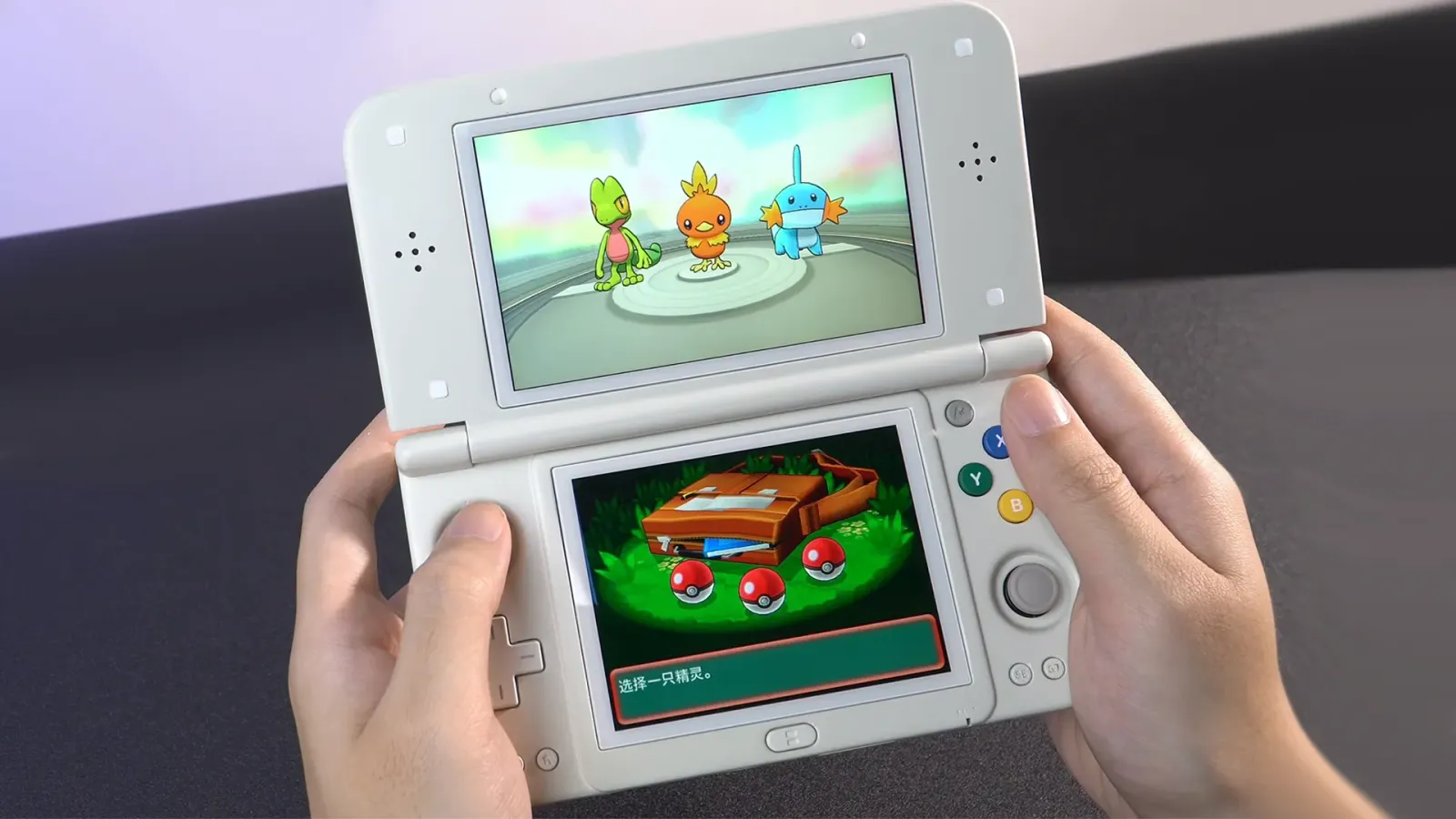
The primary hardware casualty of this dispute is the anticipated ANBERNIC RG DDS, a specialized dual-screen or advanced layout device heavily marketed toward legacy handheld enthusiasts. Promotional demonstrations suggested that the device would rely heavily on advanced emulation frameworks to replicate the dual-screen paradigm of Nintendo’s portable ecosystem. Without official upstream support from the Azahar project, consumers purchasing the RG DDS or subsequent models may find themselves reliant on proprietary, manufacturer-maintained forks that lack the rigorous testing and security updates of the primary open-source initiative. Furthermore, if these custom forks incorporate modifications designed to circumvent native verification protocols, the resulting software instability could permanently damage consumer trust in the hardware brand’s software ecosystem.
Broader Industry Fallout and Future Outlook
The fallout between Azahar and ANBERNIC reflects a widening chasm within the retro gaming hardware market. As commercial entities increasingly monetize open-source software by bundling it with mass-produced hardware, developers are pushing back against the commercialization of unpaid labor. Software creators frequently donate thousands of hours to coding, debugging, and optimizing emulators out of a passion for preservation, only to see their trademarks and software repositories utilized in marketing campaigns that emphasize out-of-the-box piracy readiness.
Industry analysts suggest that this incident may prompt other prominent emulation projects—such as those targeting PlayStation 2, GameCube, or Nintendo Switch libraries—to re-evaluate their distribution terms and implement stricter licensing agreements to prevent unauthorized commercial forking. For consumers, the ecosystem is becoming increasingly fractured. The promise of plug-and-play retro gaming hardware is colliding with the harsh realities of intellectual property law and developer burnout. Whether ANBERNIC will issue a retraction, modify its software distribution strategy, or attempt to independently maintain its proprietary fork remains to be seen as the December shipping date for its latest hardware lineup approaches. Regardless of the immediate corporate response, the digital rift serves as a stark reminder of the fragile symbiosis underpinning the modern retro emulation landscape.