Farhan hamdan
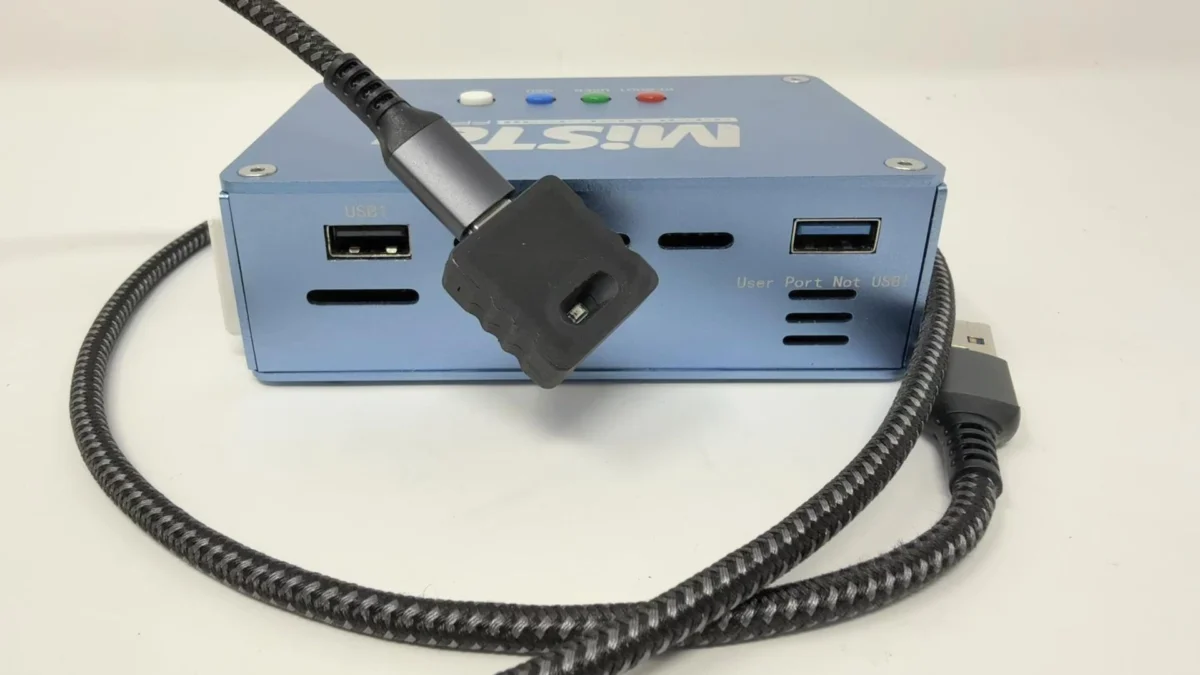
Accurately measuring display input latency has long been a critical requirement for competitive gamers, home theater enthusiasts, and retro gaming hobbyists alike. While specialized hardware solutions such as the Time Sleuth have traditionally served as the industry standard for assessing television and monitor response times, availability bottlenecks have frequently limited access to these vital tools. Addressing this hardware shortage, the MiSTer Laggy—an economical, photodiode-based display lag testing device designed specifically for the MiSTer FPGA platform—has officially returned to stock. Priced at just $12, the device offers a versatile and budget-friendly alternative for enthusiasts seeking precise latency diagnostics across a wide array of modern and legacy display configurations.
Developed by prominent FPGA community contributor Martin Donlon, widely known within the scene as Wickerwaka, the MiSTer Laggy leverages existing hardware architecture to streamline display analysis. By interfacing directly with any MiSTer FPGA kit equipped with a SNAC (Serial Native Accessory Converter) or UserIO port, the peripheral transforms the popular FPGA multi-system emulation board into a fully functional lag-testing suite.
The Mechanics and Operation of MiSTer Laggy
Operating the MiSTer Laggy requires minimal setup, making it accessible to users with varying degrees of technical expertise. To begin testing, users simply connect the photodiode device to their MiSTer FPGA setup using a standard USB 3.0 or higher data cable. The corresponding diagnostic software—the MiSTer Laggy core—is already integrated into the standard ecosystem; users who have executed the automated "Update_all" script within recent years will find the utility pre-loaded under the "Utility" section of the main menu.
Once initialized, the core allows operators to select multiple target resolutions and refresh rates directly from the user interface. The photodiode sensor is then placed directly against the screen of the display being tested, registering the precise moment a visual stimulus changes on-panel relative to the input signal. This methodology mirrors the core functionality of dedicated standalone hardware like the Time Sleuth, yet expands upon it by operating directly within the flexible rendering environment of the MiSTer FPGA platform.
Expanded Features and Advanced Display Testing Capabilities
While dedicated lag testers perform admirably within fixed parameters, the MiSTer Laggy introduces several advanced diagnostic features enabled by the underlying computing power of the FPGA host. Unlike simpler hardware solutions, the MiSTer-based testing ecosystem accommodates modern display technologies, including High Dynamic Range (HDR) and Variable Refresh Rate (VRR) implementations. Industry analysts and display calibration technicians have long noted that activating HDR or VRR can significantly alter processing latency within a display’s internal scaling pipeline, making a testing suite capable of isolating these variables invaluable.
Furthermore, the platform provides granular control over output aspect ratios—a feature with notable practical implications for retro gaming accuracy. Empirical testing of modern consumer displays, including prominent OLED panels manufactured by LG, has occasionally revealed measurable increases in input lag when running content in traditional 4:3 aspect ratios compared to native widescreen modes. The MiSTer Laggy allows testers to quantify these discrepancies instantly, providing objective data for users optimizing their setups for classic content. Additional configuration options allow for the evaluation of multiple refresh rates per resolution, accommodating both standard 60Hz setups and high-refresh-rate gaming monitors.
Chronology and Re-emergence in the Marketplace

The return of the MiSTer Laggy to commercial availability comes at a fortuitous time for the retro gaming and display calibration communities. The device was initially introduced to widespread acclaim within open-source hardware circles, bridging a gap for users who desired advanced display metrics without investing in high-end, commercial laboratory equipment.
However, intermittent supply chain constraints and the sporadic nature of small-batch hardware manufacturing led to a prolonged period of limited availability. The renewed focus on the device was catalyzed by secondary market pressures; specifically, a sudden spike in demand for display debugging tools occurred concurrently with widespread stock depletion of traditional alternatives like the Time Sleuth. When developers and hardware technicians working on display-dependent projects found themselves unable to secure conventional testing units, attention naturally gravitated back toward the open-source FPGA ecosystem. Creator Martin Donlon confirmed the replenishment of inventory via community channels, prompting a renewed evaluation of the hardware’s capabilities and potential future expansions.
Technical Implications and Future Development Potential
As open-source hardware projects continue to mature, community-driven development frequently pushes initial designs far beyond their original specifications. The MiSTer Laggy is no exception, with technical contributors already eyeing potential firmware and core updates to broaden its diagnostic utility.
Among the most frequently requested enhancements is the inclusion of a dedicated 720×480 resolution mode complete with dual aspect ratio support. Such an addition would allow developers and enthusiasts to rigorously evaluate how modern televisions and external scalers handle standard-definition progressive (480p) signals—a common operational mode for sixth-generation video game consoles such as the Nintendo GameCube, Sony PlayStation 2, and Microsoft Xbox.
Additionally, community discussions have highlighted the potential utility of incorporating a 720p at 120Hz output mode to facilitate the testing of high-refresh-rate computer monitors and modern televisions designed for competitive gaming. Another point of technical interest involves color compression testing. While the MiSTer platform natively and accurately outputs uncompressed 4:4:4 color data, researchers have expressed curiosity regarding whether sub-sampling modes such as 4:2:2 or 4:2:0 could be implemented within the testing core. Although preliminary technical consensus suggests that color sub-sampling introduces negligible, if any, measurable impact on display input lag, empirical verification remains absent in many consumer environments. Furthermore, exploring lower-bandwidth 4:2:0 modes could theoretically unlock even higher display refresh rates for stress-testing advanced display panels.
Broader Impact on the Retro Gaming and Display Calibration Ecosystem
The enduring popularity of projects like the MiSTer Laggy underscores the growing sophistication of the retro gaming community, which increasingly demands professional-grade metrics for consumer hardware. As vintage hardware transitions from standard cathode-ray tube (CRT) monitors to modern flat-panel displays, minimizing input latency remains the primary hurdle for maintaining authentic playability.
By democratizing access to precise latency measurement tools, affordable open-source peripherals empower everyday enthusiasts to evaluate their display pipelines—encompassing televisions, AV receivers, and external upscalers—with laboratory-level precision. The ability to identify processing bottlenecks, quantify the latency penalty of specific picture modes, and verify the performance of VRR-enabled setups ensures that modern displays can be configured for optimal responsiveness.
With units currently available through specialized distributors for $12—alongside readily accessible documentation and verified USB cable requirements—the MiSTer Laggy reinforces the viability of community-developed hardware solutions in addressing niche technological challenges. As ongoing updates continue to refine its feature set, the device stands as a testament to the collaborative ingenuity defining the modern FPGA and retro gaming landscape.