Indra Gunadi
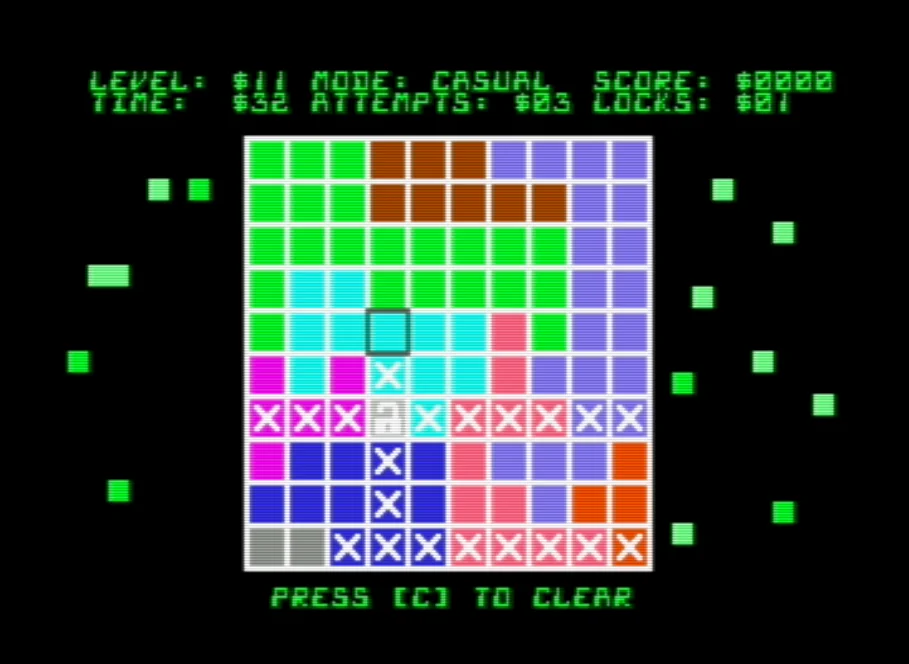
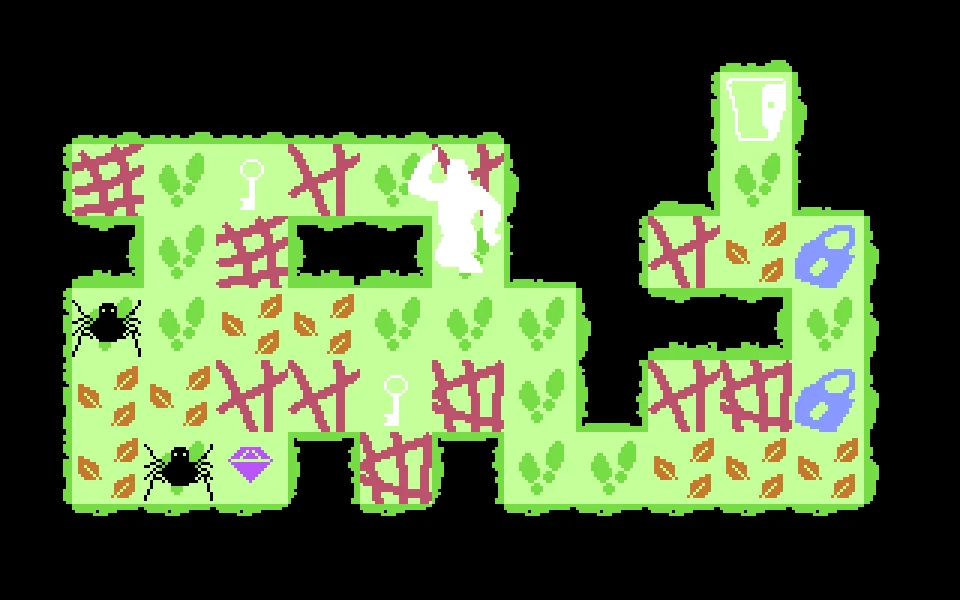
The release of Hacker, a new puzzle-based software title developed by the independent creator known as TheStuffMade, has arrived for the Commodore 64 platform as of October 26, 2026. This development marks another chapter in the enduring lifecycle of the 8-bit home computer, which, despite having been discontinued by Commodore International in 1994, continues to see active software production through a dedicated community of enthusiasts and developers. The title, a logic-driven puzzle game, emphasizes pattern recognition and constraint satisfaction, challenging players to navigate a grid-based interface with high-stakes gameplay mechanics.
Core Gameplay Mechanics and Design Philosophy
At its technical foundation, Hacker is designed to be compatible with both PAL and NTSC television standards, a requirement that historically posed significant challenges for C64 developers due to differences in refresh rates and cycle timing between European and North American models. The game functions as a constraint-based puzzle, tasking the user with identifying specific "locks" hidden within a grid.
The primary objective is governed by a strict set of rules: the player must place exactly one lock per row and one per column, while simultaneously adhering to color-coded constraints where only one lock of a specific color may exist within a designated set. Furthermore, the game enforces a spatial constraint—no two locks may be placed in adjacent cells, either orthogonally or diagonally. This creates a high-difficulty environment that requires long-term planning and deductive reasoning. The game’s failure state is binary and unforgiving: three incorrect selections result in an immediate "game over," forcing the player to restart the challenge. This design choice aligns with the arcade-style difficulty curves common to the 1980s, providing a modern interpretation of retro-gaming tension.
The Historical Persistence of the Commodore 64
The Commodore 64 remains the best-selling single computer model of all time, with estimates placing sales between 12.5 and 17 million units between 1982 and 1994. Its longevity in the current era is attributed to a unique "demake" and homebrew culture that has flourished since the advent of modern digital distribution platforms.
Following the collapse of Commodore in the mid-90s, the platform transitioned from a commercial product to a legacy hardware niche. By the early 2010s, the rise of specialized hardware interfaces—such as the 1541 Ultimate and various SD-card-based disk emulators—lowered the barrier to entry for modern developers. Unlike the early 1980s, when developers were limited by physical cassette tapes and floppy disks, today’s creators utilize cross-compilation tools on modern PCs to write code that is then optimized for the MOS Technology 6510 microprocessor.
The release of titles like Hacker serves as a barometer for this community’s health. According to industry observers, the production of new software for the C64 has seen a consistent upward trend since 2020, with hundreds of titles released annually across various genres, including platformers, strategy games, and logic puzzles.
Chronology of Modern Commodore 64 Development
The trajectory of C64 software development can be segmented into three distinct eras:
- The Commercial Era (1982–1994): Characterized by high-budget releases from companies like Epyx, Ocean Software, and Accolade. The development cycle was driven by retail profitability.
- The Transition and Emulation Era (1995–2010): Software production slowed significantly, with the scene focusing primarily on the preservation of existing titles via emulation (VICE, CCS64) and the development of "demoscene" visual arts.
- The Homebrew Renaissance (2011–Present): A period defined by the proliferation of specialized development kits (such as C64 Studio) and the rise of digital storefronts (like itch.io and dedicated repositories like PDROMs), allowing independent developers like TheStuffMade to bypass traditional publishing hurdles.
The emergence of Hacker in October 2026 is part of a larger trend of "micro-publishing," where solo developers release niche, high-quality titles that cater to the specific logical constraints of the C64’s 64KB RAM architecture.
Technical Analysis: Constraints and Optimization
Developing for the Commodore 64 in 2026 requires an intimate understanding of the system’s hardware limitations. The machine’s VIC-II (Video Interface Chip) and SID (Sound Interface Device) remain the standard benchmarks for the platform. For a puzzle game like Hacker, the primary technical challenge is not necessarily graphical fidelity, but rather the efficient management of memory and input cycles.
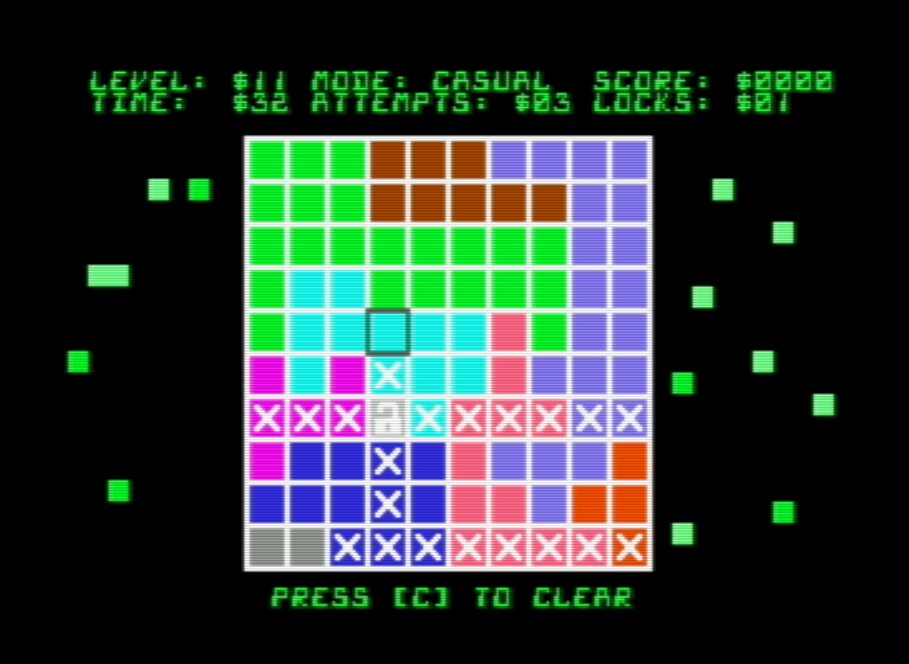
The grid system implemented in Hacker requires the game to track the state of every cell in real-time. Given the limited memory, the logic engine must be highly optimized to ensure that the "three-strike" rule is processed without input lag. When a player selects a grid coordinate, the software must instantly cross-reference that selection against the existing list of locks, checking for row, column, and color conflicts. If the player makes a move that violates the spatial constraints, the game must trigger a penalty state. These operations, while trivial for modern processors, require efficient subroutines when running on the 1MHz clock speed of the 6510 processor.
Industry Implications and Community Reaction
The release of Hacker has been met with positive reception within the enthusiast community. Discussions on forums dedicated to retro-computing suggest that there is a growing demand for "intellectual" gaming—titles that prioritize logic and puzzle-solving over the twitch-based reflex gameplay that defined much of the C64’s original commercial library.
From a broader perspective, the continued development of software for the C64 illustrates the phenomenon of "platform sustainability." As modern software becomes increasingly bloated and reliant on constant updates and internet connectivity, the Commodore 64 offers a "complete" experience. A game like Hacker is functionally finished upon release, requiring no patches, no server connectivity, and no digital rights management (DRM). This provides a sense of ownership and permanence that is increasingly rare in the contemporary gaming landscape.
Furthermore, the existence of such titles encourages the preservation of hardware. As long as new software is being developed, there is a tangible incentive for collectors and users to maintain their original machines or purchase modern replicas, such as the THEC64 or FPGA-based implementations like the MISTer.
The Role of Independent Creators
TheStuffMade represents a new archetype of developer: the hobbyist-professional. Unlike the 1980s, where developers were often employed by large studios with strict deadlines and budgetary pressures, the current generation of creators is motivated by creative expression and the technical satisfaction of conquering the constraints of legacy hardware.
These developers often share their source code, engage with the community via social media, and utilize crowdfunding or voluntary donations to sustain their work. This decentralized model ensures that the Commodore 64 ecosystem remains vibrant and resilient, even in the absence of corporate backing. The release of Hacker confirms that the platform is not merely an object of nostalgia but a living, evolving medium for game design.
Future Outlook for 8-bit Software
As we look toward the remainder of the 2020s, the trajectory of C64 software development appears stable. Advances in AI-assisted coding and improved cross-platform development tools are making it easier than ever for newcomers to join the community. While the market for such games remains relatively small compared to the global gaming industry, the depth of engagement within this niche is exceptionally high.
The success of Hacker highlights the enduring appeal of the "one more go" gameplay loop. By stripping away the complexities of modern gaming and focusing on the core mechanics of logic and pattern recognition, TheStuffMade has produced a title that resonates with both long-time fans of the platform and those seeking a challenge that is both accessible and intellectually stimulating. The longevity of the Commodore 64 is a testament to the fact that when software is built with precision and a clear design vision, it can transcend the era in which it was created.