Vera Clarissa
For nearly two decades, the transition of Apple’s Macintosh line from PowerPC architecture to Intel processors has created a widening digital divide. As software developers prioritized x86 and, more recently, Apple Silicon, the vast library of PowerPC-based hardware—once the pinnacle of computing performance—has been relegated to the realm of retro-computing enthusiasts. However, a significant technological milestone has been reached with the emergence of the Aurora Project, a community-driven initiative spearheaded by developer u/ButtonClean9403 that has successfully ported a functional version of Chromium 117 to the PowerPC platform. This development represents more than a mere technical curiosity; it serves as a bridge, allowing long-dormant hardware, such as the Power Mac G5, to interact with the modern, complex web.

The Chronology of PowerPC Web Obsolescence
The decline of PowerPC support began in earnest following the 2006 transition, but the real "web dark age" for these machines accelerated between 2010 and 2015. As websites transitioned from static HTML to dynamic, script-heavy architectures relying on HTML5, WebGL, and complex JavaScript engines, the older browsers available for PowerPC—such as TenFourFox—began to falter.
The timeline of this degradation is well-documented within the enthusiast community. In 2017, the final version of TenFourFox was optimized for older systems, but it lacked the engine updates required to render modern secure websites. By 2020, even those browsers struggled to load basic social media interfaces or secure banking portals. The Aurora Project, which surfaced on community forums like Reddit approximately one month ago, arrives as the first credible attempt to bring a contemporary Chromium-based architecture to these legacy machines. The recent release of a beta build has allowed users to test the feasibility of using a Power Mac G5 as a functional daily driver, a concept previously dismissed as impractical due to the massive instruction set architecture (ISA) differences between PowerPC and modern x86/ARM processors.

Technical Hurdles and Architectural Limitations
The core difficulty in porting Chromium to PowerPC lies in the browser’s reliance on modern GPU acceleration and its complex reliance on hardware-specific code paths. The Power Mac G5, while robust for its time, utilizes the AltiVec (Velocity Engine) SIMD unit and lacks the modern SSE/AVX instruction sets that Chromium expects as a baseline.
The developer behind the Aurora Project has noted that the current performance limitations, specifically regarding frame rate stuttering and high CPU utilization, are primarily due to the workaround mechanisms required to interface with Apple’s aging OpenGL drivers. In a statement regarding the project’s current state, u/ButtonClean9403 explained that the browser’s performance is tightly coupled to window size—an experimental strategy to bypass limitations inherent in the legacy graphics stack. "The YouTube video performance and general responsiveness are currently tied to window compositing issues," the developer stated. "These are experimental attempts to manage hardware limitations, and they are not fully optimized. We are addressing these window-level bottlenecks incrementally."

Performance Benchmarks and Real-World Usage
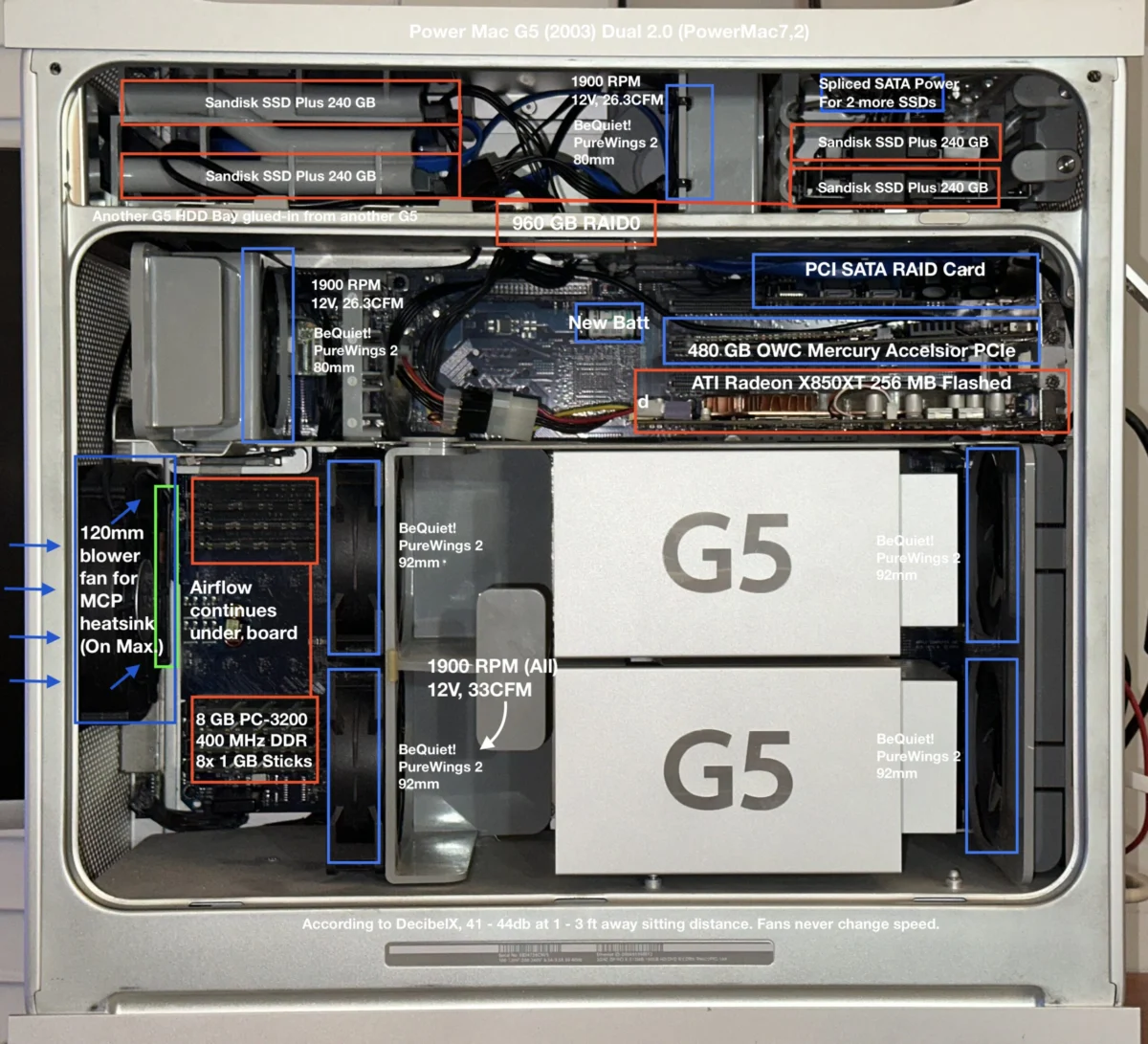
Testing performed on a Dual 2.0 GHz Power Mac G5 equipped with a flashed ATI Radeon X850 XT Mac Edition provides a clear picture of the browser’s capabilities. In controlled testing, the application launches in approximately 14 seconds, with the "New Tab" interface rendering almost immediately thereafter.
When measured against the industry-standard Speedometer 3.1 benchmark, the Aurora browser exhibits responsiveness that, while jittery, indicates a functional JIT (Just-In-Time) compiler implementation. While the system struggled to complete the full benchmark suite—halting at a score of 91/580—the mere fact that it could execute the test is a significant departure from previous browsers that would crash or time out entirely.

Multimedia playback provides the most telling evidence of the browser’s potential. Under current constraints, the browser is capable of streaming 1080p content from YouTube, provided the video window is kept to a reduced scale. When expanded to full screen, the hardware limitations become apparent, with the frame rate dropping significantly. However, even with these limitations, the browser maintains stable audio playback, a feat rarely achieved by previous PowerPC-compatible browsers, which often succumbed to total system freezes when attempting to decode high-bitrate video streams.
Software Compatibility and System Integration
The project is currently grappling with compatibility issues related to OS X distributions, specifically "Sorbet Leopard," a popular modified version of Mac OS X 10.5. The developer has identified that the current build relies on specific ppc64 binaries that are frequently stripped from custom OS images to save space.

"Sorbet Leopard’s image strips out many ppc64 binaries that Chromium Aurora depends on," u/ButtonClean9403 noted. A patch has been developed that allows the browser to bypass library-loading failures, specifically targeting the libsqlite3 dependency issues that prevent the browser from launching on certain configurations. This underscores the necessity of a symbiotic relationship between the browser developers and the operating system maintainers in the retro-computing space.
Furthermore, the browser demonstrates a degree of site-specific variability. While platforms like BlueSky remain functional, including file upload capabilities, other platforms like Facebook have implemented security headers or script requirements that trigger a connection refusal. This is not necessarily a failing of the browser, but rather an indicator of the growing complexity of modern web security protocols that were non-existent during the peak of the PowerPC era.

Implications for the Retro-Computing Ecosystem
The emergence of the Aurora Project has profound implications for the preservation of computing history. For many, the Power Mac G5 represents the pinnacle of Apple’s "industrial design" era, and the ability to connect these machines to the modern internet extends their useful lifespan by years.
From an analytical standpoint, this project demonstrates the resilience of open-source software. By porting Chromium, a massive, monolithic codebase, to an architecture for which it was never intended, the project proves that hardware obsolescence is often a matter of software support rather than physical degradation. The implications for the future are clear: as long as there is a community willing to maintain the software stack, even the most outdated hardware can remain relevant.

However, the project also highlights the fragility of this ecosystem. The reliance on experimental OpenGL workarounds and the manual patching of libraries illustrates that the path forward will not be simple. Each subsequent update to the Chromium codebase—which moves at a rapid pace—will require a corresponding effort from the porting community to maintain compatibility.
Future Outlook
The Aurora Project stands at a crossroads. As it moves out of its initial beta phase, the focus will shift from simple functionality to optimization. The developer has expressed a commitment to resolving the compositing issues and improving the integration with older GPU drivers, which would theoretically allow for smoother video playback and more efficient multitasking.

For the average user of a G5 or similar PowerPC machine, the Aurora Project is a glimmer of hope. It shifts the status of the PowerPC Mac from a "display piece" back to a "tool." Whether the project will eventually reach a level of stability suitable for daily use—comparable to modern machines—remains to be seen. However, the progress made in just one month of development suggests that the barrier between the 2000s-era hardware and the modern internet is thinner than previously believed. The project serves as a reminder that in the world of computing, the lifecycle of a machine is defined not just by its silicon, but by the ingenuity of those who refuse to let it go.