Ganda Hendra Perkasa
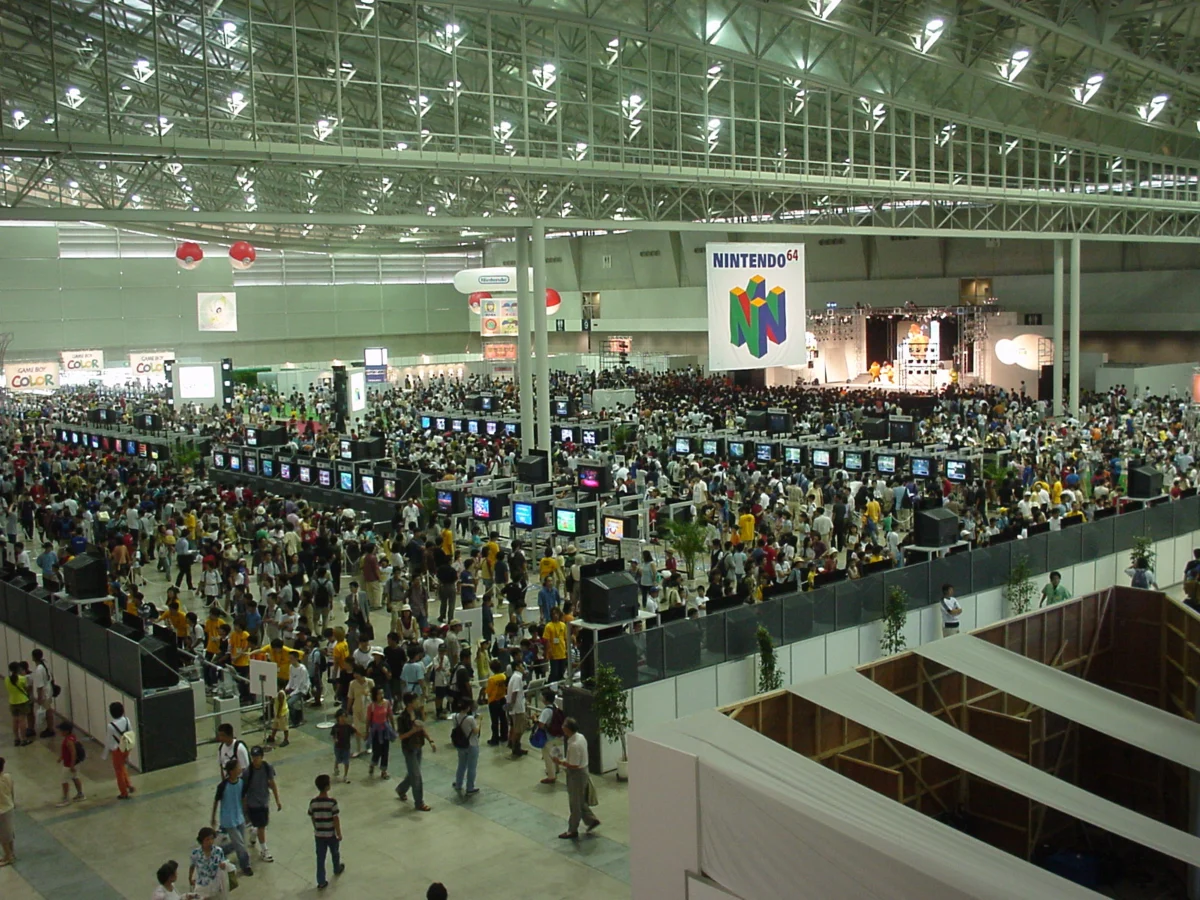
The Video Game History Foundation has officially expanded its digital repository with the public release of the Colin Williamson photography collection, offering a rare, ground-level window into the Japanese video game industry at the turn of the millennium. Spanning from 1999 through the mid-2005 era, the archive comprises hundreds of photographs captured by Williamson during his tenure as an embedded games journalist for prominent Western publications, including IGN, Official U.S. PlayStation Magazine, and PC Gamer. Documenting a period defined by massive commercial expansion, technological transitions, and vibrant physical subcultures, the newly digitized collection serves as an invaluable primary source for researchers, historians, and enthusiasts studying the medium’s golden age.
Chronology and Historical Context
To fully understand the significance of Williamson’s photography, one must examine the state of the global and Japanese video game industries between 1999 and 2005. This timeframe represented a seismic transitionary period in electronic entertainment. The fifth generation of consoles, dominated by the original PlayStation and the Nintendo 64, was giving way to the sixth generation. Concurrently, the industry was witnessing the twilight of the arcade boom and the aggressive rise of dedicated home consoles capable of arcade-quality rendering.
In 1999, when Williamson first arrived in Japan with an early-generation digital camera—itself a cutting-edge technological tool at the time—the domestic market was riding a wave of unprecedented creative confidence. Sega was attempting a high-stakes market resuscitation with the Dreamcast, which launched globally in late 1998 and 1999. Sony was preparing to release the PlayStation 2, a machine that would eventually become the best-selling home console of all time. Meanwhile, Nintendo was defending its portable empire with the impending rollout of the Game Boy Advance and laying the groundwork for the GameCube.
Williamson’s itinerary placed him at the epicenter of these commercial shifts. He routinely covered the Tokyo Game Show (TGS), which, during the late 1990s and early 2000s, operated on a biannual schedule, hosting separate spring and autumn events. These expos served as massive theatrical productions where publishers vied for public attention through elaborate stage setups, costumed brand ambassadors, and exclusive software demonstrations.
Inside the Exhibits: TGS, Space World, and Product Launches
The newly accessible archive houses comprehensive visual documentation of these landmark industry events. Visitors to the digital archive can examine high-resolution images of the Tokyo Game Show floors from 1999 and 2000, where promotional displays for era-defining titles such as Sega’s Shenmue and Space Channel 5, alongside Polyphony Digital’s Gran Turismo 3: A-Spec, captivated attendees.
Beyond TGS, Williamson’s lens captured critical milestones for Nintendo. The collection features extensive coverage of Nintendo Space World 2000, the company’s dedicated showcase event where monumental products like the Game Boy Advance and Pokémon Crystal were first exhibited to the public. Additionally, the archive captures later milestones, such as the 2005 launch event for Electroplankton on the Nintendo DS. That specific gathering brought together legendary designers Shigeru Miyamoto and Satoru Iwata alongside artist and creator Toshio Iwai for an intimate career retrospective, capturing a rare moment of cross-generational industry leadership.
Beyond the convention centers, Williamson documented the granular, day-to-day texture of Japanese consumer culture. His documentation of Tokyo’s Akihabara district—long recognized as the global capital of electronic and gaming retail—preserves storefronts, street-level kiosks, and promotional billboards that have long since vanished due to urban redevelopment. The collection also extends to location-based entertainment facilities, featuring interior shots of Sega’s sprawling Kyoto Joypolis indoor theme park and various regional activations, including a notably eccentric Pokémon-themed children’s exhibit in Osaka.
Supporting Data and Archival Scope
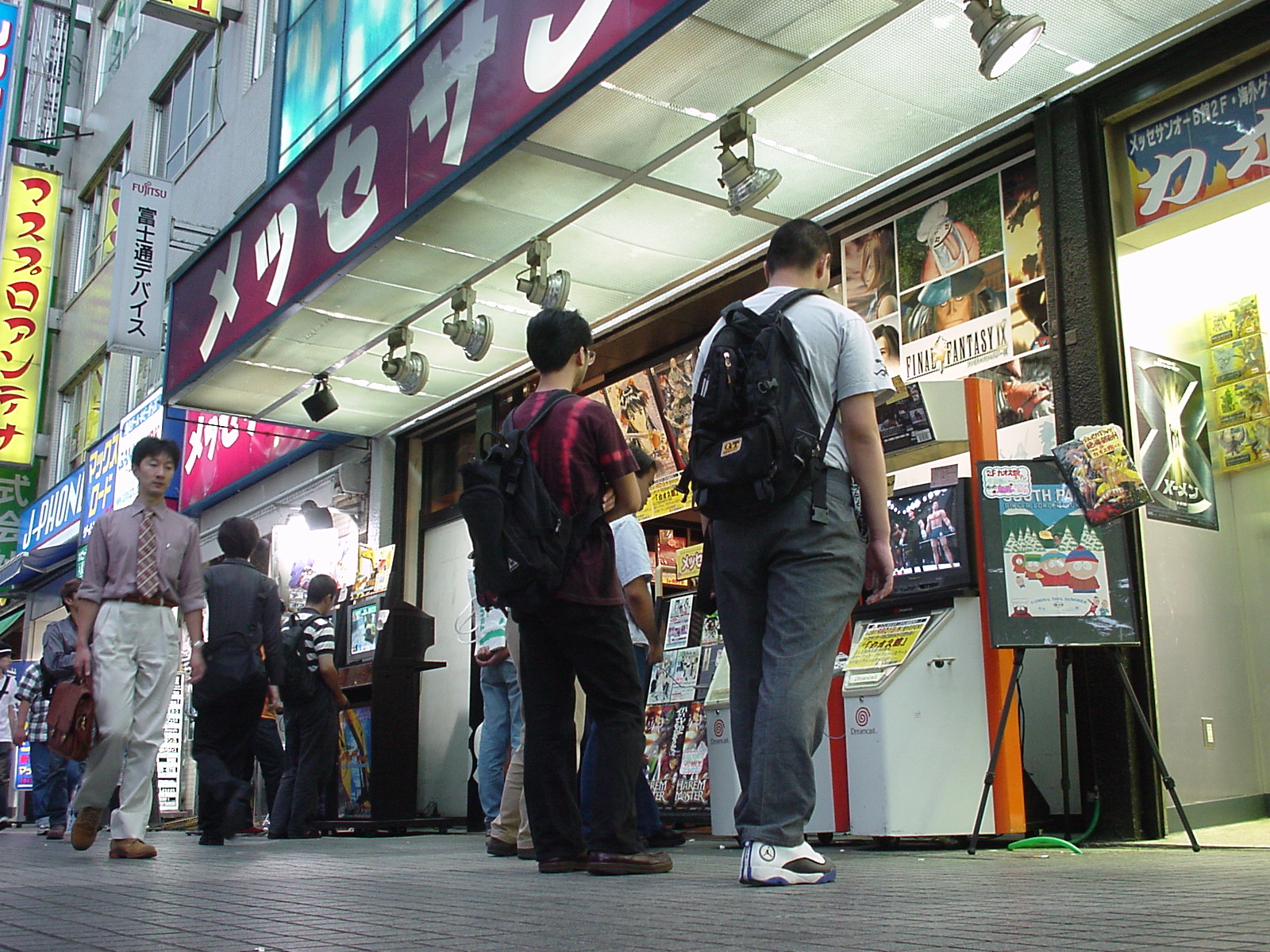
The release of the Williamson collection addresses a persistent historical gap in Western documentation of Asian gaming markets. While magazines of the era frequently published polished press-kit screenshots and standardized promotional imagery, authentic, candid reportage detailing the physical environment of Japanese trade shows and retail spaces remained scarce.
The collection highlights several distinct operational facets of the era:
- Hardware Transitions: Detailed visual records of Sega Dreamcast promotional campaigns, early PlayStation 2 marketing materials, and Game Boy Advance prototypes.
- Arcade Infrastructure: Imagery documenting specialized arcade hardware, including a rare installation of the Sega Touring Car Championship housed within a modified, full-sized automobile chassis.
- Industry Personas: Candid interactions and presentations featuring luminaries such as Hideo Kojima, Nobuo Uematsu, Tetsuya Mizuguchi, Shigeru Miyamoto, and Satoru Iwata.
- Media Ecosystem: A snapshot of late-90s games journalism, reflecting how foreign correspondents navigated language barriers, emerging digital capture tools, and access-driven reporting structures in Tokyo.
Official Responses and Institutional Perspectives
The Video Game History Foundation has integrated the rollout of the photography collection with its ongoing media programming. To provide context for the archive, Colin Williamson appeared as a featured guest on Episode 166 of the foundation’s official podcast, the Video Game History Hour. During the episode, Williamson reflected on the operational realities of reporting from Tokyo during a period of intense corporate competition, sharing anecdotes regarding access to elusive developers and the logistical hurdles of carrying early digital photography equipment across crowded convention floors.
Furthermore, the foundation released an extended bonus episode exclusively for its Patreon supporters, wherein researchers and Williamson scrutinized specific frames from the gallery, uncovering minute background details—such as forgotten promotional banners, unreleased merchandise, and attendees’ attire—that had gone unnoticed for nearly three decades.
Foundation representatives have emphasized that the discovery process within these photographs is ongoing. Due to the candid nature of the snapshots, researchers frequently identify historical anomalies, background elements from cancelled software builds, and architectural details of now-defunct retail and arcade spaces.
Broader Impact and Educational Implications
The publication of the Colin Williamson collection carries significant implications for the academic study and journalistic documentation of interactive entertainment. Historically, video game preservation efforts have focused heavily on software dumps, hardware conservation, and the archiving of printed periodicals. The preservation of primary-source photographic evidence surrounding the cultural and physical ecosystems of the industry represents a vital maturation of the archival field.
Recognizing the necessity of broad access for educational and analytical purposes, Williamson has authorized the Video Game History Foundation to permit the reproduction of these photographs for educational use. Researchers, documentary filmmakers, historians, and digital content creators are permitted to utilize images from the archive within scholarly and educational frameworks, provided appropriate attribution is given to Colin Williamson and the Video Game History Foundation.
As historians continue to analyze the economic bubble and subsequent structural realignment of the Japanese gaming industry during the early 2000s, visual repositories like the Williamson collection provide essential empirical data. By capturing the human element—the developers, the corporate pageantry, the retail spaces, and the consuming public—the archive moves beyond abstract sales figures and software catalogs, anchoring video game history firmly within the physical spaces where it was lived, played, and celebrated.