Hartono Sudibyo
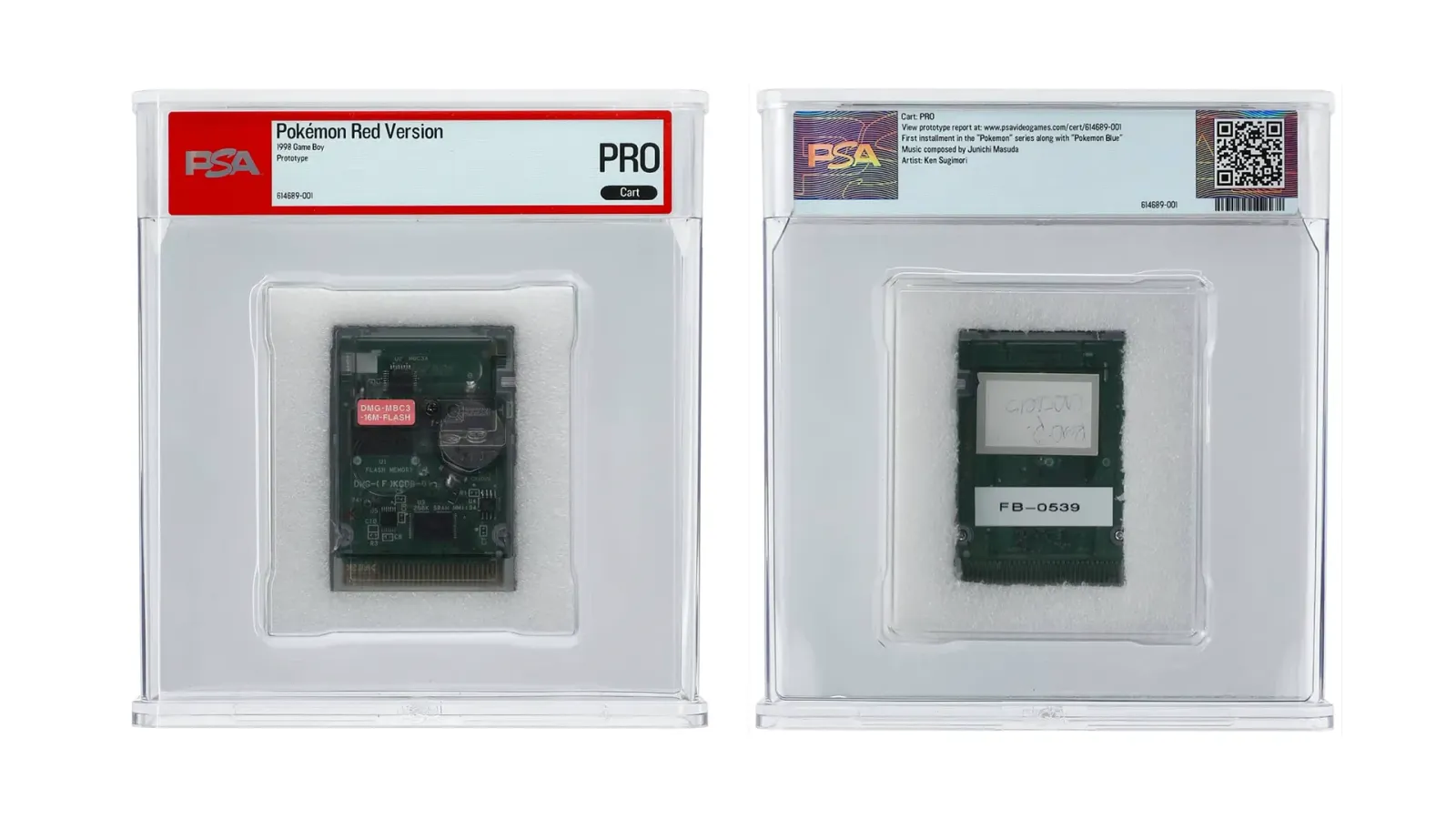
An exceptionally rare development prototype cartridge of Pokémon Red, dating back to 1998, has appeared on the high-end collectible marketplace Goldin, commanding an opening bid of $25,000. The artifact, which provides a tangible window into the foundational era of one of the world’s most lucrative entertainment franchises, has drawn intense interest from video game historians, preservationists, and high-net-worth collectors alike.
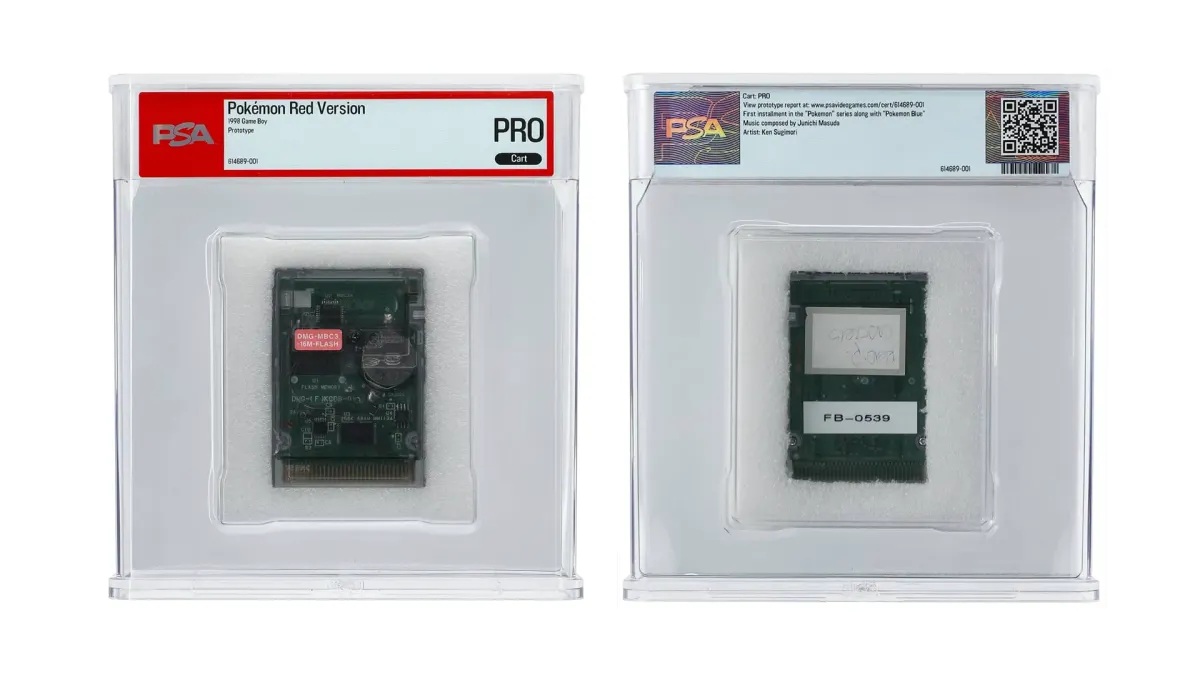
Authenticated and evaluated by Professional Sports Authenticator (PSA), the Game Boy development cartridge features a 32KB block of readable ROM data mirroring the final United States retail release. While development hardware from the late 1990s occasionally surfaces through liquidators or former developer estates, fully documented Nintendo development boards carrying Pokémon software remain exceedingly scarce, largely due to strict internal corporate security and disposal policies during Nintendo’s peak Game Boy era.
Authenticity and Technical Specifications
According to official authentication documentation provided by PSA, the physical piece possesses unique hardware markers that distinguish it from standard consumer cartridges sold at retail. The cartridge is housed in an extended development shell bearing the part number DMG-(F)KGDB-01, an uncommon board configuration utilized internally by Nintendo and its second-party developers during the late-stage optimization and manufacturing preparation phases.
A visible inspection of the exposed circuit board reveals a manufacturer sticker bearing the text "DMB-MBC-16M-FLASH," indicating the use of rewritable flash memory standard for pre-release testing units. During evaluation, diagnostic equipment limitations prevented a complete data read of the entire ROM chip; however, technicians successfully captured the initial 32KB of data.
While the core game logic within this captured sector remains identical to the final commercial US release of Pokémon Red, the header data contains distinct anomalies. Most notably, the Mask ROM version offset (0x014C) is incorrectly designated as 55 instead of the standard 00. This variance directly impacts the calculated header checksum at offset 0x014D, registering as CB instead of the expected 20. PSA experts have expressed high confidence that the unreadable remainder of the data stream follows the exact build architecture of the final retail build, signifying a very late-stage master build or duplication copy intended for hardware testing rather than an early, radically different prototype build.

Chronology of the Pokémon Phenomenon (1995–1998)
To understand the significance of a 1998 development cartridge, it is necessary to examine the compressed timeline of Nintendo’s generation-defining franchise:
- February 1996: Pokémon Red and Green launch in Japan for the Nintendo Game Boy, initially experiencing modest sales before word-of-mouth transforms the title into a cultural phenomenon.
- October 1996: The enhanced version, Pokémon Blue, is released in Japan via mail-order to CoroCoro Comic subscribers, followed by a general retail rollout.
- September 1998: Following localized redesigns, bug fixes, and localization adjustments by Nintendo of America, Pokémon Red and Blue officially launch in North America, backed by a massive multi-media marketing campaign.
- Late 1998: Development and testing hardware utilized during the North American launch preparations are systematically archived, returned to corporate headquarters, or occasionally retained by staff members. The newly auctioned Goldin prototype originates from this critical window.
The Growing Market for Video Game Collectibles
The auction of the Pokémon Red prototype reflects a broader, multi-million-dollar institutional shift toward the preservation and financialization of vintage video game media. Over the past decade, sealed and graded retro video games have transitioned from niche hobbyist items into high-value asset classes, frequently outperforming traditional alternative investments at major auction houses such as Heritage Auctions, Goldin, and WATA-graded sales events.
However, prototype hardware occupies a distinct segment of the collecting market compared to factory-sealed consumer copies. While sealed retail copies derive their value from pristine condition and nostalgia, development cartridges derive worth from their historical provenance, uniqueness, and instructional value regarding software engineering history. Because physical development units were never intended for consumer distribution, their presence on the open market often raises questions regarding corporate asset retention, though items of this age are generally viewed by the community as historical artifacts liberated from obsolete industrial archives.
Broader Impact and Industry Implications
The emergence of the Pokémon Red prototype underscores the ongoing challenges and importance of digital preservation within the interactive entertainment industry. As commercial games transition away from physical media entirely, early physical artifacts serve as crucial primary sources for historians attempting to map out the iterative design choices made by developers decades ago.
Furthermore, public sales of authenticated development hardware establish essential benchmark valuations for institutional archives, museums, and private collectors. With the auction scheduled to conclude on October 26, 2026, market analysts will closely monitor the final hammer price to gauge whether high-end collecting interest in foundational Game Boy hardware remains robust amidst shifting macroeconomic conditions. Regardless of the final sale price, the cartridge has already provided researchers with valuable technical insight into how Nintendo prepared its flagship franchise for its historic global expansion.