Hartono Sudibyo
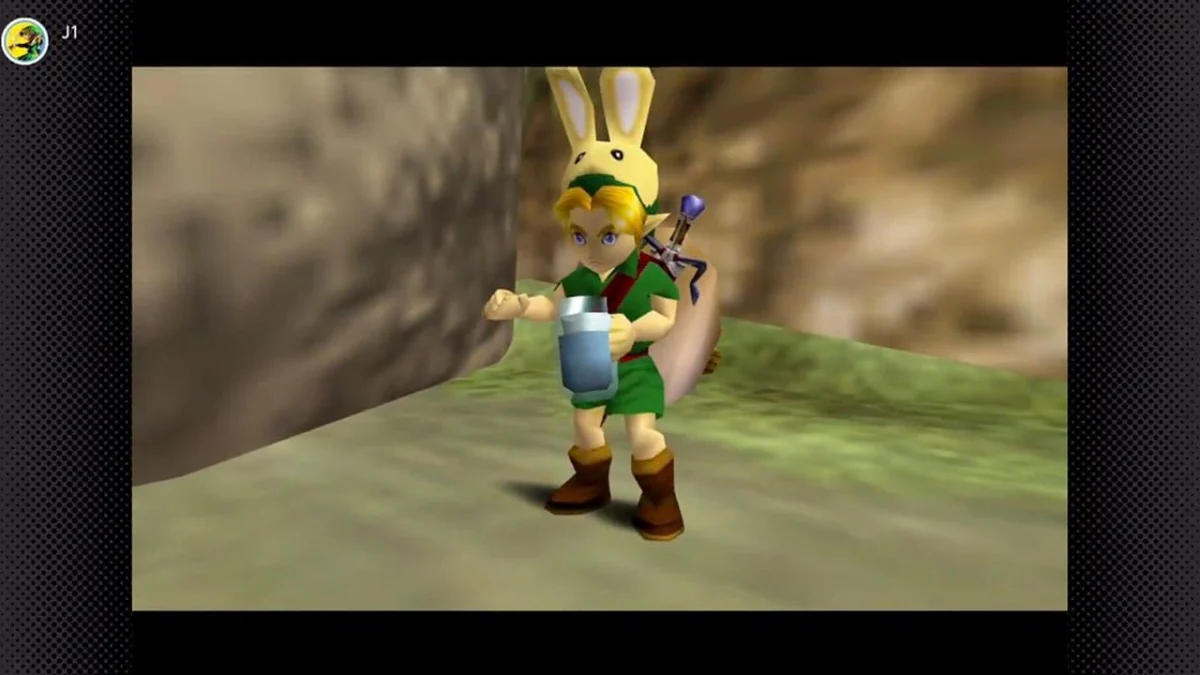
Decades after its initial release, The Legend of Zelda: Majora’s Mask continues to captivate the retro gaming community not only through its enduring narrative and atmospheric design, but through newly uncovered programming anomalies. A recently documented glitch has revealed an unexpected interaction between Link’s standard movement abilities and environmental items, enabling players to demolish heavy stone barriers without the use of traditional explosives such as powder kegs.
The discovery highlights the longevity of classic game analysis, demonstrating how dedicated players continue to probe the boundaries of legacy software architecture more than twenty years after development teams finalized the source code.
Main Facts of the Discovery
The newly discovered technique involves a specific sequence of inputs combining Link’s Spin Dash maneuver with the action of pouring spring water onto the terrain. According to video demonstrations shared across social media platforms by researchers such as user Sera68, performing a Spin Dash followed immediately by dispensing water results in an explosive reaction capable of shattering surrounding boulders instantly.
In standard gameplay, destroying these specific obstacles requires acquiring a powder keg—a heavy, explosive item gated behind specific side quests involving the Goron race. By bypassing this requirement entirely, the water-and-dash technique alters potential routing strategies for casual playthroughs, speedruns, and low-cycle completion challenges. Verification from multiple community members confirms that the trick is reproducible across standard hardware emulation and original console environments, ruling out single-instance anomalies or emulator-specific bugs.
Chronology and Development Background
To understand how such an oversight could persist for decades, observers must examine the intense production schedule behind The Legend of Zelda: Majora’s Mask. Released initially for the Nintendo 64 in the year 2000, the title was famously developed under an exceptionally compressed timeframe.
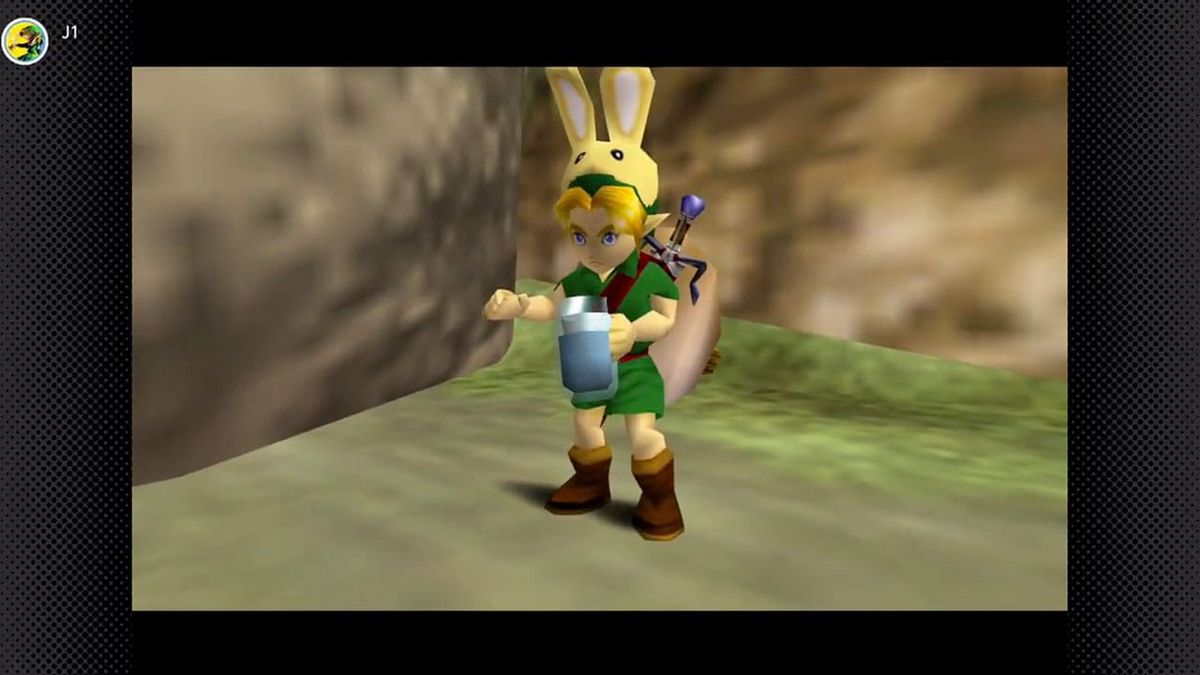
Director Eiji Aonuma and his development team at Nintendo Entertainment Analysis and Development (EAD) were tasked with completing the sequel to The Legend of Zelda: Ocarina of Time within a mere twelve months. To achieve this unprecedented deadline, the studio heavily reused character models, engine architecture, and environmental assets from its predecessor.
This rapid development cycle left little margin for exhaustive error checking across every possible permutation of physics interactions, collision detection parameters, and inventory item usage. While millions of players explored Termina over the subsequent twenty-four years, specific, highly niche combinations of movement states and item deployment remained hidden until systematic community testing exposed them.
Supporting Data and Technical Context
Software analysts examining the footage suggest the anomaly stems from an oversight in how the game engine handles state transitions and collision validation. When Link executes a Spin Dash, the game temporarily modifies his hitbox, velocity vectors, and interaction flags to account for momentum-based damage dealing.
If the player interrupts this state by initiating an item-use animation—specifically pouring bottled spring water—the memory registers may fail to clear the momentum flag before processing the environmental liquid placement. Consequently, the game engine appears to misattribute the kinematic energy of the Spin Dash to the localized liquid asset, resulting in a sudden, high-magnitude collision force directed outward into nearby destructible geometry.
Such physics engine oversights are common in late-1990s and early-2000s three-dimensional titles, where developers frequently hardcoded responses to specific object interactions rather than building fully generalized simulation systems. Similar quirks have been documented in contemporary titles such as Super Mario 64 and The Legend of Zelda: Ocarina of Time, where memory manipulation and coordinate manipulation frequently yield unintended spatial breaches.
Community Reactions and Methodological Impact
The discovery has generated significant discussion within the competitive speedrunning community, particularly among runners focusing on "Any%" categories and cyclical efficiency challenges. Eliminating the necessity to unlock, purchase, and transport powder kegs saves critical in-game minutes, potentially reshaping world record strategies for category variants that permit minor glitch utilization.

Prominent speedrunners and community archivists have noted that while the trick is mechanically straightforward to execute, integrating it into high-level runs requires precise timing to bridge the input window between the cessation of the Spin Dash and the opening of the item bottle. Unlike complex memory-corruption exploits that require extensive setup and frame-perfect execution, this technique is accessible to average players, contributing to its rapid spread and replication across various gaming forums.
Broader Impact and Implications for Retro Software Preservation
The persistence of undiscovered mechanics in decades-old software underscores the value of ongoing community-led preservation and reverse engineering. As commercial entities gradually shift focus toward modern digital ecosystems, independent researchers and enthusiasts continue to document the inner workings of legacy platforms.
These findings offer valuable insights into historical software engineering limitations, illustrating the compromises developers made under strict corporate deadlines. Furthermore, the longevity of interest in titles like Majora’s Mask demonstrates that physical and digital codebases maintain dynamic lifecycles well beyond their initial commercial distribution windows.
As automated tooling, emulation accuracy, and community collaboration continue to evolve, software historians anticipate that further anomalies will emerge from classic libraries, offering a deeper look into the foundational programming of modern interactive entertainment.