Indra Gunadi
The Technical Landscape of Amiga Homebrew
The Commodore Amiga, first released in 1985, remains a cornerstone of the retro-computing scene due to its sophisticated custom chipset. The Original Chip Set (OCS) consists of the Agnus (memory management and DMA), Denise (video), and Paula (audio) chips. These components allowed for graphical capabilities far exceeding those of contemporary 8-bit consoles, yet porting modern or arcade-accurate gameplay to this hardware remains a significant challenge due to its 7.09 MHz Motorola 68000 processor and limited 512KB of RAM.
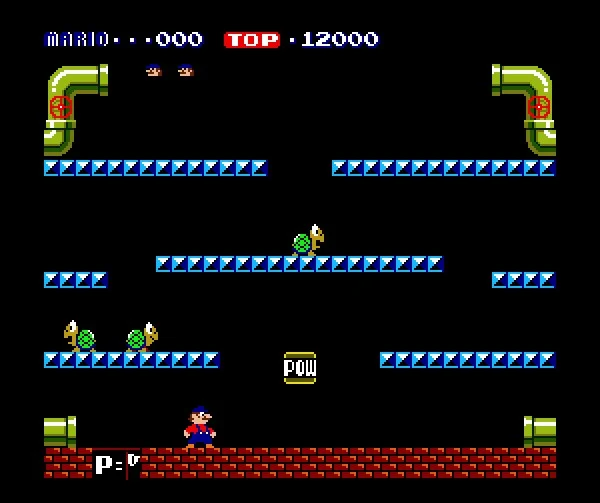
TjLaZer’s iteration of Mario Bros represents a convergence of modern development tools and vintage hardware limitations. By targeting the stock Amiga 500, the developer has ensured accessibility for the largest segment of the active Amiga user base. This decision requires careful management of the Amiga’s bitplane-based graphics and copper-list-driven raster effects, which are essential for achieving smooth sprite movement and frame-rate stability.
The Role of Artificial Intelligence in Development
A notable aspect of this release is the explicit disclosure that artificial intelligence was utilized in the development process. As the field of game development evolves, the integration of AI tools—ranging from procedural asset generation and code optimization to debugging assistance—has become a contentious yet increasingly common practice. In the context of the retro-computing scene, where developers often operate as solo entities, AI provides a mechanism to bypass the time-intensive labor of sprite animation and background rendering.
While the specific extent of AI usage in Mario Bros (2026) remains proprietary to the developer, it signals a shift in the hobbyist market. Historically, Amiga homebrew was defined by assembly-level programming and meticulous manual optimization. The inclusion of AI-assisted design suggests a new era where the barrier to entry for developing for 40-year-old hardware is being lowered, potentially leading to a surge in new software titles for legacy systems.
A Chronology of Arcade-to-Amiga Ports
The history of porting Nintendo’s arcade catalog to the Amiga is extensive, characterized by both official releases and fan-led initiatives.
- 1985–1987: The early years of the Amiga focused on demonstrating the machine’s superiority over the Commodore 64 and the Atari ST. Porting attempts were often hindered by the lack of standardized development environments.
- 1990s: The "Golden Era" of Amiga gaming saw a influx of commercial arcade ports, though Nintendo-owned properties remained largely absent due to licensing restrictions.
- 2010s: The rise of the "Retrogaming Revival" saw developers utilizing modern cross-compilers like the Amiga Cross Compiler (GCC) and IDEs like VS Code to port arcade classics to the Amiga.
- 2026: The release of Mario Bros by TjLaZer marks a maturation of this process. By combining modern workflows with the technical constraints of the stock 500, the project demonstrates how far the homebrew community has progressed in reverse-engineering arcade logic.
Technical Specifications and Performance Metrics
The Amiga 500 possesses a unique architectural hurdle: the lack of a dedicated "sprite" hardware engine as robust as those found in later consoles like the Super Nintendo. Instead, the Amiga utilizes "bobs" (blitter objects) to render moving images. The challenge for any developer recreating Mario Bros—a game reliant on precise collision detection and multi-platform movement—is to keep the blitter usage within the narrow windows allowed by the OCS chipset.
Preliminary analysis of the TjLaZer build indicates that the game maintains a stable frame rate, a prerequisite for a platformer that relies on twitch reflexes. The memory footprint of the project is also optimized to fit within the 512KB limit, suggesting a sophisticated use of data compression and memory banking. By avoiding the need for a 1MB "Fat Agnus" upgrade or a "Trapdoor" RAM expansion, the developer has maximized the potential audience, as the stock A500 remains the most widely available unit on the secondary market.
Community Reaction and Industry Implications
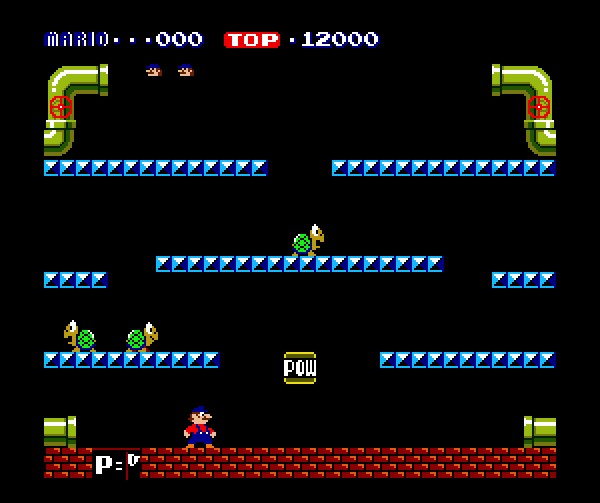
Within the Amiga community, the reception of the project has been largely positive, reflecting the demographic’s appreciation for technical achievement. In forums and social media channels dedicated to retro computing, users have praised the "feel" of the movement, which is often the most difficult aspect of a platformer to replicate across different hardware architectures.
However, the release also raises questions regarding intellectual property in the homebrew sector. While Mario Bros is a property of Nintendo, the development of fan-made ports exists in a legal "grey area." Historically, companies like Nintendo have maintained a firm stance on their intellectual property; however, the non-commercial nature of these projects often keeps them beneath the threshold of formal litigation.
From an industry perspective, the success of TjLaZer’s Mario Bros suggests that there is a sustainable future for legacy software development. As long as there is an active hardware base—maintained by repair shops and a robust second-hand market—there will be a demand for new software. The integration of AI into this niche signifies that the "Amiga scene" is no longer solely the domain of experts in 68k assembly; it is becoming a playground for developers utilizing a hybrid of modern software engineering and classic hardware constraints.
The Broader Impact on Retro Computing
The significance of the 2026 Mario Bros release extends beyond the game itself. It serves as a benchmark for what can be achieved on the original Amiga chipset. By documenting the development process—specifically the use of AI to assist in coding and asset creation—TjLaZer has provided a template for future developers.
If this model proves successful, we may see a rise in the number of high-quality ports for other aging platforms, such as the Atari ST, the Sinclair ZX Spectrum, and the Commodore 64. The ability to use AI to handle the tedious tasks of memory allocation and graphic sprite-sheet creation could unlock a massive backlog of unported arcade games, revitalizing the homebrew landscape.
Furthermore, the focus on the "Stock A500" experience acts as a bridge between the historical identity of the machine and the modern requirements of the enthusiast. It validates the original hardware, proving that despite the rapid pace of technological obsolescence, the Amiga architecture remains a viable platform for creative expression.
Conclusion: A Legacy Reimagined
The release of Mario Bros (2026) by TjLaZer is more than a simple port; it is a synthesis of history and progress. By successfully deploying a functional, high-performance arcade clone on 1987-era hardware, the developer has highlighted the enduring power of the Amiga OCS. Whether this marks a permanent shift toward AI-assisted development in the retro-community remains to be seen, but the quality of the output suggests that the trend is a net positive for preservation and playability.
For the collector and the casual enthusiast alike, the project serves as a reminder that the Amiga is not merely a static museum piece. Through the efforts of developers like TjLaZer, the machine remains a dynamic, evolving platform, capable of surprising its audience even four decades after its inception. As we move further into the 2020s, the intersection of AI-driven development and vintage computing hardware will likely continue to produce innovative works, ensuring that the legacy of the Commodore Amiga continues to grow, one byte at a time.