Arya Paningal
A Historical Foundation and Technical Evolution
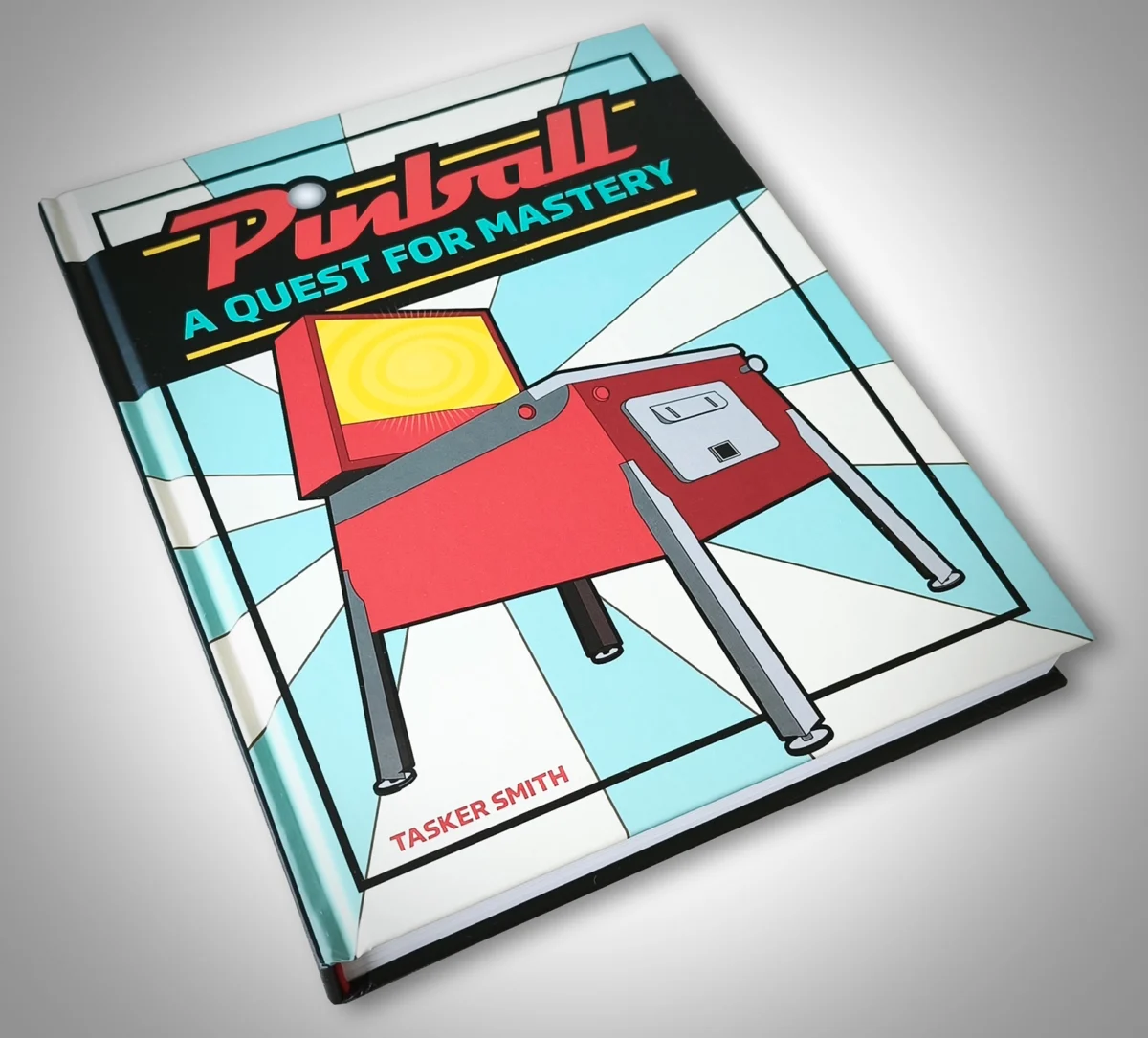
The narrative of Pinball: A Quest for Mastery begins with a necessary exploration of the game’s lineage. While industry veterans like designer Pat Lawlor have frequently expressed fatigue regarding the repetitive retelling of pinball’s origins, Smith recognizes that a comprehensive understanding of the craft requires a chronological grounding. The text traces the evolution from the early 18th-century European table game, Bagatelle, through the pivotal invention of the spring-loaded plunger by Montague Redmond in the 19th century.

This historical timeline is vital for understanding the progression of player agency. The introduction of the flipper in Gottlieb’s 1947 machine, Humpty Dumpty, serves as the central inflection point in Smith’s analysis. Before this, pinball was largely a game of chance and gravity; the flipper transformed it into a game of skill and timing. Smith meticulously maps the progression of scoring systems—from the mechanical simplicity of illuminated backglass numbers and rotating score reels to the complex gas plasma displays of the 1980s and the sophisticated LCD interfaces standard in modern machines. This technological chronology provides the context necessary for players to understand not just how a machine functions, but why specific playfield layouts and rule sets have evolved to challenge the player’s cognitive and motor skills.
Anatomy of the Machine and Mechanical Literacy
For the contemporary player, success on the machine requires more than just reflex; it requires a deep, almost intimate knowledge of the machine’s anatomy. Smith’s second section dissects the pinball machine as a complex mechanical and electronic system. By breaking down the game into its constituent parts—solenoids, switches, ball-trough assemblies, and playfield geometry—the book demystifies the "black box" of the machine.

This section is particularly valuable for tournament players who must often diagnose or account for machine behavior on the fly. When a player understands the underlying logic of a ball-lock mechanism or the physics of a target rebound, they transition from passive observers to active participants in the game’s narrative. The inclusion of detailed illustrations rather than mere photography allows Smith to emphasize the trajectory and velocity of the ball, providing a visual language for concepts that are often difficult to articulate in text. This technical depth is designed to help players move beyond basic gameplay, enabling them to read the playfield and anticipate the unpredictable motion that characterizes professional-level play.
Competitive Frameworks and Tournament Etiquette
The second major component of the work transitions from the casual arcade setting to the rigorous environment of competitive pinball. As the sport continues to formalize through leagues and global ranking systems, the importance of structure has never been higher. Smith draws upon his tenure with the New England Pinball League to outline the nuances of various tournament formats, including group match play, PAPA-style qualifying, and strike-based elimination.

Beyond the mechanics of scoring, Smith addresses the essential, yet often unspoken, code of conduct in competitive play. The book serves as a guide for navigating the social and psychological pressures of high-stakes competition. From the decorum required during a tournament match to the strategic preparation of a "game plan" before a session begins, the author emphasizes that the professional player must manage their environment as carefully as they manage their shots. This includes a systematic approach to familiarizing oneself with unfamiliar machines—a critical skill for anyone participating in major tournaments where the machine lineup is often diverse and challenging.
The Psychological Frontier: Achieving Flow State
Perhaps the most distinct contribution of Pinball: A Quest for Mastery is its deep dive into the psychology of peak performance. Drawing on the concept of the "flow state"—a term popularized by psychologist Mihaly Csikszentmihalyi—Smith examines how top-tier competitors reach a level of immersion where the machine and the player function as a single unit.

The author argues that flow is not an accidental occurrence but a state that can be cultivated through deliberate practice and mental conditioning. He outlines the physiological prerequisites for this state, including the management of nutrition, hydration, and rest. These elements, often overlooked by amateur players, are presented as fundamental components of a successful tournament strategy. By isolating external distractions and regulating internal emotional responses, Smith provides a framework for players to maintain composure under pressure. The book suggests that the difference between a high-scoring run and a "drained" ball is frequently a matter of mental clarity rather than physical inability.
The Integration of Body, Mind, and Machine
The synthesis of the book’s teachings occurs in the third section, where Smith bridges the gap between physical ball control and mental preparation. The author provides structured training regimes that encourage players to view the ball as an object with kinetic energy that must be channeled. By understanding how the ball reacts to specific playfield elements, players can develop a "predictive model" of the game.

This approach acknowledges that pinball is as much a sport of endurance as it is a game of precision. The rigorous physical demands of maintaining focus over a multi-hour tournament session are addressed with practical advice on stress management and relaxation techniques. These methods are designed to prevent the onset of fatigue, which often leads to the mental lapses that result in premature "drains."
Practical Utility and Future Impact
While the book provides a high-level look at competition, it does not neglect the pure joy of the hobby. The final section serves as a repository for the enthusiast, detailing "fun" formats like split-flipper and speed-runs, while also documenting the "Easter eggs" and hidden codes that add depth to the collector’s experience. The inclusion of extensive appendices—listing major museums, clubs, and resources globally—positions the book as an essential reference volume for any serious pinball library.

The implications of this publication are clear: pinball is entering a phase of increased academic and strategic interest. As the community grows, the need for standardized pedagogical resources becomes more pronounced. By formalizing techniques that were once passed down orally through the community, Smith’s book effectively lowers the barrier to entry for aspiring competitors while providing veteran players with a structured methodology to refine their skills.
Market Availability and Professional Reception
As of the current market status, Pinball: A Quest for Mastery is available for $34.99 through Schiffer Publishing, with broad distribution planned for later this year. The book’s physical construction—featuring a matte finish with gloss accents and heavy-duty, rigid card stock—reflects the serious nature of its contents.

In the United Kingdom, local distribution through the PaperBack Shop has already seen significant interest, with pre-order pricing set at approximately £20.92. The author is slated to appear at the annual Pinball Expo in Schaumburg, Illinois, from October 14th to 17th. This event, a cornerstone of the global pinball calendar, will serve as a venue for the book’s formal introduction to the competitive community, where it is expected to spark discussions on training methodologies and the future of professional pinball.
For those looking to move beyond the casual player status, the book acts as a roadmap to mastery. While the effectiveness of the proposed techniques will inevitably vary from player to player, the structured approach to both the hardware and the "inner game" offers a comprehensive pathway to improvement. In an era where digital gaming dominates the entertainment landscape, the enduring physical, psychological, and social challenges of pinball remain a compelling frontier for those seeking true mastery.