Indra Gunadi
The Resurgence of the Commodore 64 Software Market
The Commodore 64 remains the best-selling single computer model of all time, with estimates suggesting between 12.5 and 17 million units sold between 1982 and 1994. Despite its obsolescence in the mainstream personal computing market, the C64 has maintained a dedicated community of developers, hobbyists, and collectors. The release of Loukoumas serves as a case study for the modern "retro-coding" movement, where developers utilize specialized cross-compilation tools and emulators to create software that adheres to the strict technical constraints of the MOS Technology 6510 microprocessor and the VIC-II graphics chip.
Market data from the homebrew software sector indicates that interest in 8-bit software has seen a marked increase since 2020. This growth is attributed to a combination of nostalgia, the accessibility of modern development kits (SDKs), and the rise of digital storefronts that facilitate the distribution of physical media, such as cartridges and cassettes, to a global audience. Developers like Revive8Bit are part of a burgeoning ecosystem that treats the C64 not merely as a museum piece, but as a viable platform for creative expression.
Narrative and Mechanical Design of Loukoumas
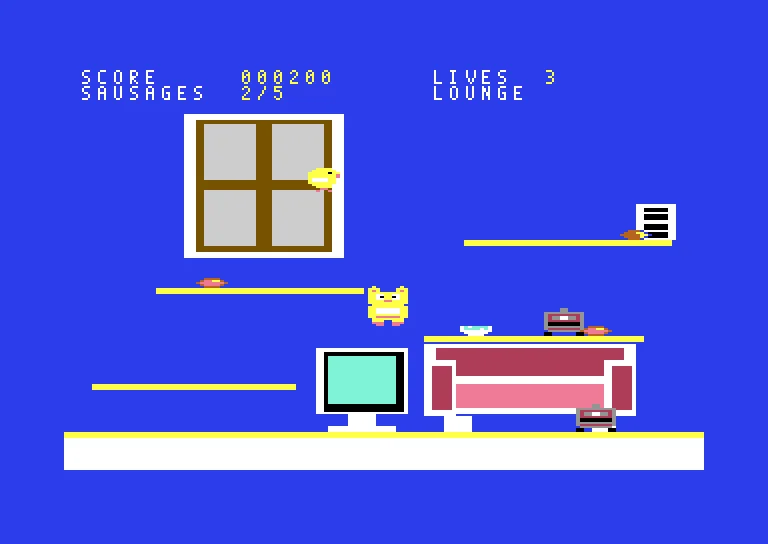
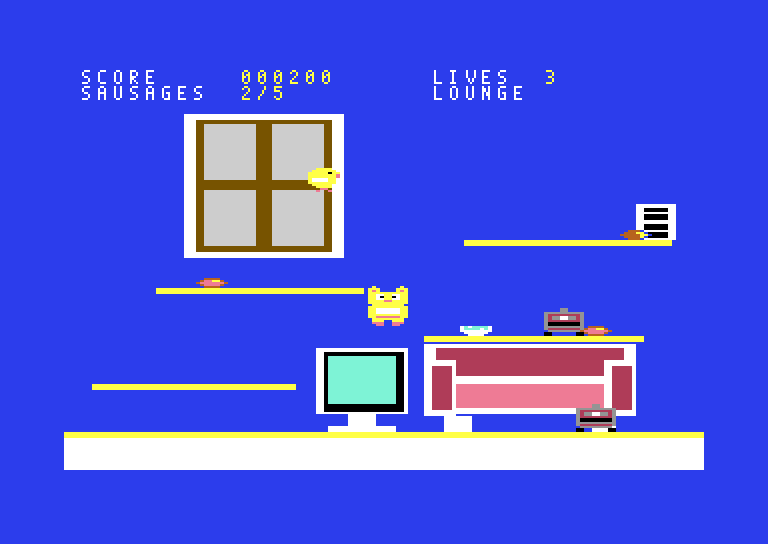
At its core, Loukoumas is a platform-adventure game that leverages the limitations of the C64’s hardware to create a stylized experience. The game’s premise—a dieting cat raiding an empty refrigerator—provides a relatable, albeit lighthearted, narrative hook. The gameplay is structured around the exploration of nineteen interconnected rooms. This level design requires careful spatial memory and dexterity, echoing the structure of classic "flick-screen" platformers that defined the platform in the 1980s.
The technical implementation of Loukoumas demonstrates the evolution of C64 programming. While early titles often suffered from "sprite flicker" and limited color palettes, modern releases like this utilize advanced raster interrupt techniques to bypass the hardware’s inherent limitations. By optimizing the code to handle multiple character sprites and complex background tile sets simultaneously, Revive8Bit has managed to produce a title that feels fluid by modern standards while maintaining the authentic aesthetic of the 1980s.
The Kypseli Setting: A Cultural Intersection
The choice of setting for the game, a flat in the Kypseli neighborhood of Athens, offers a unique departure from the typical fantasy or science-fiction tropes common in 8-bit gaming. By grounding the game in a specific, recognizable urban environment, the developers provide a sense of place that elevates the narrative beyond a simple "fetch quest."
Historical context regarding the C64’s popularity in Greece reveals a significant local scene. During the 1980s, the Commodore 64 was a staple of the Greek computing landscape, often serving as the primary introduction to computer literacy for an entire generation. The inclusion of a Greek-inspired setting is reflective of a wider trend in contemporary indie gaming: the move toward regional storytelling. This approach allows developers to infuse their work with personal experiences, effectively bridging the gap between historical hardware and contemporary cultural identity.
Timeline of Development and Release
The development cycle for software of this scale typically spans six to eighteen months. For Revive8Bit, the project began with a conceptual phase focused on character movement and collision detection—the foundational elements of any platformer.
- Q1 2026: Initial prototyping and sprite asset creation. The developer focused on defining the movement physics for the feline protagonist.
- Q2 2026: Design of the nineteen-room architecture. This phase involved mapping out the progression, ensuring that the difficulty curve remained balanced across the various environments within the Kypseli flat.
- Q3 2026: Bug testing and optimization. Given the C64’s 64KB of RAM, memory management is a critical factor; the development team spent significant time refining the code to ensure the game could run reliably on original hardware.
- October 12, 2026: Official release date. The game was made available to the public, accompanied by digital assets and documentation.
Technical Analysis of 8-Bit Software Constraints
The challenge of creating a game in 2026 for a machine released in 1982 cannot be overstated. Modern developers must account for the specific timing cycles of the VIC-II chip. If a sprite is moved incorrectly or a raster interrupt is missed, the visual output can suffer from shearing or freezing.
Loukoumas utilizes a proprietary engine developed by Revive8Bit, which is indicative of the current state of the C64 scene. Many modern developers now share libraries and tools that allow for more complex screen transitions and smoother scrolling than were possible during the machine’s initial commercial lifespan. This "new wave" of development is characterized by a high degree of technical polish, often pushing the C64 to levels of performance that were once thought impossible by the engineers at Commodore.
Industry Implications and Future Outlook
The release of Loukoumas highlights a growing trend of "digital heritage preservation through participation." Rather than simply archiving old software, the community is actively participating in the creation of new software, ensuring that the skill sets required to program for 8-bit hardware do not vanish.
From an industry perspective, the success of these titles is measured not in millions of units, but in the sustained engagement of a core demographic. Publishers and storefronts specializing in retro hardware have reported consistent growth in revenue, suggesting that there is a viable, albeit niche, market for high-quality retro releases. Furthermore, the use of AI-assisted content in the development of such games—as noted in the developer’s disclosures—suggests that the retro community is adopting modern workflow tools to accelerate the creation of classic-style experiences.
Conclusion: The Endurance of the C64
Loukoumas represents more than just a new game for an old system; it is a testament to the longevity of the Commodore 64 as a creative medium. The game’s blend of nostalgic mechanics and localized narrative provides a compelling argument for the continued relevance of 8-bit platforms in the modern era. As development tools continue to improve and the barriers to entry for retro-coding lower, it is likely that we will see an increase in the frequency and complexity of such releases.
For those interested in the evolution of digital entertainment, the Commodore 64 remains a critical point of study. Its history is not merely one of past success, but of ongoing innovation. Whether through the lens of a dieting cat traversing a Kypseli apartment or through the sophisticated assembly code that powers the game, the C64 continues to prove that hardware constraints are often the best catalyst for creativity. As the community looks toward the future, it is clear that the legacy of the 8-bit era is being rewritten, one room at a time.