Ganda Hendra Perkasa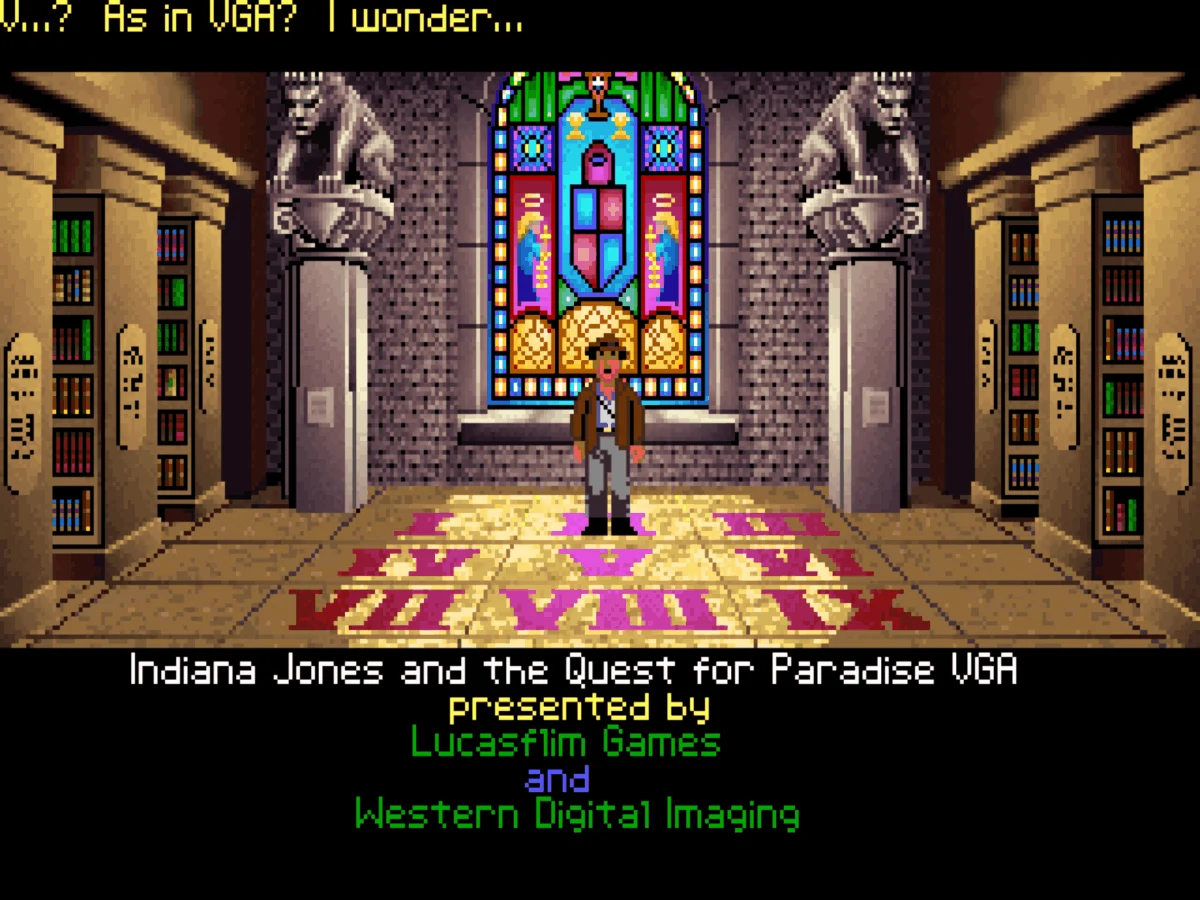
Preservationists and gaming historians have uncovered a previously unknown piece of digital archaeology hailing from the golden era of adventure gaming: a short, non-interactive tech demo titled Indiana Jones and the Quest for Paradise VGA. Unearthed from the personal archives of Aric Wilmunder—a foundational engineer who maintained the legendary SCUMM engine at Lucasfilm Games—the artifact sheds new light on the aggressive hardware marketing strategies and technical transitions of the early 1990s personal computer market. While the find does not represent a newly discovered playable title, it offers a fascinating glimpse into the commercial mechanics that drove the adoption of VGA graphics technology during a pivotal transitional epoch for IBM-compatible PCs.
The artifact was brought to light as researchers cataloged Wilmunder’s extensive collection of historical development materials. According to analysis by preservation specialists, the project is structured as a non-interactive narrative sequence rather than a standard video game. It relies on the robust Script Creation Utility for Maniac Mansion (SCUMM) engine alongside graphical assets originally engineered for Lucasfilm Games’ critically acclaimed 1990 release, Indiana Jones and the Last Crusade: The Graphic Adventure.
Technical Analysis of the Discovery
A closer examination of the demo reveals that it utilizes assets specifically built for the Video Graphics Array (VGA) version of The Last Crusade. During the late 1980s and early 1990s, personal computing was undergoing a massive visual upgrade. Standard display adapters of the mid-1980s, such as the Enhanced Graphics Adapter (EGA), were limited to a palette of 16 simultaneous colors. The introduction of the VGA standard by IBM in 1987 revolutionized computer visuals by supporting a palette of 256 colors at a resolution of 320×200 pixels, or 16 colors at 640×480 pixels.
However, in 1990, VGA graphics cards remained a luxury hardware component. Most average consumers purchasing IBM-compatible personal computers had not yet made the financial investment to upgrade their systems, leaving a massive installed base of older display hardware. To bridge this gap and stimulate sales, hardware manufacturers frequently partnered with software developers to bundle cutting-edge software with their expansion cards.
Western Digital, a prominent hardware manufacturer at the time, produced a line of graphic adapters known as Paradise VGA cards. To incentivize consumers to purchase and install these cards, Western Digital entered into a strategic promotional marketing agreement with Lucasfilm Games. The core of this partnership involved bundling a specialized 256-color VGA version of Indiana Jones and the Last Crusade directly with Western Digital’s Paradise VGA hardware.
The Genesis of 256-Color Assets at Lucasfilm
The creation of the 256-color assets utilized in the newly discovered demo was not initially undertaken solely for the Western Digital partnership. Earlier in the development cycle, Lucasfilm Games had secured a lucrative contract with the Japanese electronics and computing giant Fujitsu. This agreement required the studio to port its flagship adventure titles into 256-color formats to run on the FM Towns, a sophisticated Japanese 32-bit personal computer released in 1989.
Because the engineering work to upgrade their existing sprite libraries, backgrounds, and color palettes to 256 colors had already been funded and completed for the FM Towns hardware, Lucasfilm found itself in an exceptionally advantageous financial position. The studio possessed a repository of high-fidelity graphical assets that could be easily repurposed for the emerging IBM PC VGA market. Consequently, through a combination of the Fujitsu international licensing deal and the Western Digital domestic hardware bundling agreement, Lucasfilm was effectively compensated twice for the technological modernization of its proprietary game development pipeline.
Mystery Surrounding Distribution and Purpose

Despite the clarity regarding its technological origins, the exact intended deployment of Indiana Jones and the Quest for Paradise VGA remains shrouded in uncertainty. Preservationists have been unable to locate any historical documentation, marketing briefs, or internal memos detailing how, where, or to whom the demo was meant to be presented.
Several hypotheses have emerged within the digital preservation community regarding its purpose. Industry analysts suggest the demo may have been engineered for deployment at major trade conventions, such as the Consumer Electronics Show (CES) or Comdex, where hardware and software vendors frequently showcased upcoming technical capabilities. Alternatively, it could have been distributed to computer hardware retailers to run on display terminals, encouraging shoppers to purchase Paradise VGA expansion cards.
Yet, the complete absence of physical distribution disks prior to this archival discovery casts doubt on whether the demo was ever publicly released. Adding to the mystery is a glaring typographical error embedded directly into the software’s introductory sequence: the studio name is spelled as "Lucasflim Games" and remains misspelled on-screen for the duration of the presentation. This persistent typo strongly implies that the project was either an internal proof-of-concept, a rough prototype, or an unfinished marketing asset that was ultimately abandoned before it could undergo final quality assurance checks.
Historical and Industry Implications
The unearthing of Indiana Jones and the Quest for Paradise VGA provides contemporary researchers with valuable insights into the commercial ecosystem of PC gaming at the dawn of the 1990s. During this era, the software industry acted as a primary driver of hardware adoption. Consumers rarely upgraded expensive components like graphics cards, hard drives, or sound cards unless compelled to do so by landmark software releases that refused to run on older hardware configurations.
By tying a premium software experience—featuring one of the most bankable cinematic intellectual properties of the era—to a specific hardware brand, companies like Western Digital effectively transformed video games into powerful enterprise sales tools. This symbiotic relationship laid the groundwork for the modern hardware-software bundling strategies that continue to dominate the consumer technology landscape today, from graphics card promotions featuring AAA PC titles to console-exclusive game packages.
Furthermore, the discovery highlights the fragile and often incomplete nature of digital archiving. Major studios from the 1980s and 1990s rarely maintained pristine chronological records of every internal build, promotional snippet, or discarded prototype produced during a game’s development cycle. Much of what survives does so by chance, preserved accidentally on magnetic media stored in the personal basements, attics, or office filing cabinets of retired software engineers and developers.
Public Access and Preservation Efforts
In alignment with best practices in digital preservation and open-access historical research, the discovery team has taken steps to ensure the artifact is permanently protected and made available for public study. The underlying code and asset files for Indiana Jones and the Quest for Paradise VGA have been officially uploaded to the Internet Archive, allowing software historians, retro-computing enthusiasts, and the general public to examine the code firsthand.
Additionally, a complete video capture of the non-interactive demo has been published online, allowing viewers to witness the eccentric digital artifact without needing to emulate obsolete MS-DOS environments. While the demo represents a minor footnote in the grand legacy of Lucasfilm Games—which would go on to define the point-and-click adventure genre with legendary titles like The Secret of Monkey Island, Day of the Tentacle, and Grim Fandango—it serves as a delightful time capsule. It captures a fleeting moment when Dr. Henry Jones Jr. was casually drafted into service to sell high-end Western Digital graphic adapter cards to a rapidly evolving personal computer market.