Indra Gunadi
The release of Rotato-Match on September 18, 2026, marks a significant milestone in the ongoing preservation and active development of the Nintendo Game Boy Color (GBC) homebrew ecosystem. Developed by the creator known as devgb, the title introduces a novel puzzle mechanic that challenges the traditional conventions of tile-matching games by shifting the focus from individual piece manipulation to environmental rotation. This release arrives at a time when interest in retro-platform development has reached a historic peak, fueled by accessible software development kits (SDKs) and a growing demographic of enthusiasts dedicated to extending the lifecycle of legacy hardware.
A Departure from Conventional Mechanics
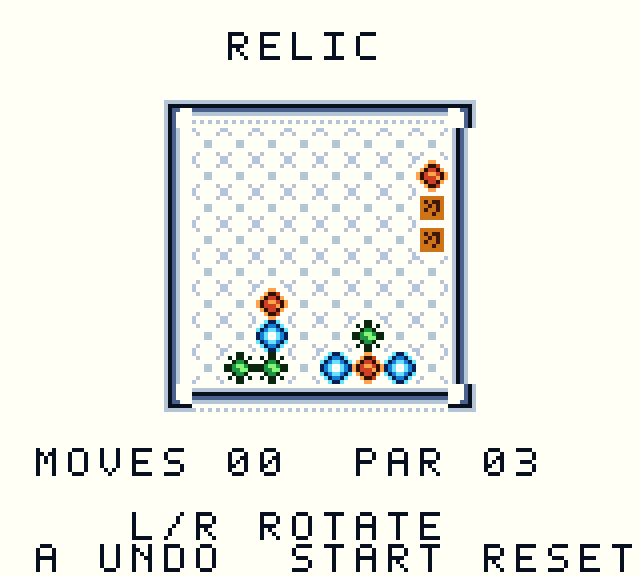
In the landscape of classic puzzle gaming, the genre has long been defined by titles such as Tetris or Puyo Puyo, where players exert direct control over falling or stationary blocks to achieve horizontal or vertical alignment. Rotato-Match subverts these expectations by tasking the player with rotating the entire game board. By utilizing the physics of gravity, the player must orchestrate cascades of matching elements. This mechanic demands a higher degree of spatial awareness and forward-thinking strategy, as a single rotation impacts the entire grid simultaneously rather than isolating individual movements.
The implementation of such logic on the Game Boy Color’s hardware—a system powered by a Sharp LR35902 core clocked at approximately 4.19 MHz—is a testament to the sophistication of modern homebrew development tools. While the GBC was originally intended for commercial titles with limited processing overhead, contemporary developers are increasingly leveraging assembly language optimization and C-based compilers like GBDK-2020 to extract performance that exceeds the capabilities of software released during the console’s commercial peak between 1998 and 2003.
Chronology of the Modern Homebrew Movement
The development of Rotato-Match does not exist in a vacuum; it is the latest iteration in a multi-decade timeline of community-led software creation. To understand the significance of this release, one must look at the evolution of Game Boy homebrew:
- 1989–2003 (The Commercial Era): The Game Boy line dominates the handheld market. Development is restricted to licensed publishers with access to expensive development kits.
- 2004–2012 (The Emulation Era): As the hardware reaches "legacy" status, hobbyists begin reverse-engineering the system, leading to the creation of the first software emulators and basic flash carts.
- 2013–2020 (The Tooling Revolution): The release of accessible open-source compilers and simplified libraries allows developers without formal engineering backgrounds to create functional games.
- 2021–2025 (The Hardware Renaissance): Interest in physical media spikes. Developers begin producing high-quality cartridges, custom packaging, and manuals, treating homebrew as a legitimate commercial endeavor.
- 2026 (The Current Landscape): Releases like Rotato-Match utilize AI-assisted workflows to optimize code, balance difficulty curves, and generate assets, signaling a new era of efficiency in retro-game production.
Technical Data and System Architecture
The Game Boy Color remains a platform of rigid technical constraints, which serves as a major draw for developers looking to test their problem-solving capabilities. The system features a 160×144 pixel display and a color palette capable of displaying 32,768 colors, though only a fraction can be utilized simultaneously on screen.
For a game like Rotato-Match, the primary challenge involves managing the tile-map updates during board rotations. In a standard tile-matching game, the engine only needs to update a small subset of the screen when a piece moves. In Rotato-Match, a 90-degree or 180-degree rotation necessitates a near-instantaneous recalculation of the entire grid’s coordinate system to ensure that gravity functions correctly for all objects. This requires efficient memory management, as the GBC possesses only 32 KB of internal RAM and 16 KB of video RAM (VRAM).
Devgb’s implementation demonstrates a mastery of these constraints, utilizing "bank switching" techniques to manage assets that exceed the standard memory limitations of the system’s cartridge architecture. By pre-calculating rotation matrices, the game maintains a consistent frame rate, ensuring that the visual feedback remains responsive—a critical requirement for any puzzle game.
The Role of AI in Contemporary Homebrew
The inclusion of AI-assisted development tools in the creation of Rotato-Match highlights a burgeoning trend in the indie development community. According to the metadata associated with the release, the developer utilized AI for content generation, graphics design, and code optimization.
In the context of retro development, AI is proving to be a force multiplier. Because retro hardware is so technically restrictive, writing code that is both readable and highly optimized for 8-bit architecture is time-consuming. AI models trained on legacy assembly language documentation can suggest code refactoring that reduces cycle counts—crucial for maintaining performance on the Game Boy’s 4 MHz processor. Furthermore, AI-driven asset generation allows solo developers to create complex sprite sheets and background tiles that mimic the distinct aesthetic of the late 90s, effectively lowering the barrier to entry for high-quality production.
Industry Implications and Market Impact
The release of Rotato-Match invites questions regarding the long-term viability of the retro homebrew market. As the demographic of players shifts from those who grew up with the hardware to younger generations interested in "low-fidelity" gaming, the market for physical Game Boy releases has seen a consistent year-over-year growth.
From an industry perspective, this development highlights a shift in how legacy consoles are perceived. Rather than viewing the Game Boy as a defunct platform, developers are treating it as a specialized medium—much like film or vinyl—that offers a unique set of limitations which foster creativity. This "constrained creativity" is a direct response to the bloating of modern game file sizes and the increasing reliance on massive cloud-based servers. By returning to a platform that is entirely offline and hardware-contained, developers are able to offer a self-contained, "finished" product that appeals to consumers seeking a break from the complexities of modern digital ecosystems.
Official Perspectives and Community Response
While devgb has maintained a low public profile, typical of the independent homebrew scene, initial community feedback has been overwhelmingly positive. Within the forums of preservationist hubs like PDroms, the consensus among testers suggests that the game’s difficulty curve is balanced, with the "three rotations ahead" requirement providing a depth that compensates for the relatively simple visual presentation.
Critics within the retro-gaming community often debate the use of AI in these projects, with some purists arguing that manual coding is the only "authentic" way to develop for legacy hardware. However, the prevailing sentiment is that as long as the final binary runs on original, unmodified Game Boy Color hardware, the methods of production are secondary to the preservation of the platform’s viability. By continuing to develop for the GBC in 2026, creators like devgb ensure that the system remains a living, evolving piece of technology rather than a static artifact housed in a museum.
Conclusion: The Future of Legacy Hardware
Rotato-Match is more than a simple puzzle game; it is a case study in how modern technological advancements, such as AI and refined compilers, can breathe life into decades-old hardware. As the community continues to refine its tools and techniques, we can expect to see an increase in both the frequency and complexity of Game Boy Color software releases.
The success of such projects serves as a reminder of the enduring power of the Game Boy platform. With its robust architecture and iconic design, the console continues to attract developers who are eager to push the boundaries of what is possible within the constraints of 8-bit computing. As we look toward the latter half of the 2020s, the intersection of nostalgia and modern optimization will likely remain a fertile ground for innovation, ensuring that the legacy of the Game Boy Color persists well into the future. Whether through the lens of preservation or the lens of active development, titles like Rotato-Match are vital to maintaining the historical and technical relevance of the Nintendo handheld legacy.