Hartono Sudibyo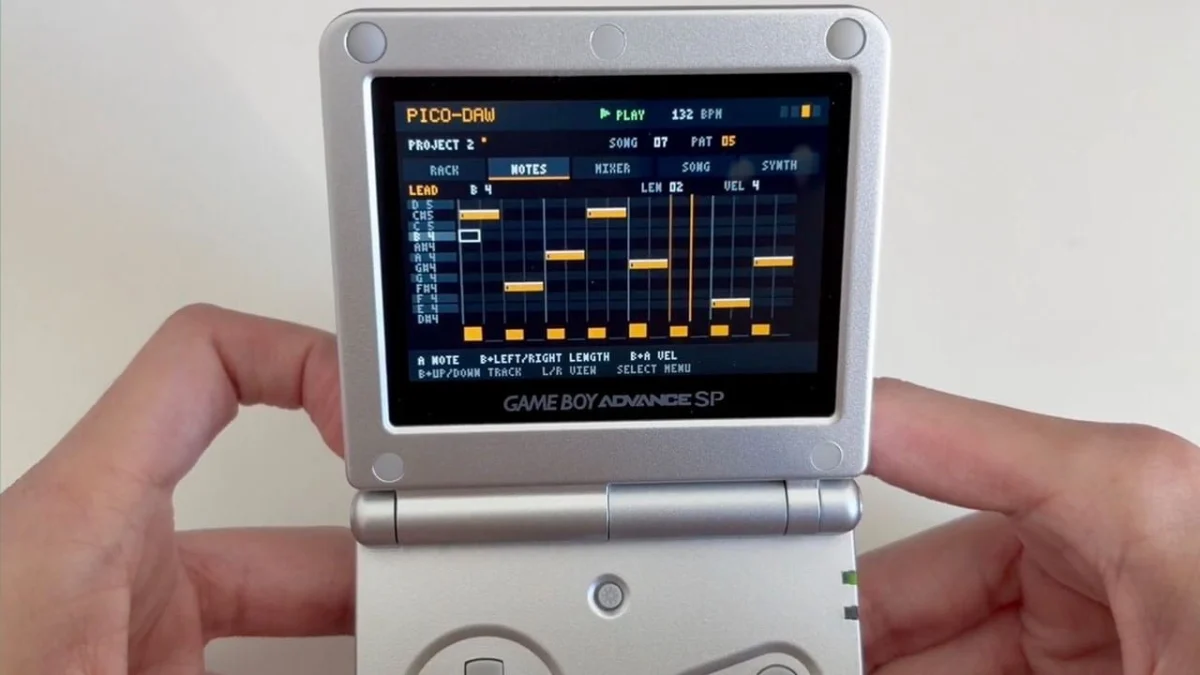
The landscape of retro-game development and hardware modification has reached a new milestone with the introduction of Nano-daw, a fully functional Digital Audio Workstation designed specifically for the 22-year-old Game Boy Advance (GBA) console. Developed by software engineer Hugo Duprez—also known in the development community through his work on SpriteFusion—the project was conceived, programmed, and brought to a stable operational state over the course of a single weekend.
While the handheld gaming community has historically celebrated robust music production software for Nintendo’s portable architecture, such as the renowned Little Sound Dj (LSDJ) and Nanoloop, Nano-daw distinguishes itself by adopting the familiar visual and functional paradigm of modern desktop MIDI sequencers like Apple’s Logic Pro or Avid’s Pro Tools. This departure from tracker-style interfaces offers a familiar environment for contemporary music producers, lowering the barrier to entry for retro-hardware composition without requiring specialized knowledge of hexadecimal code or tracker row semantics.
Chronology and Development Sprint
The conceptualization and execution of Nano-daw unfolded rapidly over a standard 48-hour weekend period in September 2026. Duprez, leveraging his extensive background as a seasoned software developer, set out to test the performance limits of the Game Boy Advance’s 32-bit ARM7TDMI processor running at 16.78 MHz.
Despite the compressed timeline, the development process was methodical rather than haphazard. Duprez utilized Astra, an AI-assisted coding environment, to accelerate specific architectural decisions, boilerplate generation, and low-level optimizations. However, the developer emphasized that the codebase was not "vibe-coded"—a colloquial term for unvetted, AI-generated programming. Instead, Duprez manually reviewed every single line of generated code, refactoring substantial blocks by hand to ensure memory efficiency, stable instruction execution, and reliable hardware interaction.
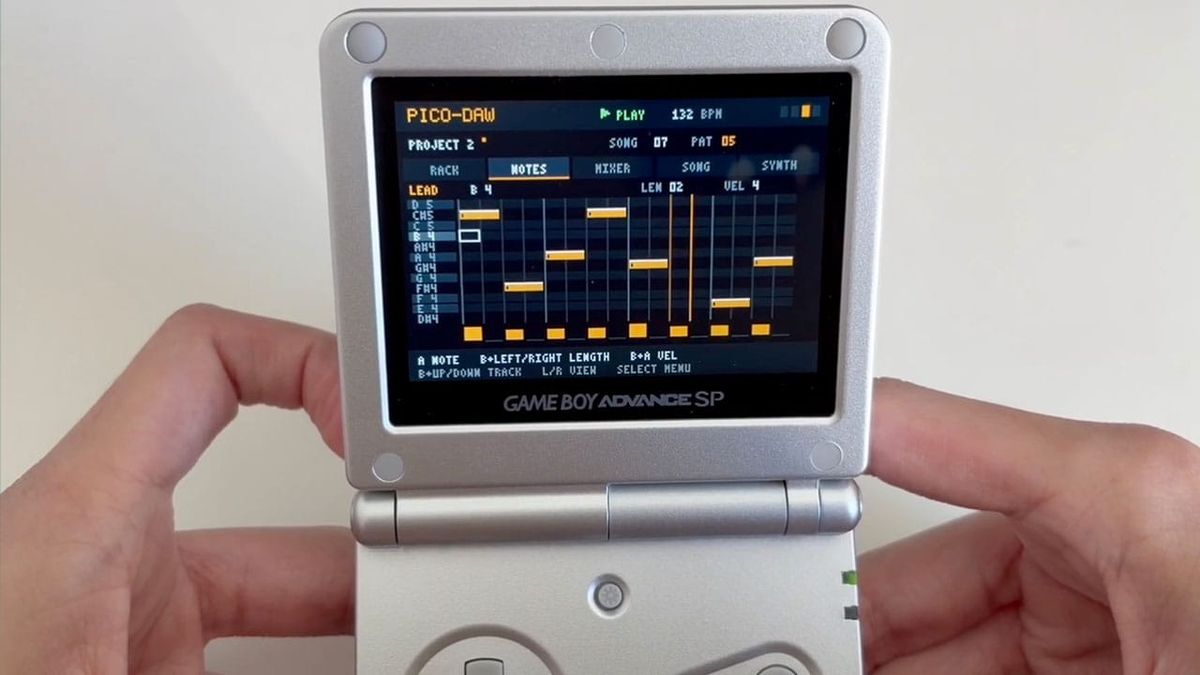
The result of this intensive weekend sprint is a lightweight, responsive audio sequencing environment that operates at a smooth 59 frames per second, mirroring the native refresh rate of the GBA hardware. Following its completion, Duprez demonstrated the software on social media channels, prompting widespread interest within both the chiptune music community and the broader retro-computing sector. The project was subsequently made available for public download via the official SpriteFusion blog, complete with source notes and documentation.
Technical Architecture and Interface Design
Programming for legacy hardware requires strict adherence to strict memory and processing limitations. The Game Boy Advance features a modest 32 kilobytes of internal workspace RAM, 256 kilobytes of external VRAM, and limited audio processing capabilities through its direct sound channels and programmable wave channels.
Nano-daw manages these resource constraints by maintaining a streamlined architecture dedicated entirely to step-sequencing and pattern playback. The application provides six distinct tracks allocated to fundamental electronic music components:
- Kick drum
- Clap
- Hi-hats
- Bassline
- Lead synthesizer
- Polyphonic chords
Each track supports up to 16 steps per pattern, allowing users to construct complex rhythmic and melodic loops directly on the portable console. The tempo is fully adjustable, starting from a baseline of 120 beats per minute and scaling according to user preference.
Interaction with the software is mapped directly to the Game Boy Advance’s physical control scheme. Users navigate the grid and place musical notes using the directional pad (D-Pad) in conjunction with the A button. This intentional design choice eliminates the need for external peripherals, ensuring that the GBA remains entirely self-contained during the music-making process. The interface layout abstracts complex MIDI data streams into clean, graphical piano-roll representations, bridging the gap between vintage 16-bit hardware aesthetics and professional studio software design.

Historical Context of Handheld Music Production
The release of Nano-daw arrives against a rich historical backdrop of portable electronic music composition. Since the launch of the original Nintendo Game Boy in 1989, musicians and engineers have recognized the creative potential of consumer gaming hardware. The chiptune genre—music generated using the sound chips of vintage computers and video game consoles—grew from an underground subculture into a recognized global genre, largely driven by bespoke software cartridges.
Software tools such as Johan Kotlinski’s Little Sound Dj (LSDJ), released in 2000, transformed the original Game Boy into a powerful live performance instrument utilizing a vertical tracker interface. Similarly, Oliver Wittchow’s Nanoloop series provided step-sequencing capabilities across various Nintendo platforms, including the Game Boy Color and Game Boy Advance.
These legacy programs relied heavily on tracker logic, where musical data is entered vertically in numerical and alphabetical columns. While highly efficient for veteran practitioners, tracker interfaces often present a steep learning curve for producers trained in standard linear digital audio workstations. Nano-daw addresses this usability gap by introducing a horizontal, timeline-based MIDI sequencing view to the GBA ecosystem for the first time, signaling an evolution in how developers interpret legacy hardware capabilities.
Development Methodology and the Role of AI Assistance
Duprez’s transparency regarding his use of development tools has sparked broader discussions within software engineering and retro-development circles regarding the integration of artificial intelligence in niche coding projects. As automated coding assistants become more prevalent, questions regarding authenticity, intellectual property, and code quality have intensified.
By publicly detailing his reliance on Astra for architectural guidance while explicitly noting his hands-on refactoring and code review process, Duprez demonstrated a hybrid development model. In this framework, AI serves as an accelerant for routine implementation tasks, while human oversight maintains architectural integrity, optimization, and bug mitigation. Industry analysts note that this approach preserves the craftsmanship of manual programming while drastically reducing the time required to prototype complex systems for obsolete silicon.
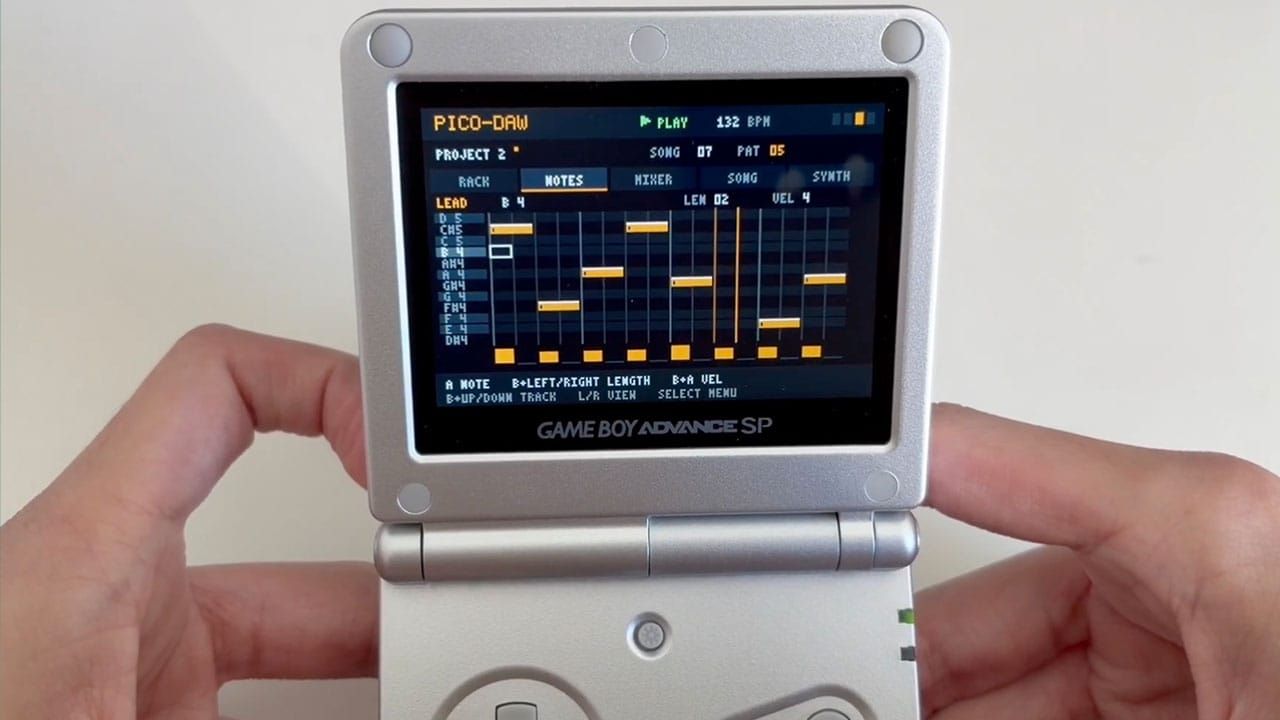
Furthermore, the successful deployment of a high-performance audio engine on 20erald-era handheld hardware underscores the viability of modern programming languages and cross-compilation techniques in retro-development. Rust and C continue to dominate this sector, allowing engineers to write safe, highly optimized code that respects the hardware’s strict thermal, memory, and processing boundaries.
Broader Impact and Industry Implications
The emergence of projects like Nano-daw highlights the enduring appeal of constrained computing environments in contemporary art and technology. By stripping away the infinite resources of modern multi-terabyte desktop workstations, developers and musicians often find renewed focus and creative inspiration within hardware limitations.
The project also underscores the vibrant health of the retro-hardware modification and homebrew development communities. Despite official support for the Game Boy Advance having ceased decades ago, independent developers continue to write original software, design physical cartridges, and push the hardware far beyond its original commercial specifications.
For the music production sector, Nano-daw serves as both a functional novelty and an impressive technical achievement. While professional studios will continue to rely on industry-standard environments like Pro Tools, Ableton Live, and Logic Pro for complex mixing and mastering tasks, the ability to draft MIDI sequences on pocket-sized, battery-powered hardware from 2004 demonstrates the timeless utility of thoughtful user interface design and efficient programming.
Nano-daw is currently available for download as a GBA ROM file via the official SpriteFusion website, allowing hobbyists, musicians, and retro-gaming enthusiasts to load the software onto flash cartridges and execute it on original Game Boy Advance hardware or compatible emulation platforms.