Jia Lissa
The transition from the 16-bit dominance of the Sega Genesis to the 32-bit architecture of the Sega Saturn represents one of the most transformative and volatile chapters in the history of the video game industry. While the era is often distilled into simple narratives of corporate rivalry between Sega of America and its Japanese headquarters, recent insights from former executives suggest a far more complex reality defined by cultural friction, shifting market strategies, and the intense pressures of a rapidly evolving global technology sector. Among those with a unique perspective is Mike Fischer, a rare executive who bridged the divide by serving in key roles at both Sega of Japan and Sega of America during this pivotal era.

A Unique Vantage Point in Corporate History
Fischer’s tenure began in 1990, during the early stages of the Mega Drive’s expansion. Unlike most of his American colleagues, who typically moved from domestic roles to Japanese headquarters, Fischer was hired into the Overseas Consumer Products Business Division in Tokyo. His background in quantitative economics and his immersion in Japanese corporate culture provided him with a perspective that was largely inaccessible to those based solely in the United States. Throughout his time in Japan and his subsequent transfer to Sega of America in 1994, Fischer witnessed firsthand the internal mechanisms of a company struggling to reconcile its arcade-centric roots with the demands of a maturing home console market.

The Genesis Success and the Shadow of the Saturn
The early 1990s were defined by the meteoric rise of the Genesis, which, under the leadership of Tom Kalinske, successfully challenged Nintendo’s market grip. However, as the 16-bit market reached saturation, the pressure from Sega of Japan to transition toward the next generation grew. This created a fundamental strategic misalignment. While the U.S. branch sought to maximize the longevity of the Genesis and its active user base, the Japanese leadership, spurred by the declining domestic performance of the Mega Drive and the emergence of competing hardware like the Super Nintendo, prioritized an immediate pivot to the Saturn.
Data from the period highlights the fiscal strain this transition placed on the company. Sega’s export-driven model meant that Sega of America often functioned as a subsidiary tasked with absorbing inventory based on directives from Tokyo, rather than local market realities. This lack of price protection and the rapid push for next-gen hardware forced Sega of America into a precarious position, managing the decline of the 16-bit era while simultaneously attempting to launch the more technically complex and difficult-to-program Saturn.
The Cultural and Philosophical Divide
The friction between Sega’s branches is often framed as a rivalry, but evidence points to deeper, systemic differences in corporate philosophy. Japanese leadership, represented by figures such as Hayao Nakayama, operated with a hierarchical, often aggressive management style that prioritized speed and arcade technical prowess. In contrast, the American team was largely composed of veterans from the toy and consumer electronics industries—professionals like Kalinske who brought a consumer-first, retail-focused mindset.
This divide manifested in product development. The Saturn, while technologically advanced, suffered from poor developer support and documentation. Fischer notes that the choice of the Hitachi processor over the Motorola 68000 series—the workhorse of the Genesis—represented a significant hurdle. Whether this decision was influenced by domestic industrial policy or a fundamental misunderstanding of developer needs remains a subject of historical debate, but the impact on software output was immediate. Titles that were simple to port on the Genesis became engineering nightmares on the Saturn, alienating third-party developers and slowing the console’s momentum.
The Role of Innovation and Legacy IP
Despite the hardware struggles, the era produced some of Sega’s most enduring intellectual properties. The development of Sonic the Hedgehog, often attributed solely to Yuji Naka, involved a broader team of creative talents, including character designer Naoto Ohshima and lead designer Hirokazu Yasuhara. Fischer’s accounts confirm that the "creator" narrative was frequently manipulated, with internal dynamics often stifling the contributions of key personnel. The preservation of this history is vital, as much of the original source code and developmental documentation from this period has been lost to time.
The post-hardware transition phase, during which Sega became a third-party developer, saw the company attempt to leverage its legacy IP while struggling to find its footing in a market dominated by the PlayStation and later, Microsoft’s Xbox. Fischer’s return to Sega during this period—specifically to facilitate the transition to third-party status—was marked by the need to mend bridges with former rivals like Nintendo and Sony. The symbolic moment of a Mario mascot welcoming Sonic into the Nintendo ecosystem underscored the finality of Sega’s departure from the console wars.
Looking Toward the Future: The Utsumi Era
As Sega navigates the modern landscape under current CEO Shuji Utsumi, the company faces the challenge of honoring its rich 16-bit history while fostering genuine innovation. The success of the Yakuza series, which eschews traditional "retro" reliance in favor of complex, narrative-driven gameplay, suggests a potential path forward. Industry observers note that the company’s recent strategy, which emphasizes the modernization of classic IP through strategic partnerships—as seen with the success of Sonic Mania—serves as a blueprint for sustainability.
However, the lesson from the 1990s remains clear: nostalgia is not a substitute for development infrastructure. The reliance on legacy talent and the resistance to shifting market trends were the primary factors that hampered the Saturn and Dreamcast eras. For Sega to thrive, the company must continue to empower new, diverse creative voices, moving beyond the internal hierarchies that defined its 20th-century operations.

Implications for the Industry
The story of the Genesis-to-Saturn transition is more than a cautionary tale; it is an essential study in the dangers of internal misalignment and the volatility of hardware cycles. The industry has evolved, but the tension between creative freedom and corporate governance persists. As Sega continues to refine its position as a global software powerhouse, the experiences of individuals like Fischer serve as a bridge between the company’s "ragtag" roots and its current corporate maturity.
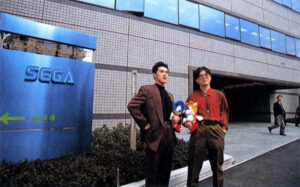
Ultimately, the transition serves as a reminder that the success of a platform is not merely a function of technical specifications or marketing budgets, but of the cohesion between the creative and business engines that drive it. As the company looks toward new projects, the ability to balance the weight of its history with the necessity of bold, innovative, and occasionally radical development will define the next chapter of the Sega legacy. Whether the company can replicate the cultural impact of the 1990s while avoiding the structural pitfalls of the past remains the central question for the current leadership.