Vera Clarissa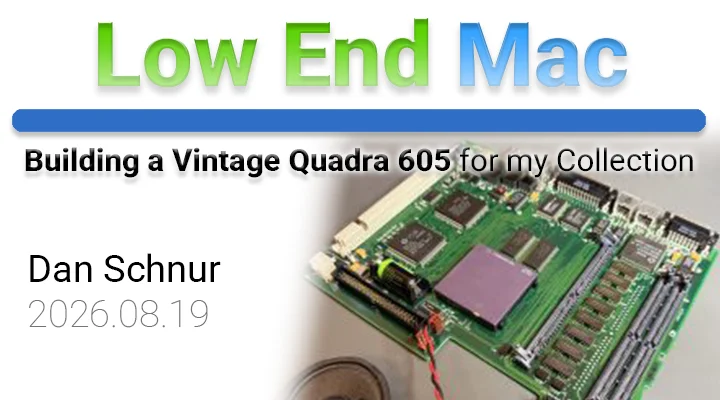
The restoration of vintage computing hardware, specifically the Macintosh Quadra 605, represents a complex intersection of electronics engineering and material science preservation. Released by Apple Computer in October 1993, the Quadra 605 was marketed as a budget-friendly entry into the 68040 processor family. While technologically significant for its time, the machine has become a notorious subject for collectors due to the degradation of its ABS (acrylonitrile butadiene styrene) plastic chassis, a common issue known as “brittle-aging” in vintage hardware circles.
The Material Crisis of Retro Computing
The degradation of late-20th-century plastic housing is a well-documented phenomenon. Over three decades, the chemical stabilizers in the plastic—specifically those used to prevent fire-retardant yellowing and structural fatigue—migrate out of the polymer matrix. When exposed to ambient fluctuations in temperature and humidity, these materials lose their elasticity. For the Quadra 605, the structural integrity of internal mounting tabs is frequently compromised, rendering the assembly process a delicate operation rather than a standard hardware installation.

The restoration of a single functional unit from two donor machines highlights the scarcity of pristine original components. In this specific case, the primary failure points were the internal plastic standoffs and retaining clips designed to secure the logic board, power supply unit (PSU), and floppy disk drive.
Chronology of the Restoration Project
The project began with the acquisition of a "for parts" unit via an online secondary market platform. Upon arrival, the machine exhibited severe structural failure. The chassis, brittle and discolored, suffered catastrophic degradation during transit, essentially rendering the outer shell a collection of fragments rather than a functional enclosure.
The diagnostic process for the first logic board revealed significant electronic failure. Following a decontamination process involving the removal of leaking surface-mount electrolytic capacitors—a standard maintenance procedure for 30-year-old Macintosh hardware—the board failed to achieve a POST (Power-On Self-Test) state. Logic analyzer data indicated a “double bus fault,” a condition where the Motorola 68040 processor is unable to complete a memory or I/O operation. After isolating the fault through signal analysis on the processor’s status pins, it was determined that the CPU had suffered a permanent hardware failure, necessitating a total board replacement.

A second unit was acquired months later to provide a functional power supply and a more structurally sound chassis. The integration of these two systems required a rigorous mechanical reinforcement strategy. The restoration utilized a combination of cyanoacrylate adhesive (super glue) for temporary positioning and industrial-grade epoxy (JB Weld) to create permanent, load-bearing repairs on the shattered plastic mounting tabs.
Technical Analysis and Hardware Performance
The Quadra 605 features a 25MHz Motorola 68LC040 processor, a 32-bit architecture that offered significant performance advantages over the preceding Macintosh LC III. However, the machine’s reliance on specific voltage rails—notably the -5V line provided by the proprietary PSU—presents a hurdle for modern power supply substitution.
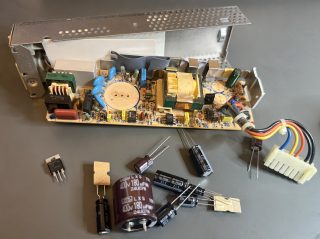
Data gathered during the testing phase of the restored unit confirmed that the original power supply required a full capacitor overhaul to meet modern ripple and voltage regulation standards. Once the electrical integrity was restored, the system successfully booted from a BlueSCSI adapter, a contemporary flash-storage solution that replaces the mechanical hard disk drives typically found in these machines.
The floppy disk drive, a component prone to belt degradation and lubrication drying, underwent a full mechanical service. The drive’s eject mechanism, often the first to fail due to broken plastic linkages, required precise recalibration. The successful restoration of these components demonstrates the viability of maintaining legacy hardware provided that the operator possesses both electronic diagnostic capabilities and structural repair expertise.
Broader Implications for the Retro Computing Community
The difficulty in sourcing functional Quadra 605 units points to a broader trend in the vintage computing market: the "survivorship bias" of high-end machines versus the rapid loss of budget-tier models. Because the Quadra 605 was a consumer-grade product, it was frequently discarded or poorly stored, unlike the more robust workstation-class machines of the era.
Market analysts in the vintage electronics space have noted that as the supply of "new-old-stock" parts dwindles, the community is shifting toward additive manufacturing (3D printing) and synthetic chemical restoration. The use of peroxide-based whitening (retrobrighting) and structural reinforcement with epoxies has become standard practice, though these methods remain controversial among purists who prioritize the preservation of original materials.

Expert Perspective and Industry Outlook
"The preservation of these machines is becoming increasingly difficult due to the chemical breakdown of the plastic, not just the electronics," says a hardware preservation specialist familiar with the Macintosh LC series. "We are reaching a point where we are not just repairing computers; we are essentially re-engineering the structural foundations of the hardware. The Quadra 605 is a perfect case study of why hobbyists must document their repair methods, as the ‘original’ plastic is essentially a ticking clock."
The implications of these restorations are twofold. First, they ensure that the software and architectural legacy of the 68k Macintosh era remain accessible for future study. Second, they provide a roadmap for the stabilization of other brittle-plastic electronics from the 1990s, such as the Power Macintosh 5200 series or early portable devices.
Conclusion of the Assembly
With the final integration of the hard drive and the successful installation of the Macintosh System 7 operating system, the unit reached a state of operational stability. The final configuration, currently displayed in a collector’s environment, supports a 12-inch Apple monitor, testing the limits of the reinforced plastic chassis.

The success of this project—characterized by the replacement of a faulty CPU, the total overhaul of the power supply, and the meticulous reconstruction of the chassis—serves as a benchmark for amateur restoration. It underscores the reality that for collectors, the path to a working machine is rarely linear. It requires a commitment to both the preservation of electronic data pathways and the difficult, often frustrating, task of restoring the physical form factor that houses them.
While the machine is now functional, the long-term viability of the epoxy-reinforced chassis remains a subject of ongoing observation. For now, the Quadra 605 occupies its intended place in the collection, serving as a testament to the persistence required to keep obsolete technology operational in the third decade of the 21st century. The project remains a definitive example of the effort required to fill gaps in historical computing collections, proving that with enough adhesive and patience, even the most degraded hardware can return to service.