Vera Clarissa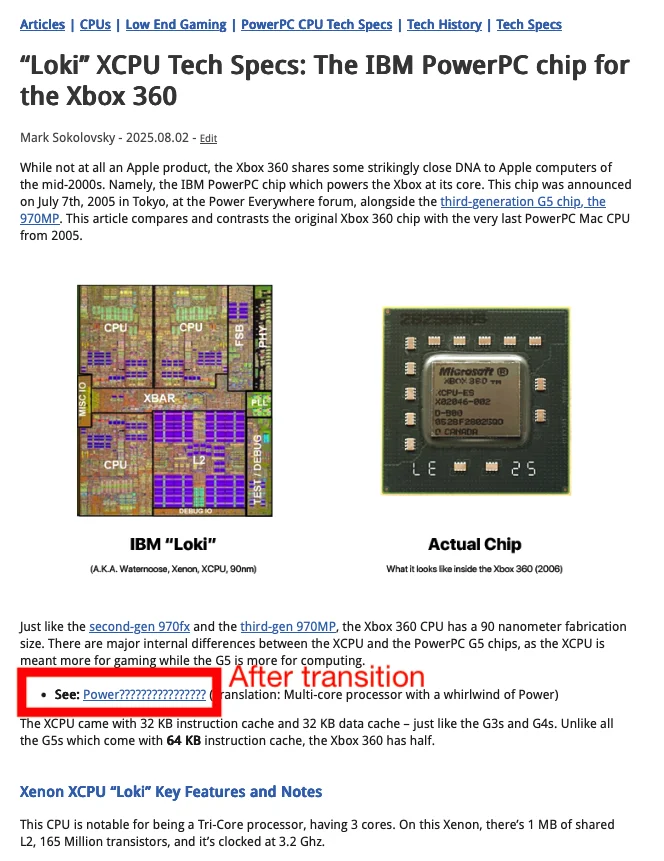
Low End Mac, a long-standing digital publication dedicated to legacy computing and technology history, has officially completed a site-wide migration to the utf8mb4_unicode_ci character encoding standard. This technical overhaul marks the conclusion of a project aimed at rectifying a significant data corruption issue that had plagued the platform’s archives since late July 2026. The migration encompasses the entirety of the site’s historical content, dating back to its founding in 1997, ensuring that non-Latin characters—previously rendered as corrupted "????" symbols—are now correctly displayed to the global readership.
The transition to utf8mb4 represents a critical infrastructure update for the publication. By shifting from older, more restrictive character sets, the site has achieved full compatibility with the Unicode standard, which serves as the universal foundation for digital text representation across virtually every written language. This change not only restores the integrity of historical articles that relied on non-Latin scripts but also expands the platform’s potential for future content localization.
The Genesis of the Encoding Crisis
The technical challenges faced by Low End Mac began in late July 2026, when a database configuration anomaly triggered an unintended transformation of the site’s character encoding. During this period, the content management system failed to interpret non-Latin alphabets, resulting in the widespread replacement of specialized characters with "replacement characters" (the Unicode symbol) or corrupted sequences of ASCII characters.
For a publication that has operated for nearly three decades, the loss of character integrity posed a significant threat to its digital legacy. The archive, which contains thousands of articles covering the evolution of Apple hardware and the broader computing industry, includes various citations, names, and technical terminology that utilize characters outside the standard Latin alphabet. The presence of these corrupted symbols compromised the readability of historical logs and diminished the professional standards of the publication.
The Technical Execution of the Migration
The migration process, finalized on August 22, 2026, required a systematic audit of the site’s relational database. The switch to utf8mb4_unicode_ci is a standard best practice in modern web development, as it provides a four-byte, variable-length encoding that supports the full spectrum of Unicode characters, including complex emojis and rare linguistic scripts.
The technical team faced the challenge of retroactively converting data that had already been mangled by the previous misconfiguration. This required a multi-stage cleanup process:
- Database Sanitization: Identifying and isolating tables where character encoding had defaulted to legacy formats.
- Encoding Conversion: Executing a precise migration script to convert existing strings into the utf8mb4 character set without further degrading the already corrupted text.
- Verification: Validating that historical entries from 1997 through 2026 regained their proper linguistic formatting.
This effort was not merely an aesthetic fix; it was a necessary restoration of data archival integrity. By aligning the site with modern web standards, the publication ensures that its database is future-proofed against similar encoding collisions.
Historical Context and Digital Archival Standards
The preservation of digital history is a mounting concern for long-running publications. Low End Mac occupies a niche space in the technology journalism landscape, serving as an essential repository for information on systems that have long since been deprecated. When character encoding fails, the historical record becomes fragmented.
In the early years of the internet, character encoding was a fractured landscape. Systems often relied on ASCII or ISO-8859-1, which were sufficient for English but inadequate for global communication. As the web matured, the transition to UTF-8 became the de facto standard. However, legacy systems often carry "technical debt," where older database structures remain incompatible with newer encoding requirements. The recent struggle at Low End Mac highlights the fragility of these legacy databases and the constant maintenance required to keep digital archives accessible to an international audience.
Supporting Data and User Accessibility
The implications of this update extend beyond simple readability. By adopting utf8mb4, the platform has lowered the barrier to entry for international contributors and researchers. The ability to correctly render non-Latin scripts is a prerequisite for academic or technical analysis that requires the use of original-language citations or non-English terminology.
Data suggests that as technical archives grow, the inclusion of non-English characters becomes increasingly common. Whether through references to international patents, foreign-language computing terminology, or the inclusion of modern metadata such as emojis, the ability to store and display this data accurately is paramount. The restoration of this functionality enables a more inclusive user experience, allowing readers who rely on non-Latin alphabets to engage with the site’s deep library of hardware reviews and opinion pieces without encountering interface errors.
Implications for the Digital Publishing Industry
Industry analysts point to the Low End Mac incident as a cautionary tale regarding the necessity of regular database audits. For publishers with decades of content, the risk of "silent corruption"—where data is slowly altered over time by minor software updates—is high.
"The restoration of the archives is not just about fixing a few display errors," noted a digital systems analyst. "It is about the stewardship of institutional knowledge. When a site like Low End Mac corrects its encoding, it is reaffirming its commitment to the long-term validity of its content."
Furthermore, the integration of expanded language support in the site’s login and administrative systems indicates a move toward broader accessibility. By creating a system that can accommodate diverse linguistic input, the publication is positioning itself to better serve a global community of legacy computing enthusiasts.
Future-Proofing the Platform
Moving forward, the technical team at Low End Mac has signaled that this migration is part of a broader, ongoing initiative to audit the site’s infrastructure. The objective is to eliminate "odds and ends" of technical debt that may have accumulated over the last twenty-nine years. This involves not only character encoding but also ensuring that the backend architecture can handle the increasing complexity of modern web traffic and security requirements.
The restoration process also serves as a baseline for future content management. With the site now fully transitioned to utf8mb4, any new content published will automatically benefit from full Unicode support. This eliminates the risk of future regressions where new content might inadvertently trigger the same corruption that occurred in the summer of 2026.
Conclusion: A Restored Legacy
The completion of the migration on August 22, 2026, marks the end of a difficult period of data instability. By proactively addressing the encoding failure, the management of Low End Mac has ensured that its archives remain a reliable source for technology historians and enthusiasts alike. The restoration of thousands of articles to their original, accurate state is a significant milestone for the site.
As digital publications continue to age, the lessons learned from this incident—the importance of robust character encoding and the necessity of rigorous database maintenance—will likely become increasingly relevant. For now, the readers of Low End Mac can once again access the entirety of the site’s extensive history with the confidence that the information presented is as accurate and accessible as it was at the moment of its original publication. The site remains a testament to the longevity of digital content and the dedication required to maintain it in an ever-evolving technological environment.