Ganda Hendra Perkasa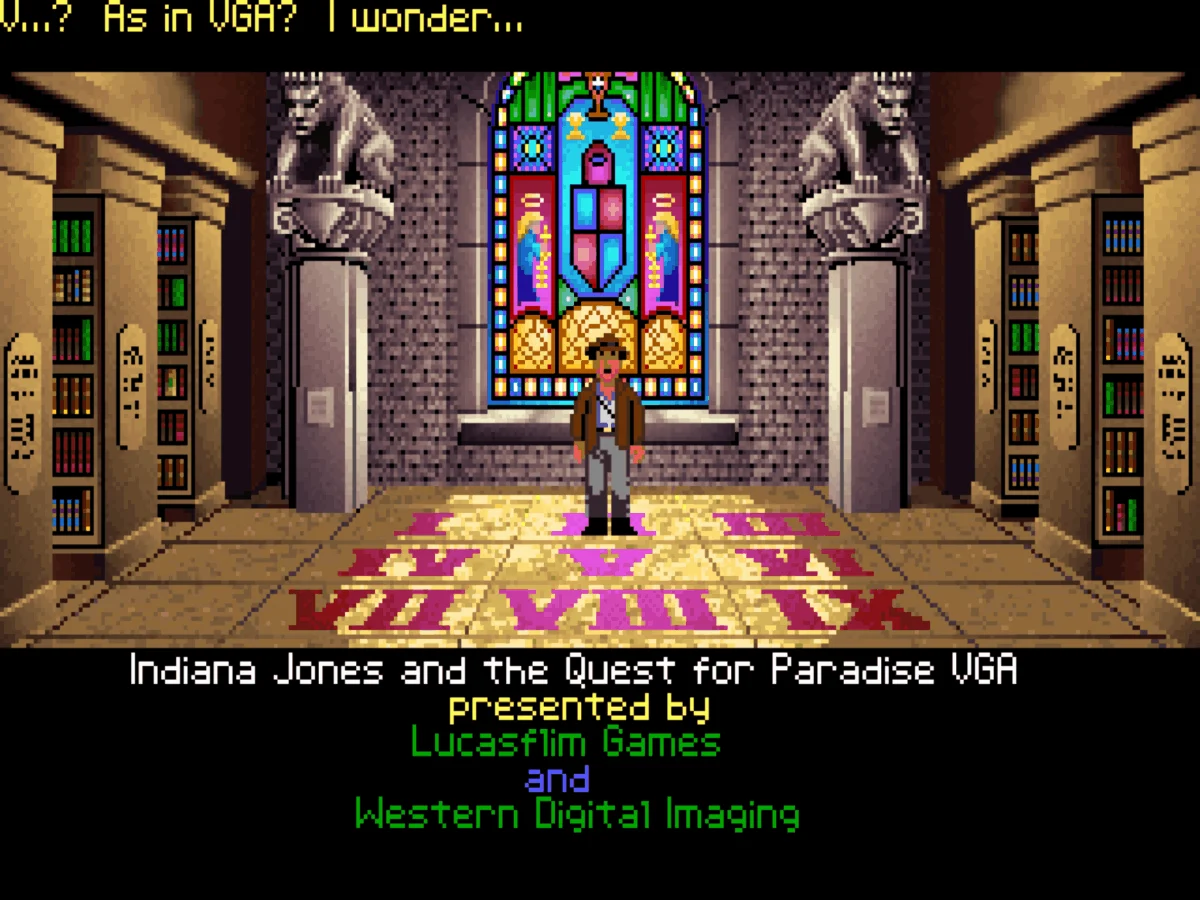
Preservationists have unearthed a rare and previously undocumented piece of interactive entertainment history from the late 1980s and early 1990s golden age of Lucasfilm Games. Deep within the personal archives of Aric Wilmunder—a pivotal software engineer and long-time custodian of the proprietary SCUMM (Script Creation Utility for Maniac Mansion) engine—researchers discovered a forgotten promotional demo titled Indiana Jones and the Quest for Paradise VGA.
The artifact sheds new light on a fascinating commercial intersection between pioneering PC hardware manufacturers and legendary software developers during the pivotal technological transition from 16-color EGA displays to 256-color Video Graphics Array (VGA) standards. While not a fully playable, interactive video game in the traditional sense, the discovery functions as a non-interactive animated digital artifact. It stitches together assets originally designed for Indiana Jones and the Last Crusade: The Graphic Adventure using the robust architecture of the SCUMM engine, providing historians and retro-gaming enthusiasts with a remarkable window into early 1990s software marketing and development pipelines.
The Technological Leap: From EGA to VGA
To understand the significance of Indiana Jones and the Quest for Paradise VGA, one must examine the state of personal computing in 1990. At the dawn of the decade, the standard display adapter for IBM-compatible personal computers was the Enhanced Graphics Adapter (EGA), which limited developers to a palette of 16 simultaneous colors out of a possible 64. While groundbreaking for its time, EGA graphics resulted in a distinct, highly dithered aesthetic that lacked the realism and depth demanded by increasingly ambitious graphical adventure games.
The introduction of the VGA standard by IBM in 1987 revolutionized computer graphics by supporting up to 256 colors on screen simultaneously at a resolution of 320×200, or higher resolutions with fewer colors. However, in 1990, VGA graphics cards remained an expensive luxury item. The vast majority of everyday IBM computer users had not yet upgraded their hardware, leaving developers in a difficult commercial dilemma: invest time and resources into creating high-end graphical versions for a nascent market, or continue targeting the ubiquitous installed base of lower-end systems.
Hardware manufacturers recognized that compelling software was the most effective vehicle to drive hardware adoption. Western Digital, a dominant force in PC storage and graphics hardware at the time, produced the "Paradise VGA" graphics card. To entice consumers to invest in the costly upgrade, Western Digital formed a lucrative strategic marketing partnership with Lucasfilm Games. The deal involved bundling a specialized 256-color VGA version of Indiana Jones and the Last Crusade directly with Western Digital’s Paradise VGA hardware packages.
A Clever Double-Dip: The Economic Realities of 1990s Development
The partnership proved remarkably efficient for Lucasfilm Games from a financial and developmental standpoint. Shortly before finalizing the Western Digital collaboration, Lucasfilm had been commissioned by Japanese electronics giant Fujitsu to develop exclusive 256-color versions of its flagship adventure titles for the FM Towns computer system.
Consequently, Lucasfilm’s development teams had already completed the costly, labor-intensive work of translating their 16-color asset libraries into lush, 256-color equivalents. Armed with these pre-existing high-fidelity assets, Lucasfilm was uniquely positioned to adapt the technology for the Western Digital VGA rollout. In effect, the studio was paid twice over to modernize its core graphics pipeline and internal SCUMM engine capabilities, capitalizing on the inevitable industry-wide shift toward VGA standards well before it became the universal baseline.

Unraveling the Mystery of the Lost Demo
Despite extensive analysis by modern preservationists, the precise intended distribution channel for Indiana Jones and the Quest for Paradise VGA remains shrouded in mystery. The discovered files comprise a self-running, non-interactive digital "movie"—effectively a scripted sequence of events rendered within the SCUMM game engine where the player has no agency or control over the protagonist’s actions.
Historians have proposed several theories regarding its original purpose. The artifact may have been engineered as a point-of-sale promotional loop to run on floor models inside computer retail outlets, designed to showcase the vivid color capabilities of Western Digital’s Paradise VGA cards to prospective buyers. Alternatively, it could have served as a flashy, attention-grabbing presentation reel for industry trade shows and press events.
However, the complete absence of contemporary physical diskettes, marketing collateral, or corporate documentation complicates these theories. If the demo had been widely distributed to retailers or trade show attendees, physical or digital copies surely would have surfaced in collector circles decades ago.
Compounding the mystery are distinct anomalies within the software itself. Throughout the entire presentation, the developer credit reads "Lucasflim Games," revealing a glaring, permanent typo in the company name. In a professional production environment intended for public consumption, such a prominent spelling error would almost certainly have been corrected before final release. This typo, combined with the total lack of internal documentation and the inability of interviewed former Lucasfilm staff members to recall working on the project, strongly suggests that the demo may have been an abandoned internal prototype or an unfinished proof-of-concept that was quietly shelved before it ever reached the public eye.
Preservation and Public Access
Recognizing the historical importance of the find, the archival team has secured and shared the artifact for public and academic study. The complete software files for Indiana Jones and the Quest for Paradise VGA have been uploaded to the Internet Archive, allowing researchers, programmers, and retro-gaming enthusiasts to examine the code and run the program on modern emulators. Additionally, a full video capture of the demo has been published online, allowing viewers to witness the forgotten promotional loop in motion.
This discovery underscores the fragility of digital history. Without the diligent efforts of modern archiving organizations and the preservation of personal records left behind by industry pioneers like Aric Wilmunder, pivotal artifacts detailing the evolution of interactive software engineering could be lost permanently to bit rot and discarded hardware.
Broader Implications for Gaming History and Software Conservation
The unearthing of Indiana Jones and the Quest for Paradise VGA offers valuable insights into the corporate strategies that shaped the golden age of PC gaming. During an era when proprietary software engines like SCUMM were tightly guarded corporate secrets, promotional tie-ins between hardware vendors and game developers served as crucial economic catalysts. They subsidized the high cost of technological transitions, enabling small creative teams to push graphical boundaries without bearing the entire financial risk alone.
Furthermore, the find highlights the ongoing necessity of institutional digital preservation. As early computer hardware and software continue to age, the physical media on which these programs were stored—ranging from magnetic floppy disks to early CD-ROMs—grows increasingly unstable. The recovery of transitional demos, abandoned prototypes, and internal documents provides scholars with a more nuanced, complete picture of how classic video games were conceptualized, funded, and marketed during the formative years of the personal computer industry.