Edi Durjana
The PlayStation 2, which launched in Japan in March 2000 before arriving globally later that year, stands as the best-selling video game console in history, shifting over 155 million units during its remarkable lifecycle. Engineered almost entirely from the ground up for compatibility with Cathode Ray Tube (CRT) televisions, Sony’s iconic sixth-generation hardware was fundamentally designed around analog video output constraints. Rather than conceptualizing graphics through fixed digital pixels and resolutions, the console’s hardware architecture relied heavily on scanlines, precise timing signals, and analog blanking intervals. Although an official Linux toolkit allowed developers to attach VGA monitors utilizing VESA display modes, this functionality remained an afterthought, and virtually no commercial titles capitalized on it.
To understand the engineering marvels and severe limitations of the PlayStation 2, industry analysts must examine its internal components—specifically the Graphics Synthesizer (GS) GPU and its dual Vector Units, VU0 and VU1. These processors formed a hardware pipeline that predated modern programmable geometry pipelines by nearly two decades, yet they operated under constraints that fundamentally dictated how games were coded, rendered, and displayed.
The 4MB eDRAM Bottleneck and the Quest for 60 Frames Per Second
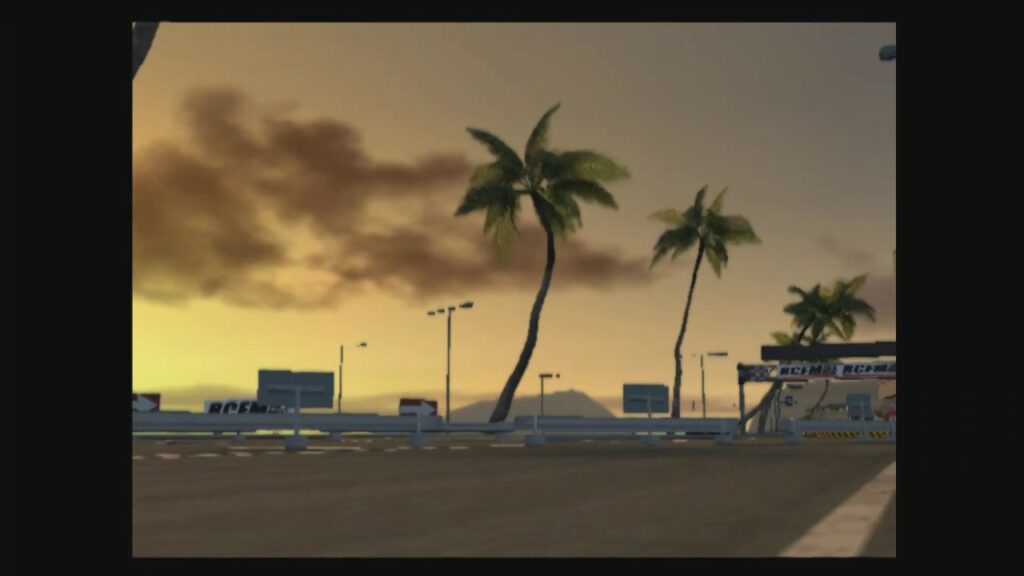
At the heart of the PlayStation 2’s graphics rendering pipeline was the Graphics Synthesizer, equipped with a mere 4MB of embedded DRAM (eDRAM). For hardware engineers in the early 2000s, fitting a standard 640×480 framebuffer into 4MB of memory presented a formidable challenge. While Sony famously instructed developers to treat the eDRAM as a high-speed scratchpad rather than traditional VRAM, developers still faced hard physical limits regarding render targets.
However, the GS compensated for its diminutive capacity with staggering memory bandwidth. Advanced rendering techniques such as alpha blending, multipass rendering, and framebuffer copies—operations that routinely crippled competing graphics processors of the era—were executed with minimal performance penalties on the PS2. Games like Driv3r pushed the GS in ways that would have brought contemporary PC GPUs to their knees. Furthermore, thanks to the fully programmable geometry pipeline enabled by the VU0 and VU1 coprocessors, the PS2 featured hardware-level geometry processing capabilities strikingly similar to mesh shaders introduced in NVIDIA’s GeForce RTX series nearly eighteen years later.
Despite these advanced capabilities, the memory restriction forced developers into a strict performance paradigm: maintaining a locked 60 frames per second (fps) in NTSC regions or 50 frames per second in PAL regions was not merely a design goal, but a technical necessity to prevent catastrophic visual artifacts.
Field Rendering Versus Frame Rendering: The Interlacing Compromise
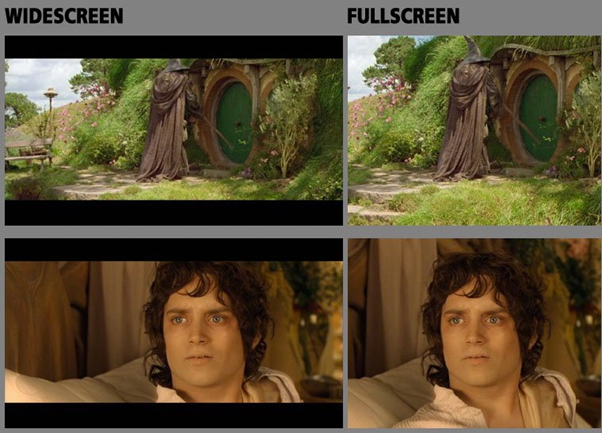
Sony’s early Software Development Kits (SDKs) heavily incentivized interlaced scanline modes, requiring a 60Hz refresh rate to achieve a 640×448 resolution. As development matured, engineers were given the choice between frame mode (rendering full, progressive frames) and field rendered mode (interlaced fields).
Field rendering offered an immediate, highly attractive solution to the 4MB eDRAM constraint. By outputting frames at 640×240 or even 512×224, the memory requirement per frame was cut cleanly in half. Render times plummeted, making it significantly easier for developers to hit a high-performing 60fps target.
Yet, this technique introduced a critical design caveat. Because CRTs naturally blended consecutive interlaced fields to construct a complete picture, any dropped frame—where the previous field had to be displayed twice—caused the entire image to vertically shift by a single scanline. To prevent this jarring visual stutter, developers programmed games to internally throttle their logic and drop frames when performance dipped, ensuring the output timing remained tightly synchronized with the 60Hz display cycle. Titles like SSX 3 utilized these scheduling tactics to preserve stability.

Conversely, frame mode rendered full-resolution images (640×448 or 512×448), increasing render times and making a consistent 60fps harder to maintain. However, frame mode proved more forgiving when hardware processing lagged; instead of erratic vertical shifting, the display simply repeated the second field of the previous frame.
This heavy reliance on CRT characteristics allowed the PlayStation 2 to mask its modest native output resolutions. It also explains why the platform boasted an unprecedented volume of 60fps titles, particularly at launch. While competitors like the Nintendo GameCube and the original Microsoft Xbox often experienced fluctuating framerates, PS2 titles maintained rigid frame-pacing discipline to appease analog display hardware.
Overcoming the "Jaggies" and Print Media Misconceptions
During the system’s 2000 launch window, critics frequently lambasted PlayStation 2 software for severe jagged edges ("jaggies") and a general lack of anti-aliasing, especially when compared to Sega’s Dreamcast. Technical historians note, however, that much of this criticism was exacerbated by the limitations of contemporary gaming journalism.
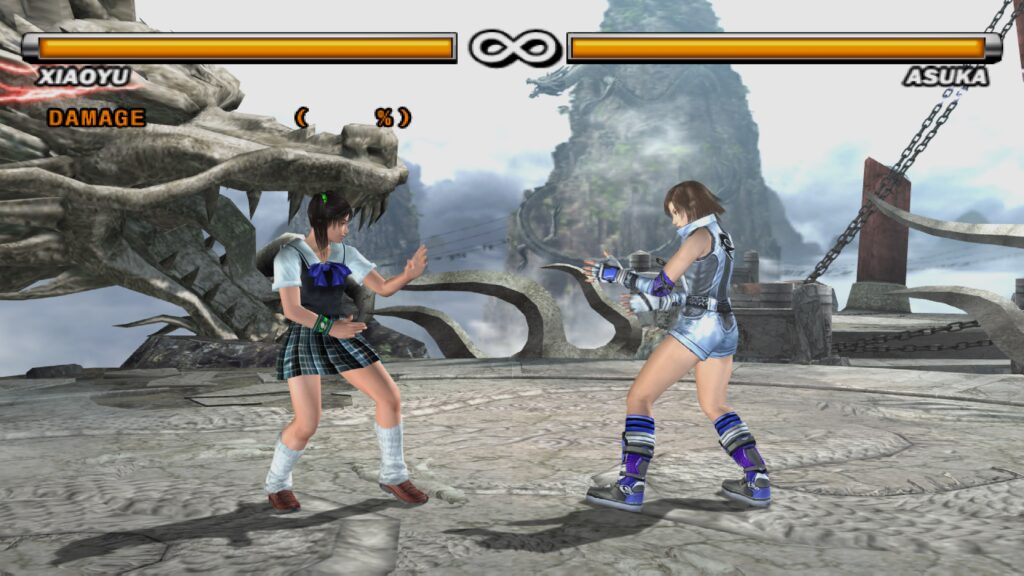
Print magazines and media outlets of the era relied on single-frame capture hardware for screenshots. Because the PS2 frequently utilized interlaced field rendering, capturing a single frame yielded only the odd or even scanlines, rather than the fully blended image perceived by the human eye viewing a CRT. Consequently, magazine pages displayed exaggerated visual artifacts that did not accurately reflect the real-world gaming experience. Combined with the low native resolutions required by the 4MB eDRAM, these technical quirks fueled widespread misconceptions about the console’s graphical fidelity.
The Widescreen Transition: Vert- vs. Hor+ Aspect Ratios
The PlayStation 2 arrived during a transitional era in home entertainment, serving simultaneously as a revolutionary video game console and one of the world’s most popular DVD players. As anamorphic widescreen movies popularized 16:9 displays, widescreen CRT televisions began entering the mainstream consumer market between 2001 and 2005.
While early consoles were built entirely around 4:3 aspect ratios, the growing demand for widescreen support forced developers to adapt. On the PS2, widescreen game implementation generally fell into three categories, with the vast majority of titles opting for the least optimal approach: Vert- (Vertical Minus).
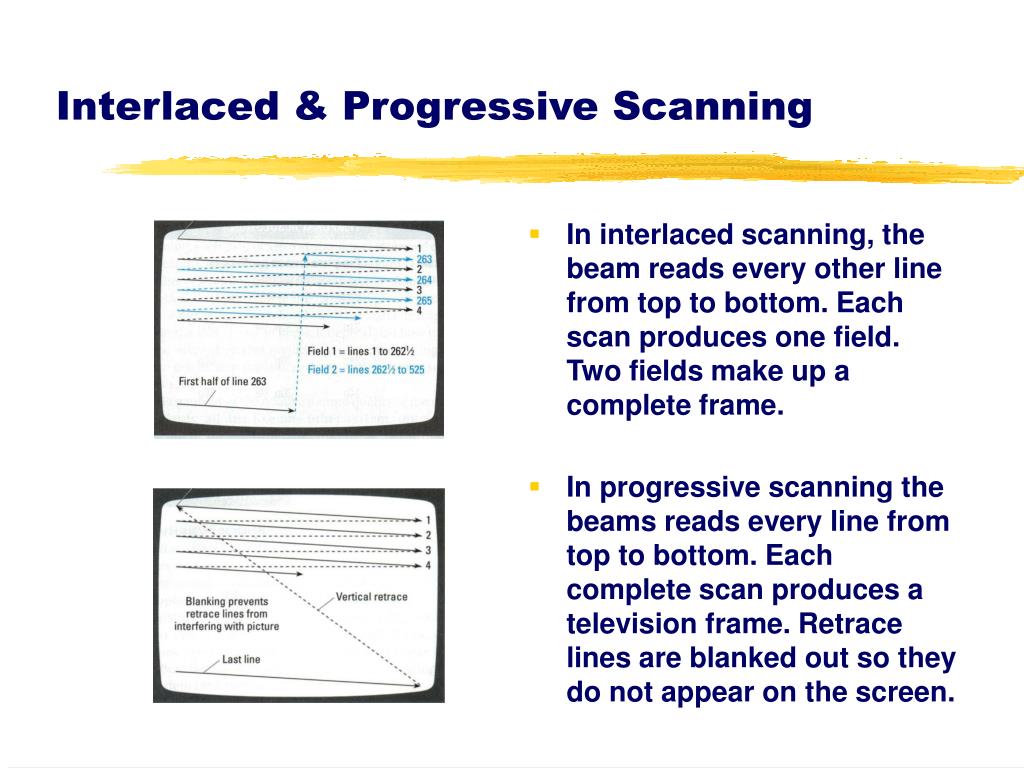
In a Vert- implementation, the engine renders a standard 4:3 image, crops away the top and bottom portions of the frame that developers deemed non-essential to gameplay, and digitally zooms in on the center to fill a 16:9 display. Acclaimed titles such as Tekken 5, alongside entries in the Ratchet & Clank and Jak and Daxter series, utilized Vert- formatting. For players using widescreen CRT sets, characters often appeared artificially enlarged due to the vertical cropping.
Executing a proper Hor+ (Horizontal Plus) widescreen mode—where the camera field of view expands horizontally without cropping—demanded significantly more system resources and eDRAM management. Because horizontal stretching required higher horizontal resolutions to maintain pixel clarity, and because scaling was computationally "free" on the Graphics Synthesizer, Vert- remained the path of least resistance for developers constrained by hardware limits.
Progressive Scan and the High-Definition Prelude
As the CRT market matured near the end of its commercial lifespan, display manufacturers introduced Enhanced Definition Television (EDTV) standards, enabling support for 480p and 576p progressive scan signals. Released around 2001, these displays required specialized connections—component cables for NTSC systems, or RGB SCART cables in European and Japanese markets—to bypass traditional interlacing.
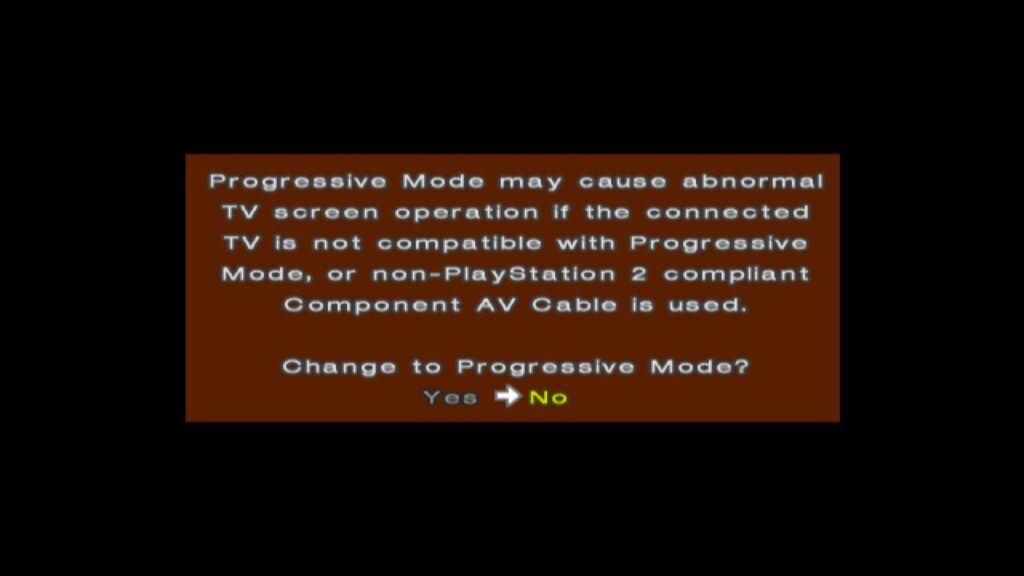
By holding specific controller inputs at boot, users could prompt compatible PS2 games to run in non-interlaced progressive scan. While this eliminated interlacing artifacts entirely, some developers still had to reduce framebuffer color depth to 16 bits per pixel (bpp) to fit within the 4MB eDRAM, occasionally introducing noticeable color banding.
Notably, select software titles like Gran Turismo 4 and Valkyrie Profile 2 advertised high-definition 1080i output modes. Technical post-mortems reveal that these modes were clever engineering workarounds rather than true native high definition. Gran Turismo 4, for instance, rendered internally at 640×540 before utilizing the GS Cathode Ray Tube Controller (CRTC) to magnify the image horizontally by an integer factor of 3 and vertically by a factor of 2, achieving a 1920×1080 output signal that satisfied period-accurate display expectations.
The Regional Divide: PAL, NTSC, and the 50Hz Dilemma
European consumers faced distinct hurdles due to the dominance of PAL broadcast standards, which operated at 50Hz compared to the 60Hz NTSC standard used in Japan and North America. While competing systems like the Sega Dreamcast quickly embraced PAL60 options to preserve frame rates, Sony initially declined to establish PAL60 as a mandatory standard for the PS2.

Consequently, early European PS2 software was locked to 50Hz, resulting in a 16.9% reduction in framerate and heavy letterboxing caused by PAL’s higher vertical line count. While UK-based developers such as Psygnosis and Core Design optimized their titles by rendering additional scanlines for PAL displays, the underlying frame rate penalty remained.
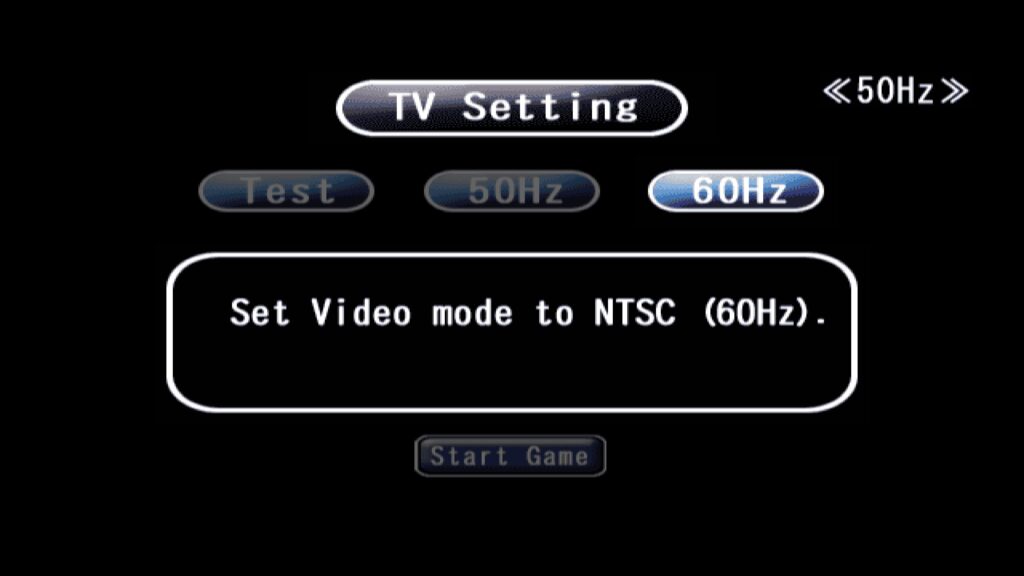
By 2002, software publishers began incorporating manual 50Hz/60Hz toggles at startup. However, due to the technical complexity of mastering full-motion video (FMV) cutscenes for both refresh rates within DVD storage limits—noted by publishers like Square with Final Fantasy X—complete harmonization across regions remained elusive throughout the platform’s early years.
The Shift to LCD Displays and Modern Preservation
The mid-2000s commercial pivot from analog CRT technology to digital LCD High-Definition televisions marked a turbulent era for retro hardware preservation. When paired with early LCD panels characterized by high input latency, ghosting, and pixel response times, analog-native consoles like the PlayStation 2 suffered severe visual degradation. Motion blur effects, once smoothly blended by the phosphor persistence of a CRT, smeared hideously across early flat-panel screens.
For decades, bridging the gap between analog console architecture and digital display technology remained a formidable challenge for enthusiasts. However, modern advancements in emulation and hardware scaling—including specialized GPU shaders and CRT beam-racing simulators pioneered by preservation groups—have successfully restored the low-latency response times and motion clarity of vintage CRTs on contemporary OLED panels.
Ultimately, the PlayStation 2’s technical legacy is inextricably linked to the analog display technology it targeted. By wringing unprecedented performance out of restricted memory and strict timing windows, Sony’s landmark hardware defined an era of interactive entertainment whose engineering brilliance continues to be analyzed by modern systems architects.