Arya Paningal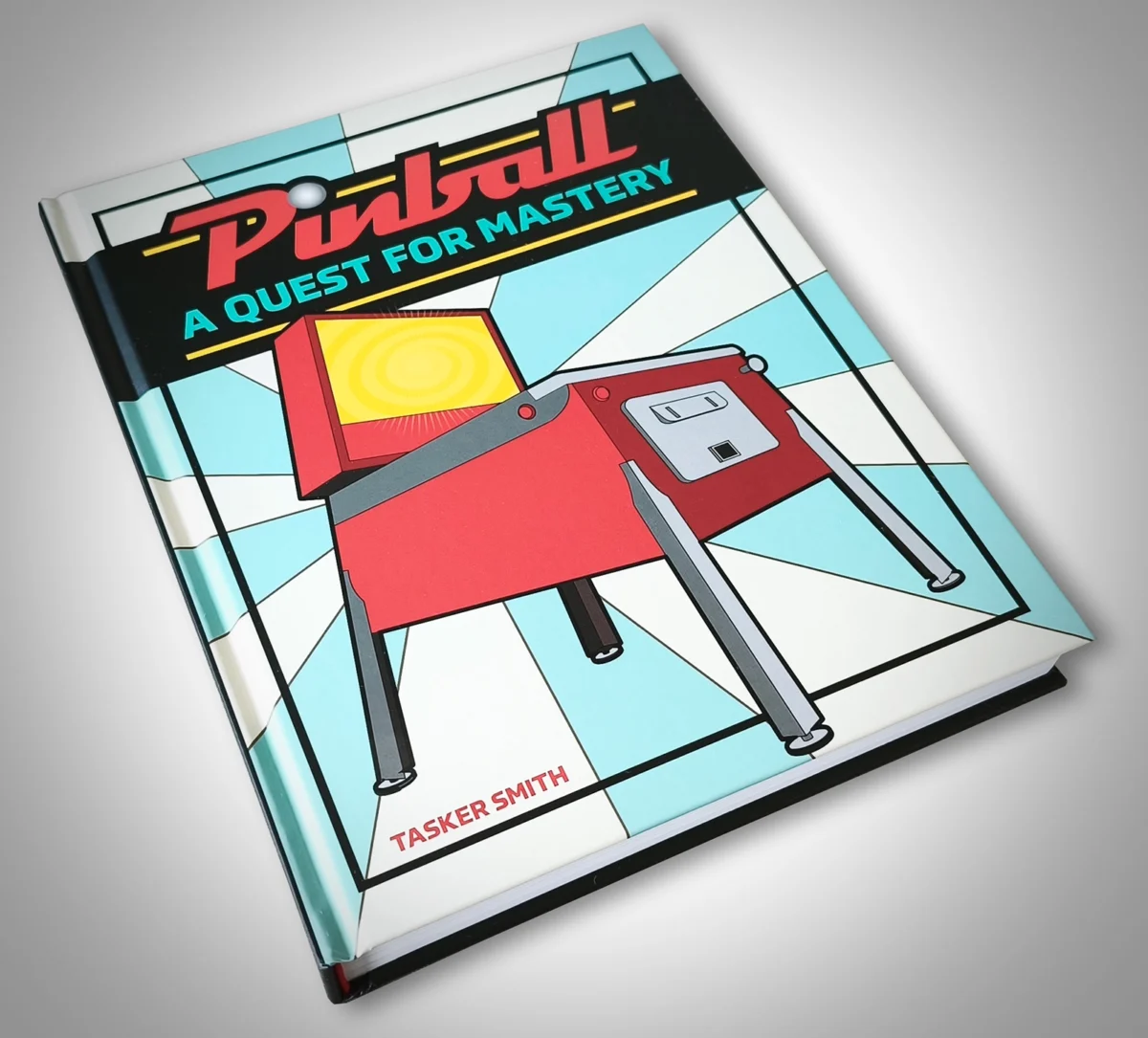
The release of Pinball: A Quest for Mastery, authored by Boston University technical educator Tasker Smith, marks a significant moment in the documentation of arcade gaming culture. Published by Schiffer Publishing, the 256-page hardback serves as a comprehensive manual for those looking to transition from casual hobbyists to high-level competitors. Released in the United States on July 28, the volume arrives at a time when interest in competitive pinball is undergoing a global resurgence, evidenced by the growth of leagues and the sophistication of modern tournament circuits.

A Technical and Historical Foundation
The book is structured into four distinct parts, mirroring the progression from historical understanding to advanced performance metrics. Smith begins by grounding the reader in the origins of the game, acknowledging the inevitable connection to the 18th-century French parlor game, Bagatelle. While this history is well-trodden ground, Smith contextualizes these early iterations with the mechanical breakthroughs that defined the modern experience.
Chronologically, the narrative moves through the pivotal patent for the spring-loaded plunger by Montague Redmond, which allowed for the first standardized gameplay mechanic. This foundation is essential for understanding the transition to player-operated flippers, specifically the landmark introduction of the Gottlieb Humpty Dumpty machine in 1947. Smith’s analysis tracks the evolution of scoring systems from simple illuminated backglass numbers to the complex digital and LCD-based displays found in contemporary Stern or Jersey Jack machines. By establishing this timeline, the book provides the reader with a fundamental understanding of how machine architecture directly influences player strategy.

The Anatomy of the Machine
Beyond historical data, the text provides a rigorous examination of the physical components of a pinball machine. For the uninitiated, this section demystifies the playfield, explaining the roles of slingshots, drop targets, ramps, and orbit lanes. While seasoned players may find some of these details familiar, the author provides a fresh perspective on how these features, often taken for granted, dictate the velocity and trajectory of the ball.
The book’s emphasis on ball control is arguably its most practical contribution to the medium. Smith outlines the mechanics of trapping, post-passing, and dead-flipping, providing illustrative diagrams that break down complex kinetic paths. In an era where digital tutorials and video content dominate, the use of static illustrations is an interesting pedagogical choice. While some readers might find the lack of video integration a challenge, the diagrams offer a clear, geometric representation of velocity and spin that players can reference during practice sessions.

Competitive Evolution and Tournament Strategy
Part Two of the publication shifts focus toward the competitive landscape. As an active participant in the New England Pinball League, Smith draws upon his personal experience to delineate the nuances of league play and tournament organization. This section serves as an essential primer for those interested in the International Flipper Pinball Association (IFPA) rankings or local league hierarchies.
The text goes beyond mere rule sets, addressing the professional etiquette required in a tournament setting. From managing the stress of a high-stakes match to the proper decorum following a loss, Smith attempts to professionalize the sport, elevating it from a simple game of chance to a disciplined athletic endeavor. This section also underscores the importance of pre-game preparation: analyzing the specific machine’s condition, understanding the ruleset, and establishing a clear, tactical objective for every ball played.

The Psychology of the Flow State
Perhaps the most ambitious aspect of Pinball: A Quest for Mastery is its deep dive into the psychological components of gameplay. Smith introduces the concept of the "flow state"—a psychological state of optimal experience where a player becomes fully immersed in the machine, and external distractions are effectively filtered out.
This is not merely a theoretical discussion; the book provides actionable steps for achieving this state, including relaxation techniques and environmental awareness. Smith addresses the physiological demands of a tournament, discussing the impact of nutrition, hydration, and sleep on hand-eye coordination and decision-making speed. By framing pinball as a performance sport that requires peak cognitive and physical condition, Smith aligns the hobby with broader trends in eSports and traditional athletics.

Broader Implications for the Industry
The publication of this book reflects the ongoing professionalization of pinball. As the market for premium home machines continues to expand, and as tournament prize pools increase, there is a growing demand for literature that moves beyond "how-to" tips and into the realm of advanced strategy and mental conditioning.
The book’s appendices provide a global perspective on the community, listing major museums, venues, and resources across the United States, Europe, Australia, and Canada. This reinforces the idea that pinball is a global community with a shared language and set of skills. The inclusion of a detailed glossary of pinball jargon further ensures that the text remains accessible to newcomers while providing a standard reference point for terminology that has historically been inconsistent across different regions.

Practical Information and Availability
Schiffer Publishing has ensured the physical quality of the book matches the depth of its content. With its rigid card stock and high-quality matte paper, the 256-page volume is designed for longevity—a necessary feature for a reference guide that is intended to be consulted frequently.
For those interested in obtaining a copy, the book is currently available through Schiffer Books in the United States at a retail price of $34.99. International distribution is currently rolling out, with pre-order options available in the UK via the PaperBack Shop at a discounted rate.

Author Tasker Smith has also announced plans to participate in the upcoming Pinball Expo, scheduled for October 14th through 17th at the Schaumburg Convention Center. This event, which attracts thousands of enthusiasts, collectors, and industry professionals, will provide a platform for readers to interact with the author and gain firsthand insights into the methodology presented in the book.
Conclusion
Pinball: A Quest for Mastery stands as a comprehensive, well-researched, and thoughtfully structured resource for the modern pinball player. By successfully synthesizing the history, mechanics, and psychology of the game, Tasker Smith has created a work that elevates the discourse surrounding the sport. While the results of implementing these strategies will inevitably vary from player to player, the book provides a robust framework for improvement. Whether one is aiming for a top-tier IFPA ranking or simply looking to understand the complex systems behind their favorite machine, this book serves as an essential guide to the pursuit of mastery. As the arcade scene continues to evolve, literature of this caliber will likely become a cornerstone for both new players and seasoned veterans looking to refine their craft in an increasingly competitive environment.