Ganda Hendra Perkasa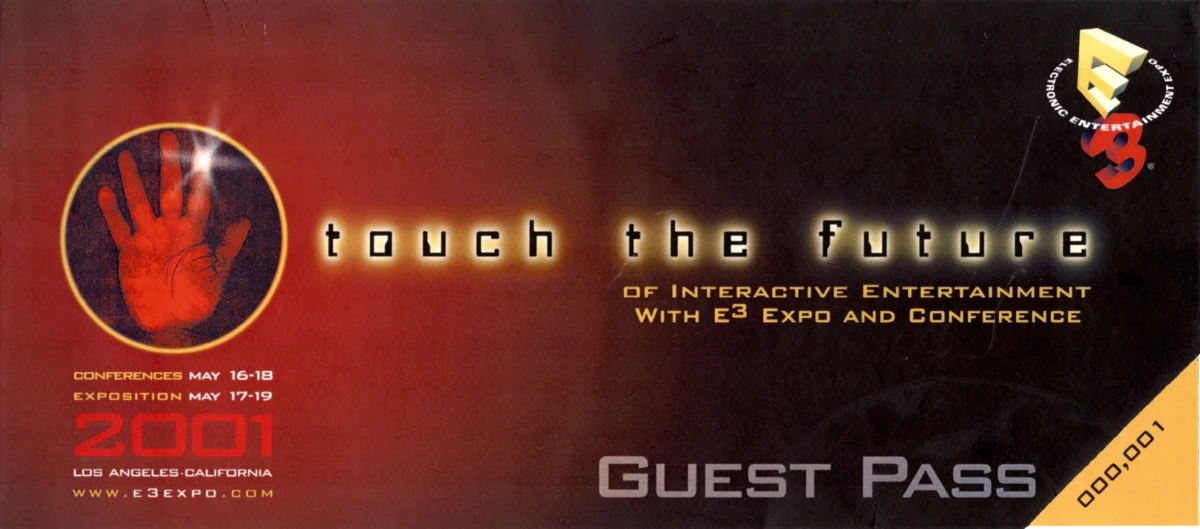
For over two decades, the Electronic Entertainment Expo—universally known as E3—served as the undisputed heartbeat of the global video game industry. Founded in 1995 by the Interactive Digital Software Association (IDSA, now the Entertainment Software Association) and Infotainment World, the annual trade show grew from a modest industry gathering into a multi-day cultural spectacle. It was a high-stakes arena where technological leaps were unveiled, multi-million-dollar marketing strategies were deployed, and the future of digital entertainment was shaped before a global audience of journalists, developers, and fans.
Now, as the medium grapples with the permanent void left by the event’s final cancellation, the Video Game History Foundation (VGHF) has stepped forward to ensure that this monumental era is not lost to time. This week, the foundation announced the launch of multiple expansive new collections within its digital archive, offering unprecedented, free public access to thousands of pages of historical documents, rare convention ephemera, and hours of foundational video footage detailing the history of E3 from its inception through its twilight years.
From Consumer Electronics Show Offshoot to Cultural Phenomenon
To fully understand the gravity of the VGHF’s archival expansion, one must look at the landscape of the American technology sector prior to 1995. Before the establishment of E3, interactive entertainment manufacturers did not command their own dedicated convention space. Instead, video game developers and hardware makers were forced to exhibit their products at the Consumer Electronics Show (CES).
At CES, video games were treated as ancillary novelties, sharing crowded floor space with commercial cameras, home audio systems, kitchen appliances, and karaoke machines. By the mid-1990s, the video game industry was undergoing explosive economic and cultural growth, transitioning from 16-bit cartridges to advanced 3D CD-ROM systems. Industry leaders grew increasingly frustrated by the low-key, dismissive treatment they received at CES. Recognizing that video games had matured into a distinct cultural force requiring dedicated institutional reverence, the IDSA spearheaded the creation of a trade show explicitly for interactive entertainment.
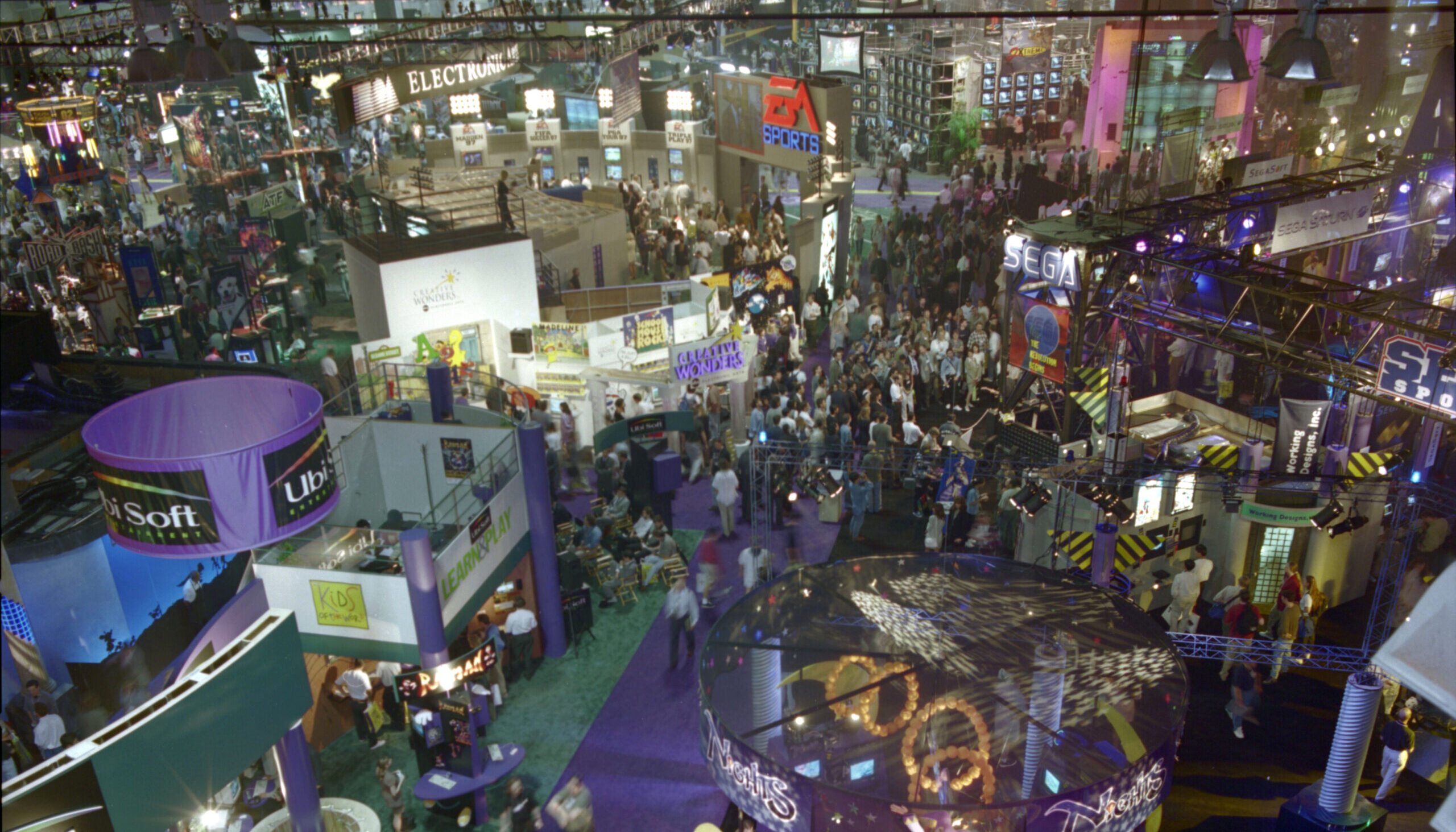
The gamble paid off immediately. E3 quickly became a larger-than-life marketing engine, celebrated for its flamboyant booths, theatrical press conferences, and relentless media blitzes. It established Los Angeles as the temporary capital of the gaming world every June, transforming the Los Angeles Convention Center (LACC) into a sensory overload of corporate pageantry.
The Carolyn Rauch Event Ephemera Collection: Behind the Scenes of a Colossus
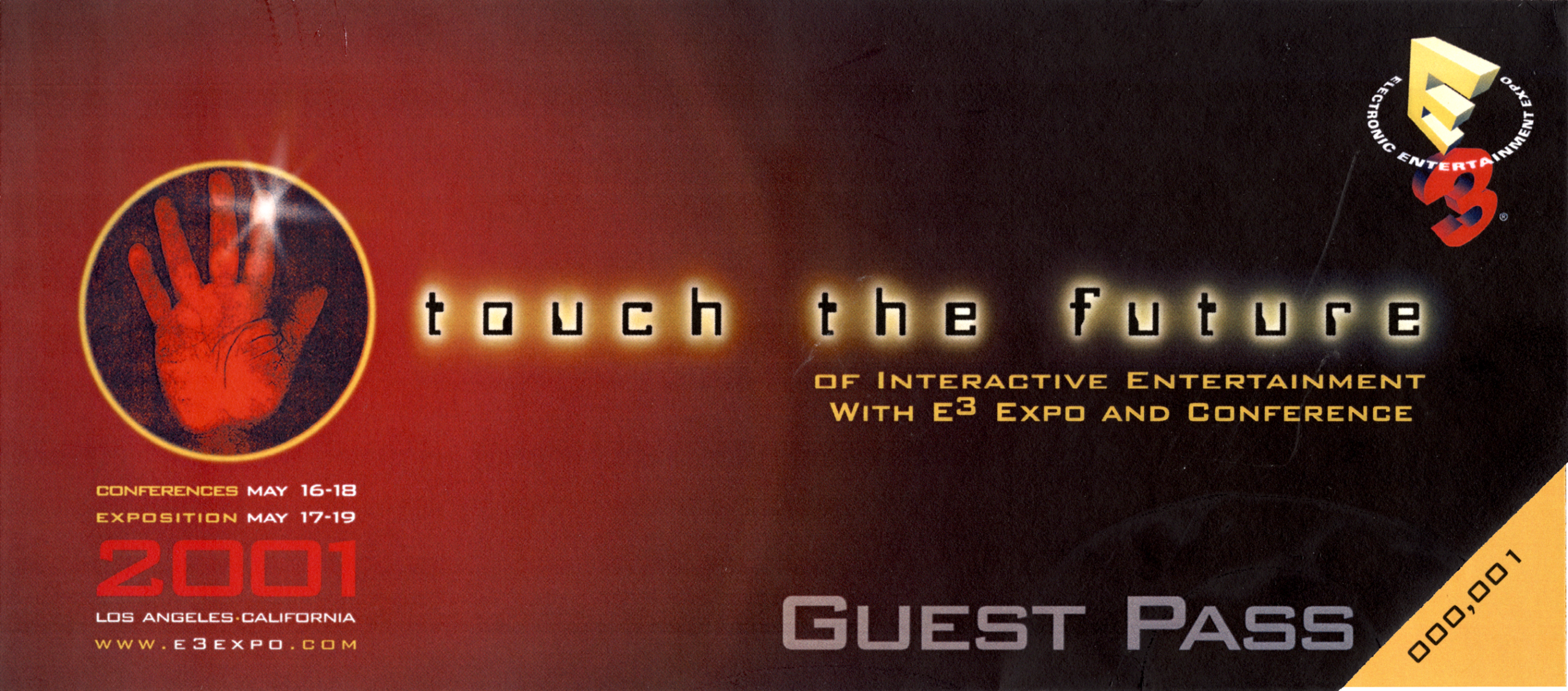
At the core of the VGHF’s new archival release is the Carolyn Rauch event ephemera collection. Donated by Carolyn Rauch, a founding IDSA member who served as Senior Vice President and oversaw E3’s operations for nearly its entire active run, the collection houses over 1,000 pages of historical artifacts. The materials span from 1996 to 2011 and include critical documentation from related industry fixtures such as the E for All expo and the Game Marketing Summit.
Rauch’s meticulously preserved archive provides researchers with an unvarnished look at the logistical tightrope required to run a convention of that magnitude. It balances the intense public fervor surrounding video games with the cold, calculated professional demands of corporate exhibitors and advertisers. The collection features rare press kits, promotional flyers, brochures, panel transcripts, official industry reports, and comprehensive event photography.
Furthermore, the archive sheds light on lesser-known operational periods, including documents from the E3 Media & Business Summit held in 2007 and 2008. These exclusive, invitation-only gatherings represented a brief, scaled-down departure from the colossal public trade shows—a strategic pivot intended to refocus the event on hard business metrics away from the consumer chaos. Historians now have unprecedented access to the internal mechanics of these elusive corporate retreats.
The Anthony Parisi Tapes and Early Show-Floor Realities
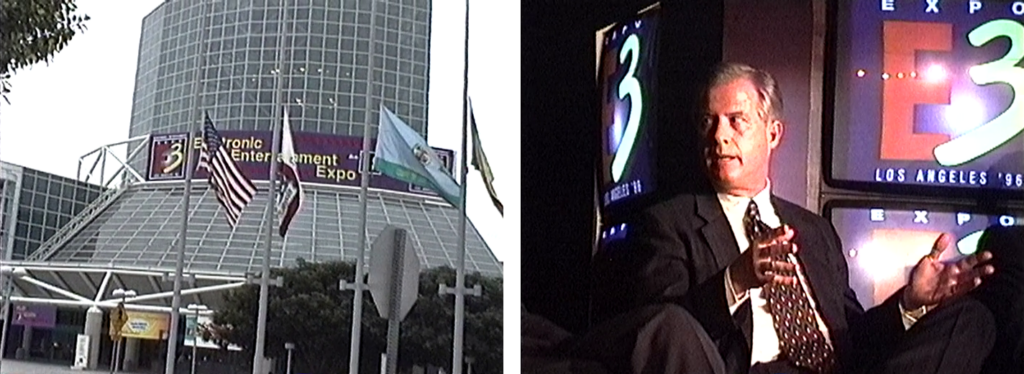
Complementing the paper ephemera is a massive audiovisual donation from Anthony Parisi, who attended the first four E3 conventions armed with a personal camcorder. Parisi has officially transferred the copyrights of his extensive video collection to the VGHF, enabling the foundation to redigitize nearly 12 hours of raw footage capturing the foundational years of the event.
These tapes transport viewers back to the mid-1990s, capturing the palpable excitement of attendees experiencing watershed titles—such as Super Mario 64 and Castlevania: Symphony of the Night—long before they ever reached retail shelves. More importantly, Parisi’s recordings preserve some of the only known audiovisual records of early E3 keynote speeches and industry press conferences. Viewers can witness historic milestones unfold in real time, including the surprise, preemptive launch of the Sega Saturn and Sony’s legendary, mic-drop announcement establishing a $299 price point for the original PlayStation.
Expanding the Historical Record: Directories, Dailies, and Rare B-Roll
In addition to the Rauch and Parisi acquisitions, the VGHF has completed the digitization of its exhaustive E3 directory book collection, spanning from 1995 to 2006. Comprising roughly 2,500 pages, these directories feature complete floor plans, exhibitor lists, and presentation schedules, offering architectural blueprints of how the industry organized itself year by year.
The digital archive also welcomes new scans of the E3 Show Daily from 1995 and 1997. Published on-site during the convention, these daily newspapers provided breaking industry news, exhibitor profiles, and a glimpse into after-hours corporate networking and local nightlife that traditional gaming journalism frequently overlooked. With these additions, the VGHF’s repository now houses over 1,500 pages of daily reporting from the expo’s history.
For media researchers, the foundation has cataloged assorted event videos from defunct entities such as Subspace Publishers and Tronix Multimedia. Notably, an archival tape from Atari Explorer Online features an exclusive 1995 interview with cult developer Jeff Minter regarding Defender 2000. Additionally, the collection incorporates press B-roll footage distributed by Nintendo and Sony between 1995 and 1998, highlighted by an unprecedented, high-quality 90-second glimpse of Rareware’s famously unreleased Nintendo 64 project, Conker’s Quest.
Firsthand Accounts: Perspectives From the Architects of E3
To contextualize these archival treasures, the Video Game History Foundation hosted Carolyn Rauch and IDSA founder Doug Lowenstein for a joint interview on the Video Game History Hour podcast—marking what is believed to be the first time the two key architects have sat down together publicly to discuss the genesis of E3.
Mary Dolaher, the long-standing event director of E3 and eventual CEO of IDG World Expo, who managed the convention’s grueling ground-level operations for more than twenty years, offered reflective insight into the physical reality of running the massive enterprise:
"I was responsible for the day-to-day operations of E3 from its inception to its demise," Dolaher reflected. "I oversaw every detail of the event, from rolling the carpet to hanging tanks from the ceiling to making sure garbage cans were placed correctly… The stories are too numerous to recount: power outages on day one, limo drivers fighting in front of the Los Angeles Convention Center, Marines rappelling down the side of the building, shutting down booths that refused to comply with noise rules, disarming rap stars who wanted to attend, wrangling celebrities and their kids."
Dolaher emphasized the all-encompassing nature of the convention culture, noting that corporate marketing extended far beyond the LACC into surrounding hotels, transit networks, and city streets through bus wraps, elevator graphics, and avant-garde art installations. She also highlighted the expo’s philanthropic and cultural initiatives, particularly its annual collaboration with the Make-A-Wish Foundation and the groundbreaking Into the Pixel art exhibition, which elevated video game graphics into the realm of recognized fine art.
Implications for Academic Research and Industry Preservation
The permanent discontinuation of E3 left a structural vacuum in the video game industry’s annual marketing calendar, prompting publishers to pivot toward fragmented, digital-only direct-to-consumer digital broadcasts such as Nintendo Direct and Sony’s State of Play. However, these modern digital showcases lack the physical convergence, serendipity, and tangible cultural impact that defined the convention era.
By centralizing these primary source documents, business records, and candid floor recordings, the VGHF’s newly enriched digital archive transforms E3 from a fleeting nostalgic memory into a rigorously preserved academic subject. The initiative provides scholars, journalists, and historians with the empirical foundation necessary to analyze how the business of interactive entertainment scaled, marketed itself, and captured the global imagination at the turn of the 21st century.
The Video Game History Foundation has indicated that it will continue rolling out additional collection highlights, archival scans, and retrospective essays from industry veterans in the coming weeks. Researchers and enthusiasts can explore the fully searchable repository directly through the VGHF digital archive portal.