Edi Durjana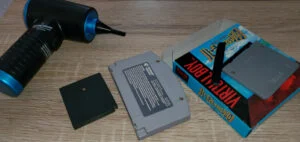
The open-source emulation ecosystem Libretro has officially released a groundbreaking utility core titled ROM Cleaner, developed by core contributor Jesse Talavera. Designed specifically for the widely utilized RetroArch frontend, the tool targets the emerging problem of digital data degradation in retro gaming ROM backups. While RetroArch is traditionally celebrated for its capacity to emulate classic hardware ranging from fourth-generation consoles to modern handhelds, the introduction of ROM Cleaner marks a significant pivot toward preventative maintenance and digital preservation. Available immediately through the built-in RetroArch core downloader on supported platforms, the utility addresses a niche yet persistent issue within digital archiving: the accumulation of virtual debris and environmental wear on older file dumps.
Background Context of Digital Preservation and Media Degradation
For decades, the retro gaming community has grappled with the physical decay of vintage gaming hardware and media. Magnetic tape in cartridges degrades, optical discs succumb to layer separation and rot, and volatile flash memory in older cartridges eventually loses its electrical charge. However, as retro gaming transitioned from physical cartridge hoarding to digital emulation and ROM preservation, archivists discovered that digital files are not entirely immune to entropy.
While digital bits do not rust in the traditional sense, poorly managed storage media, faulty file transfers, and bit rot can corrupt game files over time. In response to these challenges, preservationists have historically relied on checksum verification tools, such as GoodTools and redump sets, to ensure file integrity. Despite these advancements, the human element—specifically the nostalgic ritual of physical maintenance—has been largely absent from the digital landscape. In the era of physical cartridges, players routinely blew into connector slots to clear accumulated dust and debris. Talavera’s ROM Cleaner translates this tactile, albeit scientifically debated, historical ritual into the digital architecture of modern emulation.
Technical Mechanics and Core Functionality
According to the official release documentation provided by Talavera, ROM Cleaner operates as a specialized Libretro core rather than a standard standalone application. This integration allows users to load a corrupted or non-bootable ROM directly through RetroArch, applying the utility to sanitize the file.
The mechanism behind ROM Cleaner leverages hardware features that have become increasingly common on modern emulation devices, including handhelds, smartphones, and desktop PCs. Specifically, the utility requires access to a connected microphone. According to the developer’s operational overview, users must utilize a microphone and vocal exertion to actively purge accumulated "digital dust" from the file headers and data streams. By simulating the physical cleaning process of vintage cartridges through audio-input interaction, the utility ostensibly restores compromised backups to a functional state.
This inventive approach builds upon Talavera’s previous contributions to the Libretro ecosystem. Over the past several years, Talavera has established a reputation for developing complex software integrations, including work on the melonDS DS core, the McSoftServe project, and various functional improvements to RetroArch, such as native microphone support and XDelta softpatching protocols. The implementation of microphone-based utility processing in ROM Cleaner directly utilizes these earlier audio-handling infrastructure updates within RetroArch.
Chronology of Development and Release
The development of ROM Cleaner was conducted largely behind closed doors, diverging from the open-source community’s typical transparent staging processes.
Phase 1: Conceptualization and Prototyping
Following the integration of advanced microphone and audio-processing capabilities into the RetroArch frontend, developers began exploring non-traditional use cases for hardware peripherals within emulation environments. Talavera conceptualized a utility that could bridge the gap between physical maintenance rituals and digital file structures.
Phase 2: Internal Testing and Integration
During late 2024 and early 2025, the tool underwent closed testing to ensure compatibility across various Libretro-supported platforms. Engineers focused on ensuring that the microphone-input triggers could interface cleanly with standard ROM file formats without introducing permanent file corruption.
Phase 3: Public Deployment
On March 5, 2025, Libretro officially announced the availability of the utility. The core was pushed directly to the official RetroArch core downloader infrastructure, making it globally accessible to end-users across Windows, Linux, macOS, Android, and various dedicated handheld operating systems.
Industry Reactions and Community Response
The release of ROM Cleaner has generated substantial discussion across emulation forums, social media platforms, and digital preservation boards. Given the timing of the announcement—coinciding closely with traditional spring-cleaning periods and historical technology announcements—observers have noted the tongue-in-cheek nature of the utility.
While veteran archivists recognize the playful nod to the classic, albeit technically discouraged, practice of blowing into Nintendo Entertainment System cartridges, software developers have praised the technical ingenuity required to route microphone input data into a file-sanitizing core. The ability to seamlessly execute auxiliary software tasks within the standardized Libretro API demonstrates the remarkable flexibility of the RetroArch framework.
Furthermore, community feedback highlights a growing appreciation for projects that inject humor and nostalgia into the often dry, highly technical field of digital emulation. Users across Reddit and the Libretro forums have reported testing the core on notoriously stubborn ROM backups, praising the interactive nature of the file-cleaning process.
Broader Impact and Implications for Digital Emulation
The launch of ROM Cleaner highlights several important trends in contemporary software development and retro gaming preservation:
-
Expansion of Utility Cores: Traditionally, Libretro cores are strictly defined as hardware emulators (such as Genesis Plus GX or Snes9x). The introduction of non-emulation utility cores—such as ROM Cleaner and previous productivity or media tools—signals a broadening definition of what an emulation frontend can achieve. RetroArch is increasingly positioning itself as a universal operating environment for legacy digital media.
-
Integration of Native Hardware Peripherals: By utilizing microphones, cameras, and motion sensors, modern emulation projects are finding innovative ways to blend physical world interactions with digital software execution. This reduces the friction between the user and the software, creating more engaging and tactile experiences.
-
Preservation of Culture Over Pure Science: While professional data archivists rely on rigorous cryptographic hashing (such as MD5 and SHA-1) to verify file integrity, consumer-facing emulation communities often prioritize accessibility, nostalgia, and engagement. ROM Cleaner successfully bridges this gap, offering a tool that is scientifically amusing while remaining fully integrated into the standard user workflow.
As digital preservation efforts face ongoing challenges from format shifting, proprietary storage degradation, and shifting software dependencies, projects like ROM Cleaner ensure that the culture surrounding classic video games remains vibrant and accessible. Libretro and contributors like Jesse Talavera continue to demonstrate that maintaining yesterday’s technology can be both a technical necessity and an engaging community experience. Users interested in testing the utility can access the core downloader within RetroArch immediately to update and sanitize their digital libraries.