Ganda Hendra Perkasa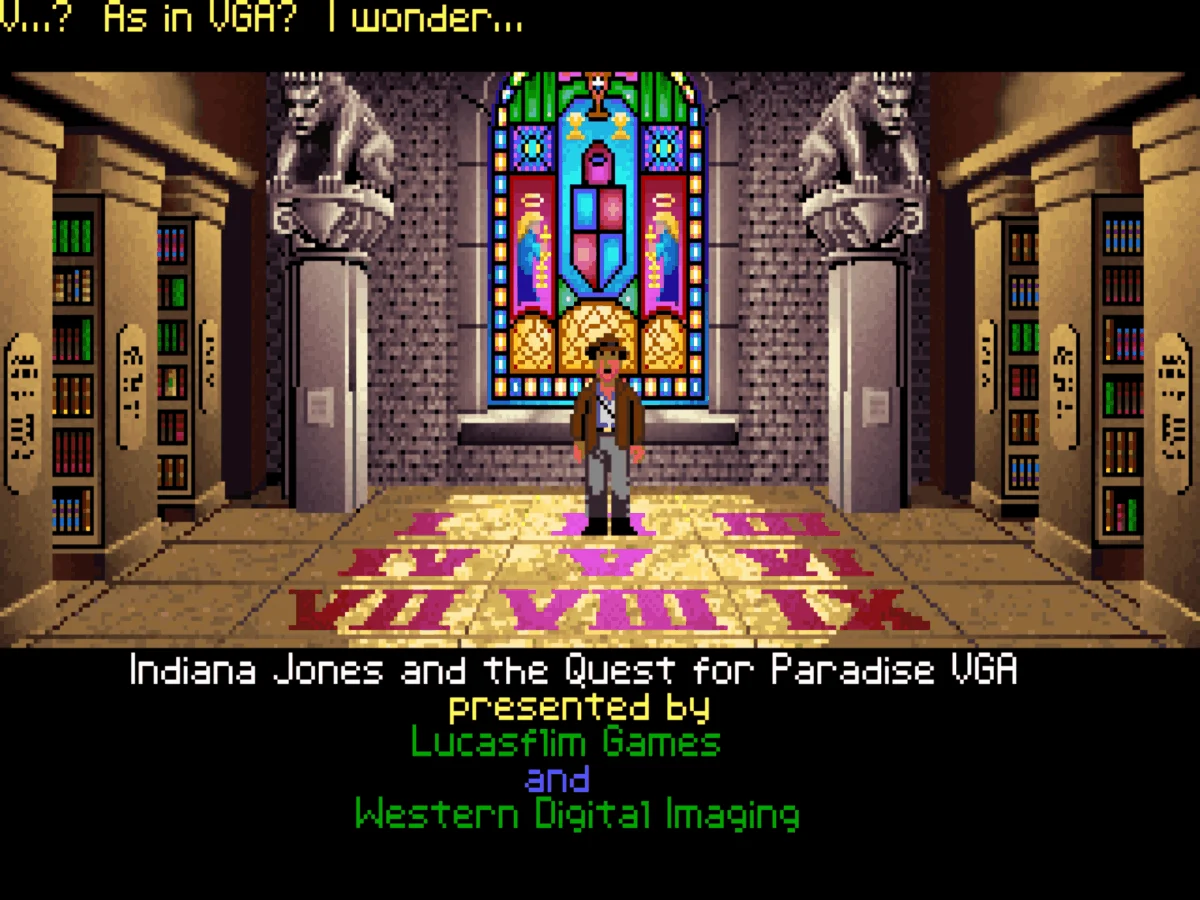
In a remarkable find unearthed from the digital archives of gaming history, a previously unknown interactive movie demo for Indiana Jones and the Quest for Paradise VGA has surfaced. This unique artifact, discovered while cataloging the personal collection of Aric Wilmunder, a long-time steward of Lucasfilm Games’ renowned SCUMM adventure engine, offers a fascinating glimpse into the development of graphical capabilities in early PC gaming. While not a complete, playable game, the demo utilizes assets originally created for the VGA version of Indiana Jones and the Last Crusade, showcasing a transitional period in computer graphics technology.
The discovery was made by researchers meticulously sifting through the extensive personal archives of Aric Wilmunder, a pivotal figure in the development and maintenance of the SCUMM (Script Creation Utility for Maniac Mansion) engine, which powered many of Lucasfilm Games’ most iconic titles. Wilmunder’s contributions were instrumental in bringing beloved adventure games like Maniac Mansion, The Secret of Monkey Island, and the Indiana Jones series to life. The process of archiving and cataloging his personal effects has yielded numerous insights into the inner workings of Lucasfilm Games during its golden era.
A Glimpse into VGA’s Ascent
The unearthed demo, Indiana Jones and the Quest for Paradise VGA, is built upon the foundation of assets originally developed for the 1989 adventure game Indiana Jones and the Last Crusade. Specifically, it leverages the graphical enhancements made for the VGA (Video Graphics Array) version of the game. At the time of its creation, around 1990, VGA graphics represented a significant leap forward in personal computing. Prior to VGA, most IBM PC compatibles were limited to CGA (Color Graphics Adapter) or EGA (Enhanced Graphics Adapter) standards, offering a palette of 4 or 16 colors, respectively. VGA, however, dramatically expanded this capability, supporting up to 256 colors simultaneously. This allowed for richer, more detailed, and more immersive visual experiences, a crucial development for graphical adventure games that relied heavily on atmospheric presentation.
The existence of a VGA-specific version of Indiana Jones and the Last Crusade was not merely a technological upgrade but also a strategic marketing initiative. Western Digital, the company that developed the Paradise VGA card, partnered with Lucasfilm Games. As part of this collaboration, copies of the VGA version of Indiana Jones and the Last Crusade were bundled with Western Digital’s Paradise VGA cards. This promotional strategy aimed to incentivize consumers to upgrade their graphics hardware by offering a high-profile, graphically impressive game as a tangible benefit. For many users, this bundle represented their first exposure to the richer visual fidelity that VGA technology offered, significantly enhancing their gaming experience and pushing the adoption of the new standard.
The Genesis of the Demo: A Marketing Endeavor
The Indiana Jones and the Quest for Paradise VGA demo appears to have been a direct product of this marketing partnership between Lucasfilm Games and Western Digital. The demo employs the robust SCUMM engine, a testament to its versatility and adaptability. The use of assets already developed for the VGA version of The Last Crusade made the creation of this promotional material relatively efficient. Lucasfilm Games had already undertaken the task of creating 256-color versions of its games for the Fujitsu FM Towns computer in Japan. This experience provided them with a pre-existing library of higher-resolution, more colorful assets that could be repurposed and adapted for the Western Digital VGA bundle. This dual strategy allowed Lucasfilm Games to effectively leverage their investment in 256-color graphics development, receiving compensation from both Fujitsu for the FM Towns versions and from Western Digital for the VGA bundle. It was a shrewd business move that facilitated technological advancement within the company and broadened the appeal of their games.
The exact purpose and intended audience for this Quest for Paradise VGA demo remain somewhat enigmatic. Researchers have speculated that it may have been intended for display at trade shows, allowing potential customers to witness the graphical prowess of the VGA card and the accompanying game. Another possibility is that it was distributed to computer retail stores as a demonstration unit, enabling customers to interact with or view the enhanced graphics firsthand. However, the lack of any physical media, such as a floppy disk, that has surfaced over the years leads to further questions. The absence of any known distribution channel suggests that the demo might have been an internal project or a limited-release promotional tool that never saw widespread public dissemination.

Unraveling the Mysteries: Documentation and Dedication
Adding to the intrigue surrounding this discovery is the apparent lack of documentation and any recollection from individuals who might have been involved in its creation. Extensive searches for project files, design documents, or even anecdotal evidence from former Lucasfilm Games employees have yielded no concrete information about Indiana Jones and the Quest for Paradise VGA. This silence from the development community is unusual for a project associated with such a well-documented studio.
A particularly telling detail that suggests the demo might not have been considered a fully polished product is a noticeable on-screen misspelling. The Lucasfilm Games logo appears as "Lucasflim Games" throughout the demo. This kind of error would typically be caught and corrected in a final release or even a widely distributed promotional piece. Its persistent presence in the demo raises questions about its development stage and whether it was ever intended for anything beyond an early-stage showcase. This oversight, while minor in the grand scheme of the discovery, serves as a poignant reminder of the often-unseen efforts and iterative processes involved in game development.
The SCUMM Engine: A Legacy of Innovation
The SCUMM engine, developed by Lucasfilm Games (later LucasArts), stands as a cornerstone of the adventure game genre. Its innovative design allowed for a more intuitive and accessible approach to game creation, moving away from complex coding for each new title. Instead, SCUMM provided a framework that simplified the process of designing puzzles, scripting dialogue, and managing game assets. This facilitated the rapid development of a string of critically acclaimed and commercially successful games throughout the late 1980s and 1990s.
- Timeline of SCUMM Engine Milestones:
- 1987: Maniac Mansion – The inaugural game powered by the SCUMM engine, establishing its core functionalities.
- 1988: Zak McKracken and the Alien Mindbenders – Further refinement of the engine, showcasing its growing capabilities.
- 1989: Indiana Jones and the Last Crusade – The game whose assets would later be utilized for the Quest for Paradise VGA demo. This title demonstrated SCUMM’s capacity for licensed properties and more complex narratives.
- 1990: The Secret of Monkey Island – Widely considered a masterpiece of the genre, SCUMM’s enhanced features allowed for sophisticated humor and engaging puzzles. The VGA version of this game was particularly influential.
- 1991: Indiana Jones and the Fate of Atlantis – This title pushed the boundaries of SCUMM with its branching storylines and intricate puzzles.
- Post-1991: SCUMM continued to evolve, with later versions powering games like Day of the Tentacle (1993) and Sam & Max Hit the Road (1993), incorporating higher resolutions and more advanced animation techniques.
The Quest for Paradise VGA demo, by using SCUMM assets from The Last Crusade, highlights the engine’s flexibility in adapting to new graphical standards. The transition from the 16-color EGA palette of the original Last Crusade to the 256-color VGA was a significant undertaking, and the SCUMM engine proved capable of accommodating this evolution.
Broader Implications and the Future of Game Preservation
The discovery and subsequent release of Indiana Jones and the Quest for Paradise VGA underscore the importance of game preservation efforts. In an era where digital content is increasingly ephemeral, the meticulous archiving of personal collections and the efforts of organizations like the Internet Archive are crucial for safeguarding the history of video games. This demo, though a fragment of what might have been, provides invaluable data points for understanding the technological and marketing strategies of Lucasfilm Games during a pivotal era.
The availability of this demo on the Internet Archive allows not only historians and enthusiasts but also developers and researchers to study its technical aspects and potential historical context. By uploading the demo and embedding a video walkthrough, the discoverers have made this piece of gaming history accessible to a global audience. The permission to watch the video at double speed is a nod to the often-protracted nature of adventure game cutscenes and the modern viewing habits of audiences, acknowledging that while the content is historically significant, its pacing may not align with contemporary expectations.
This find serves as a powerful reminder that the history of gaming is still being written, with forgotten artifacts and unreleased projects continuing to surface. Each discovery offers a new perspective on the creative processes, technological advancements, and business decisions that shaped the industry we know today. The tale of Indiana Jones and the Quest for Paradise VGA is a testament to the enduring legacy of Lucasfilm Games and the ongoing quest to unearth and preserve the rich tapestry of interactive entertainment. The lessons learned from this period, particularly concerning the strategic adoption of new technologies like VGA, continue to inform game development and the evolution of digital media.