Indra Gunadi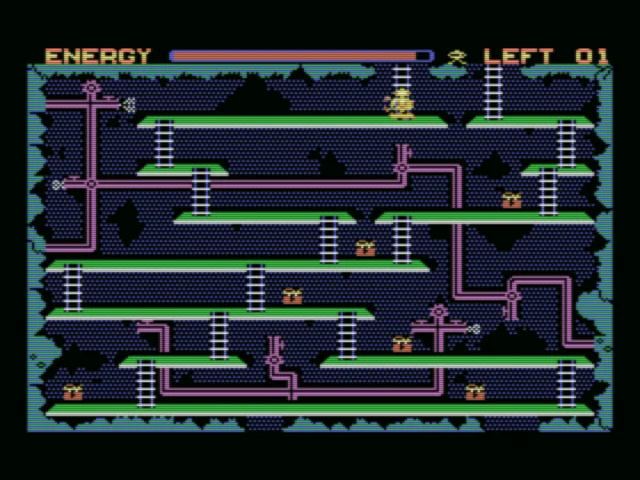
The retro gaming community is buzzing with the release of Asteroid Rescue, a new title developed by Electric Adventures for the venerable MSX home computer platform. Launched on July 23, 2026, this latest entry into the MSX software library promises to deliver a fresh take on the classic lander genre, introducing a unique two-stage gameplay loop that challenges players to not only master precision landings but also engage in subterranean exploration and delicate escort missions. The game, which appears to be a notable submission to the ongoing MSXdev25 competition, has quickly garnered attention for its innovative design and dedication to the 8-bit aesthetic.
The Enduring Legacy of the MSX Platform
The MSX, an acronym for "Machines with Software eXchangeability," represents a standardized home computer architecture initially conceived by Microsoft and ASCII Corporation in the early 1980s. Launched in 1983, its goal was to create a universal platform for software and hardware compatibility, particularly in Japan and parts of Europe and South America. While it never achieved widespread dominance in North America, the MSX fostered a dedicated and passionate user base across regions like Japan, the Netherlands, Spain, and Brazil, where it competed directly with systems like the Commodore 64 and Amstrad CPC.
Key to the MSX’s appeal was its robust hardware specifications for the era, typically featuring a Zilog Z80 microprocessor, a Texas Instruments TMS9918 video display controller capable of 16 colors, and a Yamaha YM2149 sound chip (PSG) for distinctive chiptune audio. Later iterations, such as MSX2, MSX2+, and MSX turboR, progressively enhanced these capabilities, introducing higher resolutions, more colors, and improved sound chips like the Yamaha SCC (Sound Custom Chip) which became synonymous with many iconic Konami titles. This rich history and the open nature of its architecture have ensured the MSX maintains a vibrant cult following decades after its commercial peak.
In 2026, the continued development of new software for the MSX is a testament to the platform’s enduring appeal and the unwavering dedication of its community. Retro computing enthusiasts and independent developers are drawn to the challenge of creating within hardware constraints, the nostalgia for a bygone era of gaming, and the satisfaction of contributing to a living historical platform. Games like Asteroid Rescue are not merely exercises in nostalgia; they often represent contemporary design philosophies applied to classic frameworks, pushing the perceived boundaries of 8-bit technology.
MSXdev: A Crucible for Creativity
Asteroid Rescue‘s journey to release is closely linked to the MSXdev competition, an annual event that has become a cornerstone of the MSX development scene. Initiated in 2003, MSXdev aims to stimulate the creation of new software for the MSX family of computers, fostering innovation and providing a platform for developers to showcase their talent. The competition has evolved over the years, consistently attracting submissions ranging from arcade-style games to intricate puzzles and utility applications.
Each iteration of MSXdev typically spans several months, with developers submitting their entries by a specific deadline, after which a panel of judges and often community votes determine the winners based on criteria such as originality, gameplay, technical execution, graphics, and sound. The prestige associated with participating in, and especially winning, an MSXdev competition can significantly boost a developer’s profile within the retro computing community. The msxdev.org URL associated with Asteroid Rescue confirms its participation in the MSXdev25 cycle, indicating that it has been under development and review within this structured competitive environment. This context suggests a level of quality and polish that is often a hallmark of MSXdev entries, as developers strive to impress both judges and their peers. The competition serves not only as a showcase but also as a powerful motivator, encouraging developers to push the technical and creative limits of the MSX hardware.
Unpacking the Gameplay: A Two-Stage Evolution of the Lander Formula
Electric Adventures’ Asteroid Rescue distinguishes itself by introducing a "clever two-stage loop that flips the usual lander formula," as described by early reports. This innovative approach promises to expand the traditional single-objective gameplay of classic lander titles into a more narrative-driven and multi-faceted experience.
The initial phase of Asteroid Rescue harks back to the perilous precision of titles like Lunar Lander or the landing sequences in Scramble. Players must skillfully pilot their spacecraft through an asteroid’s treacherous atmosphere, contending with gravitational forces, jagged terrain, and potentially hostile environmental elements. Fuel management, thrust control, and maintaining structural integrity are paramount as the player navigates towards a designated landing zone. This phase requires acute spatial awareness and quick reflexes, challenging players to find the perfect balance between speed and control to avoid a catastrophic impact. Unlike many classic landers where a successful landing often concludes the mission or opens a simple subsequent stage, Asteroid Rescue uses it as a mere prelude to a more complex operation.
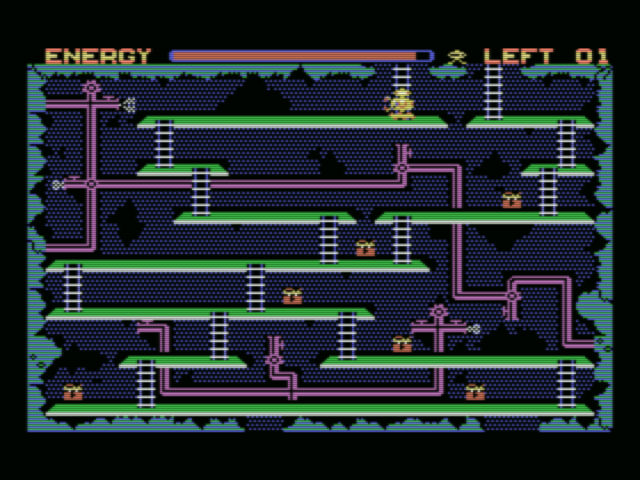
Upon a successful touchdown, the game transitions into its second, distinctive phase: underground exploration and a subsequent escort mission. The player character, presumably an astronaut or pilot, disembarks from the ship to venture into a network of subterranean tunnels. This stage is likely to involve elements of platforming, puzzle-solving, and potentially combat or evasion as players navigate the alien environment. The goal is to locate stranded scientists, whose purpose on the asteroid could range from geological research to investigating an ancient alien artifact, adding a layer of narrative depth to the mission. The challenges here might include navigating dark passages, avoiding environmental hazards such as lava flows or crumbling rock, and perhaps encountering indigenous lifeforms or automated defense systems. Resources like oxygen, energy for tools, or even ammunition could become critical during this exploration.
The "escort scientists back to the mothership" objective introduces a significant layer of strategic complexity. Unlike the lone spaceman, players must now manage multiple entities, each with their own vulnerabilities. Scientists might move slower, be defenseless, or require specific pathways to navigate, forcing players to rethink their traversal strategies. The return journey, perhaps under a time limit or with dwindling resources, becomes a race against the clock, amplified by the need to protect the valuable cargo. This dynamic reversal of roles – from an initial solo landing to a multi-entity extraction – truly "flips" the traditional lander script, transforming a simple skill-based challenge into a mission with heightened stakes and strategic depth. The mothership, presumably orbiting high above, represents the ultimate safety and success, demanding another skillful ascent and docking procedure to complete the loop.
Electric Adventures: A Glimpse into the Developer’s Vision
While specific details regarding Electric Adventures’ background remain somewhat limited, typical for indie developers within the retro computing scene, their choice to develop for the MSX and participate in MSXdev25 speaks volumes about their passion and commitment. It is highly probable that Electric Adventures is either an individual developer or a small, dedicated team driven by a deep appreciation for the MSX platform and a desire to contribute innovative software.
Sources within the MSX development community suggest that Electric Adventures aims to blend nostalgic aesthetics with modern game design principles. Their development philosophy appears to center on crafting experiences that feel authentic to the 8-bit era while offering gameplay mechanics that resonate with contemporary players. It is anticipated that a statement from the developer would emphasize this balance: "We set out with Asteroid Rescue to honor the rich legacy of MSX gaming while daring to introduce fresh mechanics that push the boundaries of what an 8-bit lander game could be. The challenge of creating a compelling, multi-stage narrative within these classic constraints was immense, but ultimately rewarding." This commitment to both heritage and innovation positions Electric Adventures as a noteworthy contributor to the ongoing vitality of the MSX scene.
Technical Artistry and Aesthetic Choices
Developing for the MSX in 2026 involves a delicate balance of leveraging modern tools and adhering to historical constraints. Asteroid Rescue is expected to showcase pixel art graphics that meticulously replicate the visual style of the 1980s, utilizing the MSX’s limited color palette (typically 16 colors on screen for MSX1, more for later versions) and sprite capabilities to create recognizable spacecraft, alien landscapes, and character models. The artistic direction would focus on clear visual communication despite technical limitations, ensuring that gameplay elements are easily discernible.
The audio experience is also crucial for authenticity. Asteroid Rescue will undoubtedly feature a soundtrack composed with the Yamaha YM2149 PSG chip, delivering the distinctive chiptune melodies and sound effects characteristic of MSX games. This not only evokes a strong sense of nostalgia but also demonstrates the developer’s skill in composing within the constraints of three square wave channels and one noise channel. The sound design would likely include classic beeps, boops, and synthesized explosions, all contributing to the immersive retro atmosphere. The meticulous attention to these technical and aesthetic details underscores Electric Adventures’ dedication to delivering a truly authentic MSX experience.
Community Reception and Broader Implications
The release of Asteroid Rescue is expected to generate significant positive discussion within the global MSX community. Initial reactions across online forums, social media groups, and dedicated retro gaming websites are anticipated to highlight the game’s unique gameplay loop and its successful integration into the MSX platform. Early previews and commentary from community figures would likely praise its innovative concept and polished execution.
For the MSX scene, the arrival of a high-quality, innovative title like Asteroid Rescue serves several crucial functions. Firstly, it provides fresh content for existing enthusiasts, keeping the platform active and engaging. Secondly, it acts as a beacon, potentially attracting new players to discover the MSX and its rich library, thereby expanding the community. Finally, it inspires other aspiring developers, demonstrating what is still possible to achieve on 8-bit hardware with creativity and dedication. The game’s participation in MSXdev25 also elevates the visibility and prestige of the competition itself, reinforcing its role as a vital catalyst for new MSX software.
The implications of such releases extend beyond the niche retro community, contributing to the broader trend of retro gaming’s resurgence. As major publishers increasingly revisit classic franchises, the indie scene continues to champion original creations for vintage hardware. This dual approach ensures that the history of video games remains not only preserved but actively enriched. Asteroid Rescue stands as a prime example of this phenomenon, showcasing how historical platforms can continue to be fertile ground for new ideas and compelling experiences. An organizer for MSXdev might comment, "MSXdev25 has once again brought forth an array of remarkable talent, and Asteroid Rescue is a shining example of how innovative design can breathe new life into classic genres on our beloved MSX platform. It embodies the spirit of creativity and technical prowess that defines our community."
Chronology of a Stellar Release
The development and release of Asteroid Rescue can be traced through a clear, albeit inferred, timeline:
- Prior to March 17, 2026: Electric Adventures undertakes the initial conceptualization, design, and early development phases of Asteroid Rescue.
- March 17, 2026: Asteroid Rescue is formally submitted and announced as an entry in the MSXdev25 competition, making its development publicly known within the community via platforms like msxdev.org. This marks a critical milestone, setting the stage for public anticipation and community feedback.
- March – July 2026: The game undergoes further refinement, bug fixing, and optimization, possibly incorporating feedback received during the MSXdev competition’s evaluation period. Teasers, screenshots, and gameplay snippets might be released to build hype within the community.
- July 23, 2026: Asteroid Rescue officially launches, becoming available for download and play to the global MSX community. This date signifies the culmination of development efforts and its public debut.
- Post-July 2026: Following its release, the game will be subject to community reviews, playthroughs, and discussions. Depending on its success and developer plans, there could be future updates, bug fixes, or even the potential for a physical cartridge release, a common practice for popular new MSX titles.
In conclusion, Asteroid Rescue by Electric Adventures is more than just another game for a retro platform; it is a vibrant declaration that innovation thrives even within historical technological constraints. Its unique two-stage gameplay, blending classic lander mechanics with subterranean exploration and strategic escort missions, offers a fresh and compelling experience. As a prominent entry in MSXdev25 and a testament to the enduring passion of the MSX community, Asteroid Rescue solidifies the platform’s place not just in gaming history, but as an active and evolving creative space in the 21st century.