
 Arya Paningal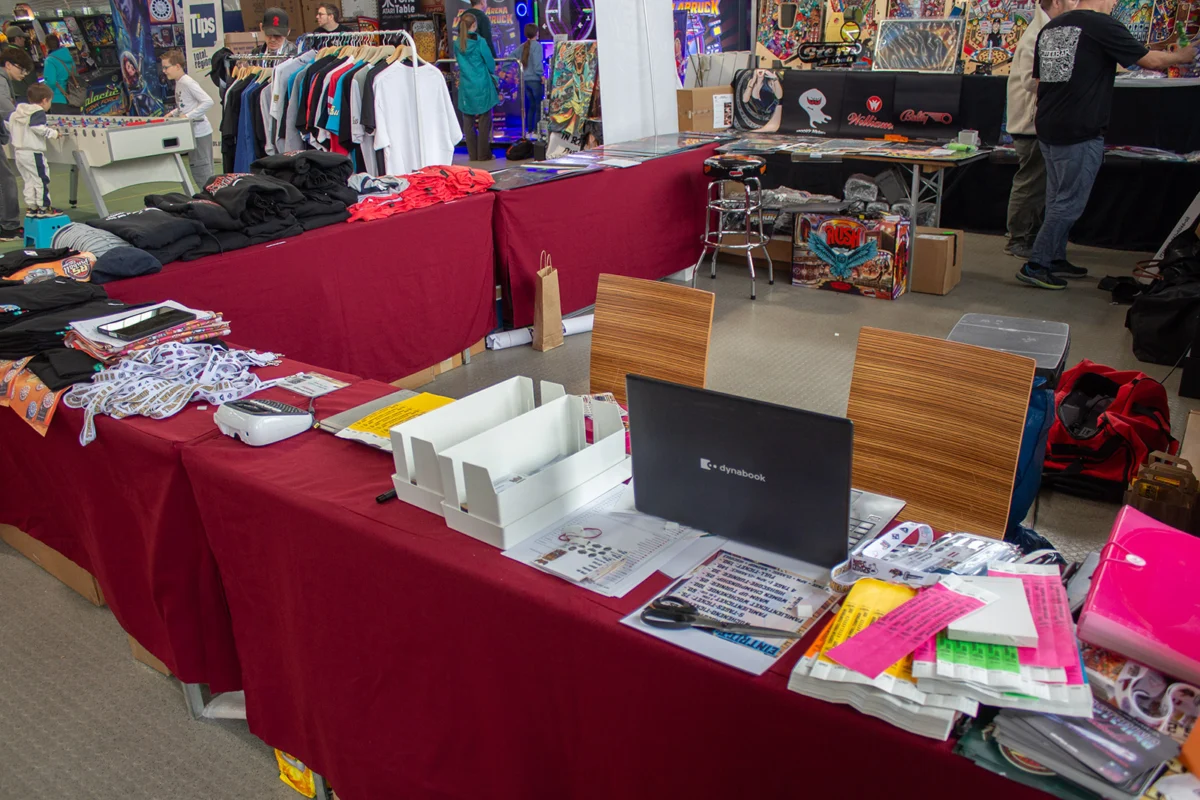
The REVA Halle Eissport in Vöcklabruck, Austria, transformed into a vibrant hub of pinball excitement from May 13th to 17th, 2026, as it hosted the inaugural Austrian Pinball Festival (APF). Building on the resounding success of the 2025 European Pinball Championship (EPC), also held at the same venue and spearheaded by Stefan Riedler of RS-Pinball, the APF was conceived as an annual celebration of the beloved game. This five-day extravaganza, which drew enthusiasts from across the continent and beyond, showcased a remarkable array of pinball machines, competitive tournaments, engaging seminars, and a palpable sense of community.

From Championship to Festival: The Genesis of APF

The 2025 European Pinball Championship, a resounding success that garnered significant community support, planted the seed for an ongoing event. The overwhelming positive response and the shared desire to avoid a one-off spectacle led to the evolution of the championship into an annual festival. Thus, the Austrian Pinball Festival was born, aiming to replicate the spirit of the EPC on a slightly scaled-down, yet equally captivating, platform. The REVA Halle Eissport, a versatile venue that transitions from an ice skating rink during the winter months to a sprawling 1,800m² exhibition and entertainment hall from late February onwards, proved to be the ideal location. The seamless transformation of the space, from accommodating ice hockey matches to hosting a world-class pinball event, underscored the venue’s adaptability. As early as late March, the prominent banner for the Austrian Pinball Festival adorned the entrance, a six-week countdown to the opening day on Wednesday, May 13th.

A Multi-Faceted Experience: Venue Layout and Attractions

The APF offered a comprehensive pinball experience, beginning even before attendees stepped through the main doors. RS-Pinball’s innovative mobile mini-arcade, a self-contained unit capable of being driven onto show floors and opened for immediate play without the need for extensive setup, greeted visitors. This mobile marvel featured a rotating selection of four pinball machines, a multi-game video arcade cabinet, and a skill-based game, offering a taste of the excitement within. For the APF, the pinball lineup included popular titles such as Pokémon, Dungeons & Dragons: The Tyrant’s Eye, Queen, and Halloween.

Adjacent to the mini-arcade, the catering area provided essential sustenance for attendees. A dedicated team offered a range of classic fair food like burgers, fried chicken, and fries, complemented by a rotisserie food truck during peak hours. For those seeking more variety, the nearby Maximarkt supermarket, a short walk across the car park, offered a wider selection of goods. Attendees learned valuable lessons about local public holidays, as the supermarket’s closure on Thursday, a public holiday, and Sunday, meant careful planning was required for provisions.

Inside the main hall, the front area was strategically organized. The registration desk served as the entry point, facilitating badge and wristband collection for pre-registered guests and handling on-the-day ticket purchases for single or multi-day entries. Entry fees were structured to accommodate various attendance plans, with daily, weekend, and full-event passes available, alongside tournament entry packages and single-event tickets for those not fully subscribed. The registration area also doubled as a retail space, offering a wide array of pinball merchandise, from branded apparel and toppers to translites, playfields, and various modification kits.

The main bar and food service counter occupied the opposite side of the entrance. Stocked with a diverse selection of beers, wines, soft drinks, and water, the bar also offered freshly brewed coffee. A pre-paid card system managed transactions, with different drinks incurring varying deductions from the card’s value. The menu included popular items like schnitzel burgers and hot pizzas, prepared to order. To ensure a clean environment, food and beverages were strictly prohibited in the free-play and tournament areas, with designated seating and tables provided near the bar for consumption.

At the far end of the seating area, the main stage served as a focal point for announcements, trophy presentations, live tournament streaming, and the highly anticipated seminars. The large, vibrant LED screen on the stage was instrumental in broadcasting tournament action and presenter talks to a wider audience within the hall.

The Free Play Arena: A Pinball Paradise

The central section of the REVA Halle Eissport was dedicated to the free-play area, a sprawling expanse divided into four main corridors. Each corridor featured rows of pinball machines, vendor stands, and homebrew creations, offering a diverse and immersive pinball experience. The sheer volume and variety of machines present were a testament to the thriving pinball community.

One notable display was the comprehensive collection of Stern Pinball’s latest offerings, including multiple versions of their then-current title, Pokémon. The presence of a large inflatable Pikachu overseeing fair play added a whimsical touch to this popular section. Further along, Jersey Jack Pinball showcased their impressive lineup, while Turner Pinball and Haggis Pinball presented their distinctive titles. The innovative P3-ROC systems from Multimorphic were also on display, demonstrating the future of customizable pinball playfields.

The free play area also highlighted the burgeoning talent within the homebrew pinball scene. Several custom-built machines demonstrated the creativity and passion of independent designers. These included Stefan Mader’s impressive creations: "Deep Blue Rage," "Tree House Club," and "Spectra 6," a unique coffee table pinball machine featuring 3D-printed playfield elements. Alessandro Cacciola of SteelShot Pinball presented his beautifully restored and converted machines, "Lupin The 3rd" (based on Diner), "Hokuto No Ken" (based on Rollergames), and the newly titled "They Call Me Trinity." The advanced capabilities of the open-source Pinball Power Up Controller (PPUC) were also showcased on machines like Flash and Time Warp, demonstrating the potential for custom game rules and graphics.

Vendors played a crucial role in the festival, offering essential parts, modifications, and accessories. Vincent Mods displayed their range of toppers and themed modifications, while Karin Kolbe offered a selection of pinball spares and aesthetic enhancements. Pinball Parts also had a significant presence, providing hard-to-find components for collectors and restorers. The American Pinball section featured their latest creations, and Melvin Brouwer-Williams showcased his "Alice’s Adventures In Wonderland" machine, a testament to detailed craftsmanship. The array of German-made conversions, including Geiger’s "Miss World," "Wild Schütz," and "La Retata," alongside Arkon’s "Sexy Girl," further enriched the diversity of machines available.

Beyond the silver ball, the festival also included a selection of amusement machines, such as table football, a dance machine, and classic skill games like Lucky Bowl and Beer Fest, providing alternative forms of entertainment for attendees of all ages.

Competitive Arena: Tournaments and Champions

The Austrian Pinball Festival was not just a showcase but also a major competitive event, featuring eight meticulously organized tournaments, each attracting a dedicated field of players.

Warm-Up Tournament
The festival kicked off on Wednesday with the Warm-Up Tournament, attracting 175 participants. The format involved seven rounds of four-player games, with points awarded for finishing positions. The top 24 players advanced to the play-offs, culminating in a thrilling final between Viggo Löwgren and Lukas Ott. After a tense best-of-three series, Viggo Löwgren emerged victorious, securing the championship. Dominique De Cock secured third place, and Alexander Muer finished fourth.

Main Tournament
The flagship event, the Main Austrian Pinball Masters tournament, saw extensive qualifying rounds held over Thursday and Friday. Players competed across four blocks (A-D), each divided into four groups of sixteen, playing a round-robin format. The top four players from each group, totaling 64 qualifiers, advanced to the Saturday play-offs. These were structured as best-of-seven head-to-head matches. The final showdown saw Arvid Flygare narrowly defeat Theodor Kristensen in a dramatic 4-3 series, with Timber Engelbeen claiming third place.

High Score Tournament
Running concurrently throughout the festival, the High Score Tournament offered a unique challenge. Players aimed to achieve their best scores on 16 designated machines, with their top 12 ranking points contributing to their overall total. Qualifying concluded on Saturday evening, with the top 32 players progressing to the play-offs. The finals, played out on Sunday, were a testament to endurance and skill. Arvid Flygare ultimately triumphed over Lukas Ott in a closely contested best-of-five final, with Erik Palfi securing third place.

Women’s Tournament
A dedicated Women’s Tournament, held on Friday evening, commenced with a social quiz designed to foster camaraderie among participants. Following the quiz, nineteen rounds of head-to-head play determined the top four finalists. Shirin Doppler emerged as the champion, winning her final matches decisively. Sabine Ramsner secured second place, Elli Paschalis took third, and Irene Mayrhofer finished fourth. The tournament concluded in the early hours of Saturday morning, with trophy presentations held later that day.

Classic Tournament
The Classic Tournament celebrated vintage pinball machines, with players competing in rotating groups on a selection of iconic machines. Eight rounds of play determined the top twelve qualifiers, with the top four receiving byes into the play-offs. Viggo Löwgren continued his winning streak, defeating Michael Trepp in the final to claim first place. Thomas Mästerman secured second, and Michael Trepp took third.

Other Tournaments and Events
Beyond the major IFPA-accredited competitions, the APF hosted several other engaging events. The Children’s Tournament provided a platform for younger enthusiasts to showcase their skills, with prizes awarded to all participants. The Lego Tournament, held on Rolf Brisberger’s ingenious Schoko 42 Lego Mindstorm pinball machine, offered a unique and playful challenge, with Simon Wodok taking the top prize. The Team Tournament celebrated collaborative play, with trophies awarded to the top three teams. A special "Best Homebrew Game" award, voted on by attendees and judged by a panel, recognized outstanding innovation, with Stefan Mader’s "Deep Blue Rage" taking home the coveted prize.

Seminars and Industry Insights

The main stage served as a platform for educational and insightful seminars from leading figures in the pinball world. Alice Lemoine of Hexa Pinball discussed the manufacturing processes and unique aspects of their Bordeaux-based factory, highlighting their innovative playfield production methods and introducing their new release, "The Three Musketeers." Aaron Davis of FAST Pinball and Brian Madden, originator of the Mission Pinball Framework, delivered an inspiring talk on building one’s own pinball machine, encouraging aspiring creators and detailing available resources. Eric Meunier, lead designer of Jersey Jack Pinball’s "Harry Potter" pinball, shared insights into the game’s development, from thematic inspiration to the engineering challenges of mass production. These seminars were live-streamed and later uploaded to YouTube, providing valuable content for the wider pinball community.

Conclusion: A Resounding Success and a Look to the Future

The inaugural Austrian Pinball Festival proved to be a resounding success, offering a comprehensive and engaging experience for pinball enthusiasts. The event fostered a strong sense of community, celebrated both established and emerging talent, and provided a platform for competitive play and industry discussion. While the APF will not return in 2027 due to scheduling conflicts with the German Pinball Association’s expanded GPA Expo, plans are already underway for its triumphant return to Vöcklabruck in 2028. With two years to organize, aspirations are even higher for what promises to be an even grander celebration of pinball. The success of the 2026 APF sets a high benchmark for future events, solidifying its place as a must-attend destination for pinball lovers across Europe.








