Vera Clarissa
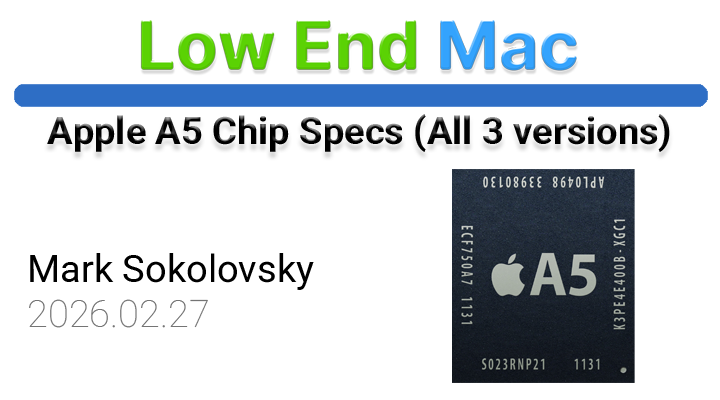
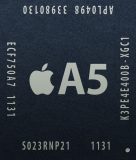
The Apple A5 chip, a pivotal component in the evolution of Apple’s mobile device strategy, represents a significant leap forward in processing power and efficiency for its era. This article provides a comprehensive hardware profile of the A5 series, detailing its architecture, performance capabilities, and its foundational role in devices that shaped the early landscape of the smartphone and tablet market. The A5 chip, manufactured by Samsung, was first introduced on March 11th, 2011, marking a critical juncture in Apple’s in-house silicon development.
Architectural Foundation and Manufacturing
The Apple A5, identified by the codename APL0498 and part number S5L8940, was built upon a 45-nanometer fabrication process, with later iterations potentially leveraging a more advanced 32nm High-K dielectric metal gate process. This technological advancement allowed for increased transistor density and improved power efficiency compared to its predecessors. While the exact transistor count for the A5 remains undisclosed, its dual-core architecture and enhanced graphics capabilities indicated a substantial increase in complexity.
The chip adhered to the ARMv7 instruction set architecture, supporting 32-bit processing. This architecture provided the fundamental framework for the operating systems and applications that ran on devices equipped with the A5. The shift to a dual-core CPU configuration was a major differentiator, enabling parallel processing and significantly boosting the multitasking capabilities and overall responsiveness of the devices it powered.
CPU and Memory Subsystem
At the heart of the Apple A5 lies its dual-core CPU configuration. Each of these cores operated at clock speeds ranging from 800 MHz to 1 GHz, depending on the specific device and its power management profile. These were designated as "Performance Cores" (P-Cores), designed to handle demanding computational tasks. The A5 chip did not feature "Efficiency Cores" (E-Cores), a concept that would become more prominent in later Apple Silicon generations. The total number of active cores in the A5 chip was two, though a notable exception existed in the third-generation Apple TV, where only a single core was utilized, likely to optimize power consumption and thermal output for a stationary device.
The cache hierarchy played a crucial role in the A5’s performance. Each P-Core was equipped with 32 KB of L1 instruction cache (L1i) and 32 KB of L1 data cache (L1d), totaling 64 KB of L1 cache per core. For the Apple TV Gen 3 variant, the L1 cache per core was reduced to 32 KB. The unified L2 cache for the P-Cores was 1 MB, a significant allocation that facilitated faster access to frequently used data and instructions, thereby reducing latency. Information regarding dedicated E-Core caches or a system-level cache for the A5 is not publicly detailed.
The memory subsystem of the A5 was designed for high bandwidth and efficiency. It utilized LPDDR2-800 memory, operating at a frequency of 400 MHz. The memory bus width was 64 bits, with two 32-bit channels, contributing to a theoretical memory bandwidth of approximately 6.4 GB/s. This bandwidth was critical for feeding data to the dual-core CPU and the integrated graphics processor, ensuring smooth operation of applications and media playback. The standard RAM capacity for devices featuring the A5 chip was 512 MB.
Graphics Processing Capabilities
The Apple A5 chip integrated a powerful graphics processing unit (GPU) for its time. The GPU featured two cores, a configuration that supported enhanced graphical rendering for games, user interfaces, and video playback. It incorporated 4 SIMD (Single Instruction, Multiple Data) Execution Units (EUs) and 32 FP32 (Single-Precision Floating-Point) Arithmetic Logic Units (ALUs). Operating at a clock speed of 200 MHz, the GPU was capable of delivering approximately 12.8 Giga Floating-Point Operations Per Second (GFLOPS). This computational power was instrumental in rendering rich 2D and 3D graphics, providing a fluid visual experience that was a hallmark of Apple’s iOS ecosystem. The A5 did not include dedicated AI (Artificial Intelligence) cores, as AI processing was not a primary focus for mobile chipsets in 2011.
Historical Context and Timeline
The introduction of the Apple A5 chip in 2011 was not an isolated event but a continuation of Apple’s strategic push towards custom silicon. Following the success of the A4 chip, which powered the original iPad and iPhone 4, the A5 represented a significant generational leap.

- March 2011: The Apple A5 chip debuts with the launch of the second-generation iPad. This device immediately showcased the enhanced performance, particularly in graphical capabilities, allowing for more sophisticated applications and a smoother user experience.
- October 2011: The A5 chip finds its way into the iPhone 4S. This iteration of the iPhone brought about substantial performance improvements over the iPhone 4, with the A5 being a key enabler for features like Siri, Apple’s voice assistant, which demanded considerable processing power. The A5 in the iPhone 4S was often clocked slightly higher than in the iPad 2.
- March 2012: The third-generation Apple TV is released, featuring a single-core variant of the A5 chip. This adaptation highlights Apple’s ability to customize its silicon for specific device requirements, balancing performance with the unique power and thermal constraints of the Apple TV form factor.
- March 2012: The fourth-generation iPad, often referred to as the "iPad with Retina Display," also features the A5X chip, a more powerful variant with a quad-core GPU. While sharing the A5 moniker, the A5X represented a further evolution, demonstrating Apple’s rapid development cycle and commitment to pushing graphical performance boundaries. The A5 chip itself, however, continued to power other devices.
- October 2012: The fifth-generation iPod Touch, a device focused on media consumption and gaming, also incorporated the A5 chip, underscoring its versatility across Apple’s product lines.
The A5 chip was therefore instrumental in powering a range of Apple’s most popular devices during a critical period of growth and innovation in the mobile computing landscape.
Devices Powered by the Apple A5
The Apple A5 chip was a cornerstone of several influential Apple products, contributing significantly to their capabilities and market success. The primary devices that leveraged the full potential of the A5 include:
- iPad (2nd generation): Launched in March 2011, this tablet marked the debut of the A5 chip, showcasing its dual-core power for a more responsive and graphically rich tablet experience.
- iPhone 4S: Released in October 2011, the iPhone 4S benefited immensely from the A5’s processing power, enabling features like Siri and significantly improving overall performance and battery efficiency.
- Apple TV (3rd generation): Introduced in March 2012, this iteration of Apple’s set-top box utilized a single-core version of the A5, optimized for its specific use case of media streaming and light interactive applications.
- iPod Touch (5th generation): Launched in October 2012, this portable media player and gaming device also featured the A5 chip, providing a robust platform for apps and entertainment.
While the A5X chip, a quad-core GPU variant, powered the fourth-generation iPad, the core A5 architecture remained a versatile and widely adopted component across Apple’s ecosystem.

Analysis of Implications and Broader Impact
The Apple A5 chip was more than just an incremental upgrade; it represented a strategic imperative for Apple. By developing its own custom silicon, Apple gained unparalleled control over its hardware and software integration. This vertical integration allowed for:
- Optimized Performance: Apple could tailor the chip’s architecture and features to precisely complement its operating system (iOS) and applications. This resulted in a level of performance and fluidity that was often superior to devices relying on off-the-shelf components.
- Power Efficiency: The A5’s manufacturing process and architectural design contributed to impressive power efficiency, a critical factor for battery-powered mobile devices. This enabled longer usage times between charges, a key selling point for consumers.
- Competitive Advantage: The superior performance and efficiency offered by the A5 gave Apple a distinct competitive edge in the rapidly evolving smartphone and tablet markets. Devices powered by the A5 were perceived as faster, smoother, and more capable than many of their rivals.
- Foundation for Future Innovation: The A5 laid the groundwork for subsequent generations of Apple Silicon, such as the A6, A7, and the M-series chips. The lessons learned in design, manufacturing, and integration with the A5 were invaluable in Apple’s ongoing journey to create increasingly powerful and efficient processors.
The A5 chip’s success also signaled a broader trend in the industry, encouraging other manufacturers to invest more heavily in their own custom silicon development. This shift has fundamentally reshaped the semiconductor landscape, leading to a more competitive and innovative environment for mobile computing. The emphasis on performance, efficiency, and tight hardware-software integration established by the A5 continues to define the benchmarks for mobile device performance today.
The information presented here is based on publicly available technical specifications and industry analysis. While specific details like transistor counts are often proprietary, the architectural insights and performance metrics provide a clear understanding of the Apple A5 chip’s significance in the history of mobile technology.

Source: (Apple Silicon, Wikipedia, the free encyclopedia, https://en.wikipedia.org/wiki/Apple_silicon, February 27th, 2026.)